Lost Records: Bloom and Rage – A Review (And Some Personal Reflections)

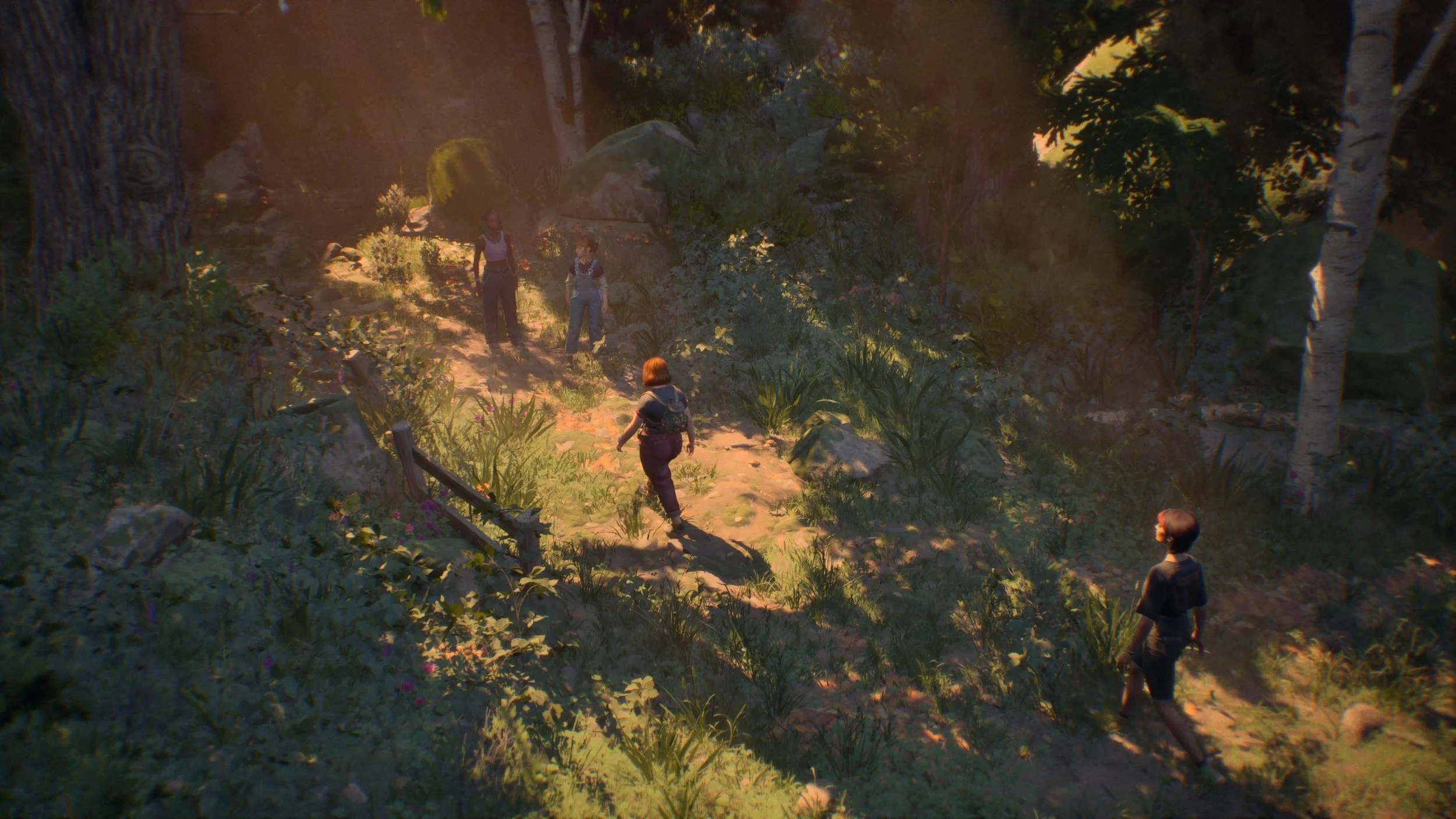
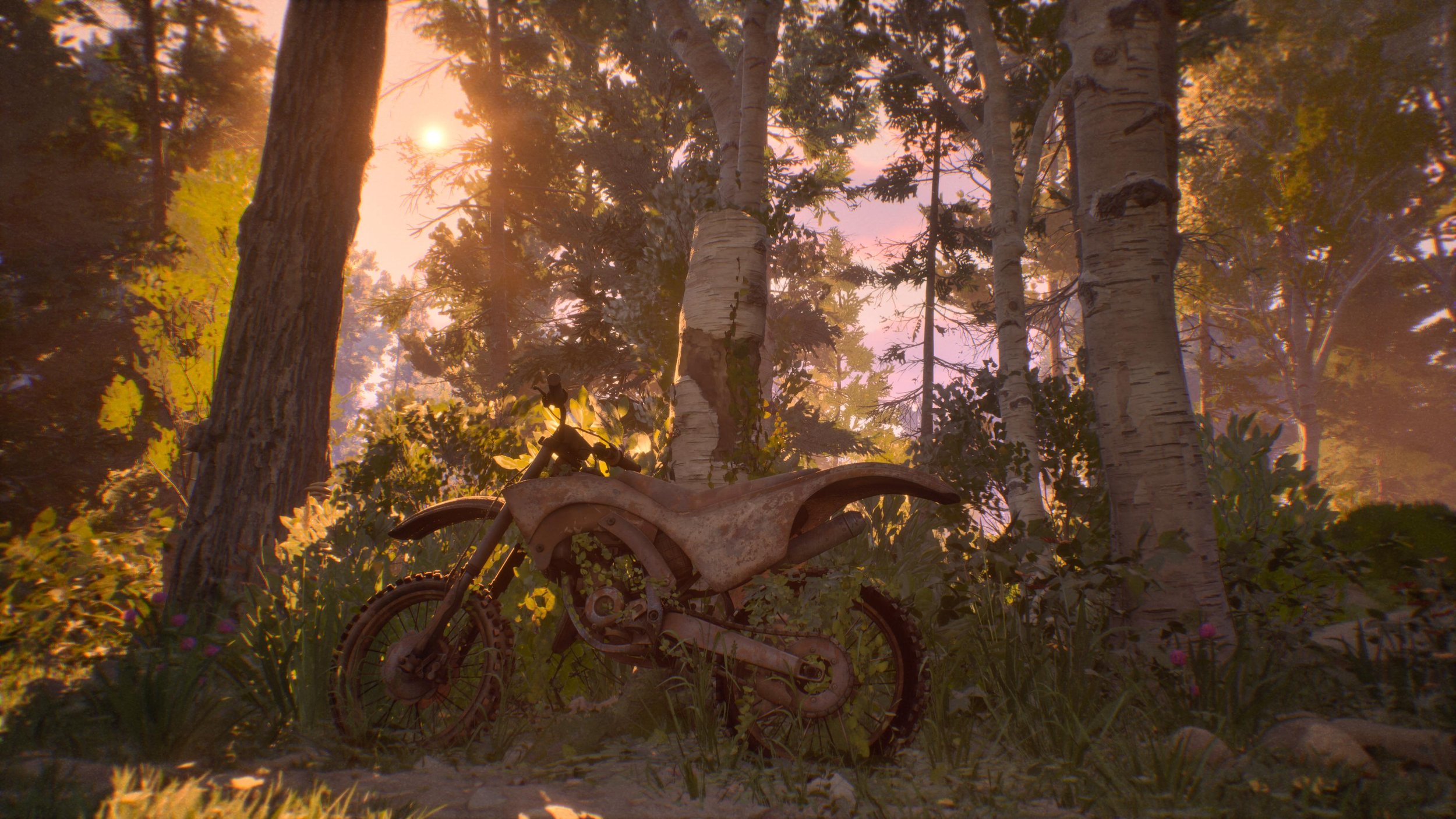
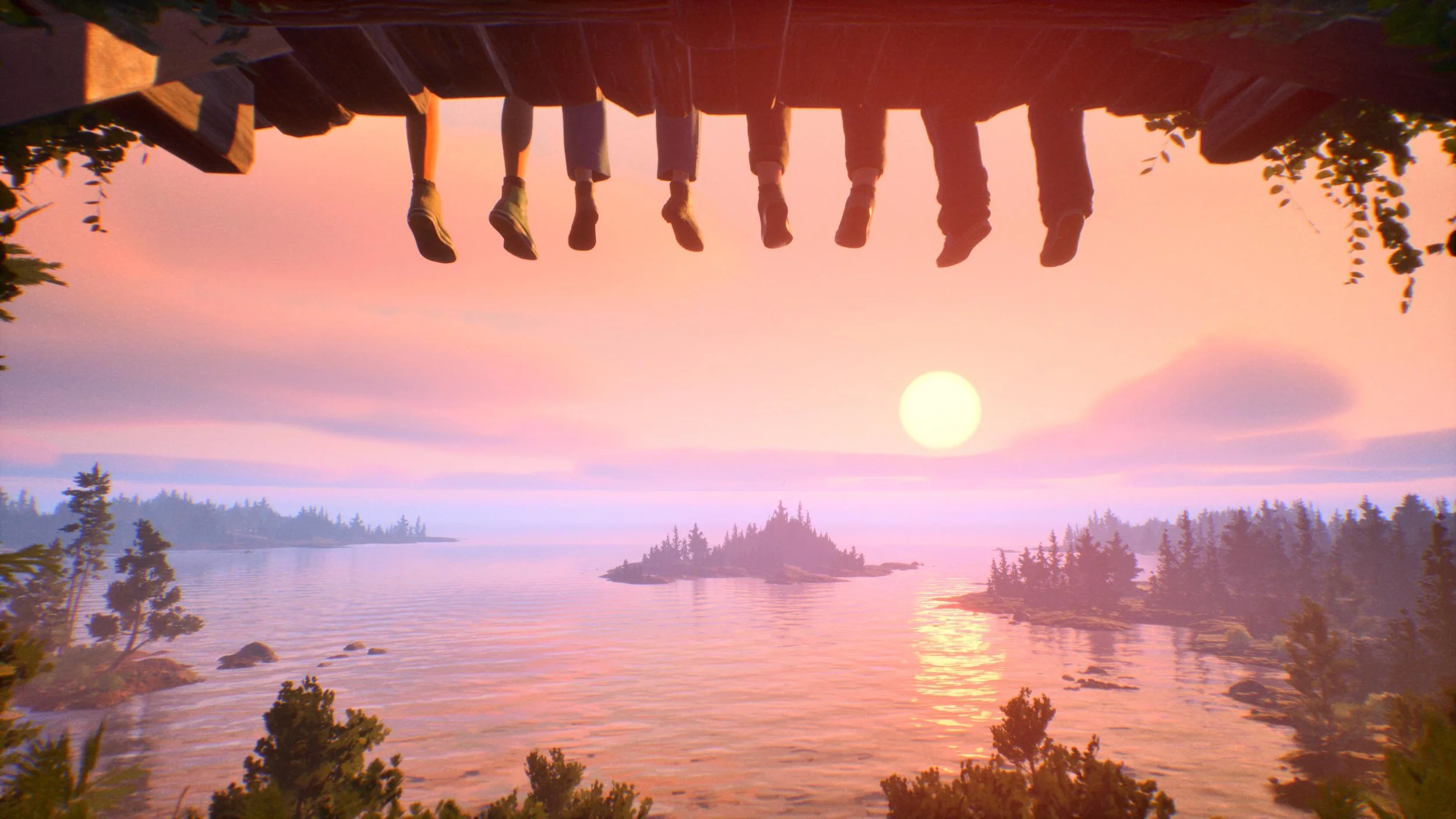
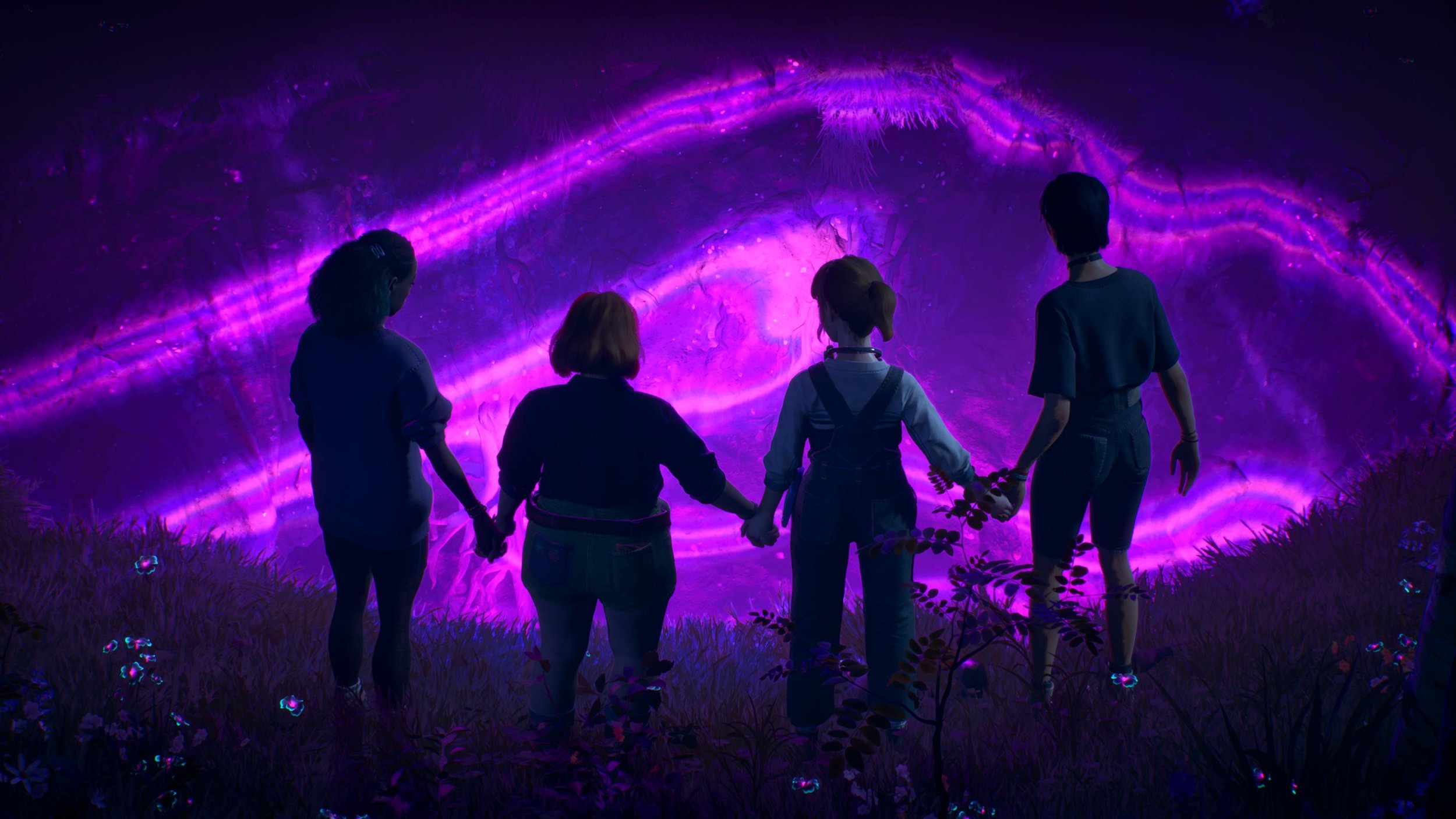
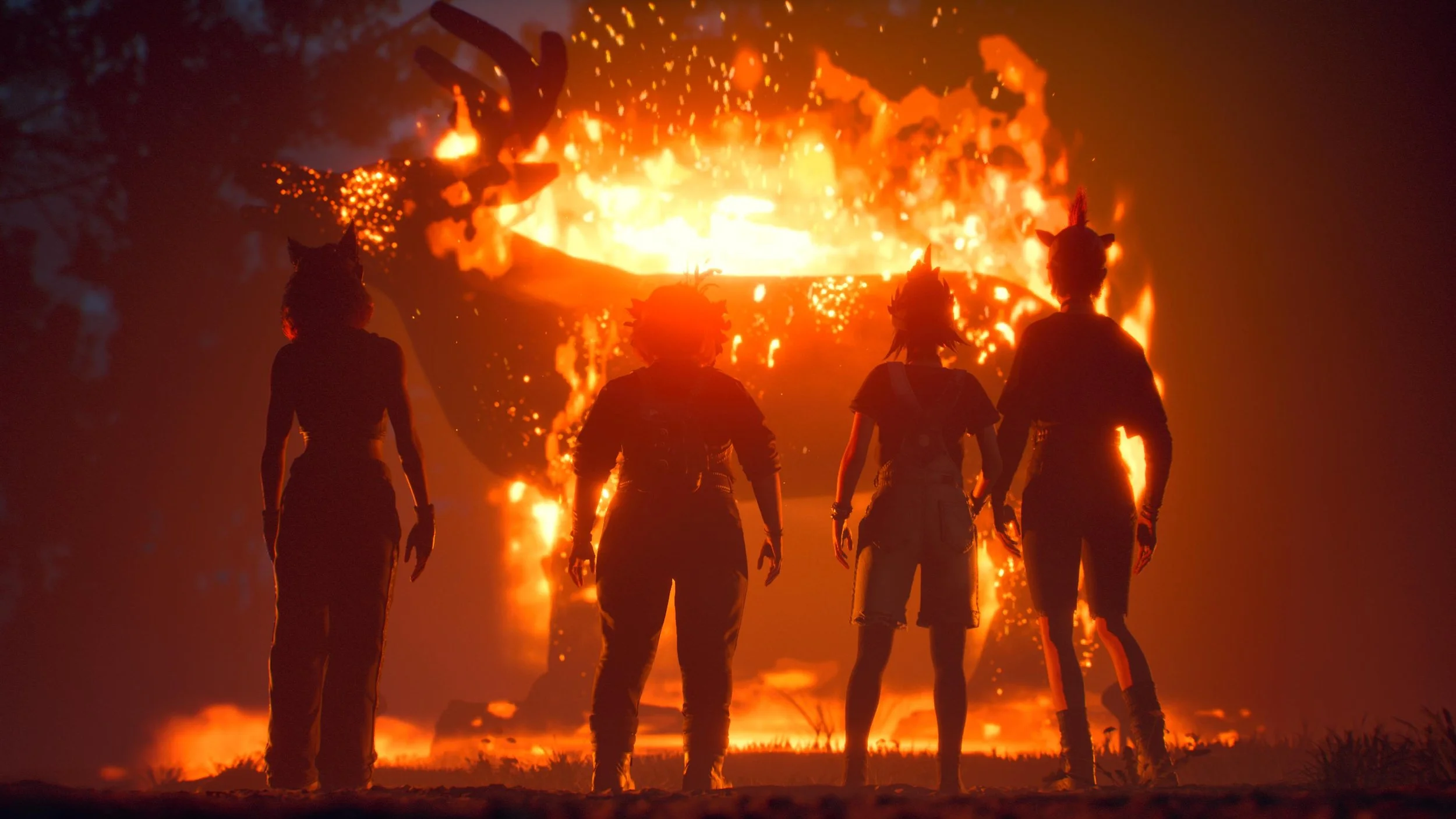
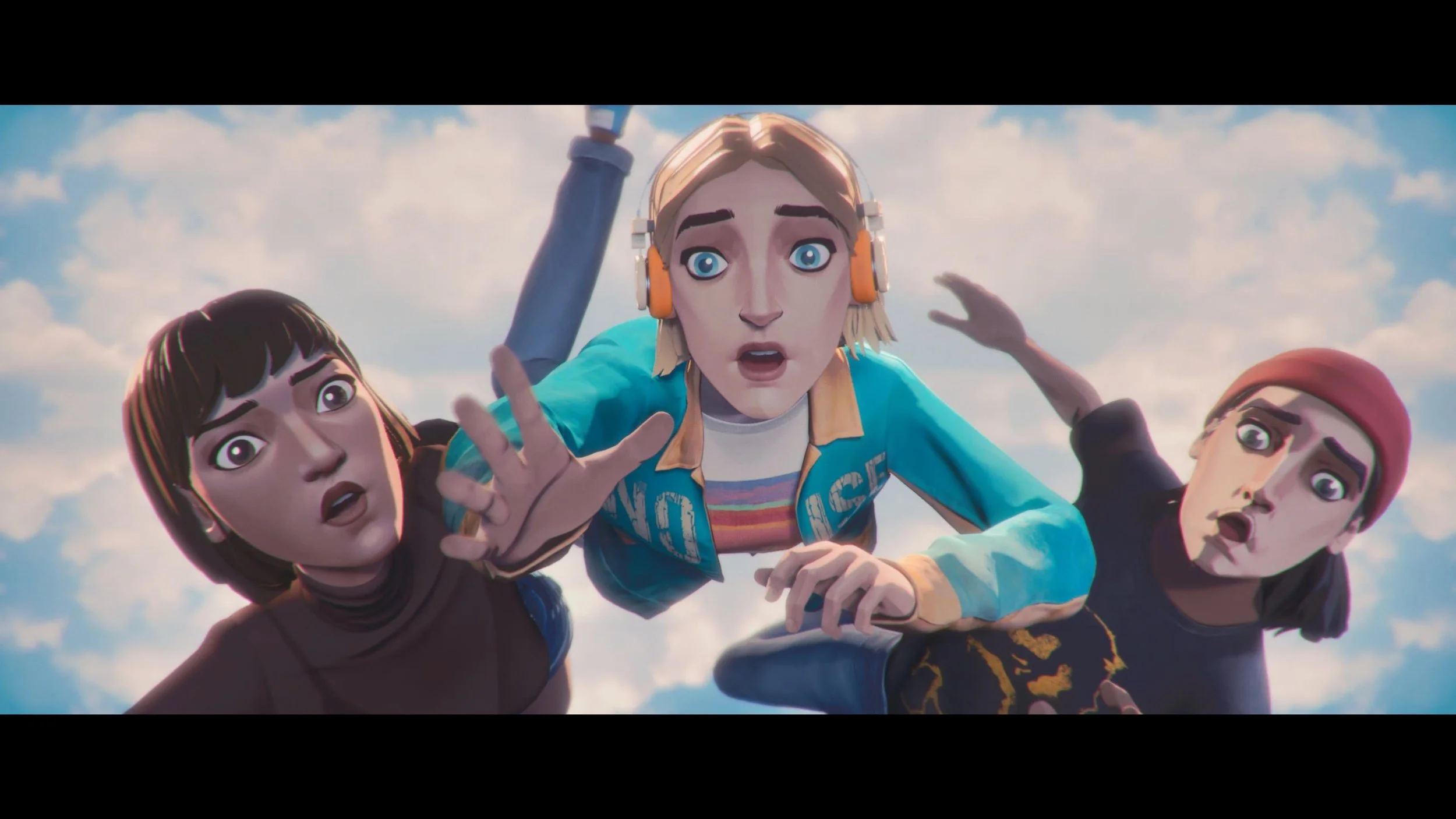
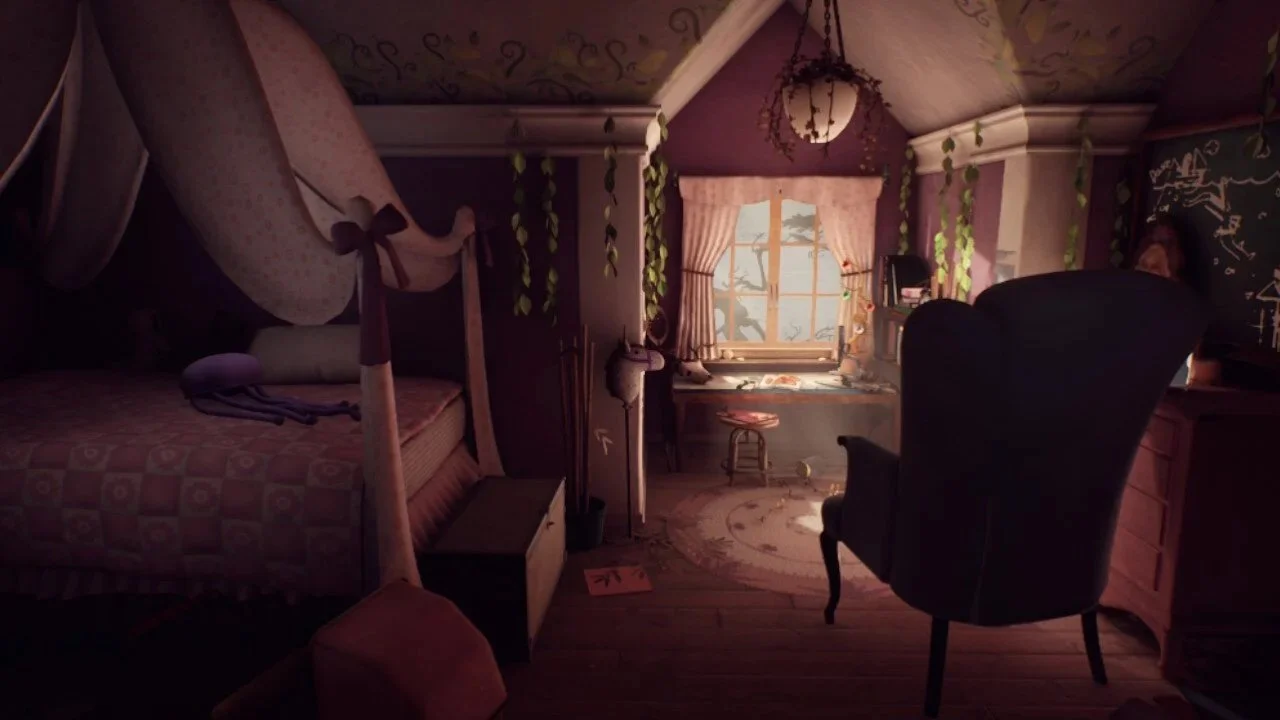
Lost Records: Bloom & Rage, from Don't Nod, has worked its way under my skin in the best possible way. Rooted in the early to mid-90s, the game captures the specific ache of being a teenager in a new town with startling accuracy. It portrays the fragile reality of finding your "tribe" - a world where your entire social existence feels in constant flux as you navigate high-pressure situations in real-time.

While many games attempt to bottle nostalgia, this title manages to capture the internal monologue of the outsider; it gamifies social anxiety. It understands that for many, a hang out isn't a passive experience but a high-stakes performance. You can be surrounded by people who genuinely adore you, yet the game forces you into that uncomfortable headspace where you rehearse a sentence three times in your head, only to stay silent because the moment has already passed. The story follows a group of young teen girls as they navigate the awkwardness of puberty, their love of music and their own family dramas. Recording it all is Swann, a newby in town who tries to fit in.

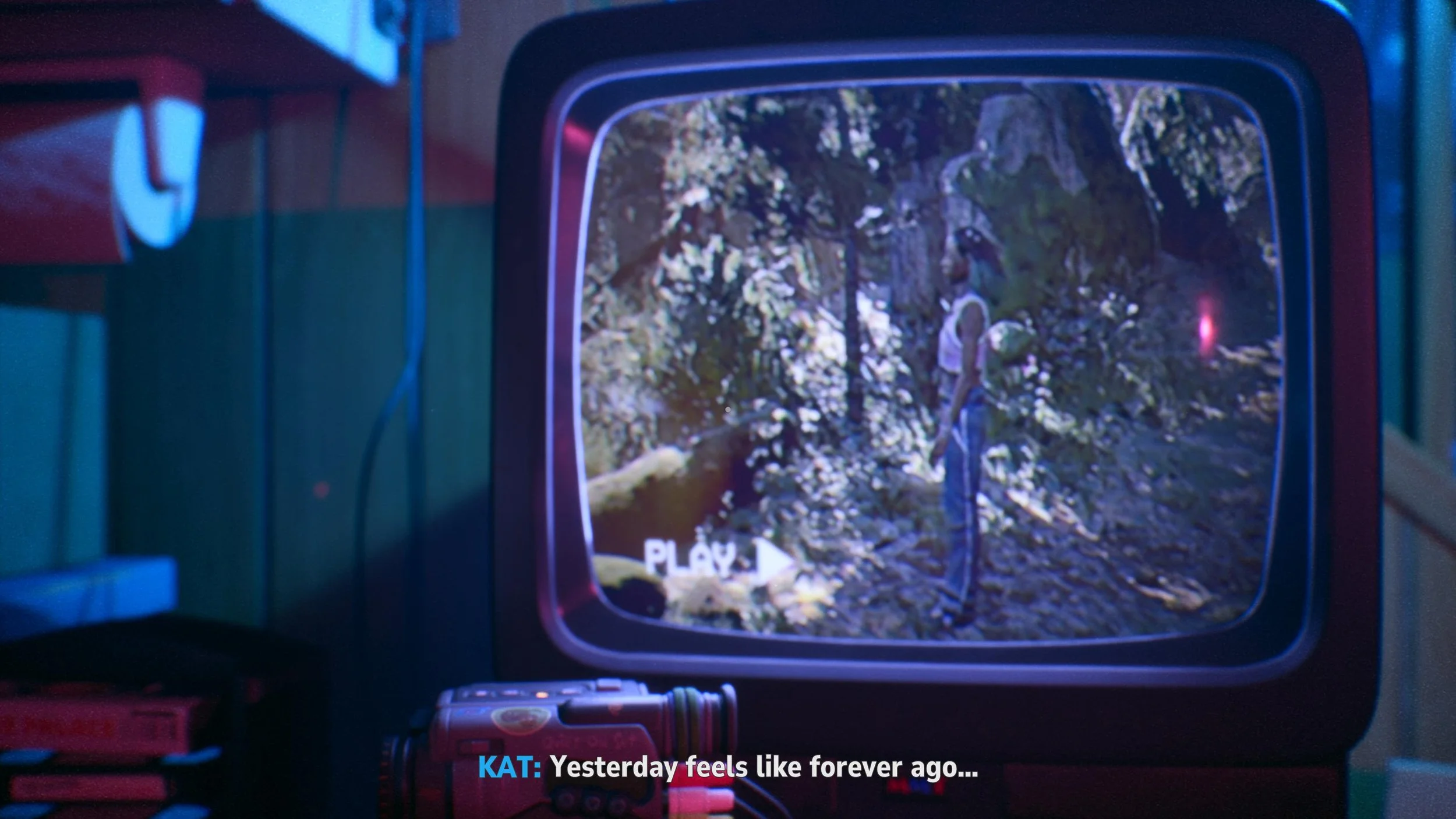
Even when Swann is firmly "in" the group, the narrative preserves that feeling of being one step behind the beat. It resonates with anyone who has ever felt like they were watching their own life through a viewfinder, waiting for the "right" moment to finally press record.
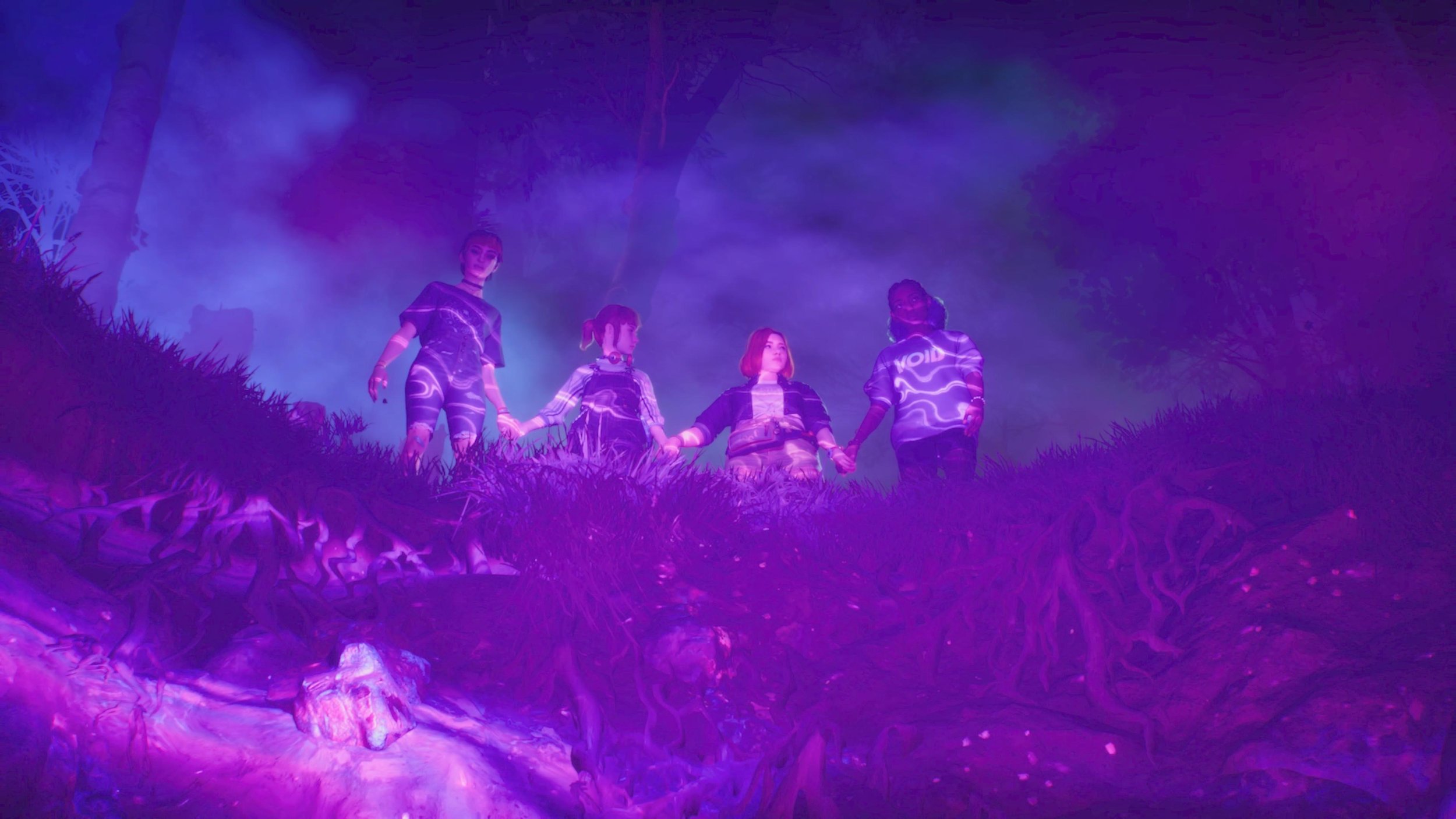
The game hits the beats of our formative years by focusing on the high stakes of everyday life:

1) The High Stakes of Small Moments - In your teens, a misinterpreted look or a joke that falls flat feels like a social death sentence. Lost Records mirrors this by making the dialogue feel organic and unpredictable. The playable "interruption" and "overthink" mechanics perfectly simulate the frantic mental math required to fit into a group dynamic.

2) The Shared Secret as Glue - Using a dual-timeline structure, the game explores how the bonds of our youth—forged in shared secrets and late-night vulnerability—define the adults we become. It captures that specific era of "firsts": the first time you felt truly understood, and the first time you realized that connection could vanish in an instant.

3) The 90s as an Emotional Backdrop - The setting isn't just about camcorders and grunge; it’s about a world that existed before the norm of always being online. In this analog era, if you felt like an outsider in your small town, you were truly an island. This sense of isolation heightened the need to find your tribe, making the fear of losing them feel visceral.

In short, I think Lost Records succeeds in its mission because it acknowledges a painful truth: being loved doesn't automatically mean you feel like you belong. The game acts as a mirror for the "quiet ones" - those who held the camera so they didn't have to be in the frame, who listened more than they spoke, and who still, decades later, wonder if they said the right thing at a party in 1997. It is a beautiful, aching tribute to the messy process of growing up and the ghosts we carry from our most influential friendships. As a man fast approaching his 50s, I contemplate who I was and where my life is taking me a lot more and this videogame is a fine version of that sentiment.

LINK: Pure Invention: How Japan's Pop Culture Conquered the World- Book Review (and Personal Reflections)

LINK: The Rise of Retro Gaming During Covid

LINK: Japan: My Journey to the East

LINK: Blood, Sweat and Pixels- Book Review

LINK: Utopia for Realists- Book Review
LINK: On And On And Colston ( Or, How We Kinda Sort of Learned to Talk About the Legacy of Colonialism and the British Empire)

LINK: ‘Natives: Race and Class in the Ruins of Empire’

LINK: Elden Ring- Videogames As Art

The Company of Wolves - Cult Film Review

Years ago, late one night, I caught The Company of Wolves on the BBC. It remained a wondrous fever dream but I hadn’t seen it in over 30 years so I thought I’d give it a revisit.

Now, Neil Jordan and Angela Carter’s 1984 cult classic isn't your average ’80s creature feature. Drenched in gothic romance and Freudian symbolism, it filters Little Red Riding Hood into a haunting, dreamlike descent into dark folklore. Far from a straightforward horror flick, the film operates as a richly symbolic nightmare, weaving together fairy-tale mythos, adolescent anxiety and the primal allure of the wild.

The film opens in the present day with young Rosaleen (Sarah Patterson) falling asleep in her bedroom and dreaming herself into a fantastical, timeless forest. This framing device immediately pulls us into the subconscious, where childhood innocence collides head-on with burgeoning maturity and the dangerous realities of the adult world. Governed entirely by dream logic, the narrative glides effortlessly between eerie, nested vignettes—each serving as a cautionary fable or a dark metaphor for Rosaleen's internal awakenings.

Visually, the film is an absolute triumph of atmospheric studio design. Drenched in heavy fog, eerie lighting, and towering trees, the hyper-stylised forest sets create an unforgettable, fairy-tale gothic atmosphere that punches well above its weight. Then, of course, there are the practical effects. The transformation sequences remain properly skin-crawling, prioritizing psychological body horror over standard creature-feature tropes and delivering a visceral depiction of metamorphosis where the beast literally tears its way out from within the human shell.

At the heart of the film is its clever reinterpretation of the wolf. It isn't just a literal predator lurking in the trees; it’s a multifaceted symbol for masculine desire, forbidden temptation, and the untamed nature inside us all. Anchored by Patterson's quiet curiosity, the narrative is elevated further by Angela Lansbury, who is marvellous as Grandmother. She delivers chilling, darkly humorous warnings about men and their animalistic impulses—most famously offering the immortal advice:

"Never trust a man whose eyebrows meet."

While its heavily allegorical nature means it prioritises mood and thematic resonance over a traditional linear plot, those willing to surrender to its hypnotic rhythm are in for a deeply psychological ride. The Company of Wolves emerges as a visually intoxicating, intellectually provocative piece that transcends its genre—a dark fairy tale for grown-ups that masterfully navigates the fine line between fear and fascination, inviting you to ponder the wolves within and without long after the static fades.

LINK- Toxic: Women, Fame and the Noughties- Book Review (and Some Thoughts)

LINK- Pure Invention: How Japan's Pop Culture Conquered the World- Book Review (and Personal Reflections)

LINK- The Rise of Retro Gaming During Covid

LINK- Japan: My Journey to the East

LINK- Blood, Sweat and Pixels- Book Review

LINK- Utopia for Realists- Book Review

LINK- On And On And Colston ( Or, How We Kinda Sort of Learned to Talk About the Legacy of Colonialism and the British Empire)

LINK- ‘Natives: Race and Class in the Ruins of Empire’ LINK: Elden Ring- Videogames As Art

Wicked City - Cult Manga Review

In the early 90s UK manga boom, there was a fear that "Japanimation" was corrupting our youth, and Urotsukidōji: Legend of the Overfiend was the absolute poster child for what parents feared we were watching on VHS. Joining this infamous shortlist was 1987's Wicked City by Yoshiaki Kawajiri—the very definition of late-night, top-shelf anime salaciousness and the kind of movie people assumed you’d only find nestled between Ninja Scroll and Akira in a dusty comic shop somewhere in Soho. However, it was everywhere, including Virgin Megastore, HMV and Forbidden Planet, as well as my precious Rodney's Books and Games. I never watched the film at the time but thought I'd give it a look now to correct my old-skool manga knowledge gap. So, how does it fare?

Well, the film wastes no time setting its dark tone, giving us THE iconic spider-woman scene within the first five minutes—one I'd heard about from friends over 30 years ago but had never experienced until now. Our protagonist, Taki, thinks he’s getting lucky with a beautiful woman in a bar, only for her to transform into a terrifying arachnid demon, sprouting massive legs from her torso to pin him down. It’s a legendary piece of body horror that instantly hooks you, setting the stage for a pretty straightforward, hard-boiled noir affair where Taki, a member of the secret "Black Guard," must protect a fragile peace treaty between the human world and the demon realm.

The animation is gorgeous, fluid, and has that signature Kawajiri sense of style that perfectly evokes the era; it looked head and shoulders above most other studios at the time. We get heavy shadows, stark neon blues and purples, and framing that feels incredibly cinematic. While Demon City Shinjuku kept its edge-lord tendencies relatively reined in, Wicked City dives straight into the deep end of problematic territory. The film is packed with gratuitous sex and graphic sexual violence, featuring tentacle assaults and demon violations that definitely push past simple fanservice and into genuinely uncomfortable territory.

It’s a product of its time, and the characters fit those 80s archetypes perfectly: Taki is your quintessential trench-coat-wearing, chauvinistic slacker who happens to be a badass with a gun, while his demon partner, Makie, actually gets some great moments of agency and holds her own in a fight, even if the script constantly subjects her to distress. This is all brought to life by voice acting that is highly indicative of the era's localization quality—which is to say, the dub is gloriously wooden. Taki sounds like a man trying to read a grocery list while doing a flat Clint Eastwood impression, and the ancient mystic they are protecting sounds like a bizarre, screeching caricature. It is stiff, clunky, and completely drains the tension from otherwise horrific scenes, but honestly? I love it. It adds a brilliant layer of unintentional comedy to an otherwise grim, self-serious movie.

Overall, whilst problematic for its gratuitous sexual violence, the lush animation, iconic framing, and that legendary opening five minutes make it almost mandatory viewing for fans of peak bubble-era Japanese animation. It’s well worth the 80 minutes or so of your time... just maybe don't watch it with your other half.

LINK- Fire Tripper- Cult Manga Review

LINK- Akira Soundtrack Vinyl Review

LINK- Monster City- Cult Manga Review

LINK- Japan: My Journey to the East

LINK- The Offworld Collection- Book Review

LINK- Manga Exhibition at the British Museum

LINK- The Midnight Library and the Idea That You Can’t Go Home Again

LINK- The Transportive Nature of Objects (And the Power of Mini Consoles)

Horror Express - Cult Horror Film Review

There’s something inherently exciting about claustrophobic horror, where some people are stuck in a small space and have to survive against a creature or worse - each other. Set on a moving train, Horror Express (1972) is one of the best examples of the sub-genre. 

Directed by Eugenio Martín, this Spanish-British co-production offers an unusual and wonderfully original premise that completely bypasses the standard tropes of vampires, werewolves, and haunted houses. Instead, it serves up a two-million-year-old part-man, part-ape fossil from deep back in our evolutionary chain that turns out to be far from extinct.

The story kicks off aboard the Trans-Siberian Express, where anthropologist Professor Alexander Saxton (Christopher Lee) is transporting his frozen discovery back to Europe. Naturally, things go wrong almost immediately as the crate is opened and bodies start dropping with their eyes burned completely white. It quickly becomes apparent that the creature isn't just alive and well but it's lethal.

What makes Horror Express so brilliant is how it handles its threat. Even though the original creature is killed off surprisingly early on, it possesses the terrifying ability to transfer its consciousness and energy—and all the ancient, stolen knowledge it holds—into another human host. If that parasitic, body-hopping dynamic sounds familiar, it's because it feels like a clear, direct precursor to John Carpenter's 1982 classic The Thing.

Despite the modest budget, the film looks gorgeous. The vivid colours and striking cinematography by Alejandro Ulloa masterfully capture the claustrophobic, suffocating feel of a steam train hurtling through the freezing Siberian wilderness.

The acting is top-notch across the entire cast, but the real heart of the film lies in the iconic pairing of Christopher Lee and Peter Cushing. Both legendary actors play it completely straight as men of science—erudite, learned gentlemen—rather than the occultists, mad scientists, or outright villains they were so frequently cast as during their Hammer Horror days. Their on-screen chemistry is effortless and a joy to watch.

The script is also packed with cracking one-liners. Telly Savalas turns up in the third act as a boisterous, ruthless Cossack officer who completely steals every scene he's in. But the absolute highlight of the dialogue comes during a moment of peak paranoia:

"But what if one of you is the monster?"

An aghast Cushing, without missing a beat, replies: "Monster? We're British, you know!"

The final 15 minutes of Horror Express are insanely good. As the true cosmic nature of the creature is revealed and the body count spikes, the tension escalates into pure, unadulterated madness. Chaos erupts on board, complete with resurrected eye-bleeding Cossacks, a desperate race towards a literal cliff-end, and Christopher Lee basically going full Rambo with a rifle to save the day.

Horror Express is insanely good fun and has stood the test of time remarkably well. By combining sci-fi cosmic horror with a classic Agatha Christie - style mystery setting, it stands out as one of the best, most unique old-school horror films of its era.

If you've somehow missed this one over the years, do yourself a favour: turn down the lights, get the kettle on, and jump aboard.

LINK: The Argument for Videogames As Art in the Age of Mechanical Reproduction

LINK: Akira Soundtrack Vinyl Review

LINK: The Power of Stories and How They Are Manipulated

LINK: The Message by Ta-Nahisi Coates - Book Review (and Some Thoughts)

LINK: The Anxious Generation: Book Review (and Some Thoughts)

LINK: Utopia for Realists- Book Review
LINK: Toxic: Women, Fame and the Noughties- Book Review (and Some Thoughts)

Hollow - Graphic Novel Review

Whilst pottering around the local library graphic novel section, I saw a cool cover that immediately caught my eye - as the old saying goes, always judge a book by it's cover. Upon closer inspection I saw that it was by a writer I've long admired from the Lumberjanes series, Shannon Watters as well as newbie Brandon Boyer-White. Reading the blurb I saw that it was a modern-day take on The Legend of Sleepy Hollow and so, suitably intrigued, I checked it out and, one wet evening, dove in!

The story follows teenager Izzy Crane who moves to the legendary town, only to finds her name carries some serious historical baggage. However, she is a scientifically minded young lady and doesn't go in for superstition but when she forms an unexpected bond with Vicky Van Tassel, the two discover they share more than just a family legacy; they are at the center of a nefarious plot. The mystery deepens with the unexpected appearance of the Headless Horseman, who, instead of being a terrorizing figure, is seeking their help to protect the Van Tassels and stop a reign of terror against the firstborn that has been perpetrated over many generations. But by who?

I really enjoyed this graphic novel as it uses the original story as a foundation whilst reframing the legend for a new generation. For example, the opening features a figure in period costume being chased by the Headless Horseman through the woods at night but when he escapes, he pulls out his mobile phone to tell of his near escape. This ain't your grandpy's Sleep Hollow!

The dialogue is modern and feels natural and authentic, capturing the voices of the characters without ever sounding like it's trying too hard to be cool or 'hip'. This genuine tone makes the characters feel like real people you could be friends with. Hollow was very positive and respectful in its approach to its characters as it is an excellent example of organic LGBTQ+ representation; it treated all characters with depth and respect. Their identities are simply a part of who they are, allowing them to be well-rounded individuals whose personal journeys feel earned and true.

This authenticity is perfectly complemented by Bernice Nelle’s beautiful art as portrays the main characters in distinctive styles which shows their personalities. The costume designs are easy to follow and stylish, mixing what feels like a Boston Tea Party chic aesthetic with a modern university vibe that makes the world both historic and contemporary.

Overall, Hollow is a thoroughly enjoyable graphic novel that takes a beloved legend and makes it feel fresh and relevant. It’s a great read for fans of the original story and anyone looking for a compelling mystery with memorable characters and stunning art.

Gaming Can Be Good For The Soul

In a digital realm often defined by a relentless pace—by sprawling maps to conquer and epic foes to vanquish—a revolution has been underway for many years. These aren’t the blockbuster epics that demand hundreds of hours of your life but instead shorter games built on the simple, yet profound, act of slowing down. These are not games about saving the world or defeating epic bosses, but rather about the quiet, introspective moments of life. Titles like Venba, A Short Hike, Alba: A Wildlife Adventure, Beyond Your Eyes and And Roger are a few of the games that I've played that are part of this movement, proving that video games can be a powerful medium for exploring the profound depths of the human experience.

I recently found myself completely engrossed in these narrative-driven gems, and what struck me most was their ability to tackle complex, emotional themes with a gentle touch.

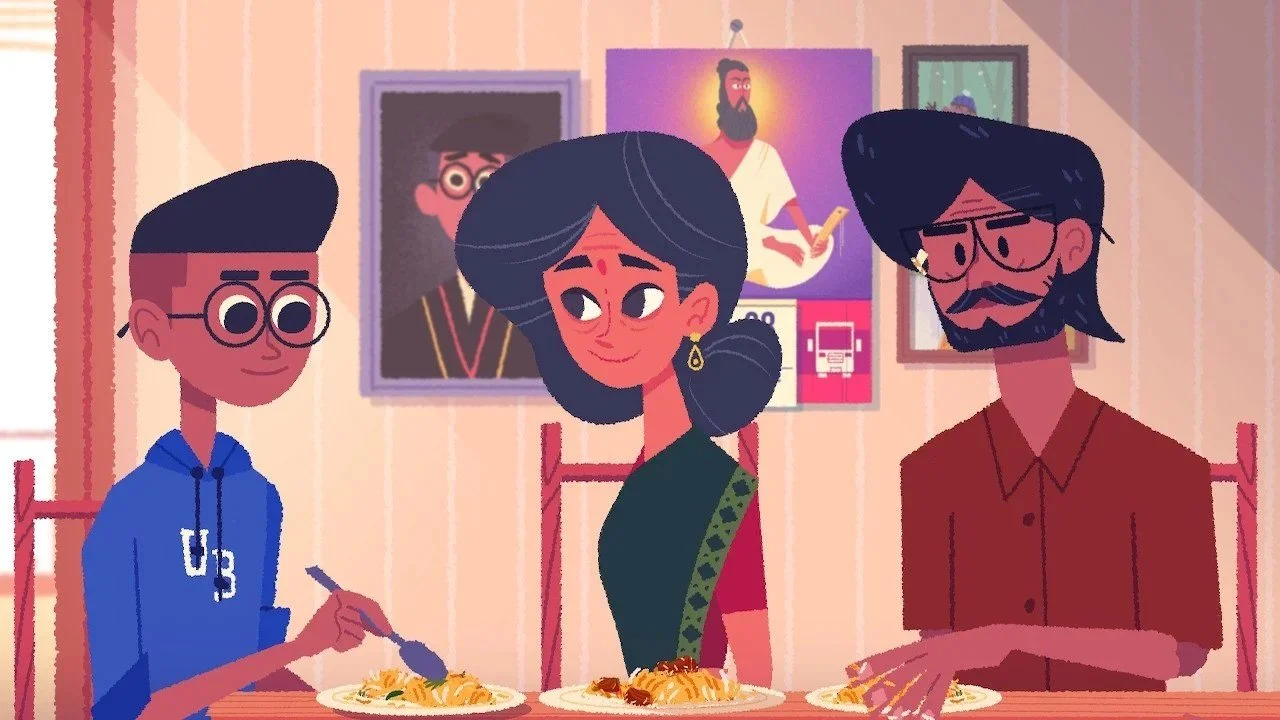
Venba is a beautiful exploration of emigration, identity, and the power of food which speaks volumes without ever feeling heavy-handed.

And Roger uses the backdrop of old age and dementure as a poignant, fantastical journey to explore the fear of death and forgetting.

Alba: A Wildlife Adventure reminds us of the importance of community and our connection to the natural world.

A Short Hike is a game that, on its surface, is about a simple walk up a mountain, but beneath its charming exterior lies a meditation on friendship, self-discovery, mental health and the value of taking a break.

Beyond Your Eyes has you playing a soul crossing the River Styx and reflecting on your life, including the unreliable narrator trope.

These games resonate so deeply because they embrace introspection. They give us space to reflect on our own lives and emotions, much like a good book or a moving film. They understand that a compelling story isn't always about grand, sweeping gestures, but can be found in the small, intimate moments that make us human—the memory of a family recipe, a chance encounter with a stranger, or the simple act of taking a deep breath and looking at the stars.

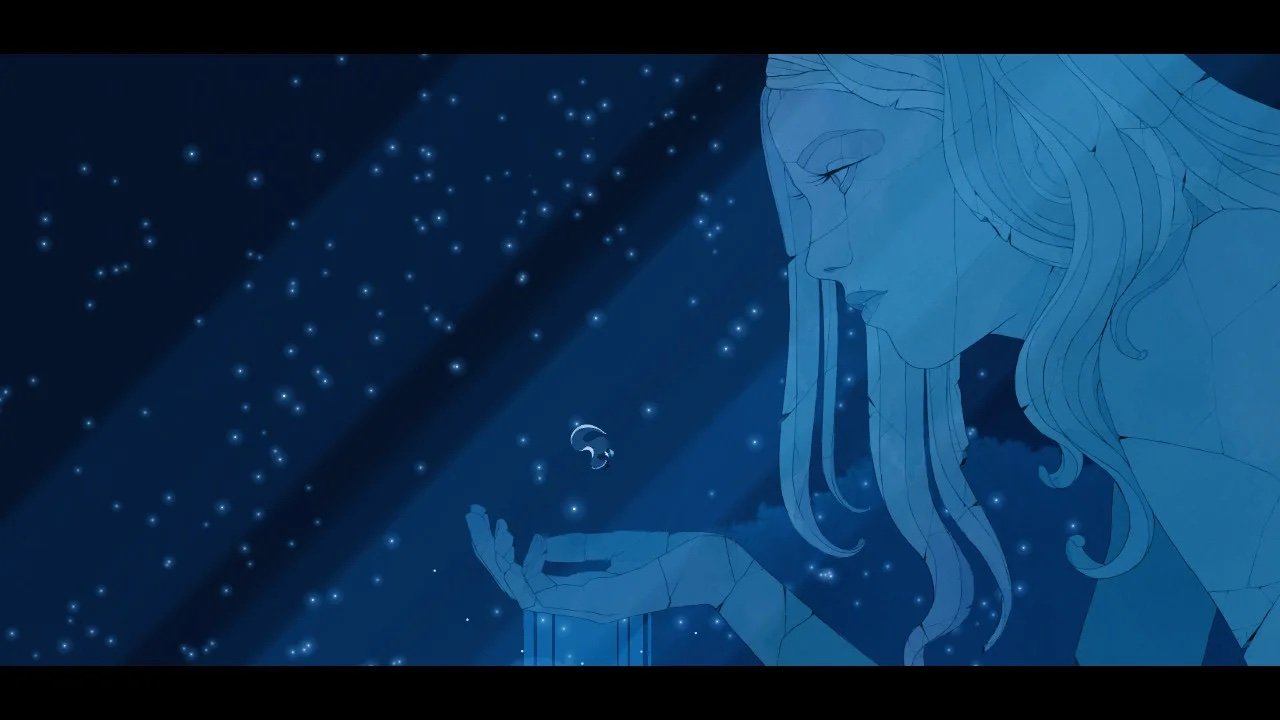
If you're drawn to games that prioritize emotional resonance over a high score, there's a world of incredible titles waiting for you. For those who appreciate the quiet beauty of these experiences, you might find a new favorite in games like Spiritfarer, a cozy management sim about saying goodbye; Gris, a stunningly beautiful platformer that tells a metaphorical story of grief and recovery; or my favourite What Remains of Edith Finch, a collection of interconnected tales about a family's legacy. Each of these titles offers a unique and memorable journey into the heart of what it means to be alive.

Ultimately, these games remind us that the most meaningful adventures aren't always found in a fantasy realm or on a distant planet. Sometimes, they are found within ourselves. They are a testament to the fact that video games, at their best, are not just a form of entertainment, but a powerful art form capable of inspiring empathy, fostering reflection and can help us understand the human condition, one quiet story at a time.

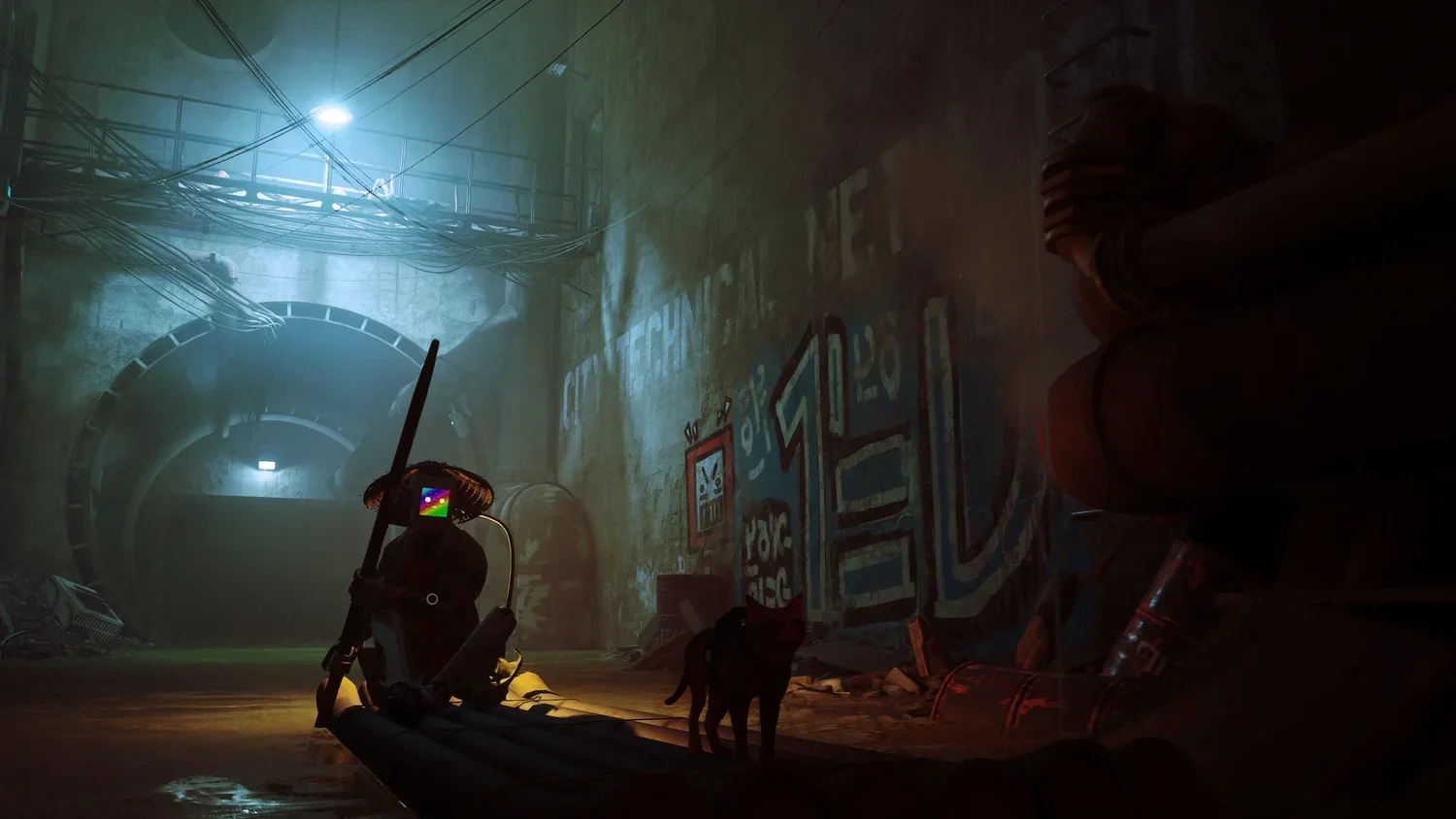
Stray and Animals in Peril -Videogames as a Writing Stimulus

I've always loved using video games to enhance learning in the classroom. Years ago, we used Brain Academy and Dr. Kawashima's Brain Training to improve mental math skills. Later, games like Endless Ocean, Shadow of the Colossus, and Limbo served as a great stimulus for creative writing. More recently, we used a VR experience called Perfect to help students write a descriptive piece for Michael Morpurgo's wonderful book, Kensuke's Kingdom.

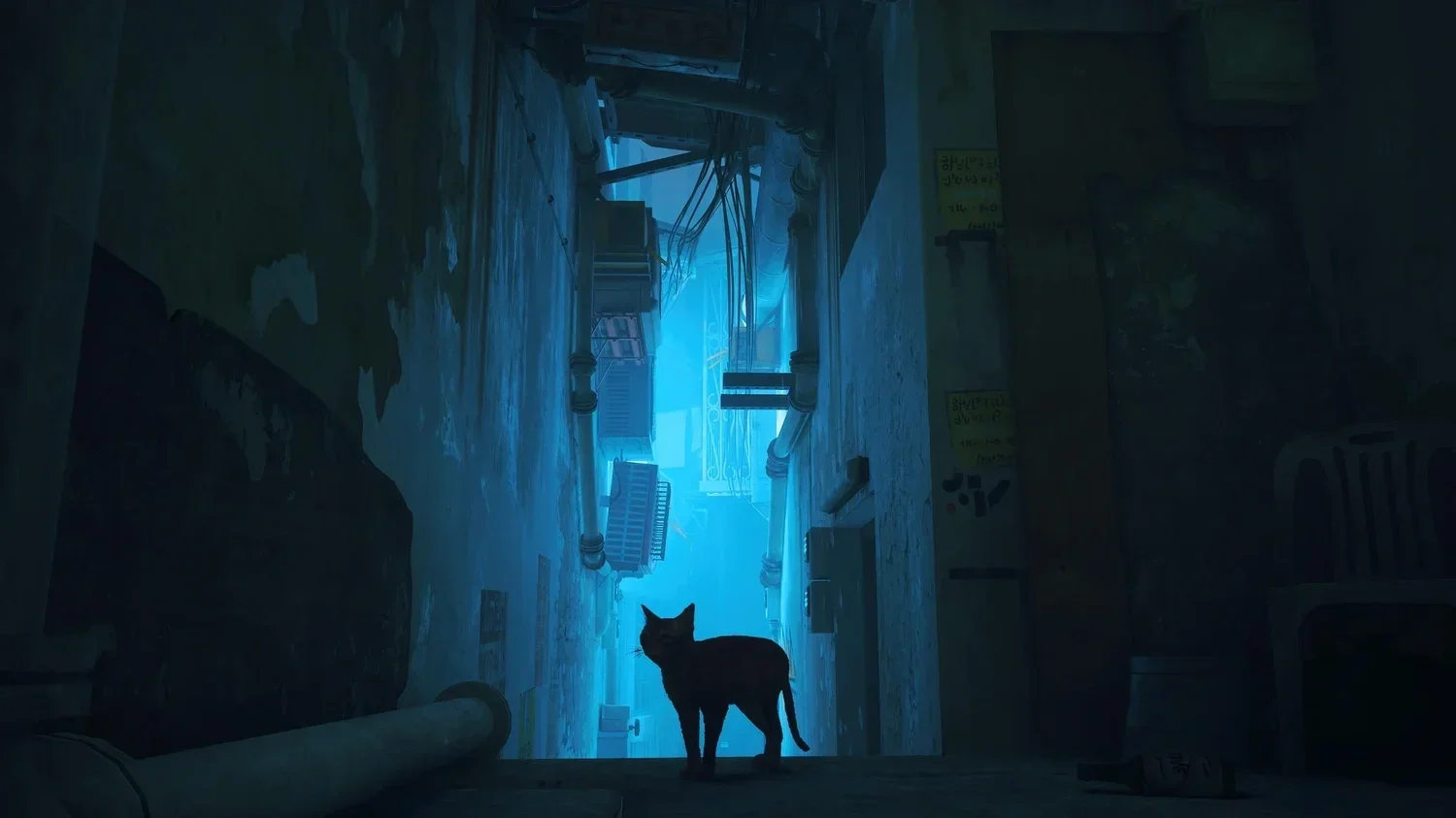
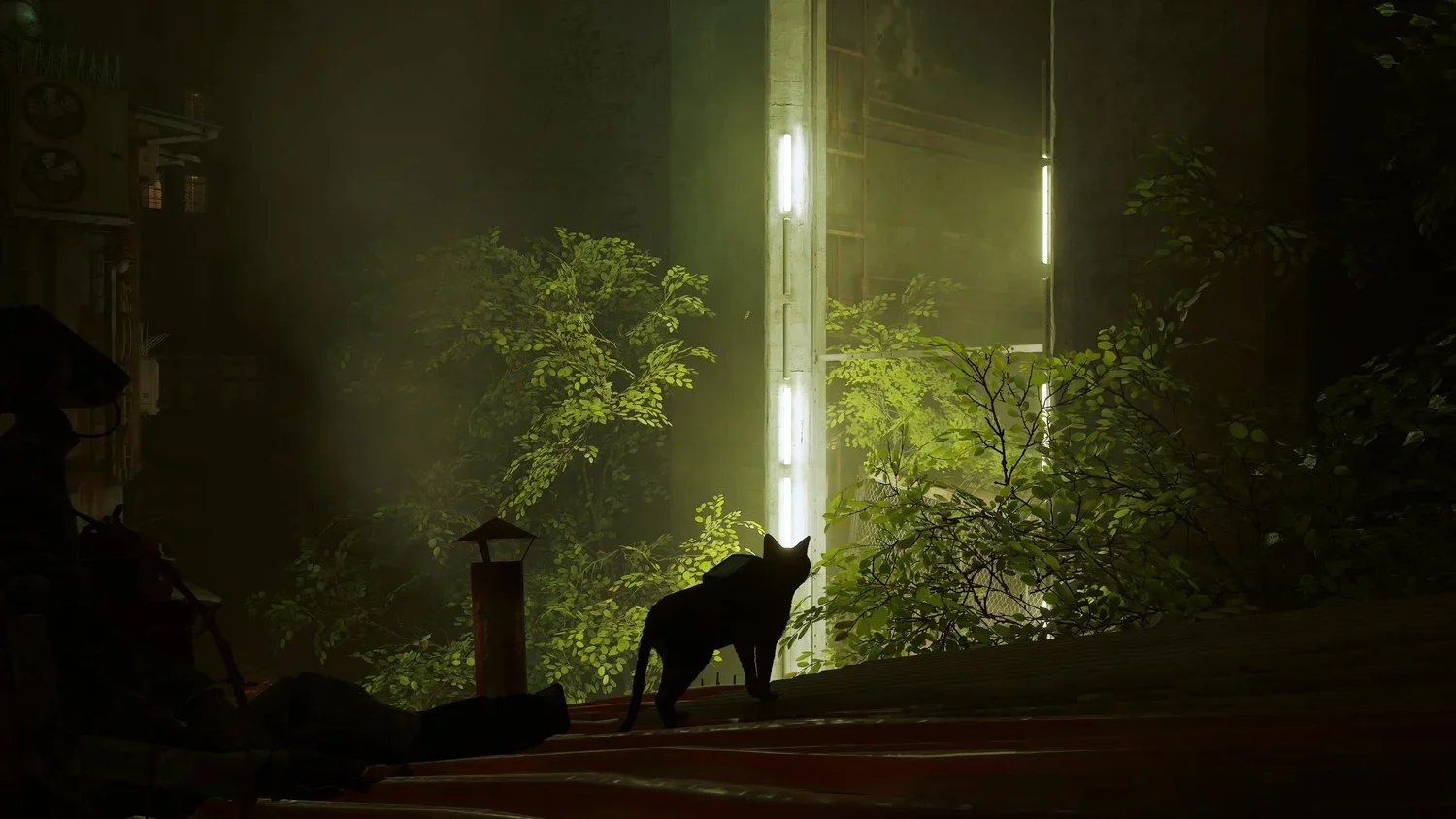
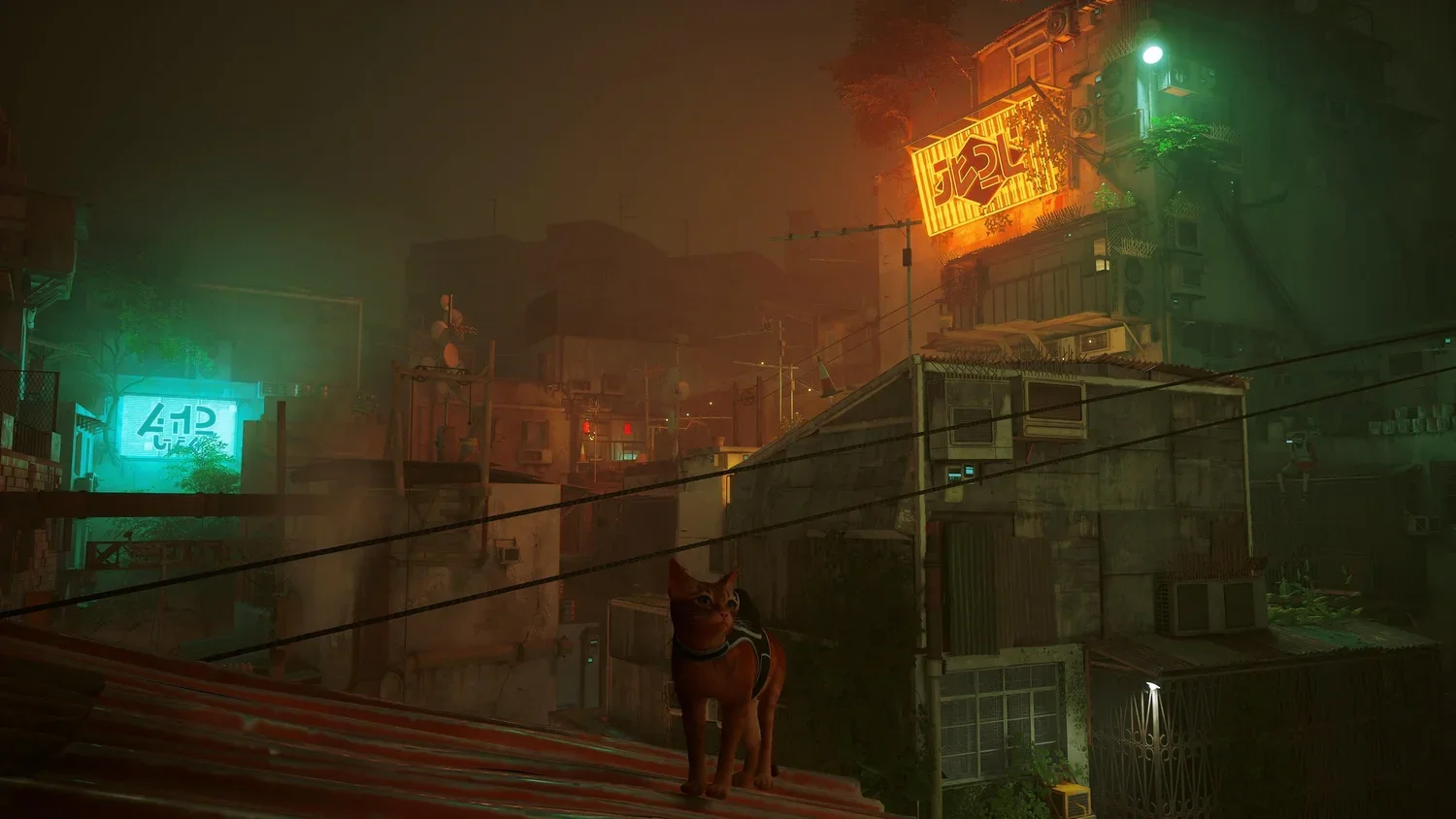
It had been a while since I had used a video game in my lessons, but while we were exploring the theme of animals in peril for a new creative writing unit, I was reminded of a recent game I had purchased, Stray. The premise—a cat surviving in a dystopian future against crazed robots and a dangerous world—felt like a perfect fit. However, as the game is rated 12+, I had to be selective about the video footage I captured to use as a stimulus.

When I showed the pupils the edited footage, their reaction was incredibly positive. The lush, vibrant green world immediately drew them in, while the dark and damp pipe system created a sense of tension and unease. The shift into the sodium orange and neon hues of the decaying lower city captured their full engagement.

The writing output was excellent, and the footage truly inspired the pupils, allowing them to be creative and show real flair in their work. Check out their work below:

The stars looked like flying fireflies,the sky twinkled and the moonlight it looked like a busy day was a head. Rain poured like a waterfall. Heavy fog had lifted. A cat shivered in the mossy,damp and ivy filled cave. Maple felt a spiky object licking her, it was her mother waking her up by grooming her, Maple’s mother told her that they were going to hunt. The stray cat asked, “Can I come mother?” the small cat shivered on the soggy cardboard. Her mother agreed.

They jumped over beautiful greenery, the cracking metal pipes,mossy brick walls were everywhere and the cracked walls had bright green ivy in the straight walls. A sharp bit of glass slashed Maple’s paw making her paw bleed.

When they got to a large rotting pipe. Her family jumped on the pipe without ease,when it was Maple’s turn… When she jumped on to the pipe cracks started to form. Then the pipe broke she held onto the pipe for dear life. But she fell down into the black abyss. When she got up she felt a pain in her leg. Then she fainted as her family meow to her.

________

A terrible storm arose from the darkness in the abandoned forest. The cold breeze felt ghostly and petrifying for Luna as she ran to find shelter. She looked out at the full shining moon with her shiny black and amber eyes- it looked so beautiful ! Luna whimpered as the leaves flew with force past the trees that were swaying. She felt very cold and had leaves and twigs on her muddy ginger fur. 

Luna was searching for shelter when she discovered a river as she was walking the sun  rose from the storm .As she was walking  she fell into a deep pit .Blood . 

She woke up to a   scary, black  and  ghostly alley. Alone  As she tried to get up she squealed with pain. When she finally got up she was limping . Luna was too weak to walk anymore she fainted.

_________

The hour was late, it was the Witching in the city. Car headlights were shining at a half-dissolved cardboard box. Inside, a  chinchilla arose, she was called Winnie and she was the baby of the family. She looked around at the twinkling stars, heard the screech of the cars and smelt sewage from the pipes below. She fell asleep once more.

In the morning, the family went to find food in the nearby farmer’s field. Farmer Elijah grew the most juicy and delicious cabbages and the chinchilla’s loved it. 

As they were hopping along the field, Winnie fell down a deep ditch and thought she’d fallen to her doom. 

When she awoke, she couldn't bare the pain which filled her whole body. Suddenly, down to her left she saw a musty, brown rat with two black front teeth sticking out.

“W-who are you?” Winnie asked, trembling with worry.

________

The dark, grey clouds were pouring rain heavily on the forsaken forest which was near the city. Thunder boomed, lighting struck but a short while later the sun came out in the middle of the evening. 

Flowers were blooming, grass was dying whilst pipes and poles were creaking. In an old, abandoned cave lived a sad little fox, the fox was named Lydia. She was laying down thinking of food but also thinking of her mum. She knew her mom Kacey would say, “Go hunting.” 

So, she stood up and started running. She started to realize that she was fast and was very good at jumping from one pipe to another across a lake. 

LINK: Stray- Videogames As Art

LINK: Japan: My Journey to the East

LINK- The Last Guardian- Video Games As Art

LINK- Shadow of the Colossus- Book Review

LINK: Manga Exhibition at the British Museum

LINK- The Midnight Library and the Idea That You Can’t Go Home Again

The Castle: Adventures in a World of Unraveling Men by Jon Ronson - Book Review

Jon Ronson has made a career out of immersing himself in strange situations and engaging with people who hold eccentric or fringe world views. He meets subjects where they are and listens to their perspective without judgment, even when he fundamentally disagrees with them. In his latest book, The Castle: Adventures in a World of Unraveling Men, the inciting incident is oddly personal: his son sends him a frantic text message about being caught in a bizarre, "fucked up" situation in rural Connecticut. 

Investigating the lead, Ronson stumbles into the world of Chris Mark—a 70-something steel magnate heir living in a custom-built castle, inspired by Hugh Hefner, attempting to curate a modern harem. Mark feels like a man completely out of time, particularly in an era defined by heightened scrutiny of male behaviour. Using this surreal encounter as a springboard, Ronson pivots into a broader investigation of the male loneliness epidemic, toxic masculinity, and the shifting social status of men in the 21st century.

The Castle is a fascinating read, and several core threads stand out like in Chapter 3 (Marktown on the Party Line), where Ronson highlights the staggering statistic that 6.7 million American men have stepped away from work and society entirely, joining the ranks of NEETs (Not in Education, Employment, or Training). Surprisingly, this retreat hasn't triggered a wave of violent crime; violent incidents in the US have actually fallen by two-thirds over the past three decades, and by 80% in England since 1995. So where is all that male energy going, and why are men withdrawing?

Ronson traces historical parallels, pointing out that British garden cities like Letchworth and Welwyn Garden City were originally conceived as social engineering projects—built to rehabilitate a population weakened by harsh factory and living conditions during industrialisation. Marktown, Illinois, copied this model and transplanted it to America with initial success, until a catastrophic 1955 explosion at the local Standard Oil refinery shattered the community. What followed was a surge in "deaths of despair"—a phenomenon exacerbated by the erosion of social institutions (churches, bowling leagues, local clubs) and a fragmented US healthcare system that offered no safety net. While European welfare states provided a cushion during post-industrial decline, many American men were left in economic and psychological limbo.

While many left-behind men sank into quiet despair, roughly 207 million people worldwide turned to social media, attempting to forge new lives as content creators. Ronson highlights the story of Greg Chisholm, a lawncare creator whose life took an unexpected turn when a goofy video of him messing around with his two young daughters down a Walmart aisle went viral. Sensing an opportunity, Chisholm shifted his channel focus towards family content.

However, as copycat creators flooded the platform with increasingly dubious videos, Chisholm found himself caught in the crossfire. YouTube's automated algorithms began lumping his wholesome family clips alongside disturbing "Elsagate" content—surreal, horror-infused children's videos featuring characters like Momo or Bloody Peppa Pig. Consequently, his channel was demonetised and removed. It encapsulates one of the fundamental flaws of platform capitalism: tech giants will happily support creators while they drive engagement, but will instantly run the other way the moment algorithmic chaos creates a whiff of controversy.

Ronson compares this online wasteland to the growing number of isolated men who retreat into parasocial relationships with AI chatbots like ChatGPT—seeking validation from love-bombing, sycophantic algorithms that assure them of their extraordinary worth. In the post #MeToo era, society called for an honest reflection on male stereotypes, but the political landscape—particularly the rise of Trumpian populism—sparked a sharp reactionary movement against being labelled a "beta male".

This conflict creates a confusing cultural paradox. Brené Brown's famous TED talk The Power of Vulnerability championed the idea that men lowering their emotional guards would heal society. Yet in practice, many men report encountering the modern "ick"—where genuine expressions of vulnerability are still coded by peers and partners as needy or unappealing. Caught between demands for emotional openness and traditional expectations of stoic strength, many men are left deeply confused.

This tension is mirrored across modern media, where advertisements, TV programmes, and films frequently feature the "doofus dad" trope—a hapless man dragged along by a hyper-competent female partner. In reaction, the "Alpha Male" and "Lone Wolf" archetypes have surged in popularity, promising a return to "anti-woke", traditional patriarchal values.

In the chapter Civil War is Coming: Many of Us Will Die, Ronson maps out the culture war dividing those who believe masculinity must evolve and those desperate to hold onto traditional hierarchies. As algorithms thrive on outrage, a lucrative ecosystem of simple-answer bloggers, vloggers, and influencers has emerged to monetise male anxiety.

Ronson also examines how the 2010s peak of cancel culture and public shaming generated a sharp reactionary wave of radical un-shaming. Today, online figures proudly display a total lack of remorse or introspection after saying or doing terrible things. Ronson reflects on his own experiences with this phenomenon, including his falling out with Graham Linehan and the wider schisms emerging within his social circle (which includes figures like Richard Dawkins). He draws further parallels with actor Armie Hammer's high-profile downfall and the historical case of John du Pont, the wealthy heir whose wrestling obsession metastasised into fatal delusion.

At its core, Ronson's analysis rests on sociological fundamentals: during periods of rapid social upheaval, suicide and self-destruction spike. Sociologist Émile Durkheim termed this condition anomie—a state of normlessness that occurred, for example, during the collapse of the USSR, when male life expectancy in Russia plummeted from 62 to 58 in a matter of years. People require structure, familiarity, community, and dignity. When those foundations are abruptly removed, individuals either retreat inward or lash out by abandoning all social inhibitions.

As Durkheim outlined in his study of society:

  • Rapid Social Change: Societies transform faster than their moral and cultural codes can adapt.

  • Industrialisation: Moving from tight-knit traditional communities to atomised urban environments weakens shared values.

  • Economic Instability: Both sudden economic crashes and rapid, unregulated booms disrupt familiar routines and unmoor human desires.

The result is social fragmentation, higher rates of "anomic suicide", and widespread despair. People untethered from meaning find themselves adrift; unable to locate a clear purpose, they surrender to the id and their baser instincts.

Overall, The Castle is a brilliant, multi-layered piece of work as Ronson avoided the lazy trap of simply dunking on the "manosphere", choosing instead to document the profound untethering of modern masculinity from its historical place in society.

LINK: The Evolving Fears of a Horror Gamer

LINK: The Power of Stories and How They Are Manipulated

LINK: The Message by Ta-Nahisi Coates - Book Review (and Some Thoughts)

LINK: The Anxious Generation: Book Review (and Some Thoughts)

LINK: Utopia for Realists- Book Review
LINK: Toxic: Women, Fame and the Noughties- Book Review (and Some Thoughts)

LINK: Pure Invention: How Japan's Pop Culture Conquered the World- Book Review (and Personal Reflections)

LINK: Japan: My Journey to the East

LINK: Blood, Sweat and Pixels- Book Review

The Commodification of Niche Interest

The modern era of the internet, particularly with the advent of social media, has fundamentally transformed how niche interests grow and accelerate. What once took years or decades to build a dedicated following can now be supercharged into a global phenomenon almost overnight. This acceleration, while creating vibrant communities and a wave of genuine enthusiasm, has also cultivated a fertile ground for market speculation and scalping—creating a complex, often frustrating dynamic for both long-time enthusiasts and newcomers alike.

I've spoken about this before with regards to retro gaming (The Transportive Nature of Objects and the Power of Mini Consoles), but there are a couple of other personal interests I'd like to look at. This isn't an exhaustive list by any means, but rather a look at a few examples close to my heart.

Take the recent resurgence in pulpy horror paperbacks. The more artistic, bizarre, or outlandish the cover art, the better. Before the internet, you had to hunt through libraries, charity shops, or dusty secondhand bookstores to discover these cult gems. However, Paperbacks from Hell by Grady Hendrix completely blew open interest in this once-quiet corner of the genre. What might have remained a niche passion enjoyed by a small, dedicated group of collectors scouring conventions has, in today's hyper-connected world, gone viral—turning an obscure subculture into a semi-mainstream trend.

A similar shift occurred with the appreciation for anime background art. Once confined to a tiny circle of collectors, appreciation for the medium exploded in popularity, driven by online communities and high-profile publications like Anime Architecture by Stefan Riekeles. The book shone a spotlight on a long-neglected art form—the hand-painted cityscapes and backdrops of classic Japanese animation—framing it as fine art in its own right. While this fostered genuine artistic appreciation, the finite supply and inherent scarcity of physical, hand-drawn production cels created a perfect storm for massive price spikes and aggressive market hype.

Moving beyond print and animation, the recent matcha craze offers a contemporary, fast-moving example of viral demand. Matcha has existed for centuries, its health benefits and distinct flavour known to a small, dedicated following for generations. Yet a single viral TikTok trend can introduce millions of new consumers to the drink in a matter of days. This sudden, massive influx of demand places an immense strain on supply chains, causing prices to skyrocket almost overnight. The wild obsession with Labubu dolls—effectively this generation's Garbage Pail Kids—further illustrates how a trend can be turbocharged in seconds by viral content, turning a designer toy into a high-stakes, scalped collectible.

This turbocharged growth is a double-edged sword. On one hand, it’s a fantastic way for people to discover new hobbies, products, and communities. The internet provides an accessible platform for sharing passions and connecting with like-minded enthusiasts. Someone who stumbles across matcha through a short video can quickly dive into online forums, blogs, and social groups to learn about its rich history, grades, and traditional preparation methods. The same goes for new collectors inspired by Paperbacks from Hell or those who began admiring Japanese background art after seeing a stunning layout online—creating authentic, lasting appreciation that outlives the initial trend.

Manga has become more mainstream - and that is a good thing!

On the other hand, this rapid acceleration creates prime conditions for scalpers. Unlike the Tickle Me Elmo or Tracy Island frenzies of the past—where seasonal hype was somewhat contained—the internet allows resellers to operate with unprecedented speed and efficiency. Automated bots buy up limited-edition stock the millisecond it drops, only for it to appear on secondary marketplaces at exorbitant markups. It’s an intensely frustrating reality for genuine fans who simply want to enjoy their hobby without battling predatory pricing. When internet-fuelled hype meets finite vintage items like anime cels or out-of-print books, those markets become especially vulnerable to extreme speculation.

Ultimately, the internet has become a powerful accelerator for niche passions, breaking down the geographic and temporal barriers that once limited their reach. It has democratised discovery, allowing anyone with a smartphone to stumble upon a new obsession. Yet this democratisation comes at a cost. The sheer speed and scale of online hype create a volatile ecosystem where genuine passion and predatory profit-seeking exist in an uneasy, constant tension. The challenge for these communities going forward is navigating this new landscape—celebrating newfound interest while finding ways to protect their hobbies from the disruptive practice of scalping.

Record of Lodoss War - Cult Manga Review

Back in the heady days of the early 90s, when anime was still widely referred to as "Japanimation" in much of the West and finding new titles meant making an expensive pilgrimage to Forbidden Planet or hunting through the back shelves of local comic shops like Rodney's Books and Games in Barking, one series stood above all others as the ultimate gateway to fantasy: Record of Lodoss War.

While this period was famous for cyberpunk dystopias and hyper-violent horror, this 1990 13-episode OVA series took a completely different path, giving us unadulterated high fantasy. I never got around to watching it at the time as it was prohibitively expensive and quite difficult to find but strangely, despite this, it always cast a long shadow. Because it was so formative to the genre, it regularly dominated the pages of the various manga and anime magazines I bought at the time. Decades later, I finally sat down to see if the reality matched the legendary reputation.

The story centres on Parn, a headstrong but incredibly green young warrior eager to clear his late father's dishonoured name. When his peaceful village is attacked by goblins, Parn sets off on a quest to defend his homeland, quickly assembling a classic, ragtag party of adventurers along the way.

What starts as a localised skirmish, however, quickly spirals into a continent-spanning crisis. The dark island kingdom of Marmo is launching a massive invasion of the civilised realms, orchestrated by shadowy conquerors and Karla—a mysterious "Grey Witch" who has been pulling the geopolitical strings of Lodoss for centuries to keep the world in a state of perpetual, balanced warfare. It ultimately falls to Parn and his newfound companions to stop the forces of darkness, solve the riddle of the witch, and prevent the resurrection of an ancient, destructive deity.

Watching the series [null]today, I found it immediately clear that Lodoss War is steeped very much in the high fantasy Tolkien tradition. You’ve got ancient dragons guarding legendary hoards, grumpy, axe-wielding dwarves, majestic but aloof elves, and enough magical doodads and cursed artifacts to fill a D&D dungeon master’s almanac. That tabletop game's DNA runs incredibly thick through its veins as it follows a classic heroic party's journey, but the show treats its lore with a level of sincerity and weight that makes the world of Lodoss feel genuinely ancient and mythological rather than just a collection of tired tropes.

What truly elevates this OVA into the tier of timeless classics, though, is its absolutely beautiful art style. This is peak 90s hand-drawn cel animation, and the visual design is nothing short of breathtaking. The production team went all-out on world-building, and it shows in the amazing attention to detail on the backgrounds. Every moss-covered stone in a forgotten ruin, every flickering torch in a sprawling castle hall, and every sweeping shot of the Accursed Island feels like a living, breathing painting. There is a texture and a lived-in warmth to these environments that modern, sterile digital animation often struggles to replicate. It doesn't just provide a backdrop for the action; the scenery actively tells the story of a war-torn continent.

Holding this vast world together is a deeply likeable crew of characters. While Parn is the naive centre, the show thrives on the chemistry of his party. You have Slayn the wise wizard, Ghim the rugged dwarf, Etoh the loyal cleric, Woodchuck the cynical thief, and, of course, Deedlit—the high elf who practically launched a thousand anime elf tropes with her iconic long ears and fierce grace. Watching this group grow from a localised defence force into a tight-knit found-family tasked with saving the world is incredibly rewarding. You become genuinely invested in their survival, which makes the stakes feel incredibly real when things go sideways—and things do go sideways in quite spectacular fashion.

The show delivers some of the most detailed fight scenes of its era, easily rivalling the kinetic energy of 1986’s Arion. The choreography is top-notch, swapping out the abstract speed-lines of lesser shows for fluid, weighty physical combat. Swords clash with a [null]satisfying metallic crunch, shields splinter, and the spellcasting feels appropriately cataclysmic. Whether it’s a small-scale skirmish against a band of goblins or a massive, multi-army clash against the forces of Marmo, the action is beautifully framed and meticulously animated. The dragon fights in particular are legendary, capturing the sheer, terrifying scale of these beasts as they tear through landscapes.

Overall, the Record of Lodoss War OVA is a masterclass in classic fantasy animation. It’s a warm, comforting blanket of a series for anyone who loves epic quests, beautiful artwork, and a proper old-skool adventure.

If you haven't revisited it since the VHS days—or if you're a newcomer like me, finally looking to see where modern fantasy anime found its footing—it is well worth your time. Grab a cup of tea, dim the lights, and let yourself get lost in Lodoss.

LINK- Fire Tripper- Cult Manga Review

LINK- Akira Soundtrack Vinyl Review

LINK- Monster City- Cult Manga Review

LINK- Japan: My Journey to the East

LINK- The Offworld Collection- Book Review

LINK- Manga Exhibition at the British Museum

LINK- The Midnight Library and the Idea That You Can’t Go Home Again

LINK- The Transportive Nature of Objects (And the Power of Mini Consoles)

The Steep Price of Admission in Gaming

My name is Anjum, I am 45 years old and I am a gamer. This sounds like the declaration of an addiction of some kind but it’s not. Sure, I really love the medium, but I simply don't have as much time to dedicate to it as I’d like. Between books, podcasts, television series and films, I have to balance my time carefully, meaning gaming takes a significant—though not dominant—share of my limited free hours.

So, why do I love video games? It’s complex. I adore storylines that are mature and embrace intricate themes, but I am equally fond of plain, stupid fun where the narrative is laughably B-movie but delivered with complete earnestness. I love the sheer diversity the medium offers, from massive AAA blockbusters to sweet little indie titles crafted by a lone developer in their bedroom. I love exploring digital worlds and stumbling across moments of quiet, contemplative beauty.

However, over recent console generations, a more uniform design ethos has crept into the AAA industry—one designed to constantly overstimulate the player from one narrative beat to the next with no room to breathe. I want the ability to explore at my own pace, not to be confronted by hundreds of icons slathered across a map (I'm looking at you, Ubisoft). It is precisely what The Legend of Zelda: Breath of the Wild executed so brilliantly, and where imitators like Immortals: Fenyx Rising stumbled.

The £70 Dilemma and the Cost of Hype

This shift in design has occurred alongside a turbulent period for the industry. Between systemic crunch, toxic workplace cultures and massive executive bonuses contrasting with cyclical layoffs, gaming’s corporate underbelly has faced a well-deserved reckoning. Yet, right in the middle of these revelations, the industry pushed through a price hike, raising baseline game prices to £70—and in some cases £80 or more for premium editions.

The arguments in favour of the price increase sound reasonable on the surface; Gamers (with a capital G) routinely demand 100-hour experiences, cutting-edge graphical innovation, and vast open worlds. Production budgets have ballooned into the hundreds of millions, team sizes have expanded exponentially, and base game prices hadn't risen substantially in real terms for over two decades. Also, proponents for this price rise also point out that the second-hand market offers no return for the original developers, making higher initial launch prices necessary to keep the studio lights on and ensure workers receive a living wage.

However, consumers have every right to be cynical. Predatory monetisation—from loot boxes to aggressive microtransactions—continues to rake in billions annually. When digital distribution did away with physical manufacturing, printing, and shipping costs, those savings were never passed on to the buyer. Even simple touches, like illustrated instruction booklets, were quietly stripped away while prices remained firm. Once publishers realised they had a captive audience willing to pay more, they simply kept testing how far they could push the envelope.

Code in a Box: GTA VI and PlayStation’s Digital Mandate

This pricing escalation has collided head-on with a rapid, alarming shift away from physical media. A key tipping point arrives with Grand Theft Auto VI. Launching at a baseline £80 price point, physical retail copies of the game carry a quiet catch: store shelves host nothing more than a "code in a box"—a plastic shell containing a digital download voucher rather than an actual disc.

This trend was cemented when Sony officially announced that physical disc production for new PlayStation games will be phased out entirely starting January 2028. Going forward, new titles will exist exclusively on digital storefronts or as boxed download codes.

This transition poses severe financial and practical issues for players. Without physical discs, the second-hand market disappears entirely and gamers will lose the ability to trade in old titles, lend games to friends or buy pre-owned copies at discounted rates. Furthermore, it hands platform holders an absolute digital monopoly. On a closed digital storefront, publishers dictate the price indefinitely, removing the healthy price competition historically driven by physical retailers clearing shelf stock. And we can all see how monopolies are NOT a god thing - just look at the water and energy industry here in England!

The Preservation Crisis: Gaming as an Archived Art Form

Beyond the economic impact, the death of physical media presents a catastrophic threat to game conservation and historical preservation. When you purchase a digital game, you do not own the piece of art; you hold a temporary licence to access it on a server. History has already shown us what happens when digital storefronts shut down or licensing agreements expire—games vanish instantly. Entire libraries of digital-only titles on legacy platforms have been rendered inaccessible overnight. If cinema or literature operated under this model, priceless cultural artefacts would routinely be erased at the whim of corporate strategy or legal contract end-dates.

Sure, physical discs are not always immune to required day-one patches but at least they provide a permanent, tangible archive. They ensure that a playable version of a work exists independently of a company's servers. Denying players physical media strips away consumer ownership and reduces videogames from a preserved art form to an ephemeral, rented utility.

The Verdict

Videogames remain one of the most exciting, emotionally resonant art forms in modern culture. However, the industry's financial model and distribution strategies are in desperate need of a reality check.

As the industry continues to navigate post-pandemic realities, remote working options, and changing consumer habits, it must address these foundational flaws. Elevating prices while simultaneously stripping away physical ownership, consumer rights, and long-term art preservation is an unsustainable trade-off. If gaming wishes to be treated with the same cultural respect as film or literature, its custodians must protect its history—and that starts with ensuring players truly own the games they buy.

LINK: The Evolving Fears of a Horror Gamer

LINK: The Power of Stories and How They Are Manipulated

LINK: The Message by Ta-Nahisi Coates - Book Review (and Some Thoughts)

LINK: The Anxious Generation: Book Review (and Some Thoughts)

LINK: Utopia for Realists- Book Review
LINK: Toxic: Women, Fame and the Noughties- Book Review (and Some Thoughts)

LINK: Pure Invention: How Japan's Pop Culture Conquered the World- Book Review (and Personal Reflections)

LINK: Japan: My Journey to the East

LINK: Blood, Sweat and Pixels- Book Review

Azumanga Daioh - Cult Manga Review

Back in the early 2000s, there was a massive paradigm shift in the world of anime and manga. While the late 90s had conditioned us to expect giant robots, existential cyberpunk dread, or high-stakes shonen battles, a quiet revolution was brewing and leading the charge with pure, unadulterated absurdity was Azumanga Daioh.

Adapted from Kiyohiko Azuma’s brilliant four-panel manga (the massive compendium of which sits proudly on my shelf), this 2002 series practically laid down the blueprint for the modern "slice of life" genre. Looking back at it now, it remains a wonderfully nostalgic, cute, and delightfully quirky masterclass in character-driven comedy. It seemed the perfect fit for the optimistic new millennium that many of us were envisioning... I wonder how that turned out?

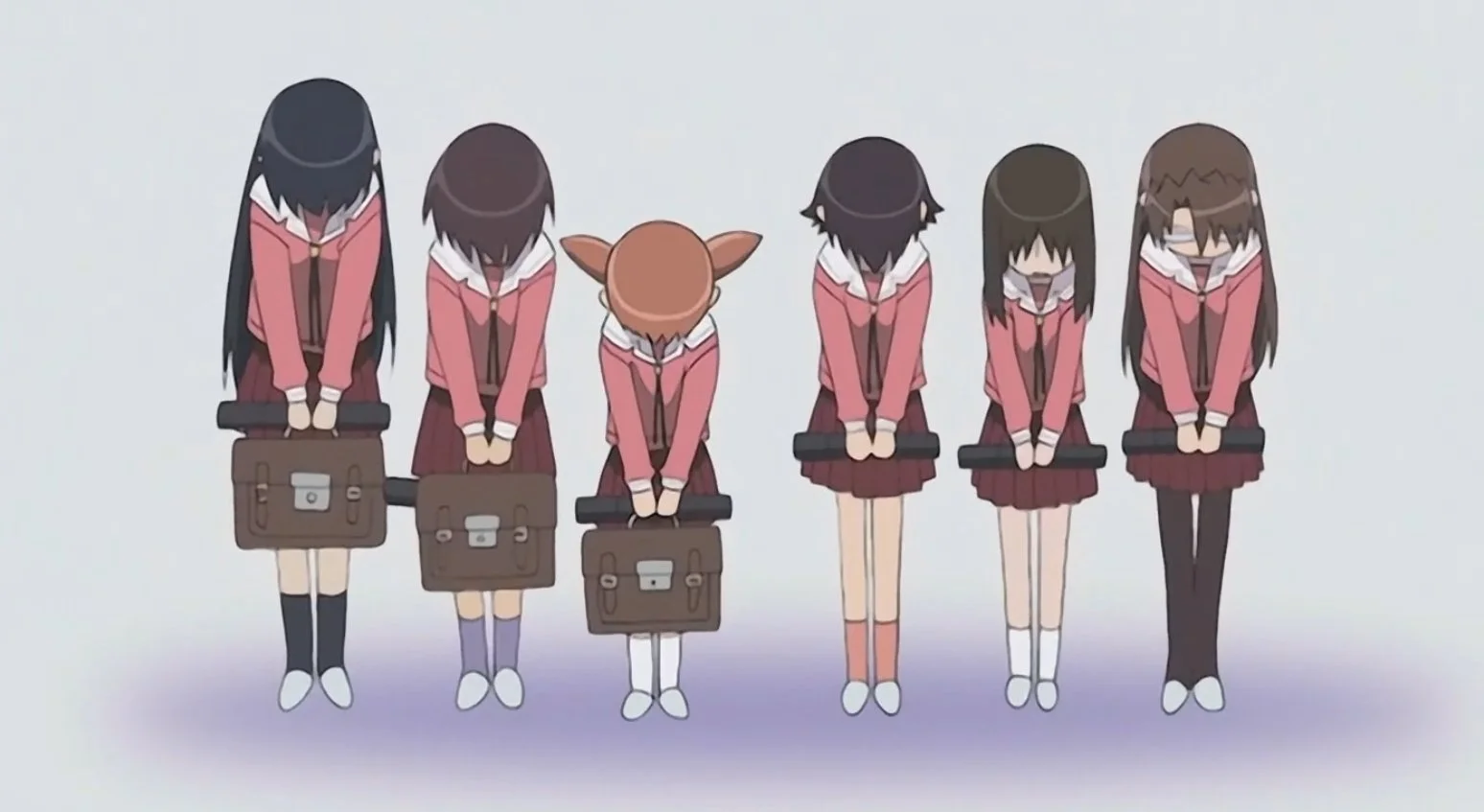
At its core, Azumanga Daioh doesn’t have a plot in the traditional sense. It simply tracks the lives of a few vastly different girls navigating their three years at an ordinary Japanese high school. The magic lies entirely in how these distinct personalities bounce off one another. You have Chiyo-chan, the ten-year-old child prodigy who enters high school early but remains adorably naive; Sakaki, the tall, athletic, and intimidating girl who secretly just wants to cuddle soft cats (who routinely bite her); Tomo, a walking weapon of chaotic energy; and Yomi, her long-suffering, diet-obsessed best friend.

As the show is structurally tethered to its short-form comic roots, the episodes are broken up into bite-sized vignettes and so this format allows the animation to indulge in a barrage of cute non-sequiturs, drifting away from reality at a moment's notice to pivot into bizarre dream sequences or random, disconnected gags. Admittedly, because the humour is so relentlessly surreal and experimental, most of these sketches hit the bullseye—just not quite all of them. A few jokes linger a second too long or dive so deeply into abstract Japanese wordplay that they might leave you scratching your head. But when the comedy lands—which is about ninety per cent of the time—it is absolutely hysterical.

While the entire ensemble is fantastic, the crown jewel of Azumanga Daioh is undoubtedly Ayumu Kasuga, universally known by her nickname, "Osaka." Transplanted from her hometown to Tokyo, she starts out with the classic, quirky country bumpkin shtick, but her regional background quickly takes a back seat to her utterly unique psychological wavelength. Osaka operates on a severe time-delay; her brain exists in a permanent, hazy state of low-battery daydreaming that provides the show with its absolute best moments.

Some of my favourite bits in the entire series stem from Osaka's bizarre internal "contemplations." Whether she is genuinely wondering if Chiyo-chan’s pigtails can be detached to serve as flight propellers, or staring blankly into space imagining the inner lives of stray animals, her logic is as flawless as it is unhinged. And then, of course, there is the legendary hiccup incident. Watching Osaka succumb to a sudden bout of the hiccups, only to instantly terrify herself with the urban legend that having one hundred hiccups in a row will literally kill you, is a masterclass in comedic escalation. Her increasingly desperate, space-cadet attempts to cure them before hitting the fatal number is peak Azumanga, perfectly balancing adorable vulnerability with laugh-out-loud weirdness.

There are other stand out vignettes - be it the Summer holiday break away to Chiyo-chan's pied de terre, the ultra competitive sports day, Osaka's confusion between escalators and elevators, Chiyo-chan's adorable penguin costume for Cultural Festival Day, the meeting place in a crowd being Sakaki as she is the tallest person - that will speak to you and the universal experience of going to school and hanging out with friends.

Rewatching Azumanga Daioh today feels like stepping into a time capsule of a gentler, weirder era of anime. It doesn't rely on high stakes, fan service, or complex lore. Instead, it invites you to sit back and enjoy the mundane, distorted through a beautifully eccentric lens. If you are looking for a comforting, laugh-out-loud slice of life that celebrates the joy of doing absolutely nothing with a group of loveable weirdos, this classic is still mandatory viewing. Pop the kettle on, embrace the non-sequiturs, and mind the cats.

LINK- Fire Tripper- Cult Manga Review

LINK- Akira Soundtrack Vinyl Review

LINK- Monster City- Cult Manga Review

LINK- Japan: My Journey to the East

LINK- The Offworld Collection- Book Review

LINK- Manga Exhibition at the British Museum

LINK- The Midnight Library and the Idea That You Can’t Go Home Again

LINK- The Transportive Nature of Objects (And the Power of Mini Consoles)

Legenda by Janina Ramirez - Book Review (and Some Thoughts)

Historian and author Janina Ramirez has gained an excellent reputation for looking at history through the lens of women, who are often left out or have their contributions entirely forgotten. I very much enjoyed Femina, and the follow-up, Legenda, promised to look through the history of iconic women who had their names and reputations modified, manipulated, used, and abused down the centuries, often for political ends. So, how was it?

Well, Ramirez starts with an anecdote about far-right agitator Jean-Marie Le Pen and his bastardisation of the actions and sayings of Joan of Arc to build a case against Islamism. However, he misquotes the Maid of Orléans to suit his agenda, and he wouldn't be the first to do so.

Ramirez states that:

"Nationalism, by nature of setting one group of people against those outside that group, feeds on nostalgia and weaponises it, harnessing it to notions of separatism, racism, elitism and misogyny."

She is critical of the history curriculum taught and the complicity embedded within the reframing of national narratives. By looking at the stories and legends of these women, we can learn more of the truth, rather than the accretions and myth-making that have occurred centuries after their passing.

Ramirez looks at seven countries or regions—including France, the Iberian Peninsula, Greece, Germany, Italy, and Britain—to pair and contrast a modern figure with one from the eighteenth or nineteenth century. She states that she is compelled to do so because:

"As a historian I do not just deal with the past but also try to understand how humanity can come together peacefully to build inclusive societies that value equality, in hope of a better future."

She starts off with a great point: many countries have female personifications designed to represent a whole, unified people in one female form—think of the Statue of Liberty, Britannia with her lions and Union Flag shield, or Germania with her sword and armour. Yet real, flesh-and-blood women are often forgotten about, overlooked entirely, or have their biographies suitably altered to cater to the nationalistic and religious needs of certain parties. Take Elizabeth of Thuringia, who is venerated in Germany, Hungary, Czechia, Slovenia, Austria, Slovakia, and Croatia; many of these nations did not even exist when she was born, so she has been thoroughly co-opted.

Along the way, we meet the following women who helped shape history:

France: Revolution and Reinvention

  • Charlotte Corday: The murderess who killed Marat, a writer and government policymaker who sent many people to the guillotine and worsened life for the general populace during the Reign of Terror after the French Revolution. She is remembered for being upper-class, highly educated (especially in classical history), and deeply religious.

  • Joan of Arc: The young maid who led French forces, very successfully at first, against the English. There was a prophecy about a warrior woman from her home region and she leant into that, claiming that holy voices were guiding her. When captured, she was burnt and her ashes scattered in the Seine to prevent martyrdom. She lives on in sainthood and is represented across the country with many statues and monuments, far away from her home village of Domrémy.

    Linked to her were other female mystics, including Hildegard of Bingen and Marie Robine, who predated Joan but had a similar modus operandi of mystical visions and voices. Julian of Norwich and Catherine of Siena also heard voices, but relayed them to religious authorities rather than keeping them secret for a period like Joan did; as a result, they received guidance and advice, whereas Joan (like Margaret of Antioch) was seen as a maverick and unpredictable in the eyes of church authorities.

    Joan was also linked to Joanna of Flanders, another warrior woman who broke a siege and gained an unexpected victory. She was admired by Christine de Pizan, who wrote a poem about her, though this was largely ignored until the French Revolution brought a revival of Joan and the celebrated power of women.

    Ramirez believes that "... the story of the poor, illiterate peasant girl who single-handedly saved a nation is a construct, not a reality."

    Joan has gone through many mutations over the centuries—initially reviled, then revered—showing a chameleon-like ability to be all things to all people without truly belonging to either extreme (be it the alt-right asking for a "return to an authentic France" or the far left calling for an uprising against the bourgeoisie, technocrats, and autocrats).

The Iberian Peninsula: Dynasty and Discovery

  • Agustina: A soldier during the Spanish War of Independence who inspired many during frontline and guerrilla battles. She served her country well, but after the war found herself in the difficult position of having to return to civilian life and adopt the traditional role expected of women.

  • Isabella of Castile: Her reputation has grown through the centuries as Queen during the Spanish Golden Age and the Age of Discovery. However, her history is far murkier and warrants careful study, as she was a powerful woman from an era that demanded an acute awareness of court intrigue and shrewd politicking.

    Her reign saw the completion of the Reconquista (the seven-century-long period of driving Muslims out of Spain), the persecution of Jews, and the rise of the Spanish Inquisition. An incredibly pious monarch, she ensured her Catholic faith came to the fore under her rule. Alongside this, she consolidated economic, legal, military, and political influence around herself and her husband—creating a new national identity that later rulers like Franco would exploit for their own gain.

    Ramirez ends this chapter by noting that history often erases the multi-ethnic, culturally, and religiously diverse nature of the Iberian Peninsula, presenting Spain historically as a monocultural entity instead. Make no mistake, however: Isabella was an authoritarian who wielded incredible influence and power, leading to the enslavement and genocide of indigenous peoples across the Americas.

Greece: Autonomous and Atypical

  • Laskarina Bouboulina: Also known as the 'Greek Joan of Arc', Bouboulina was a fierce warrior widow who fought for Greek independence from Ottoman rule. Philhellenism (the love of ancient Greek culture) and the return of ‘Romaiko’—the rebirth of the imperial political glory of the Byzantine Empire—were alive and well in the 18th century, with many across Europe seeking to excise the Ottomans from the continent.

  • Anna Komnene: An 11th-century historian who wrote The Alexiad. Her monumental work documented the reign of her father, Byzantine Emperor Alexios I Komnenos, and the First Crusade. However, her contributions to the field were often credited to her husband, as it was believed a woman was incapable of authoring such a text. Coming from royal blood gave her the privilege and freedom to research and write. She was a Byzantine woman who followed in the footsteps of powerful empresses like Irene of Athens (co-regent, regent, and sole empress from 780 to 802), Euphrosyne (empress from 823 to 829), and Theodora (empress regent and monarch in her own right from 830 to 856), challenging rigid societal norms where the roles of men and women were strictly defined.

The Low Countries: Exceptional and Extreme

  • Julie Billiart, Françoise Blin de Bourdon, and Catherine Duchatel: The first three Sisters of Notre Dame de Namur, who maintained a secret Catholic school even under threat of death after the French Revolution in the early 19th century. This group also guarded centuries-old treasures and relics of their faith, which survive to this day.

  • Marie of Oignies: A 14th-century ascetic who gave up her middle-class family's wealth to serve lepers and the poor, striving to live as humbly as Christ. She experienced visions and engaged in self-harm to suffer as Christ suffered (imitatio Christi).

  • Hildegard of Bingen: An Abbess and legendary polymath who promoted a healthy body to foster a healthy soul—a century prior to the mortification and 'anorexia Christi' movement that swept across Europe and glorified suffering for Christ.

  • Christina the Astonishing: In the 12th century, Christina was declared dead, but during her funeral, she came back to life. She would throw herself onto fires and emerge apparently unscathed, hang herself from gallows and survive, and so forth. She was a true force of nature, but her extreme behaviour led to most religious organisations ignoring her.

  • Elizabeth of Spalbeek: She suffered stigmata on Fridays and performed exhausting, painful displays of Christ's suffering.

  • Lutgardis of Aywières: Another ascetic who went to extreme lengths to feel close to Christ.

These women inspired the Beguines movement, where communes of women joined together to help the poor and needy while imitating Christ's life. They also gained financial and social independence during a period (the 13th to 16th centuries) marked by a shortage of men and dowries due to constant Crusades and wars. The Beguines offered them a better life and a deeper spirituality. Key figures in this movement included Mechthild of Magdeburg and Marguerite Porete.

Germany: Bonds and Bloodlines

  • Lola Montez: A woman who became the courtesan of King Ludwig I of Bavaria and championed many liberal causes—including the plight of schoolteachers, wage increases, and investment in education—alongside a strong anti-Jesuit sentiment. She was an agent provocateur whom the Catholics and Jesuits deeply disliked.

  • Empress Adelaide: This 10th-century widow was promised the throne upon the death of her husband, the King of Italy. Imprisoned in a castle, she escaped and remarried, becoming the Holy Roman Empress and ruler of the Ottonian Empire in Germany. She ruled alongside King Otto and, through their children's alliances and marriages, became highly influential and respected. From Burgundian princess to Italian queen, German co-ruler to Holy Roman Empress and, finally, regent of an empire, Adelaide was extremely capable and powerful.

Italy: Piety and Papal Power

  • Anna ‘Nina’ Morisi: In the 19th century she worked as a maid, but when a Jewish child in her care became ill, she illicitly baptised him for fear of his soul entering limbo. The child recovered but was forcibly removed from his family, as Catholics could not live with non-Catholics at the time. This sparked international outrage over a child taken from his family through no fault of his own. The Pope was seen as the spiritual and secular ruler, but this overreach united disparate factions calling for a unified Italian state.

  • Catherine of Siena: The Patron Saint of Rome since the 19th century, Catherine was a great self-promoter in high demand from various church factions due to her numerous visions. She declared that she was married to Jesus and that he gave her a ring made of his foreskin (don't ask!). She also claimed to have the stigmata, though only she could see the marks.

    I must say, out of all the women I've read about, Catherine of Siena seems to be the one who huffs her own guffs, and pretty hard at that. She was an avid self-promoter of the 'trust me bro' celebrity variety, and I find it rather vulgar. To each their own, but it leaves a bad taste in my mouth. True, she sought to weed out corruption and accretions that she felt had corrupted the true Catholic faith, but she placed herself firmly at the centre of it all.

  • Bridget of Sweden: Catherine of Siena's senior by 40 years, Bridget played a similar role and held significant influence over Pope Urban V, eventually being sainted by his successor, Pope Gregory.

Britain: Traditional and Transnational

  • Lady Godiva: The story of Godiva riding naked through Coventry on a dare to convince her husband to lower the tax burden is a hoary one. In truth, the eleventh-century Godiva was a formidable Anglo-Saxon ruler who held vast swathes of land before the Norman Conquest caused untold damage and altered England forever. Her historical reality was quickly erased to serve the myth of a passive, submissive noblewoman.

  • Rani of Jhansi: Like Godiva, the Rani saw her territory ruthlessly annexed by an external power—in her case, the British East India Company under the Doctrine of Lapse. Rather than submit, she led her troops from the front lines during the 1857 Indian Rebellion, becoming an enduring symbol of anti-colonial resistance even as British historians attempted to paint her as a bloodthirsty villain.

The Verdict

Ramirez leaves us with an urgent warning and a powerful call to action: legends are fluid, but the complex, real human beings beneath the myths are far more illuminating than any edited propaganda. In an era where history is routinely weaponised by politicians and extremists—and truth itself is threatened by digital manipulation—reclaiming these forgotten stories is essential.

Nation-building does not belong to the powerful few; it belongs to all of us. By seeking out cross-cultural truths and uncovering women’s hidden pasts, we protect historical reality from manipulation and reclaim a far more inclusive future.

LINK- Toxic: Women, Fame and the Noughties- Book Review (and Some Thoughts)

LINK- Pure Invention: How Japan's Pop Culture Conquered the World- Book Review (and Personal Reflections)

LINK- The Rise of Retro Gaming During Covid

LINK- Japan: My Journey to the East

LINK- Blood, Sweat and Pixels- Book Review

LINK- Utopia for Realists- Book Review
LINK- On And On And Colston ( Or, How We Kinda Sort of Learned to Talk About the Legacy of Colonialism and the British Empire)

LINK- ‘Natives: Race and Class in the Ruins of Empire’ LINK: Elden Ring- Videogames As Art

And Finally... Thunder Force V!

Ever since playing Thunder Force III and IV on the Sega Mega Drive back in the early to mid-’90s, I've been looking for Thunder Force V. I even mentioned in an article way back on this very blog in 2016 (London Gaming Market Hits the Spot) that this game was my white whale.

Well, I never did find it in the wild, as it was never released in Europe at all. However, after all this time, I finally got a chance to play it—sort of. This was on my cousin's PSP mind you (through various mods and suchlike) but I'm glad to have finally played it. So, how is it? Well, it's different, that's for sure. The PS1 polygonal graphics have stood the test of time well enough—at least for those of us who remember them from back in the day, though they're certainly an acquired taste for modern audiences—but the music is as banging as ever.

I'm slowly working my way through it now, but it’s proper challenging—let's just say my reaction times aren't quite what they used to be! It took me a good while to get back into the shmup groove, but once I started to memorise enemy patterns and push my reflexes as far as they’d go, the game sang. I haven’t completed the game yet but so far it doesn’t seem as good as III or IV in my opinion, mostly due to the enemies and backgrounds clashing a lot—especially with enemies flying from the background into the foreground—but there is a real thrill in playing something so delightfully old-school that isn’t a bullet-hell (a sub-genre I do love, but not in quite the same way).

Having recently finished Astro Bot, I know that its final stage featured a homage to the TF5 soundtrack. I've not got there yet, but I'm up for the challenge. I'm sure hearing it in context within the actual game will be a total blast, and once I've finished the game, I'll share my full thoughts.

LINK- Pure Invention: How Japan's Pop Culture Conquered the World- Book Review (and Personal Reflections)

LINK- Looking Back at the Switch

LINK- The Rise of Retro Gaming During Covid

LINK- Japan: My Journey to the East

LINK- Blood, Sweat and Pixels- Book Review

LINK- Utopia for Realists- Book Review
LINK- On And On And Colston ( Or, How We Kinda Sort of Learned to Talk About the Legacy of Colonialism and the British Empire)

LINK- ‘Natives: Race and Class in the Ruins of Empire’

LINK- Elden Ring- Videogames As Art

Go With the Flow: Shmups as Digital Transcendence

To the uninitiated, the screen of a shoot 'em up looks like chaos—a kaleidoscope of neon death where survival seems mathematically impossible. But to those of us who grew up gripping a joystick or gamepad, this is not chaos; it is a precise, rhythmic ceremony of survival.

This genre holds a unique power to bridge Mihaly Csikszentmihalyi’s psychological concept of Flow with the Japanese philosophy of Kando—that deep, emotional resonance of shared spirit. However, for me, the path to this feeling has shifted over the decades, evolving from the strategic memorization of the classics to the trance-like Zen of modern bullet hell.

My love affair with this genre is rooted in memory and mastery. In the classic era, Flow wasn't just about reaction time; it was about learning. These games have always held a special place in my heart because once the enemy patterns were memorized, you could execute a perfect run, looking like a total badass as you dismantled the machine on a single 20p credit.

My defining moment occurred at Heathrow airport. I have a vivid memory of standing before an R-Type cabinet, reaching Level 3—the Giant Battleship stage. Unlike other games where the boss was a sprite at the end of the level, here the warship was the level. I bought the game on the Amstrad CPC 464 and felt like a total legend as my tiny fighter took down a Bydo warship that was bigger than the screen. It was a feeling of empowerment that followed me as I bought R-Type again on the Master System and eventually progressed to the Megadrive and the Thunder Force series. In these classics, the Kando—the euphoria—came from the tangible sense of conquering a massive, mechanical obstacle through sheer grit.

As the years passed, the genre evolved into Bullet Hell, or Danmaku. Games like DoDonPachi and Ikaruga didn't just add more bullets; they changed the psychology of play.

I respect these innovators. Ikaruga, with its polarity-switching mechanics, creates a genuine state of Zen. However, I have felt a growing disconnect. While I enjoy the Zen state of exports like Deathsmiles or Akai Katana, they can feel stagnant compared to the originators. They lack the momentous weight of that R-Type battleship. Generally, bullet hell games have a different feel and mechanics; they prioritize a hypnotic dodge over the heavy, tactical destruction of the past.

Despite these differences, when either sub-genre is played at the highest level, they achieve the same result: a higher state of consciousness. This sensation is perfectly mirrored in the anime Macross Plus. There is a scene where the pilot Isamu Dyson flies the prototype YF-19 fighter through a never-ending sky, bewitched by the virtual idol Sharon Apple. As her music swells and the atmosphere turns into a psychedelic tunnel of light, Isamu is no longer just piloting; he is transcending. He pushes the machine past its limits while in a trance-like state of bliss. Simon Critchley would consider this a mysticism of sorts, as the spirit or soul transcends the body to be free from pain or anguish.

This is the ultimate promise of the shmup, whether it is R-Type, DoDonPachi, or Ikaruga it is the Isamu Dyson effect. The screen becomes a blur of color, the self vanishes, and the player reaches a zenith where fear of failure is replaced by the pure, euphoric joy of flight.

Ultimately, we chase the same ghost. We are looking for that specific Kando where the world melts away. Whether it is the memorized destruction of a giant warship or the hypnotic weaving through a curtain of lasers, we seek the moment where we stop thinking and start being—flying through our own digital, never-ending sky.

LINK- Pure Invention: How Japan's Pop Culture Conquered the World- Book Review (and Personal Reflections)

LINK- The Rise of Retro Gaming During Covid

LINK: Japan: My Journey to the East

LINK- Blood, Sweat and Pixels- Book Review

LINK- Utopia for Realists- Book Review
LINK- On And On And Colston ( Or, How We Kinda Sort of Learned to Talk About the Legacy of Colonialism and the British Empire)

LINK- ‘Natives: Race and Class in the Ruins of Empire’

LINK: Elden Ring- Videogames As Art

An Appreciaton for the Swords and Sworcery Soundtrack

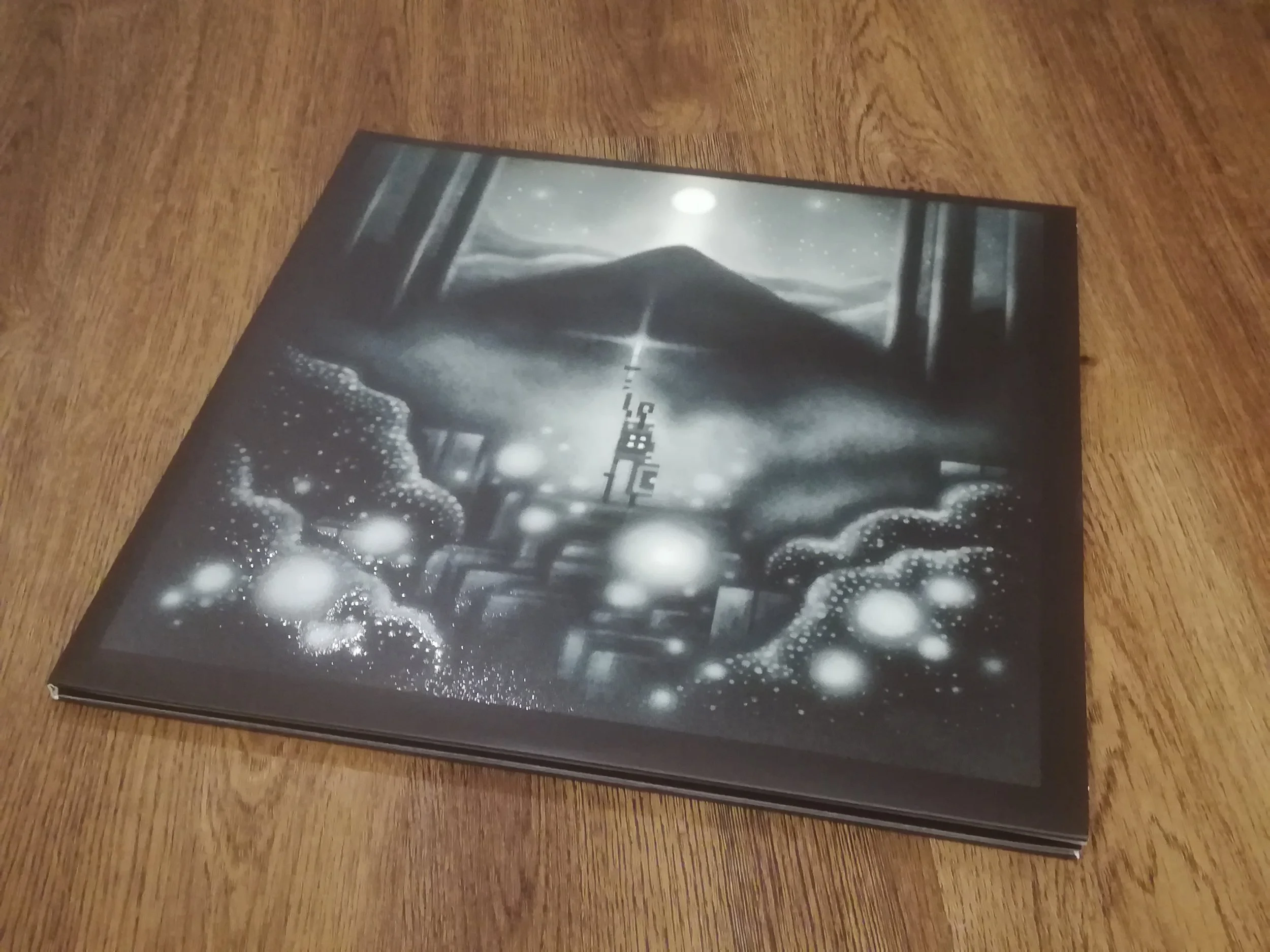
It has been nearly 15 years since the release of Superbrothers: Sword and Sworcery EP, a project that fundamentally altered my perception of what the medium could achieve. At its core, the game functioned less like a traditional videogame title and more like an interactive concept album, where the boundary between play and melody merge into a singularity. By weaving together the striking pixel art stylings of Craig D. Adams, the gameplay elements of Zelda, Punch Out, and classic point-and-click adventure games, and the music of Jim Guthrie, the developers created a synergy between art, music and mechanics that still remains influential in the industry today.

Guthrie’s soundtrack is the heartbeat of this experience, a genuine masterpiece that effortlessly blends genres to create an atmosphere perfectly suited to its mysterious world. For many, including myself, this was a deeply formative gaming experience that showed the possibilities of the iPad. The impact was so profound that the aesthetic language of the game, with its specific use of color and geometry, heavily influenced the art style of this very website. There is a singular quality to Guthrie’s work here that I have not encountered elsewhere in the videogame music space, even after all this time.

The music itself is wonderfully eccentric, characterized by a unique production process that combined live ukuleles with the lo-fi digital textures of the MTV Music Generator on the original PlayStation. By integrating old recordings and fragments from his personal portfolio, Guthrie crafted a soundscape that feels both intimate and expansive. The record moves fluidly between gentle ukulele noodlings and all-out prog-rock epics, capturing the ethereal, often melancholic mood of the pixelated landscape while standing firmly as a complete and cohesive musical work.

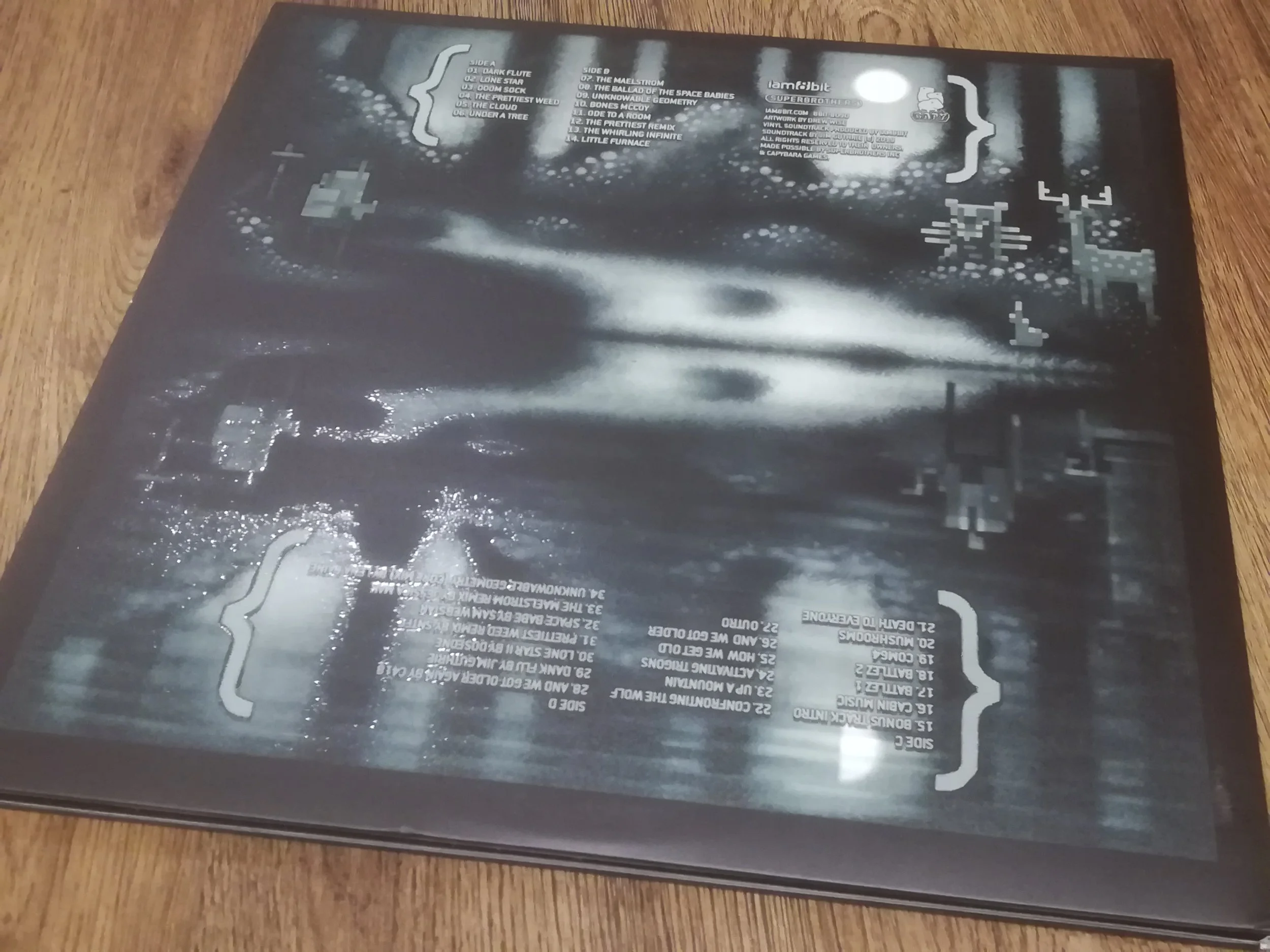
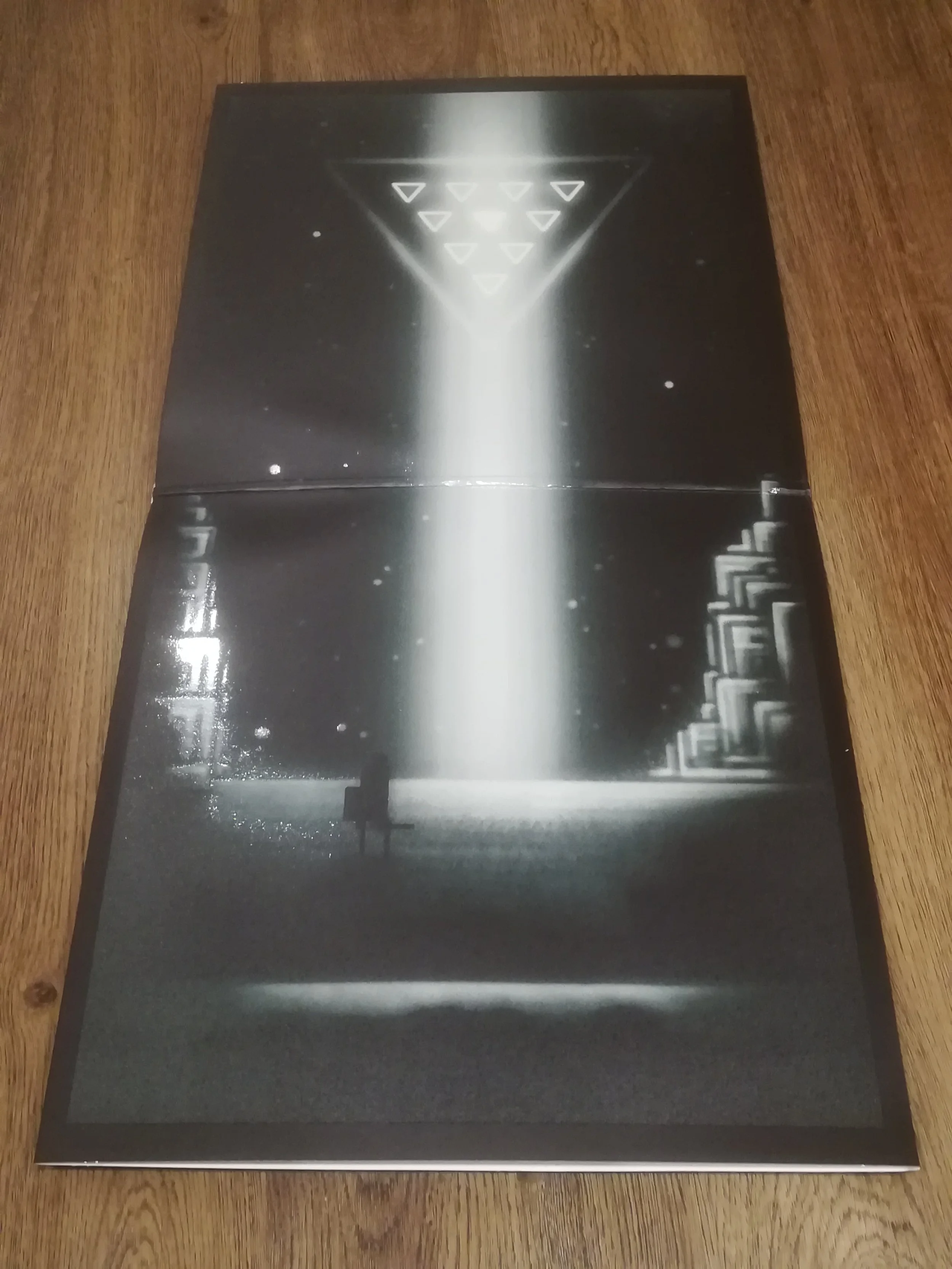
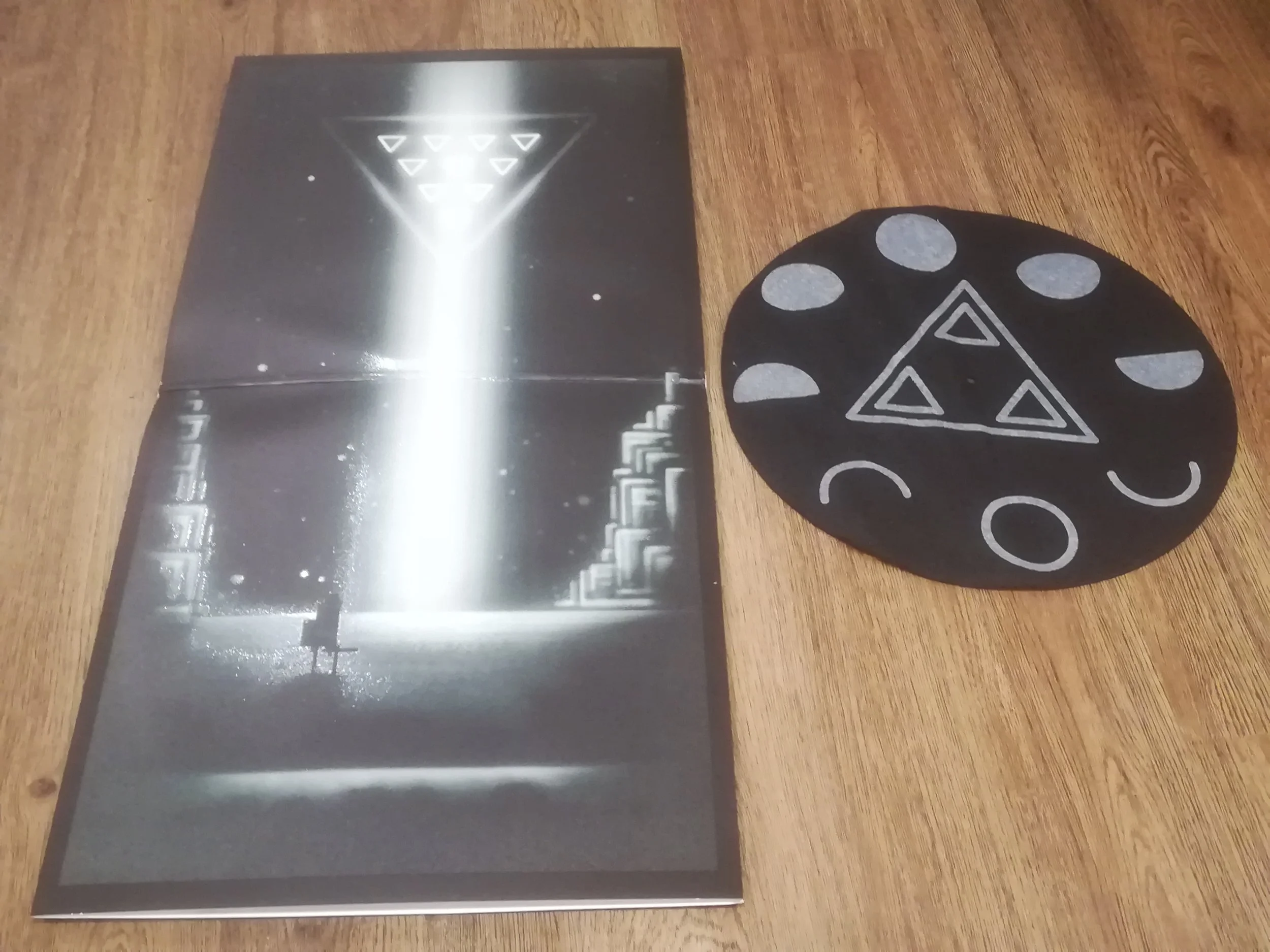
When the special deluxe edition of the soundtrack was released on vinyl a few years ago, it felt like a no-brainer. The weight and quality of the release provided a sense of permanence to a soundtrack that I have listened to continually online since its debut. Dark Flute, Doom Sock, Ballad of the Space Babies and Unknowable Geometry are all on regular rotation on my playlist, especially when I am writing artices for this blog.

Even after all this time, the Sword and Sworcery LP soundtrack remains a benchmark for creativity and atmosphere. It serves as a reminder of a specific moment in indie gaming history when everything aligned to create something truly transcendent. Whether you are revisiting the woods of the Caucasus or experiencing Guthrie’s compositions for the first time, the Sword and Sworcery LP soundtrack is a work that continues to resonate with the same intensity it did a decade ago.

LINK- Pure Invention: How Japan's Pop Culture Conquered the World- Book Review (and Personal Reflections)

LINK- The Rise of Retro Gaming During Covid

LINK: Japan: My Journey to the East

LINK- Blood, Sweat and Pixels- Book Review

LINK- Utopia for Realists- Book Review
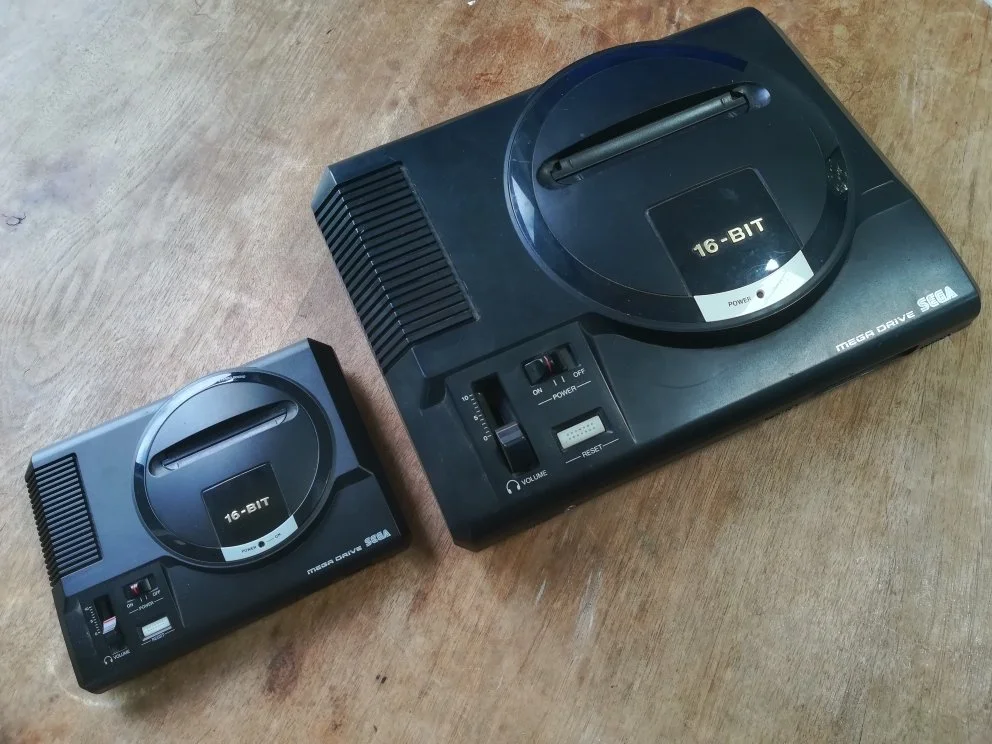
LINK- On And On And Colston ( Or, How We Kinda Sort of Learned to Talk About the Legacy of Colonialism and the British Empire)

LINK- ‘Natives: Race and Class in the Ruins of Empire’ LINK: Elden Ring- Videogames As Art

The Digital Miracle: Videogames Are Magic

As an elder statesman of gaming (I’m in my mid-40s), I believe that videogames are magic; they are a modern form of alchemy that combines narrative, art, music and agency into a singular experience that no other medium can replicate. Composer (and problematic Right Wing favourite) Richard Wagner called his works Gesamtkunstwerk as he thought of his operas in this way. For me, however, there is a profound power in the interactivity of videogames that I simply cannot find anywhere else. While a book describes a world to me and a movie shows me a world, a videogame asks me to exist within it.

The capacity to transform into someone else, and walk in their shoes, is perhaps the medium’s greatest miracle. I often feel trapped in the singular perspective of my own life, bound by my specific geography, history and body. Videogames break these chains and allow me to inhabit the skin of a grieving father, a wandering samurai, a mythical creature or a soldier in a forgotten war. This is not just passive observation but active participation- when the character struggles, my hands sweat, when they triumph, my heart races. This creates a bridge of empathy that connects me to experiences I would never otherwise understand, curing the empathy fatigue of the real world by recharging my ability to feel for others through a safe, structured environment.

Videogames also give me the ability to forget the state of the world - at least for a while. This is scientifically backed with the concept of the Flow; when a game engages me, and the challenge perfectly matches my skill, my brain enters a state of cognitive absorption. The noise of reality fades. The physical pain, the heartbreak, or the grief that occasionally hums in the background is temporarily silenced because my brain is fully focussed on the task at hand - it is a balm, smoothing over the jagged edges of my anxiety.

They do not let me escape forever and nor should they but the majesty of videogames lies in their ability to serve as a way station. When the weight of the world threatens to overwhelm me, a game offers a place to set that burden down for an hour or so. It is a momentary suspension of gravity, a pause button for my soul. I return to the real world not just distracted, but restored. I bring back a piece of that digital bravery, that puzzle-solving resilience, and that quiet peace.

The Japanese concept of "Kando" is all about experiencing emotions and feelings of euphoria and some games have taken me there to a higher plane, usually it's been Cave bullet hell games or synaesthesia-themed games like Tetris Effect or Rez Infinite.

Life often feels chaotic, unfair, and devoid of clear rules. Existential dread creeps in when I feel I have no control over my destiny and, for those who have the Black Dog of depression over their shoulder, videogames offer a miraculous counter-balance: Order.

In a game, problems have solutions. If I try hard enough, learn the patterns, and apply my skills, I will overcome the obstacle. This loop of effort and reward provides a sense of agency that the real world often denies me. It reminds my subconscious mind that I am capable, that I can affect change, and that I can survive.

To play is not merely to waste time; it is to engage with a miracle of human creativity that offers solace to the wounded. It is a magic spell cast in code, offering me a chance to be more than I am, so I can face who I must be. With that said, I'm off to explore the platforming challenge of Bubble Bobble.

The Spirit of Wonder - Cult Manga Review

Having known of The Spirit of Wonder: Miss China's Ring only through vague advertisements in publications like Manga Mania and Anime FX, finally diving into the 1992 OVA felt like uncovering a beautifully preserved artifact.

The film is immediately captivating, presenting a cozy blend of intricate retro-futurism and intimate, small-town human warmth. The setting of a quiet seaside environment, where advanced scientific endeavor operates directly alongside the mundane daily life of a local ramen shop, suits this duality perfectly. This unexpected juxtaposition is the very heart of the narrative as this eccentric world is anchored by its three principal characters.

Miss China runs a successful local restaurant, but her tenants, the senior scientist and inventor Mr. Breckenridge, who works in a rented room upstairs, and his protege Jim, have a grand plan to create an aerospace vehicle. The tragedy and comedy of the piece emerge because their brilliant ideas and ambitious dreams are consistently outpaced by their budget and practical capacity. It is precisely against this backdrop of impractical genius that Miss China becomes the vital emotional and logistical anchor. Her efficient, grounded sensibility contrasts sharply with the airy, optimistic dreams of the inventor, frequently making her the one to manage their debts or provide common-sense solutions. While the explicit plot concerns a mysterious ring that may hold the key to the success of the latest rocket launch, this ultimately functions as a vehicle for character study and atmospheric exploration.

The OVA’s true strength lies in its execution. The animation, characterized by soft colors, detailed machinery designs, and unhurried pacing, prioritized immersion over high-speed action. This approach allows the viewer to truly appreciate the sense of quiet, optimistic pursuit inherent in the scientist's vision. Director Mitsuru Hongo created a sweet, optimistic and intricate film about the power of dreams and community.

Overall, Miss China's Ring stands as an excellent example of high-quality, pre-digital OVA production, offering a sophisticated, character-driven narrative rather than a spectacle, and is highly recommended for viewers who appreciate thoughtful science fiction grounded in intimate, human settings.

LINK- Pure Invention: How Japan's Pop Culture Conquered the World- Book Review (and Personal Reflections)

LINK- The Rise of Retro Gaming During Covid

LINK- Japan: My Journey to the East

LINK- Blood, Sweat and Pixels- Book Review

LINK- Utopia for Realists- Book Review

LINK- On And On And Colston ( Or, How We Kinda Sort of Learned to Talk About the Legacy of Colonialism and the British Empire)

LINK- ‘Natives: Race and Class in the Ruins of Empire’ LINK: Elden Ring- Videogames As Art

Retro Revival X - A Shop Full of Nostalgia

Regular readers of this website will know how often I find myself contemplating the profound, almost magnetic power of nostalgia. In previous articles, I’ve explored how the collective trauma and isolation of the COVID-19 pandemic triggered a massive cultural shift. Faced with an uncertain present, millions of us sought solace, comfort, and a sense of safety in the familiar landscapes of our childhoods. We didn’t just want to remember the past; we wanted to touch it.

This collective yearning has had a massive impact on the vintage market. Over the last few years, old things have risen dramatically in price. I’ve noticed this firsthand during my own late-night scrolls through eBay and various auction sites, hunting down vintage anime cels and original production backgrounds. But it’s not just animation art; the boom has swallowed up old gaming systems, classic cartoon toys, and memorabilia from long-forgotten but fondly remembered children's television series. What used to be considered loft-clearing junk is now highly prized treasure. Which brings me to a serendipitous discovery I made recently in Devon…

The signage is pure 90s nostalgia.

I was walking around Torquay, having just dropped my daughter off at a softplay centre for a birthday party, when I accidentally stumbled upon a shop that felt like a localized tear in the fabric of time. Unfortunately, it was a Sunday, and the shutters were firmly down. But peering through the glass, I knew I had to plan a return trip.

The perfect opportunity arose a couple of weeks later. My wife was booked in for a lengthy hair-colouring session, my eldest was away at a sleepover, and with my youngest daughter happily acting as my wingwoman, we headed back into Torquay.

I went with a very specific mission in mind. I was there to right a nearly 40-year-old wrong and settle a sad tale of childhood woe. When my wife was a young girl, she was an absolute fanatic for the Care Bears. For her birthday, she had desperately wanted one of the iconic, cuddly bears. Alas, her well-meaning parents—who were not exactly au fait with the nuances of Care-a-Lot—instead bought her a toy model of the Cloud Sweeper, complete with the Cloudkeeper, that beardy old dude with a broom. Needless to say, it was not the same thing. I was determined to find an old-school Care Bear and finally grant her childhood wish.

Our destination was Retro Revival X, and you truly cannot miss it. The storefront signage is gloriously coded in the style of the late 80s and early 90s, featuring a classic geometric grid background slashed with great, sweeping graffiti strokes of neon lime green and electric blue. It’s an absolute statement of intent, screaming its retro credentials before you even cross the threshold.

The front window display is a masterclass in pop-culture dopamine, packed with classic IPs like Micro Machines, Snoopy and Sesame Street. Stepping inside, I was incredibly impressed by how well laid out it all was. Rather than the chaotic, dusty clutter of a standard junk shop, Retro Revival X is clean and organized, utilizing a smart central island surrounded by neatly arranged shelves and glass display cabinets lining the perimeter.

To the left lies an absolute paradise for retro gamers. The shelves are stacked with legendary consoles: the NES, Sega Master System, Mega Drive, and the Nintendo 64. Sitting right alongside the hardware is a fantastic selection of software, stretching from classic cartridges to big-box PC CD-ROMs and even old-school floppy disks.

As we meandered toward the checkout desk, the hits of pure nostalgia just kept coming. I spotted the legendary VHS-based board game Atmosfear, a pristine Home Alone 2 Talkboy (and its counterpart, the Talkgirl), and even a ZX Spectrum computer. The toy selection is a veritable roll-call of Saturday morning television royalty: ThunderCats, He-Man and the Masters of the Universe, Teenage Mutant Ninja Turtles, Rainbow Brite, My Little Pony, Transformers, and classic wrestling figures from the WWE (or the WWF, as it will always be known in my heart). To round out the collection, there are packs of Pokémon cards, graphic novels, vintage annuals, and books catering to just about every niche taste.

But did I succeed in my quest? Absolutely. Tucked away on the shelves, I found a brilliant 2014 re-release of the classic, old-style Care Bear. It was exactly what I had been looking for.

As I bought it, I ended up having a wonderful chat with the shop's French owner. His passion for retro culture was completely infectious, and it was hilarious listening to his slightly askew, uniquely continental interpretations of the British and American shows we grew up with.

I left Retro Revival X with a smile on my face, a Care Bear under my arm, and the immense satisfaction of knowing there is a place in Torquay where your inner child can be thoroughly satiated—and at a really reasonable price, too. Whether you are looking to fix a childhood toy tragedy or just want to relive the glory days of 16-bit gaming, I highly recommend paying them a visit.

LINK- Pure Invention: How Japan's Pop Culture Conquered the World- Book Review (and Personal Reflections)

LINK- The Rise of Retro Gaming During Covid

LINK: Japan: My Journey to the East

LINK- Blood, Sweat and Pixels- Book Review
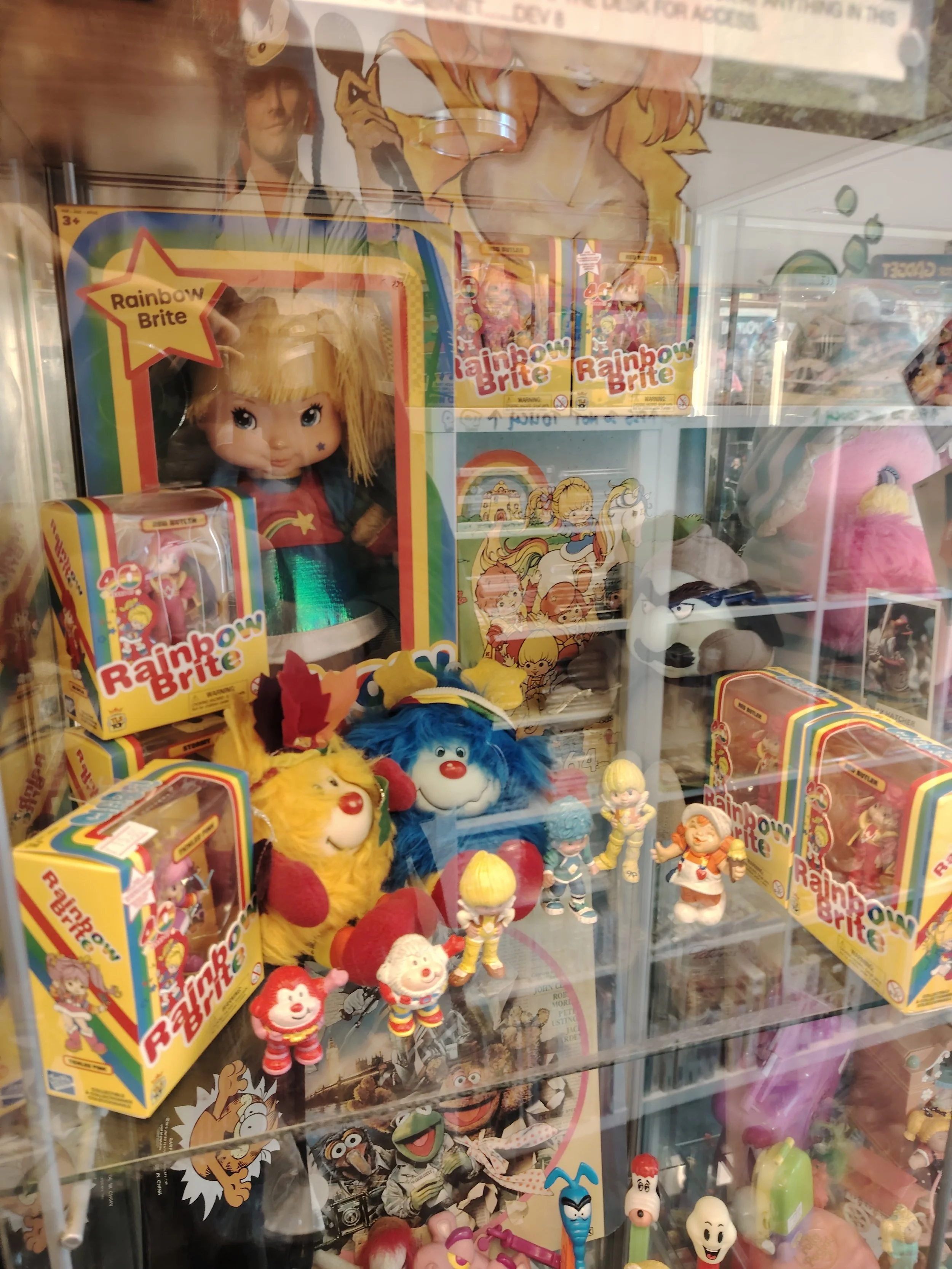
LINK- The Argument for Videogames As Art in the Age of Mechanical Reproduction

LINK- Akira Soundtrack Vinyl Review
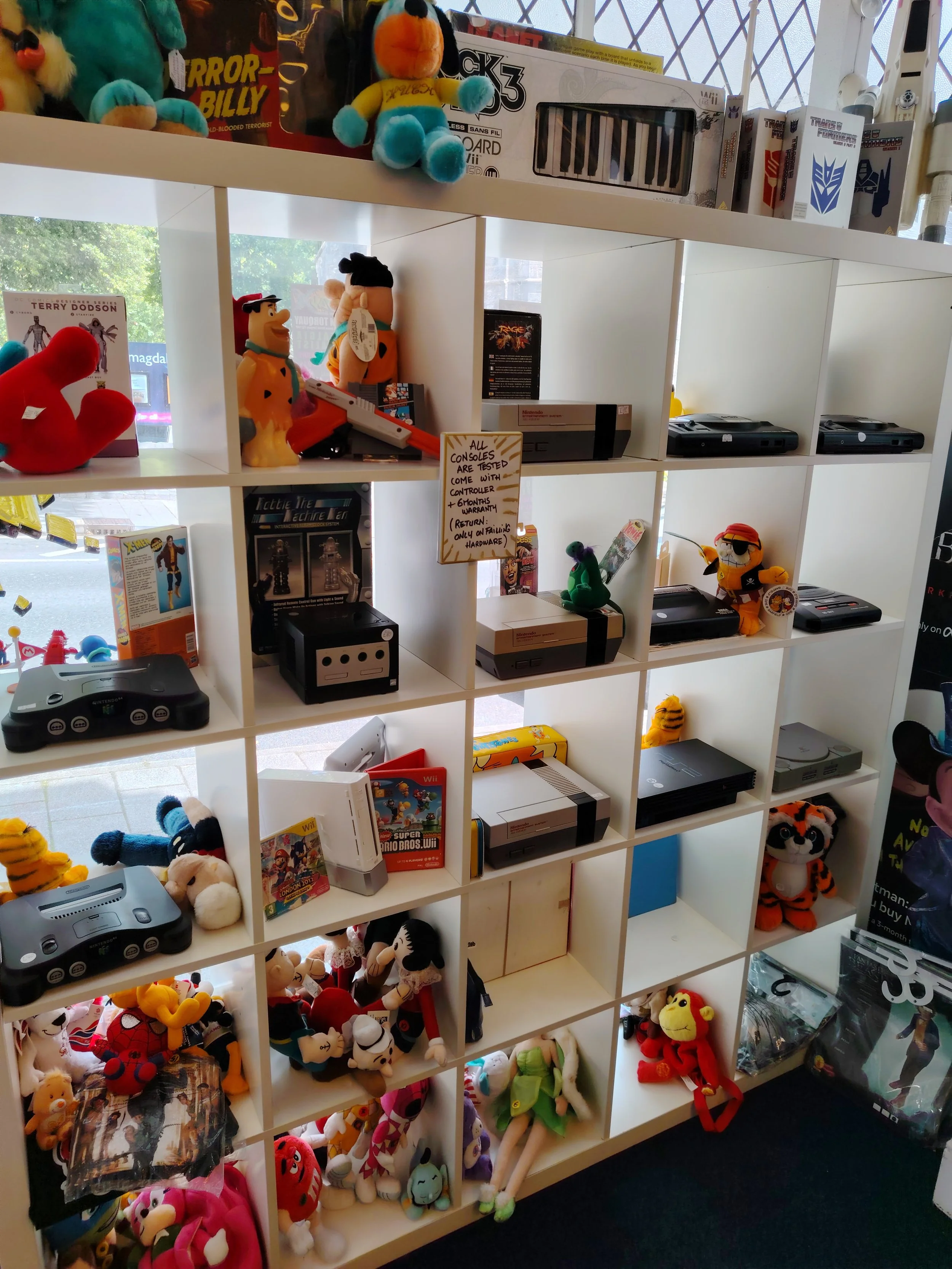
The Power of Graphic Novels

Comics are amazing as they can open our minds to a whole world of imagination. G. K. Chesterton said that the power of stories wasn't that they told us that evil exists but that it could be defeated and I think comics and graphic novels are the modern day fable that have these power fantasies that allow us to live in other people's shoes and gain a deeper understanding of the human condition.

There are many comics and graphic novels which are based on real life and tell us about a wide variety of historical and biographical events but I particularly enjoy comics which talk about the human condition and humanity which are not always based on real life but capture its intricacies and complications; there is power in the truthiness.

My eldest is in her final year of primary school and will be going to secondary school. She is excited but also has a sense of worry and trepidation; the same feelings I'm sure we had when we were that age and were confronted with the same transition.

We have spoken to her a little about how it is an amazing time with so much potential to find your tribe, persue the interests that draw you in and possibly make friends for life. However, this being the unknown, she is naturally worried and it can become overwhelming. When that happens, she can shut down and not want to talk about things, and that's fine... I was the same with my parents. However, I’ve found that graphic novels are the ultimate tool for low-stakes processing as the medium presents complex ideas with visual immediacy and zero preachiness, it bypasses the defensive walls a child might build. It’s a shared language I've used to open doors throughout her life. So, whilst in London for a course, I went to my go-to comic shop, Gosh! in SoHo and bought New Kid by Jerry Craft. It’s about a gifted pupil called Jordan who wins a scholarship to a prestigious school but struggles to fit in. The book masterfully handles themes like systemic racism, stereotyping, and code-switching but does so through a relatable middle-school lens.