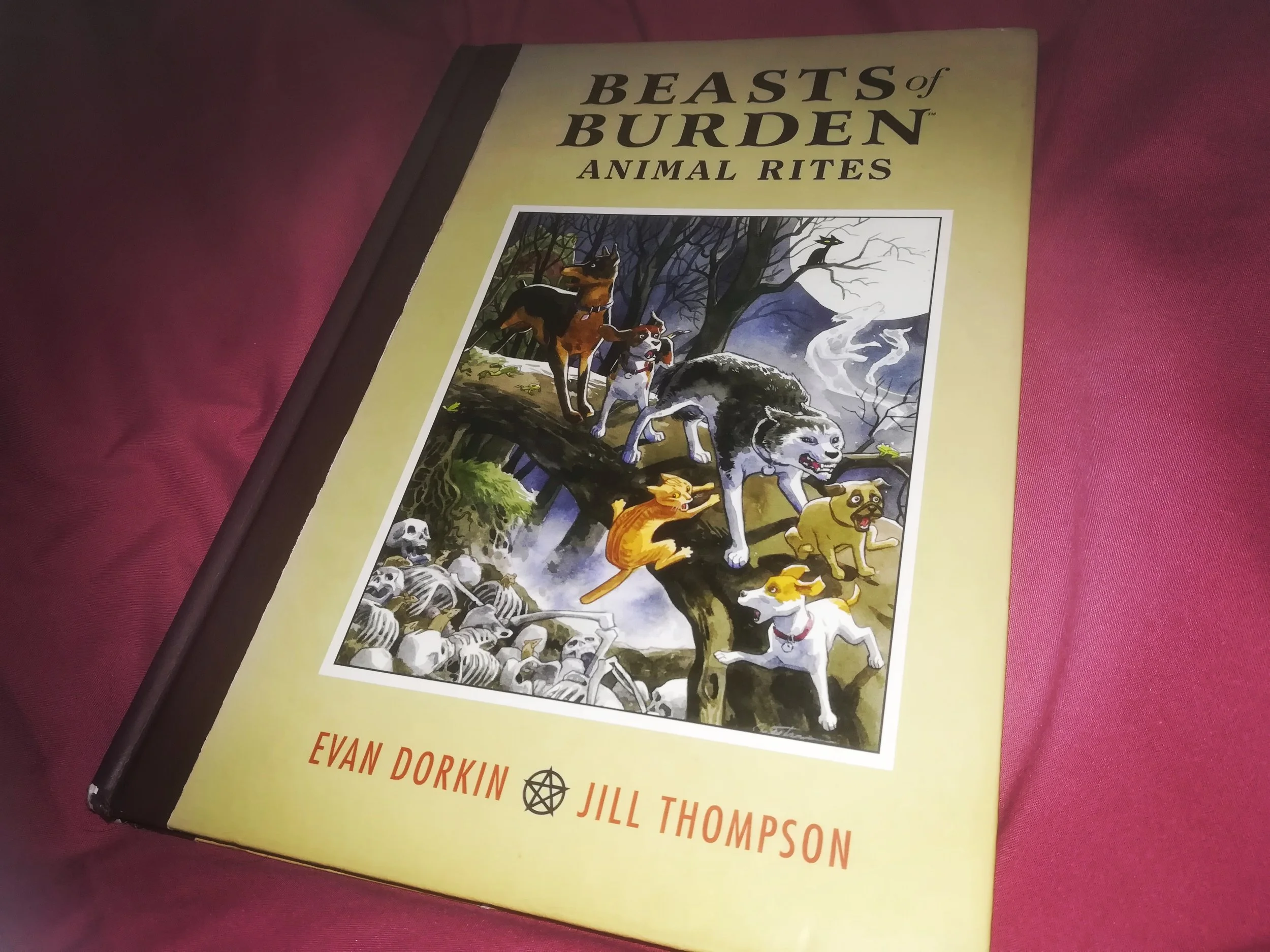
Beasts of Burden: Animal Rites - Graphic Novel Review

Whilst at my local library I saw this graphic novel and the watercolour art and name Jill Thompson attracted me to it. I knew of Thompson through her work on The Sandman: The Little Endless Story Book graphic novel and Death: At Death’s Door graphic novel from decades ago and was intrigued by this so took it out.

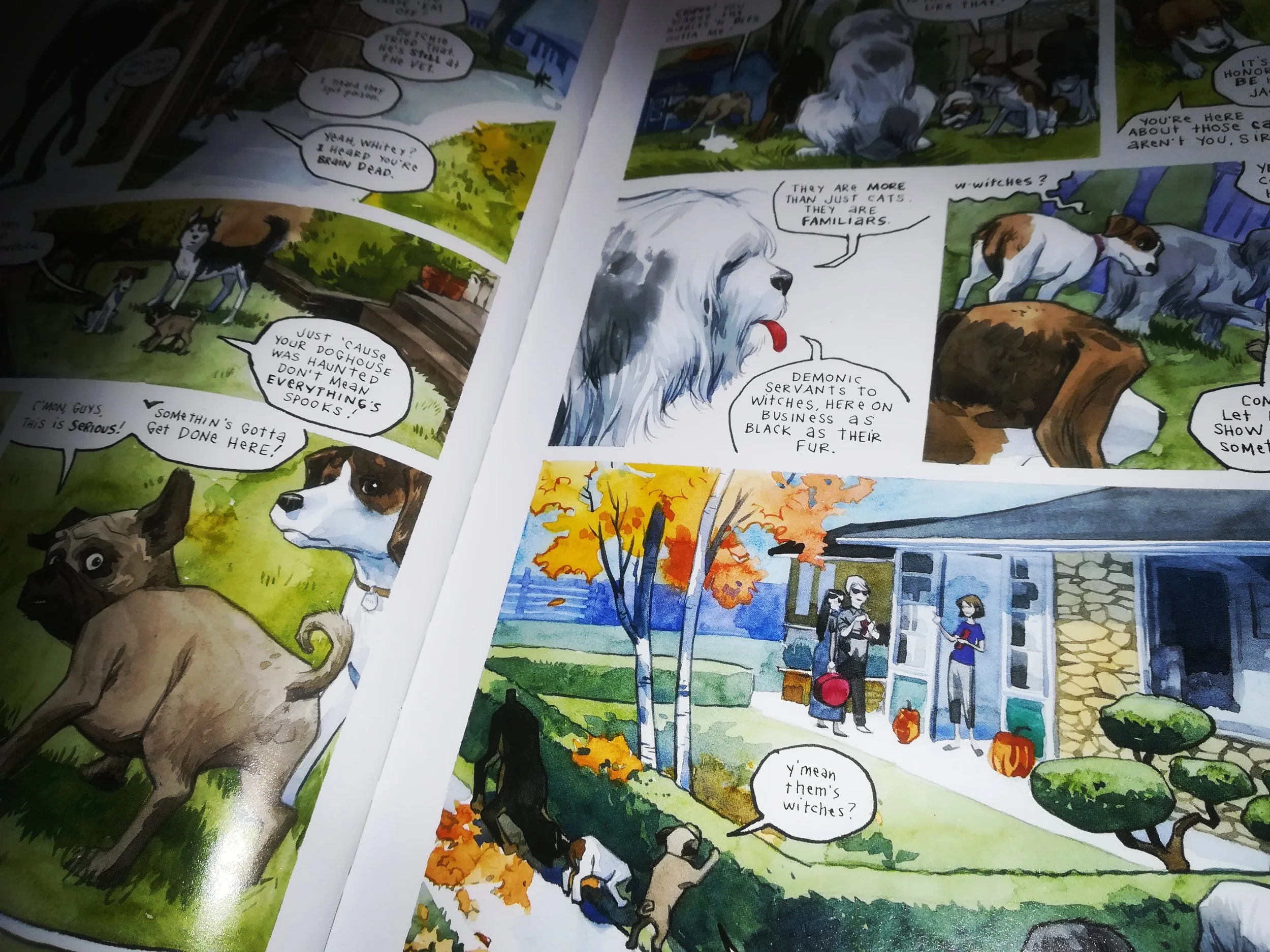
This graphic novel is a collection of the original five-part comic series about four dogs and a cat who band together to solve supernatural mysteries in their seemingly quiet town of Burden Hill. It's a bit like a darker, more macabre version of Scooby-Doo, where the ghosts are real and the stakes are life and death. As a Black Labrador owner myself and someone surrounded by dogs on a daily basis (my in-laws have five between them!), I was immediately drawn to how well writer Evan Dorkin captured the personalities of the canine cast. The characters are instantly recognizable and endearing: Rex, the perpetually scared Doberman; Jack, the excitable spaniel; Ace, the loyal and natural leader Husky; Pugsley, the playful pug jokester; Whitey, the childlike beagle and Old Wise, the elder statesman Old English Sheepdog. They're joined by Orphan, the pragmatic and snarky cat, and together they navigate a world of bizarre and often horrific events.
There are numerous stories:

Stray involves the mystery of the haunted kennel where Jack hears a spooky dog yowling at night. The animals all team together to exorcise the ghost but is it malevolent?

The Unfamiliar looks at a modern day coven of witches and their dark ceremony to summon Sekhmet to remake the world.

Let Sleeping Dogs Lie is a play on the zombie lore as the dead dogs are arisen by a witches familiar as an act of vengeance of the events in The Unfamiliar.

A Dog and His Boy finds a runaway sleeping in one of the dog's kennels and the animals take him in. However, when the moon is out a chamge happens and so the animals have to band together to stop the threat and find their friend a release.

The Gathering Storm has frogs falling from the sky and White's apprentice trying to stop the terrifying creature with magic but without success. The motley crew dispatch the big bad and become part of the Wise Dog Society.

Lost is the sad story of a mother dog looking for her lost children. She calls upon the Wise Dog Society who go maverick and create a summoning spell that goes wrong with tragic results. The last image from this issue will haunt me for quite a while.

Something Whiskered This Way Comes is about the search for the witch's familiar who was thought killed a few stories ago. She has been captured by the rats who seek a Rat Kingdom but will Orphan be able to help his fellow cat escape from their evil clutches, and at what cost?

Grave Happenings sees our crew of dogs tackle a warlock who uses emissaries to revive him after death. After being defeated he comes back videogame style in a second phase, more powerful form.

I thoroughly enjoyed my time with this graphic novel as Thompson's watercolor art is truly beautiful, filled with rich detail and a wonderful, classic feel that gives the stories an almost storybook quality which contrasts well with the often dark subject matter. Dorkin's writing is equally impressive, filled with hilarious animal-based jokes and wordplay that provide much-needed levity. But, beyond the humor, he expertly reveals the unique personalities of each character and builds an intriguing world of paranormal lore.

Beasts of Burden: Animal Rites is a fantastic and unique read that balances heartfelt character moments with genuine horror and suspense. It's a must-read for anyone who loves a good mystery and appreciates the unspoken connection we share with our pets.

Battle Royale High School - Cult Manga Review

If you're a fan of classic '80s OVAs that throw caution (and coherent plotting) to the wind in favor of non-stop action, gore, and sheer absurdity, then Battle Royale High School is a must-see. This 1987 one-shot anime, not connected to the popular film duology (starring Beat Takeshi) or manga, is an hour-long, unhinged journey that somehow manages to cram just about every genre imaginable into its runtime.

The story, such as it is, centers on Riki Hyoudo, a high school karate champion with a penchant for wearing a leopard mask. Riki's martial arts prowess, it turns out, is tied to an ancient interdimensional prophecy. He's psychically linked to Byoudo, the demon king of the Dark Realm, who, thanks to some fairy mischief and a lightning ball reminiscent of Arnold's first appearance as the Terminator, finds himself on Earth and eventually possesses Riki. From there, things spiral gloriously out of control. We're introduced to a stern demon slayer, a space/time continuum inspector in power armor, a love triangle, grotesque monsters, and enough exploding bodies to make your head spin. The plot is less a cohesive narrative and more a series of escalating, wildly entertaining events designed to facilitate as much over-the-top violence as possible.

This OVA delivers on its promise of ultra-violence as the fight scenes are frequent, well-choreographed, and genuinely brutal. There's plenty of blood, dismemberment and exploding demons. The pacing is a non-stop assault of events and there's rarely a dull moment as the story rushes from one ridiculous scenario to the next.

The animation and character designs are a fantastic blend of '80s and early '90s aesthetics, with Nobuteru Yuki who would later work on the stunning The Vision of Escaflowne, handling character design. Hideaki Anno and Shirō Sagisu, who worked on Evangelion several years later, both worked on this too so there is some pedigree. However, don't go in expecting a deep or logical story as characters appear and disappear, motivations are thin, and the plot often feels like an afterthought to the action. It's less a narrative and more a series of connected set pieces. There's virtually no time for character development; everyone is an archetype, serving simply to move the carnage along. The sheer absurdity of it all, especially in the English dub, can lead to some genuinely laugh-out-loud moments, though not always intentionally.

So, if you can turn off your brain and just enjoy the ride, Battle Royale High School is incredibly fun. It's the kind of "so bad it's good" experience that cult classics are made of.

Battle Royale High School is absolutely worth watching if you appreciate the wild, untamed spirit of '80s anime OVAs. It's not a masterpiece by any means but it's a fantastic example of spectacle and immediate gratification in lieu of any real meaning. It's a loud, bloody, and thoroughly enjoyable hour of anime that embraces its own ridiculousness. It's well worth an hour of your time.

British Dystopias: The Ghost of Empire

There is something unique and distinct about British dystopias - whether in books, television, or film - that sets them apart from their international counterparts. This distinction is rooted in the long, slow shadow of a falling Empire. For centuries, Britain held much of the world in its grasp, only to watch that power ebb away and this gradual weakening has left a profound psychological mark on a society that often struggles to accept that its global status has fundamentally changed and the legacy it sought to write for itself has been re-examined and re-contextualised.

The Hauntology of Decline

The migration of former Imperial subjects to the "motherland" brought deep-seated anxieties regarding class and eugenics to the surface. Perhaps that is why British dystopian narratives so often revolve around class - the rigid structure that persists in Britain despite the comforting illusion of meritocracy. However, one look at the current poor political and “liberal” talking heads landscape quickly strips away that veneer.

Whilst tidying the school, my colleagues and I found this horrific thing in a cupboard…

This pervasive sense of decline has birthed a specific cultural mood: Hauntology. Originally coined by Jacques Derrida and popularized by critics like Mark Fisher, hauntology describes a collective mourning for lost futures. In Britain, this manifests as a nostalgic pining for an idealised past that never truly existed - a "Keep Calm and Carry On" spirit sanitised of its actual historical hardship.

In this state, the nation is possessed by the ghosts of its own relevance. We see it in the fetishisation of the "Blitz Spirit," used as a rhetorical bandage for modern systemic failures. It is a retreat into a comforting memory loop because the current dystopian reality feels too difficult to navigate.

Weaponized Nostalgia and Material Decay

This nostalgia is not benign; it is weaponised. We saw it in the snobbery surrounding the Brexit vote and the cultural vandalism that followed. We see it in the way grifters have misappropriated national narratives for short-term gain, while the media feigns surprise at the (very real) fires they helped stoke.

This weaponised nostalgia serves as a smokescreen for the material decay surrounding us. We are living through the consequences of 14 years of austerity, the self-inflicted wounds of Brexit, aggressive privatisation as well as wider geopolitical decisions. The reality is undeniable: raw sewage in our rivers, potholes that make roads look like the lunar surface, the systematic dismantling of the social safety net and not abiding by the rule of law including those to do with the right to protest and human rights.

Yet, in a masterful sleight of hand, the establishment avoids the topic of corporate greed or ministerial incompetence. Instead, the narrative is manipulated so the public looks down at the immigrant rather than up at the systems stripping the assets of the state.

The Curated Curriculum

My own understanding of this was shaped - or rather, limited - by my education. About thirty years ago, my history lessons covered the Romans, the Tudors, and the World Wars with a distinct jolly hockey sticks sheen. It was a narrative of “Plucky Britain: the island fortress surviving against the odds.”

Historians like Niall Ferguson have argued that the Empire was a benign force of "Anglobalisation," disseminating the benefits of free markets before "discreetly" fading away. This glorification has been the prevailing educational narrative for decades. Even as a teenager in the late '90s, I remember wondering: What was the cost of this Empire to the people who were conquered?

From Arrogance to Insight

As the child of second-generation British-Pakistanis, I heard a different history at home - stories of atrocities in India and the trauma of Partition. At the time, I was an arrogant teenager. I told my parents to calm down, arguing that without Britain, we wouldn't have trains, bureaucracy, or fish and chips. I thought they were simply entrenched in an old-fashioned worldview.

It wasn't until I studied Anthropology at university that I encountered a critical analysis of colonialism. I realized my parents weren't entrenched; they were informed by experience, while I had been informed by a curated curriculum. I was always warned that whenever there was wealth inequality, the heard earned positions and roles we had worked so hard to attain would be challenged and we would once again be seen as “The Other”.

The Defensive Wall

Today, when I raise facts about imperialism that challenge the popular entrenched narrative, I am often met with a wall of defensive clichés:

  • "Why can't you get over it? It’s in the past."

  • "Stop playing the race card."

  • "You should be grateful for free speech."

  • "You’re just anti-British."

I often wonder if I would face these same reactions if I were white. Perhaps then I’d simply be dismissed as a "woke libtard." We live in a society where, despite being more connected than ever, we are separated by these conflicting stories of who we are.

A Legacy to Repair

The "it was years ago" excuse doesn't hold water. You cannot upend societies for centuries and expect the damage to vanish in a few decades. The legacy of Empire is written into the very borders of the modern world - from the Kashmir conflict to the borders of Africa drawn with no regard for ancestral lands. These are not accidents; they are the direct consequences of a crumbling Empire’s hasty exit.

Acknowledging this - and acknowledging concepts like white privilege - does not mean assigning individual blame to every white person today. Just as it is wrong to blame all Jews for the actions of the Israeli state or all Muslims for 9/11, we shouldn't assume malice where there is often simply a lack of awareness.

History is written by the victors, and for 600 years, that narrative has been one-sided. We cannot change the past, but we are responsible for the legacy we leave behind. To ignore the repercussions of history is to gaslight the millions living with its consequences. We must choose to see the reality, however dystopian, before we can hope to repair it.

LINK: Japan: My Journey to the East

LINK: The Argument for Videogames As Art in the Age of Mechanical Reproduction

LINK: Akira Soundtrack Vinyl Review

LINK: The Power of Stories and How They Are Manipulated

LINK: The Message by Ta-Nahisi Coates - Book Review (and Some Thoughts)

LINK: The Anxious Generation: Book Review (and Some Thoughts)

LINK: Utopia for Realists- Book Review

LINK: Toxic: Women, Fame and the Noughties- Book Review (and Some Thoughts)

Angel's Egg - Cult Manga Review

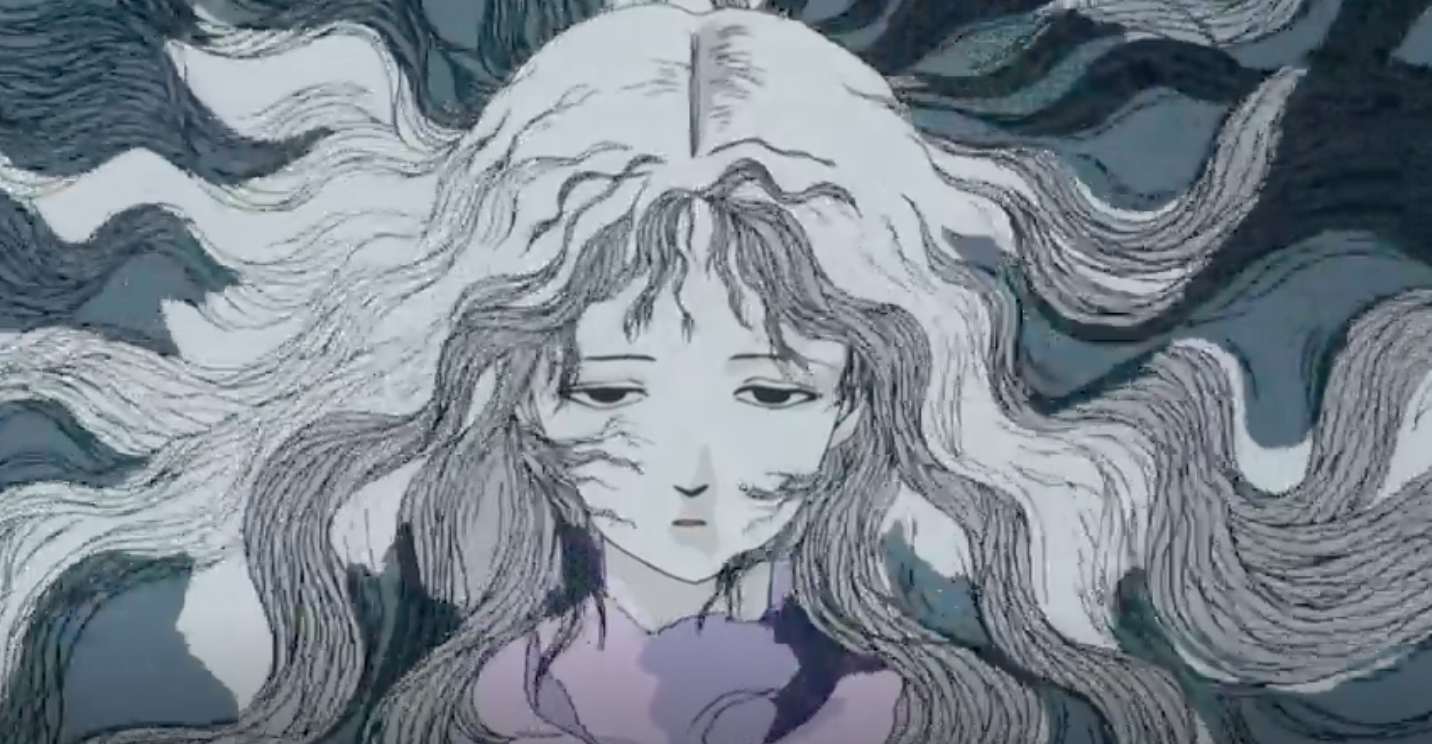
When people describe a piece of art as a "mood," I think films like the 1985 cult classic Angel’s Egg (Tenshi no Tamago) is precisely what they mean. Directed by Mamoru Oshii and featuring the ethereal character designs of legendary artist Yoshitaka Amano, this film is far more than traditional animation. It is a haunting, minimalist journey that prioritizes atmosphere and sublime beauty over standard narrative, creating an experience that feels like a dark painting come to life.

The story itself is deceptively simple, unfolding within a surreal, Gothic-dystopian landscape. A young, nameless girl wanders the desolate world alone, fiercely guarding a large, mysterious egg tucked beneath her clothes. Her solitude is eventually broken when she meets a young man carrying a cross-shaped weapon. He chooses to accompany her through the ruins, but his presence introduces a quiet tension as he repeatedly asks her to break the egg open. As they travel, the two engage in sparse, cryptic dialogues that delve into ambiguous theological philosophy, touching on heavy themes of faith, loss and existential meaning.

Rather than relying on traditional exposition or dialogue, Angel's Egg lets its striking visuals and eerie incidental audio do all the heavy lifting. The film's environment is dominated by deep, ink-black shadows and a fiercely unique aesthetic that masterfully utilizes darkness to build tension. This eerie imagery is perfectly paired with a discordant, atmospheric score that amplifies the overwhelming sense of isolation. Because there is so little dialogue to guide the audience, you are forced to completely immerse yourself in the film's acoustic and visual landscape, interpreting meaning or just taking in the audio-visual overload.

Overall, Angel's Egg is an enigma that defies easy explanation. It leaves viewers not fully knowing what is going on or what to make of its dense symbolism, yet that is precisely why it is so easy to love.

There is something deeply arthouse, hypnotic, and oddly calming about its slow, deliberate pacing. It stands as a beautifully haunting fever dream that lingers in the mind long after the final frame fades to black.

LINK- Fire Tripper- Cult Manga Review

LINK- Akira Soundtrack Vinyl Review

LINK- Monster City- Cult Manga Review

LINK- Japan: My Journey to the East

LINK- The Offworld Collection- Book Review

LINK- Manga Exhibition at the British Museum

LINK- The Midnight Library and the Idea That You Can’t Go Home Again

LINK- The Transportive Nature of Objects (And the Power of Mini Consoles)

The Sacred Horizon: Finding Solace in Finite Games

Life, as it unfurls, often feels like an ever-expanding list of obligations; deadlines loom, commitments multiply, and the digital world hums with a relentless energy that can leave us feeling perpetually… time-poor. As the years drift by, those precious moments of leisure time transform from simple downtime into something far more valuable – a cherished, almost sacred resource.

Within this context, the sprawling, endless games with daunting 'to do' lists can begin to feel less like an escape and more like an unwelcome echo of the very pressures we seek to leave behind. A creeping dread can set in, a sense of obligation intruding upon our hard-won free time.

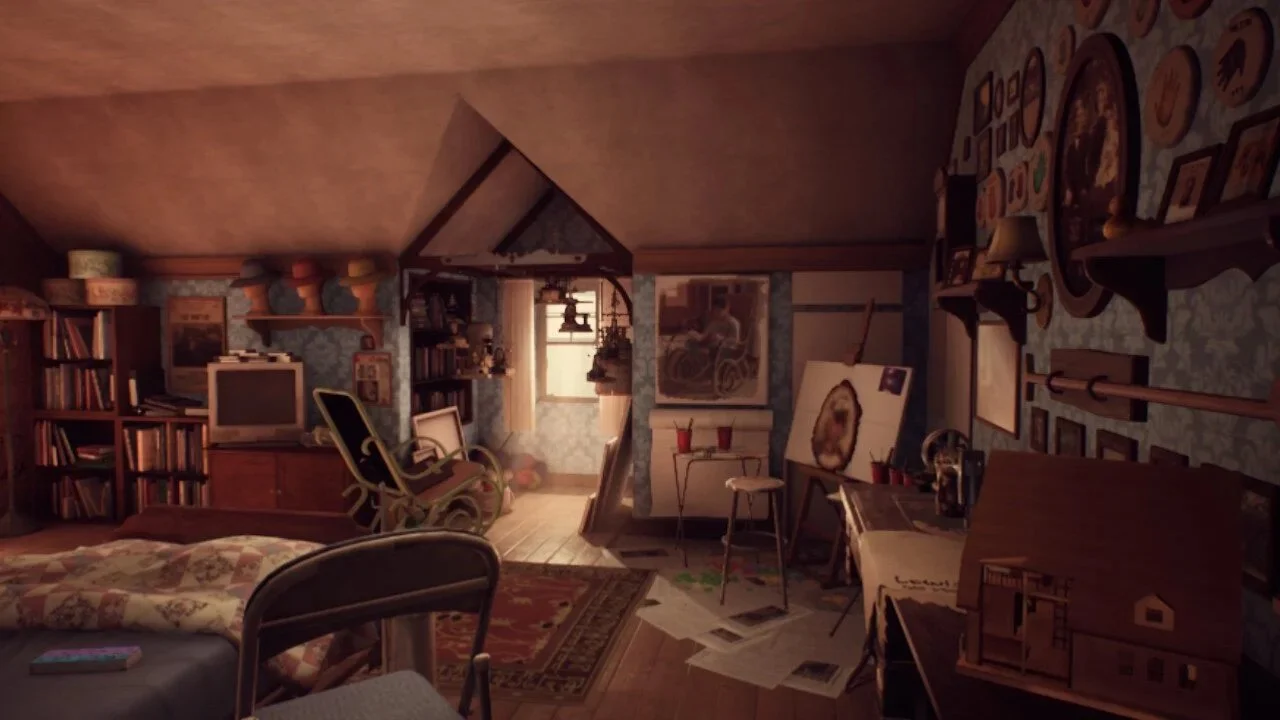
I find games that offer a clear endpoint comforting. Games like What Remains of Edith Finch, SOMA and Road 96 all possess a profoundly satisfying sense of closure. They invite us into their meticulously crafted worlds, immerse us in their compelling stories, and then, crucially, they let us go. There's no endless grind for the shiniest loot, no sprawling list of tasks that stretches into the virtual eternity. Instead, we experience a complete journey, a contained narrative that leaves us with a sense of fulfillment, perhaps even a touch of wistful melancholy, but never burdened by the nagging feeling of unfinished business.

This appreciation extends beyond mere narrative closure. There's a growing desire for genuine engagement over frictionless experience, much like we had in the 360/ Wii/ PS3 era. The acceptance of fail states, of the necessity of dying and learning, speaks to this. It's not about shying away from challenge, but about ensuring that the challenge contributes meaningfully to that feeling of progression, that each attempt, whether successful or not, moves us further along the intended path, deepening our understanding and connection to the game's systems and story.

It's often within these finite narratives that we find the emotional connection we increasingly crave. These games frequently delve into profound themes, explore the nuances of complex characters, and evoke genuine feelings, leaving a lasting impact long after the credits roll. They resonate because they often mirror the very human experiences of loss, love, fear, and hope within a contained and manageable framework.

Beneath all of this lies a profound undercurrent – the growing awareness of time's relentless march. As the balance of our lives subtly shifts, the value of each moment of leisure sharpens into poignant focus. The existential understanding of the finite nature of our own time intertwines with the deeply human need for joy, for escape, for meaningful experience. Perhaps that's precisely why these contained, narrative-driven games hold such a powerful appeal. They offer a microcosm of life itself – a journey with a beginning, a middle, and an end, filled with moments of connection, challenge, and ultimately, a form of resolution.

In a world that often feels boundless and demanding, there's a profound solace in experiences that respect our time, that offer a complete and emotionally resonant journey within a defined frame. They remind us that even within the virtual, we can find narratives that mirror our own desire for meaning and closure, offering a precious and deeply satisfying use of our increasingly valuable free time. And in that, perhaps, lies a small but significant victory against the creeping tide of time itself.

LINK: Japan: My Journey to the East

LINK: The Argument for Videogames As Art in the Age of Mechanical Reproduction

LINK: Akira Soundtrack Vinyl Review

LINK: The Power of Stories and How They Are Manipulated

LINK: The Message by Ta-Nahisi Coates - Book Review (and Some Thoughts)

LINK: The Anxious Generation: Book Review (and Some Thoughts)

LINK: Utopia for Realists- Book Review

LINK: Toxic: Women, Fame and the Noughties- Book Review (and Some Thoughts)

The Melodic Time Machine (or: How Videogame Soundtracks Take Us Back)

There is a very specific kind of magic in the hum of a CRT television - that static-charged air and the low-frequency thrum that preceded the light. For a certain generation, the sounds that followed, be it the Sega chorus, the ethereal swell of the PlayStation startup, or the playful bounce of the GameCube, unlock core memories.

Psychologists call this Music-Evoked Autobiographical Memory (MEAMs) - it acts as a uniquely potent trigger, often bringing back vivid, emotionally rich, and nostalgic memories. It is a clinical term for something that feels profoundly soulful: the way a handful of synthesized notes can bypass your logical brain and trigger a Proustian flashback so vivid you can almost smell the carpet of your childhood bedroom and taste the Angel Delight. It hits what researchers call the reminiscence bump, that formative era where our identities were being forged in the glow of 16-bit adventures.

The Digital Sanctuary

You can see this phenomenon in real-time if you spend five minutes in the comment section of any retro videogame soundtrack on YouTube. These pages have quietly evolved into digital sanctuaries. In a corner of the internet usually defined by noise and chaos, these comment sections are strangely reverent.

You’ll see thousands of check-in posts: 2024 check-in, May 2026, still here, Who else is listening to this to feel okay? These aren't just spam; they are flags planted in the sand. They are people proving to themselves - and to a community of strangers - that they still exist, and they still remember the version of themselves that first heard those notes thirty years ago.

The Aquatic Ambience Effect

Among these digital artifacts, David Wise’s score for Donkey Kong Country on the SNES holds a nearly legendary status. With Aquatic Ambience, Wise famously pushed the Super Nintendo’s limited sound chip until it did things it wasn't supposed to do, creating a soundscape that felt vast, fluid, and strangely eternal.

For many, this track is a mental safe space. The comments here often read like quiet confessions. People share stories of using these chords to navigate modern grief, burnout, or the simple, heavy loneliness of adulthood. There is a surreal ability in these textures to act as a tonic, smoothing out the jagged edges of a world that has become much louder and more complicated than we ever expected it to be.

There are hundreds of comments which are beautiful and touching.

Then there is the longing sadness of Stickerbush Symphony. It captures a very specific 90s mood: a blend of melancholy and hope. It triggers a nostalgia that isn't just about a video game, but about a feeling of safety. Back then, the biggest weight on our shoulders was a difficult platforming level, not the crushing velocity of adult life. Wise’s music gave those pixels a soul, creating something that felt ahead of its time while perfectly preserving the grainy, warm texture of the era.

Personal Echoes: From the Master System to the Mega Drive

While the SNES often takes the cultural spotlight, my own digital sanctuaries are flavored with a different kind of synthesis. My closest friend and I grew up in the glow of the NES, Master System, and Mega Drive, and it is those FM-synth landscapes that truly vibrate in my memory.

For me, the check-in happens during the opening notes of Streets of Rage 2, where Yuzo Koshiro’s club-inspired beats made a living room feel like a gritty, neon-soaked metropolis. Or the frantic, optimistic energy of Sonic the Hedgehog 2, and the soaring, metallic intensity of Thunder Force III and IV. These weren't just background tracks; they were the anthems of our shared youth.

Why Do We Keep Coming Back?

We keep returning because these soundtracks represent a period of perceived simplicity. In an age of always-on connectivity and digital exhaustion, a 16-bit melody or a PS1 chime offers a rare moment of singular focus.

These games were our first real adventures, and their soundtracks became the scores to our lives. By building these collective time capsules in the comments, we’re making sure those experiences don't just fade into the background noise of history.

We aren't just listening to old music; we’re visiting our younger selves - making sure they know we’re still here, still listening, and still remembering what it felt like to be a hero in a world made of light and sound.

Patlabor WXIII: A Cult Film Review

Having experienced the first two entries of the trilogy, I approached the final installment of Patlabor with high expectations. The original Patlabor remains a masterclass in cyber-terrorism with provocative religious undertones, while its sequel serves as a profound meditation on the veneer of peace and military ethics. Naturally, I was eager to return to the world of the Tokyo Metropolitan Police Special Vehicles Unit 2 and their iconic Labors. However, even a cursory bit of research revealed that WXIII is widely considered the "black sheep" of the franchise. As a fan of cult cinema, I was undeterred; I went in forewarned that this might be a misunderstood trailblazer or, perhaps, simply a disappointment.

WXIII: Patlabor the Movie 3 departs significantly from the high-stakes political thrillers of its predecessors, offering instead a gritty, atmospheric noir centered on a traditional police procedural. Set against the perpetually rainy backdrop of Tokyo Bay, the narrative follows two detectives who serve as the film's true heart: the grizzled, cynical veteran Takeshi Kusumi and his younger, more earnest partner, Shinichiro Hata. Kusumi - navigating the investigation with a persistent leg injury and a dry, snarky wit - provides a grounded contrast to Hata, whose personal life and budding romance with a mysterious researcher become inextricably linked to the case. Their dynamic anchors the story in a human reality often missing from mecha-heavy narratives.

As they navigate bureaucratic red tape and industrial secrets, the duo uncovers a truth far more organic and unsettling than mere mechanical sabotage. I thoroughly enjoyed my time with the film, as its technical merits are undeniable. The animation remains top-notch, and the stunning background art provides essential worldbuilding alongside necessary moments of contemplative calm.

The primary point of contention for many fans is the absence of the core cast; the SV2 crew members are relegated to the periphery, eventually providing "heavy metal" backup only in the final act, approximately seventy-five minutes into the runtime. While the series' protagonist, Noa, makes a brief, wordless cameo earlier on, the lack of the trademark character dynamics explains the film’s divisive reputation.

Overall, I found WXIII to be a somber, slow-burn mystery that is exceptionally well-told. It moves beyond the giant robot trope to explore the ethics of scientific progress and the unintended shadows cast by a rapidly evolving city.

LINK- The Rise of Retro Gaming During Covid

LINK- Blood, Sweat and Pixels- Book Review

LINK- The Offworld Collection- Book Review

LINK: Japan: My Journey to the East

LINK- Battle Angel Alita: And So It Ends

LINK- The Moomins 80's Soundtrack Vinyl Review

LINK- Inspector Gadget Retro Soundtrack Review

LINK- Ulysses 31 Retro Soundtrack Review

LINK- The Mysterious Cities of Gold Retro Soundtrack Review

Patlabor 2 - Cult Manga Review

A short while ago, I finally sat down and watched Patlabor: The Movie. I found that it stood out as a titan of late-80s anime and deservedly was oft cited in the same breath as Akira, Ghost in the Shell and Ninja Scroll. So, how would the sequel fare?

Mamoru Oshii’s Patlabor 2: The Movie is less a film about giant robots and more a haunting autopsy of the modern nation-state. Released in 1993, its vision of "gray zone" warfare - where the line between peace and conflict is blurred by misinformation and economic complicity - has only grown more chillingly relevant.

The story is set in a near-future 2002 and follows the Tokyo Metropolitan Police's Special Vehicle Section 2 as they are drawn into a web of domestic terrorism and military intrigue. When a missile attack on the Yokohama Bay Bridge - initially blamed on the Japanese Self-Defense Forces - turns out to be a masterfully staged phantom strike by a rogue former UN peacekeeper named Yukihito Tsuge, Tokyo is plunged into a state of emergency. As the city is slowly occupied by its own military and the rule of law dissolves into martial law, detectives Goto and Nagumo must navigate a landscape of misinformation and political maneuvering to stop Tsuge from shattering the illusion of Japan's post-war peace.

The film was a direct response to Japan’s controversial role in the 1990 Gulf War. While the nation’s constitution prevented military intervention, the government essentially “bought” its way into international good graces by contributing $13 billion to the war effort. Oshii saw this not as pacifism, but as a parasitic extraction: a nation consuming the stability and oil prices secured by foreign blood while maintaining a domestic mirage of moral purity.

At the heart of this complex geopolitical story of intrigue is the character Shigeki Arakawa. During a hushed, atmospheric boat ride through Tokyo, he delivers the monologue that defines the film's philosophical thrust:

"Look at this city. From here, it looks like a scene from a dream, doesn't it? But it’s a mirage. In this city, people have everything. They’re convinced that this peace will last forever. But this peace... it’s a peace bought at the expense of wars being fought elsewhere. We export the reality of war and import the fruits of its labor. We call it 'peace,' but it’s a fraudulent peace. They say that an 'unjust peace' is better than a 'just war.' I used to believe that. But once you’ve experienced a peace that’s been bought with a 'just war' happening somewhere else—in a place you can’t see—you start to realize how thin that line really is. If the foundation of our peace is the suffering of others, then our 'peace' is nothing more than a crime. And yet, I’d still take this 'fraudulent peace' over a 'just war' any day. Because in a 'just war,' everyone dies for a lie. In an 'unjust peace,' at least we can pretend the lie is true. Maybe the front lines will come home eventually... but until that day, isn't the view beautiful?"

This sentiment found a striking modern echo in Mark Carney’s recent speech at the World Economic Forum in Davos. Addressing the rupture of the global order, Carney suggested that our international stability was often a performance - a way of "living within a lie" to maintain economic momentum. Much like Arakawa, Carney suggested that for decades, middle powers prospered under a rules-based order they knew was partially false. The fraudulent peace Arakawa describes is the geopolitical equivalent of what economists call "externalities": the costs of our comfort, such as conflict and labor exploitation, are simply moved off the balance sheet and out of sight.

What makes Patlabor 2 so effective is that it refuses to deliver this message as a dry lecture. Instead, it utilizes Production I.G’s peak hand-drawn animation to create a palpable sense of dread. The film is famous for its empty shots—long, wordless sequences of Tokyo’s infrastructure, canals, and military convoys moving through silent, snowy streets. This use of ma, or negative space, forces the viewer to sit with the weight of Arakawa’s words. The mecha action is minimal, relegated to the background, because the true battle is one of perception.

By the time the denouement arrives, the film doesn't offer the catharsis of a won war. Instead, it leaves the audience with a lingering, uncomfortable awareness that the view from the window is indeed beautiful, but the slaughterhouse is still running.

Overall, Patlabor 2 remains a pinnacle of mature storytelling that treats its audience with the respect of a political thriller while utilizing the unique visual strengths of animation.

The Uncanny In-Between (or, 'How the Pandemic Awakened Our Obsession with Liminal Spaces and the Backrooms')

In his seminal work on supermodernity, the French anthropologist Marc Augé coined the term "non-places" to describe the transitory zones where we spend a staggering portion of our lives - motorways, hotel rooms, and airports. Under normal circumstances, these spaces offer a strange, liberating form of anonymity. Stripped of historical or relational significance, they allow us to shed our everyday roles, step out of our routines, and exist as transient shadows. However, the arrival of the COVID-19 pandemic fundamentally warped this dynamic.

As global lockdowns abruptly emptied out transit hubs and city centers, these functional zones lost their human hum and they became weirdly liminal, uncanny, and exposed. Without the comforting distraction of crowds and purpose, we were forced to confront the raw, architectural hollows of our modern world, pushing the phenomenon of liminality from an academic observation straight into collective existential dread.

This shift in the cultural zeitgeist found its perfect digital manifestation in the "Backrooms" meme. While early digital folklore and creepypastas like Slenderman relied on the traditional horror tropes of a monster lurking in the shadows, the Backrooms tapped into something far more cerebral and intriguing: the lingering sense that reality itself isn't quite right. Born from a simple, viral image of an empty, yellowish, fluorescent-lit office space, the Backrooms represents a narrative of pure existential dread. It resists definitive resolution; there is no monster to defeat at the end of a traditional hero's journey. Instead, the void itself is the antagonist. The horror stems entirely from the realization that you have slipped through the cracks of the map, trapped in an environment where the rules of reality are unstable, monotonous, and utterly incomprehensible.

This terrifying architectural subversion has deep roots in our creative history. It echoes the labyrinthine, shifting logic of Jorge Luis Borges’ The Garden of Forking Paths and the structural enigmas found in classic ‘Puzzle House’ mystery films and books. It finds its modern literary peak in Mark Z. Danielewski’s masterful novel House of Leaves, where a shifting house defies the logic of Euclidean space. Danielewski famously utilizes "ergodic design" - unconventional page layouts that demand unusual effort and active agency from the reader - to make the physical act of reading a visceral echo of navigating a claustrophobic, impossible maze.

Unsurprisingly, the medium of video games has become the ultimate laboratory for exploring these non-Euclidean spaces. Hideo Kojima and Guillermo del Toro's legendary P.T. masterfully mined this concept by trapping players in a looping domestic corridor that subtly altered itself with every turn, fracturing the player's sense of time and linearity. Remedy's Control used the ever-shifting Old House to create a constantly changing structure that moved and shifted beneath your feet. Even older titles like Nintendo GameCube’s Eternal Darkness used psychological isolation and incomprehensible, cyclopean structures to make players feel completely alone against forces beyond human comprehension.

More recently, and accessibly, the indie hit Exit 8 stripped horror down to its purest liminal essence, tasking players with escaping an uncanny, recursive subway station by hunting for minute, unsettling anomalies. This game itself was turned into a very recent film.

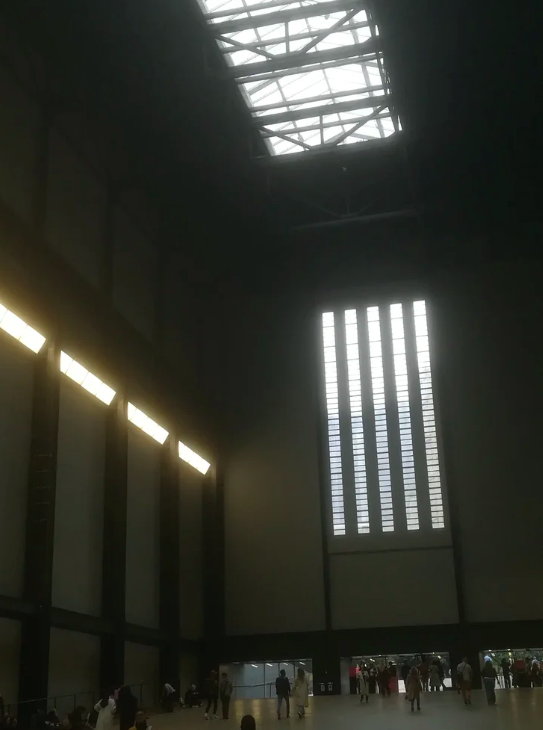
Yet, we do not need an experimental novel or a gaming console to encounter these existential slips; they frequently bleed into our real lives. Anyone who has ever gotten turned around in a museum or an art gallery during a quiet hour knows this exact feeling. You turn a corner, the murmurs of other patrons vanish, and a sudden, profound worry creeps in. It feels as though you have fallen clean out of space and time—marooned in an in-between world where non-Euclidean rules apply, and the familiar boundaries of reality have quietly dissolved.

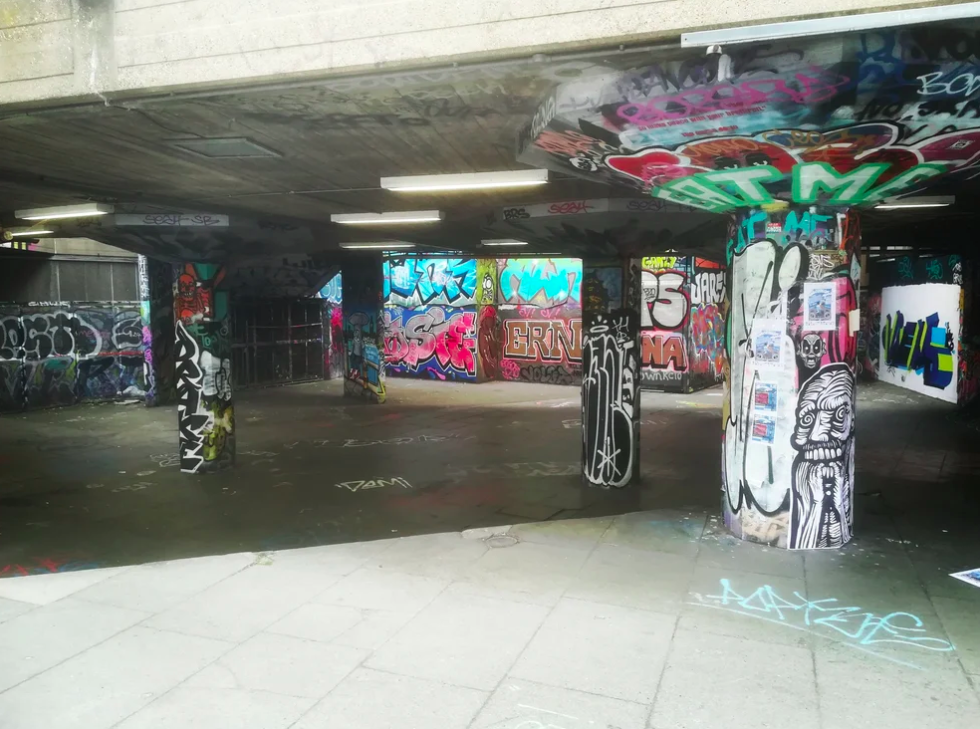
Far from just repelling us, however, our collective exposure to the uncanny has sparked a strange, magnetic desire to actively explore the liminal spaces that surround us. There is a haunting, nostalgic beauty to be found in the quiet thresholds of our everyday lives: underground car parks with their cold concrete echoes, abandoned shops, and old pubs with dusty windows where vibrant life once hummed. This fascination extends outward into nature too, drawing us toward ancient paths leading to silent mountains, deep caves, and mist-covered lakes.

Ultimately, the Backrooms meme and our pandemic-induced isolation did not invent our fascination with the void; they simply gave us a language to articulate it. They reminded us that beyond the routine veneer of daily life lies a captivating, unsettling world of thresholds just waiting for us to step through.

Now… After you, dear reader!

LINK: The Power of Ergodic Design

LINK: The Evolving Fears of a Horror Gamer

LINK: Pure Invention: How Japan's Pop Culture Conquered the World- Book Review (and Personal Reflections)

LINK: The Rise of Retro Gaming During Covid

LINK: Japan: My Journey to the East

LINK: Blood, Sweat and Pixels- Book Review

LINK: Toxic: Women, Fame and the Noughties- Book Review (and Some Thoughts)

LINK: The Power of Stories and How They Are Manipulated

LINK: The Message by Ta-Nahisi Coates - Book Review (and Some Thoughts)

The Game Narrative Kaleidoscope - Book Review

I'm a huge Inkle fan; the studio has produced some of my favorite games over the past few generations, including Heaven's Vault and A Highland Song. They are masters of deeply narrative experiences. So, when they requested short essays on the craft of game writing and received a couple of hundred responses from industry insiders, my interest was piqued.

The essays are uniformly interesting, capturing the distinct thoughts and personalities of the individual writers. They are well worth a read, whether you choose to go page by page or navigate through the "choose your own adventure" style choice-based system. There are over a hundred essays in total, each a maximum of two and a half pages, but a few stood out:

I very much enjoyed reading the wide variety of essays on game narrative.


Josh Boykin's ‘Choose Yourself’ is a call to arms to industry compatriots to not let the system destroy them:

"... There's no game that's worth your soul... None of this damn industry is worth the friends I've seen it chew up and spit out, the people thrown out at the mere whiff of shareholder profit, the layoffs hot on the heels of even successful launches not to mention the cottage industry of grift and graft propped up by toxic people who see a game with a person of color as protagonist as a shortcut to a rage bait paycheck. How dare they take our stories. They don't fuck deserve them."

While it is angry in tone, I totally get it and agree that those who create games have been shafted over the last few years.


Wojtek Borowicz's ‘The Platform is the Message’ uses Marshall McLuhan's nugget of wisdom, "The medium is the message," to discuss how push notifications and emails can be used to bring fascinating stories to life using technology outside of traditional computers and consoles. The concept of games like Lifeline and Thousand Lives - where you interact with a single character to guide them and deal with the permanent consequences of your actions - is highly appealing because there is no redo.


Yao Chang's ‘Embrace the Brutality of Being Human: By Writing Games’ explains how games can act as a catharsis to explore perspectives less spoken about in the world. For Chang, games can look at the short and brutish lives we can lead, but they can also capture the beauty contained within that brutality: a kindly touch for a rape survivor, or the offer of freedom from a psych ward.

I like how they end on a note of dark optimism: "Embrace the brutality of Being Human by writing games! Shed light on our perils and triumphs..."


Sam H's ‘Dissecting Game Dialogue as Characterisation’ looks at how non-voice-acted dialogue can convey character and emotion. She highlights many great examples, such as Deltarune, Chicory, and Wandersong - all games I have played and which perfectly exemplify her points. By manipulating font, text speed, and shaking certain words, games can convey far more meaning than simple syntax allows.


Lisa Hunter's ‘10 Reasons Your Writer is Crying in the Office Bathroom’ is a brutal breakdown of the common issues faced by writers, featuring amazing nuggets like: Deep Down You Hate Narrative, We Monetised Our Therapy and Mom Called.

It is pure gallows humor, but like the best black comedy, it contains a large element of truth.


Morgan Jaffit's ‘Play Like Hartley’ is a powerful and incisive piece about how the video game industry is on fire, and pretending otherwise is the last thing on Jaffit's mind. He shares how many of his friends have been doxxed and lost their jobs, how his brother suffered a stroke, and how the anti-Semitic attack on Bondi Beach made him feel increasingly unsafe. However, he passionately asserts that, despite it all, the goal of a writer is to "Play your heart out as the waves crash in. In the end, that is what matters."

I admire his honesty and resolve during such bleak times, even as the ship sinks and the water laps at our feet.


Alice Kent's ‘Did You Just Feel That?’ considers Aristotle's theory of catharsis and how a narrative lead must carefully manage the pacing and emotional journey of the player.

I found it a well-written and introspective piece on how stories shape and mold us, especially in video games where we are active agents in the journey.


Ashley Poprik's ‘The "A" in "Game": Education in Play’ looks at edutainment and how video games can serve as educational tools without wearing that explicit label. By virtue of their interactivity, many video games naturally encourage experiential learning. This is something very close to my heart, as I have used video games as a contextual hub for learning for many years.


Gregory A. Wilson's ‘Implied Storytelling and Moral Messages’ looks at how games can convey powerful messages in nuanced ways without over-explaining. He uses the example of Brothers: A Tale of Two Sons and its powerful ending which—irrespective of your faith or lack thereof—conveys a profound message through a gentle vibration of the controller.

It is powerful stuff indeed, and it had me reflecting on my own playthrough of the game over a decade ago.


The Midnight Train - Book Review

About four years ago, I read The Midnight Library by Matt Haig and loved it. The timing was perfect, as it coincided with a visit to my parents in East London. Back then, I wrote:

"...the book was all about the various choices and opportunities we face and the paths we take. It was apt as I was staying in my childhood family home for the first time in 11 years. I've changed a lot in that time; married, learned to drive, had two kids, travelled and worked across the world, and finally come back to Britain. I've also gained a few pounds around the belly and lost a little more off the top, but I’m content really. Arriving in Barking and parking outside the house, things didn't seem to have changed that much—it had a recent lick of paint, but the streets felt like the same old, same old.

After seeing my parents briefly, I went into town with my dad and saw the true scale of change; Barking had really developed. So much of the old council estate (the infamous Gascoigne Estate) was now low-rise apartments and building sites of riverside abodes. The shops mainly consisted of barbers, hairdressers, fast-food places, and mobile phone shops, but there was also a Costa and a Starbucks—so obviously the town was changing, with city types moving in."

Barking has changed a lot of over the years.

Overall, I loved that book and concluded that what makes life so interesting and powerful is our evolution as people. So, what about the follow-up, and how does it measure up?

Well, The Midnight Train follows Wilbur, a successful businessman who, at the end of his life, meets the younger version of the kindly old bookseller he knew in his youth, who acts as his psychopomp (a guide to the afterlife) to help him reflect on the key moments of his life. His vessel of choice on this personal River Styx is a train - a beloved toy from his childhood. While the train is Wilbur's specific mode of transport, everyone gets something different based on their own personal memories and affections.

Much like Dickens' A Christmas Carol or the videogame Before Your Eyes, a soul gets a chance to recollect their life and reflect on pivotal moments. However, in this version, there are strict rules you must follow to be allowed into "eternity." Naturally, when Wilbur starts messing with the past, a lot of wibbly-wobbly, timey-wimey stuff happens.

Over the course of the story, Haig delivers some amazing, highly quotable line. A few that stood out to me include:

"Stories are like the threads that make a strong rope."

"Russian doll days with an ever-expanding future."

"...we act for outside eyes..."

That last quote - “we act for outside eyes” - really gets to the heart of the book's deeper critique. Wilbur starts out as the quintessential modern success story: a businessman who bought into the capitalist rush, climbing the ladder and measuring his worth by his bank account and status. It's a trap so many of us fall into, especially when we look at the changing landscapes of our hometowns, driven by development and gentrification. We are conditioned to think that growth, profit, and building upward is the ultimate goal. But through Wilbur’s retrospective journey, Haig holds up a mirror to this hyper-capitalist mindset. The novel gently but firmly argues that chasing monetary success is a hollow race against time. When you’re sitting on a train bound for eternity, your net worth means absolutely nothing.

Instead, the narrative shifts the metric of a "successful life" away from ledger books and toward the relational impact we leave behind. I’ve always liked this about Haig's writing; his central theme always seems to be that our relationships are what give us meaning in the face of nihilism. It’s not about the wealth we accumulate for outside eyes to envy, but the quiet, unseen ways we connect with, support, and love the people around us.

Overall, I found the story to be wonderful and thought-provoking. While it might not be entirely groundbreaking material, it is deeply humanist, relatable, and introspective. It’s a timely reminder to slow down, look away from the grind, and invest in the people who actually make the journey worthwhile. Ultimately, it’s the kind of book that successfully makes you question your own priorities and life decisions.

LINK: Videogames As Art - Nier: Automata

LINK: The Evolving Fears of a Horror Gamer

LINK: The Power of Stories and How They Are Manipulated

LINK: The Message by Ta-Nahisi Coates - Book Review (and Some Thoughts)

LINK: The Anxious Generation: Book Review (and Some Thoughts)

LINK: Utopia for Realists- Book Review

LINK: Toxic: Women, Fame and the Noughties- Book Review (and Some Thoughts)

LINK: Pure Invention: How Japan's Pop Culture Conquered the World- Book Review (and Personal Reflections)

LINK: Japan: My Journey to the East

LINK- Blood, Sweat and Pixels- Book Review

Red Iron Road: TV Series Review

Red Iron Road is an animated horror anthology series that draws from a deep well of folklore and traditional tales to construct its eerie narratives. Much like Love, Death & Robots, each short film varies in length and aesthetic, ensuring the viewer is never more than a few minutes away from a completely unique experience.

Family of Vurdulak

This segment utilizes a visceral Bande Dessinée style of animation that doesn't shy away from gore. The story follows a man traveling through the Siberian wastes to reach a pivotal meeting. After ignoring local warnings, he finds himself bunkered down in a remote cabin with a family under siege by a werewolf-like creature. While the animation is relatively minimalist, it is incredibly effective; the episode is punctuated by a sense of dark humor and sharp wit that keeps the tension from becoming overbearing.

The Forest King

Set in a near-future dystopia where personal privacy is the only currency left to trade, a father fights to reclaim his son from the clutches of an addictive VR game. The result is a bleak exploration of late-stage capitalism and a poignant inquiry into what it means to be an individual in an increasingly oppressive society. The short cleverly uses a hybrid of CGI for the virtual world and traditional cel-animation for the "real" world, visually reinforcing the divide between the two.

The Ratcatcher's Daughter

When a young woman falls for a handsome communist revolutionary, their romance is quickly sidelined by a literal plague: a horde of rats intent on world domination. To survive, the couple must unite to defeat the "Rat Liberator." Gorgeously rendered in stark black and white with vibrant splashes of blood-red, this is an intriguing, surrealist story that blends political revolution with the logic of a fever dream.

The Undertaker

This is the bluntly narrated tale of an aspirational gravedigger who builds a life of apparent success—a funeral parlor, a wife, and children—only for tragedy to strike with rhythmic regularity. The stop-motion, "paper-doll" animation is a standout; it evokes the trippy, slightly unsettling cartoons of the 1980s. Fans of Jan Švankmajer, Lotte Reiniger, or the original felt-covered Moomins will find much to love in its tactile, creepy aesthetic.

Lord

In a post-apocalyptic wasteland, a ruthless tyrant and his crew scavenge the land in "kitted-out" war rigs. While the setup is pure Mad Max, the twist lies in their cargo: they aren't hunting for fuel or water, but for toys. Their resolve is tested when they are forced to navigate a dark tunnel teeming with monsters. The animation here serves as a sharp contrast to The Undertaker, reminiscent of Æon Flux or the Liquid Television era. With a palette heavy on dark purples and hot pinks, the visual style is as aggressive and intriguing as the story itself.

No. 8 Reporting

Driven by a curiosity about the world beyond the walls of his modern city, a respected journalist boards a train to the frontier, only to discover that the "civilized" world is more fragile than he imagined. The animation uses fluid rotoscoping to create an uncanny, realistic movement. It’s a slow-burn narrative that keeps you invested right up until its suitably dark, cynical payoff.

Dystopian and Optimistic Sci-Fi: Our Way Forward

Ah, the future! A fascinating and ever-shifting landscape in the world of science fiction. The visions of tomorrow, once brimming with an almost naive optimism, have certainly taken a darker, more cynical turn. It's easy to feel disheartened when the prevailing narrative, both in our media and in our everyday lives, seems to be a relentless march toward a dystopian future. The cheerful, chrome-plated dreams of the 1960s, featuring Rosie the Robot, have been replaced by the gritty, rain-slicked streets of Blade Runner and the desolate, robot-dominated landscapes of The Terminator.

This shift in storytelling reflects a deeper societal unease. We're living in a world where the Mean World Syndrome has taken hold—a phenomenon where a 24-hour news cycle and infinite play social media feeds bombard us with so much negativity that we perceive the world as more dangerous than it actually is. It often feels as though we're teetering on the edge of catastrophe; this cultural pessimism can become a dangerous, negative self-fulfilling prophecy, known as the Golem Effect. When we expect the worst from our institutions and each other, we often end up creating the very conditions we fear. We see this cycle manifest in our data and our headlines.

It’s easy to feel caught in this cycle, especially when pluralistic ignorance enters the room. We often stay silent about our hopes for a better, more equitable future because we assume everyone else prefers the "edgy" realism of a cynical world. We fear being seen as naive or uninformed, and that fear stifles the honest conversations and radical imagination required to break the cycle.

However, a new story is beginning to emerge—a narrative that moves beyond bleak, post-apocalyptic endings to offer a glimpse of a different kind of survival. This new vision isn't about humanity conquering nature, but about humanity finding its place within it. The COVID-19 pandemic, for all its tragedy, acted as a catalyst for this realization. It forced us to slow down and question the "business as usual" model that prioritized output over well-being.

The Great Resignation and the subsequent rise of hybrid work models aren't just logistical shifts; they represent a move toward a more human tempo. By spending more time at home and in our local communities, many have begun to reclaim a sense of equilibrium, dissolving the artificial barriers between our productive lives and our natural environments.

This hopeful undercurrent is also bubbling up in science fiction, though often in disguise. While gritty dystopias still dominate the box office, we are rediscovering the power of stories that offer incisive social commentary under the veneer of "inane" or "cheesy" titles. These aren't always happy stories, but they are useful ones. Planet of the Apes was a powerful critique of social hierarchies and systemic racism; RoboCop and Alien offered blistering warnings about corporate overreach and the decline of civil society. Even Starship Troopers used a layer of over-the-top action to expose the dangers of jingoism and fascism.

By deconstructing the "bad" futures, these stories allow us to imagine the "good" ones. They remind us that the future isn't a fixed, predetermined destination. It's an ongoing conversation. The narratives we choose to tell ourselves—and the courage we find to admit we want something better—have a profound impact on the kind of world we build. Maybe, just maybe, the next big science fiction blockbuster won't be about how we fall apart, but about how we finally learned to live together.

LINK: Videogames As Art - Nier: Automata

LINK: The Evolving Fears of a Horror Gamer

LINK: The Power of Stories and How They Are Manipulated

LINK: The Message by Ta-Nahisi Coates - Book Review (and Some Thoughts)

LINK: The Anxious Generation: Book Review (and Some Thoughts)

LINK: Utopia for Realists- Book Review

LINK: Toxic: Women, Fame and the Noughties- Book Review (and Some Thoughts)

LINK: Pure Invention: How Japan's Pop Culture Conquered the World- Book Review (and Personal Reflections)

LINK: Japan: My Journey to the East

LINK- Blood, Sweat and Pixels- Book Review

The Runaway's Diary - Graphic Novel Review

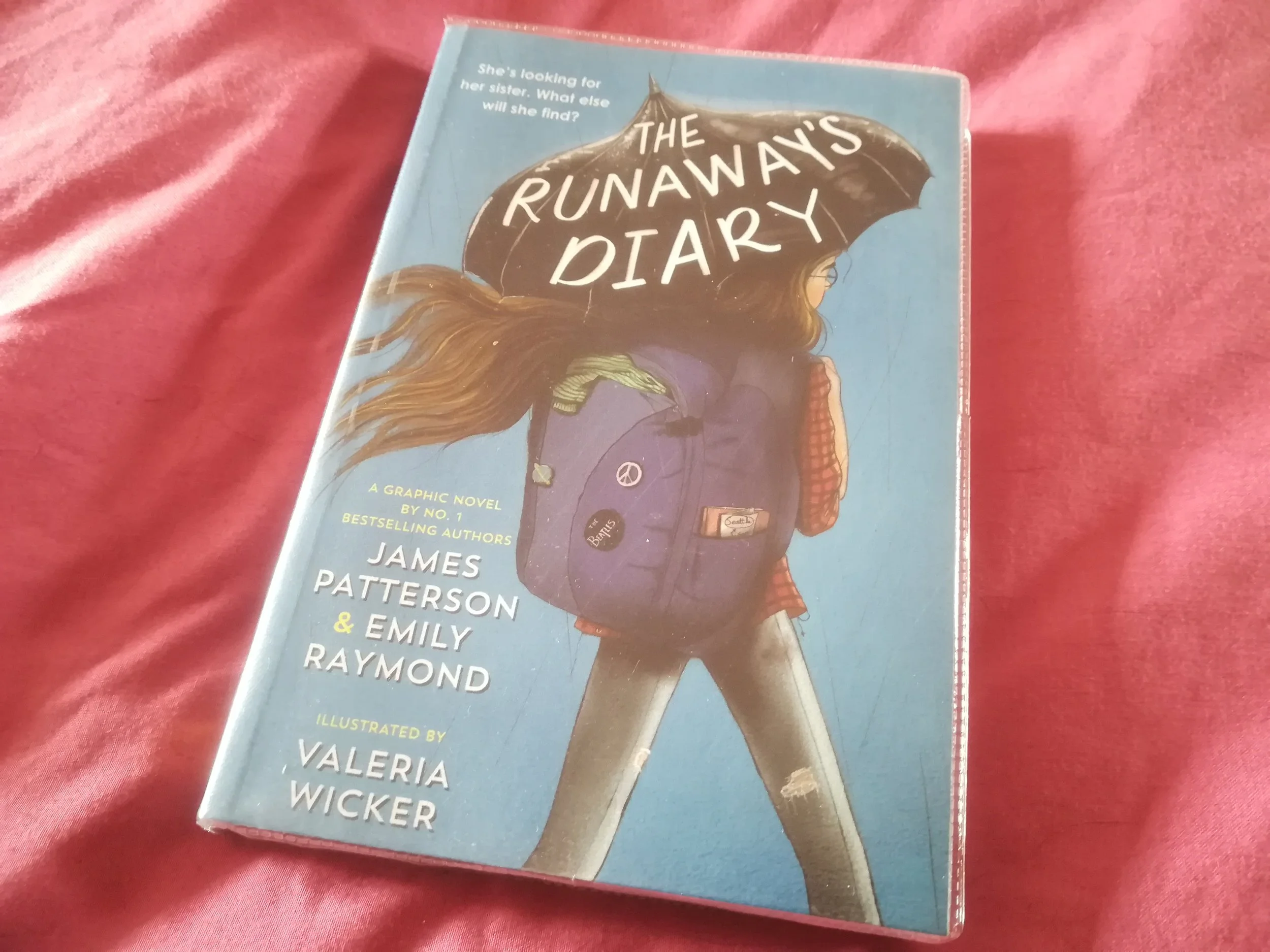
Whilst at the library I picked up this book as the cover was gorgeous and I recognised James Patterson's name, even if I don't read his stuff.  So, how was it?

Well, The Runaway's Diary is a sometimes thoughtful exploration of a young girl’s journey. The story centers on Eleanor, a fifteen-year-old girl who runs away from home to find her sister in Seattle. Armed with little more than a few old postcards and a bus ticket, she quickly finds her imagined adventure turning into a harsh reality. As she navigates the streets of a city that's much larger and colder than she anticipated, she is taken in by a grumpy but kind woman and eventually finds a makeshift family among a group of other homeless teens. Her search for her sister becomes a search for adaptation and survival as she struggles to cope with her new reality.

I enjoyed my time with the book and think that one of the book’s greatest strengths is its use of Eleanor as an unreliable narrator. The story's inconsistencies and the somewhat sanitized portrayal of homelessness are not plot holes, but rather deliberate artistic choices that give us a window into Eleanor’s mind. She’s a young girl processing trauma and coping with a frightening situation by framing it as a grand adventure where no real harm can come to her.

I think that the choice made in the story are particularly effective for its tween and young adult audience, as it allows them to engage with heavy themes like poverty and vulnerability in a way that feels safe and understandable. The hints of darker truths are present, but they remain understated, leaving the reader to contemplate them without being traumatised. While the graphic novel may have its share of slower moments and lacks the non-stop action of a typical Patterson thriller (I've seen a few films but read none of his books), it’s a deliberate and effective departure for the author.

Complementing this narrative is the beautiful and clear artwork by Valeria Wicker. Her character designs are clear and simple but embued with a  lot of personality. Eleanor's crazy hair is a visual clue to her inner turmoil but it doesn't have to be spelt out for her audience. The layouts are easy to follow and is such a visually appealing experience that it makes the story's emotional beats hit with more impact.

Overall, it's a solid graphic novel that is well worth a read, particularly for its unique take on an unreliable narrator and its gentle, yet honest, approach to difficult subjects.

The Phone Call - Short Film Review

It is rare for a film to leave such a lasting impression on the heart in just 22 minutes, but The Phone Call manages it with effortless grace. A masterclass in minimalist storytelling, the short film is a poignant reunion for Paddington alumni Sally Hawkins and Jim Broadbent, though the stakes here are far different from the whimsical streets of London.

The story centers on Heather - played with a delicate, shy nervousness by Hawkins - who spends her shift at a helpline call centre. Her world narrows to the confines of her headset when she receives a call from Stanley, a distraught man portrayed by a typically brilliant Broadbent. While Broadbent remains largely a disembodied voice, his performance is staggering, capturing the weariness and weight of a man in his final moments. What follows is an incredibly intimate, free-flowing and kind conversation between two strangers anchored to one another by a phone line. As Heather gently coaxes Stanley into sharing his life, the film transcends the tragedy of the situation to focus on the beauty of a brief, pure human connection.

Despite the heavy subject matter, it avoids the trap of being purely bleak; instead, it unfolds with a surprising warmth and ends on a resonant note of optimism and hope.

Humanist Perspectives in Videogames

Our identities are complex tapestries woven from our genetics, culture, interests, experiences, and memories. Among these threads, the media we love, especially the stories we encounter, plays a part in shaping who we are but it doesn't have to define us entirely.

Long before the printing press, libraries, or even writing itself, stories were the bedrock of human connection. Myths, legends, fables, and folklore have been passed down through generations, across vast stretches of time and space. We create and share these narratives, and in turn, they shape us, becoming the fundamental building blocks of our cultures. They instill our values, inform our beliefs, and bind us together across diasporas and against the relentless march of time. Through the stories our ancestors left behind, we remember their lives, their worlds, and their convictions.

Many myths are universally familiar - those shared across entire cultures or religions, narrating the creation of our world, the origins of life, and the tales of gods, goddesses, and spirits. Though now often enshrined in books, these narratives originated in the oral tradition, stories told around crackling campfires or sung in stirring ballads.

Stories are powerful because they’re how we remember where we came from. They take root in our families and become part of our own personal history, helping us define who we are and what we value—whether on a global scale or in our private lives.

But too often, stories about marginalized groups focus almost entirely on trauma. While this is often done to build empathy, it shouldn’t be the only perspective we see. It’s just as important to share the lighter, more joyful moments that shape a person’s life. There is so much more to the human experience than just hardship, and those other parts deserve to be celebrated too.

When people from these backgrounds challenge the status quo, it can often lead to defensiveness. However, if we want to treat videogames as a serious art form, we have to be open to critique and different points of view. Like any other medium, games only evolve when we’re willing to have an honest dialogue about them.

I believe humans are naturally wired to cooperate. At some point, we seemed to drift toward a more self-centered individualism, but I think art is the antidote to that. Real art requires a certain level of vulnerability; it’s about showing your authentic self to connect with others. That connection is what creates a true sense of belonging.

As we get older, we usually develop a better appreciation for nuance. We might have less patience for trivial things, but we also gain the ability to see the complexity in life. This kind of maturity inevitably changes the stories we choose to tell and the ones we find most meaningful.

Some videogames stand out for offering alternative, often less-accepted, historical views or deeply humanist perspectives:

  • Assassin's Creed (Especially the Ezio Trilogy and Black Flag)

  • Valiant Hearts: The Great War

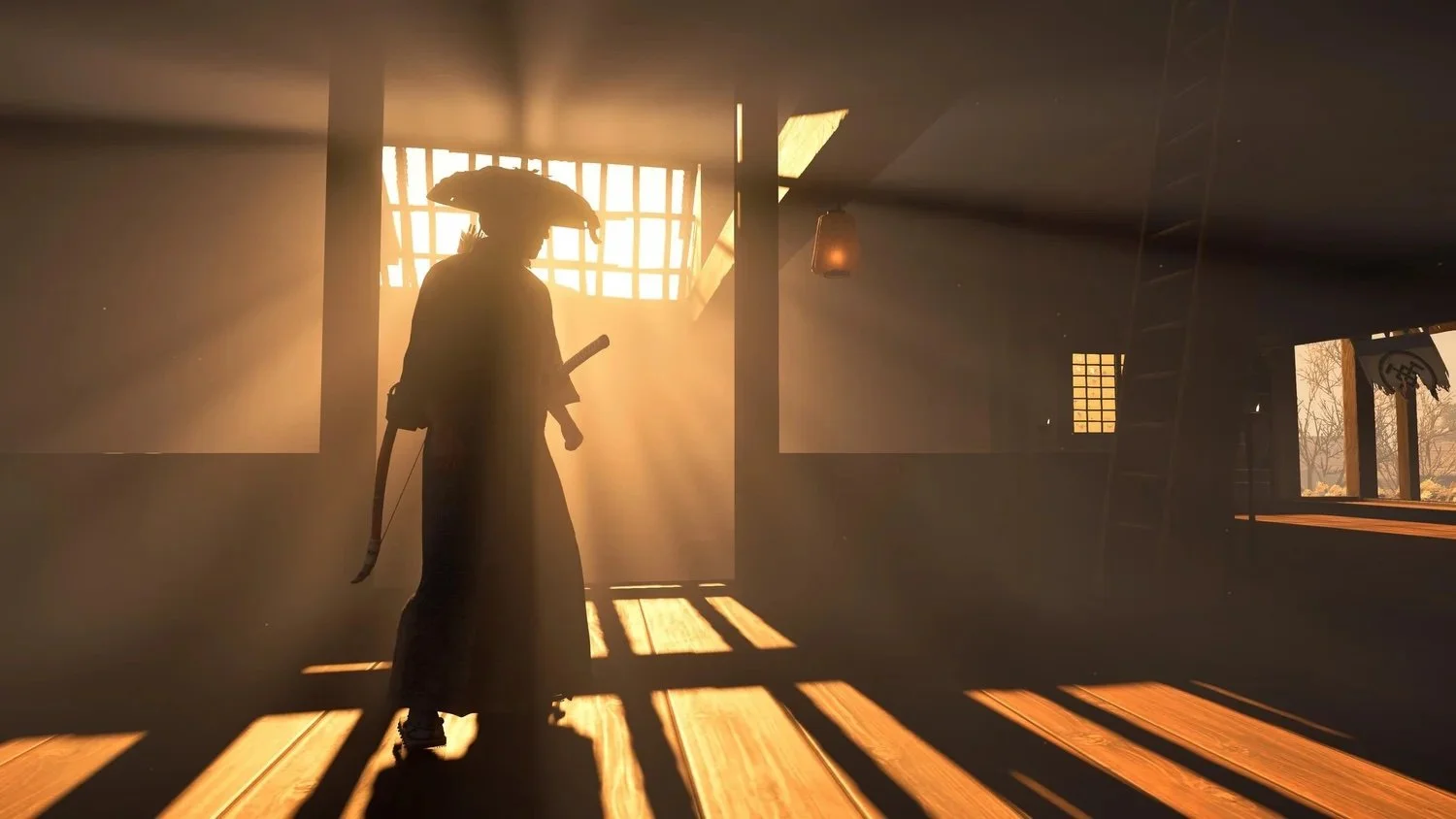
  • Ghost of Tsushima

  • Red Dead Redemption

  • Oregon Trail

  • Nier: Automata

  • SOMA

These titles, among others, demonstrate the capacity of videogames to transcend mere entertainment, becoming powerful vehicles for diverse storytelling and deeper human understanding.

LINK- The Good Place and Philosophy - Book Review (and Some Self-Reflection)

LINK- The Future Starts Here: An Optimistic Guide to What Comes Next- Book Review

LINK- Children of the Stones: Cult TV Series Review

LINK- On And On And Colston ( Or, How We Kinda Sort of Learned to Talk About the Legacy of Colonialism and the British Empire)

LINK- Japan: My Journey to the East

LINK- Pure Invention- Book Review

The Power of Gaming as a Cognitive Respite

I've always preferred local, cooperative gaming over the competitive online stuff as I have a desire for connection, not conflict. Some of my happiest memories are rooted in the camaraderie of couch co-op classics like Micro Machines and Streets of Rage 2, or that shared emotional rollercoaster of "pass-the-pad" single-player games like Resident Evil VII and Amnesia: The Dark Descent. That spirit of collaboration continues now with my daughters, whether we’re trash-talking over Mario Kart 8 or working together in Kirby and the Forgotten Land or Mario 3D World.

However, sometimes I like to experience a game at my own pace—no anxiety about having to "git gud", prove anything to strangers or even talk to anyone. That's why I gravitate toward narrative-driven games; they give me a clear end goal but the journey lets me explore things on my own terms. As a teacher, my life is constantly full of people, so my mental bandwidth often needs a genuine chance to recalibrate.

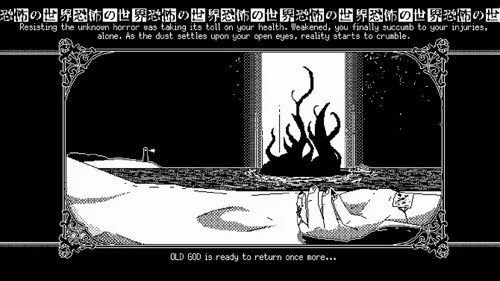
But here's the kicker: the real, subtle power of these solo experiences lies in a weird, thematic irony. I'm trying to escape the depressing cycle of global news - all the wars, genocides, and political noise - but I end up playing games like Clair Obscur: Expedition 33 (trying to revive a blighted world against an all-encompassing enemy) or World of Horror (confronting cosmic evil). These aren't simple escapist fantasies; they're narratives about desperation, grief and inhumanity.

I suspect that these games aren't providing an escape from the void but rather a structured way to look into it. The act of engaging with these fictional struggles, where I have agency and a defined objective, feels like a genuine form of cognitive processing and emotional regulation - a kind of therapy. We saw this clearly during the early days of Covid, when those structured digital worlds offered routine and a sense of mastery during a time of utter chaos. Now, facing the deep emotional toll of current events, like the ongoing tragedy in Gaza, that need for solace feels even more critical for me.

Gaming provides a controlled emotional container. By parsing the fantastical horrors in a safe space, I may be subconsciously processing the real-world chaos and existential unease that constantly permeates my news feeds. The entire spectrum of human emotion - vulnerability, sadness, pain - is covered in these games.

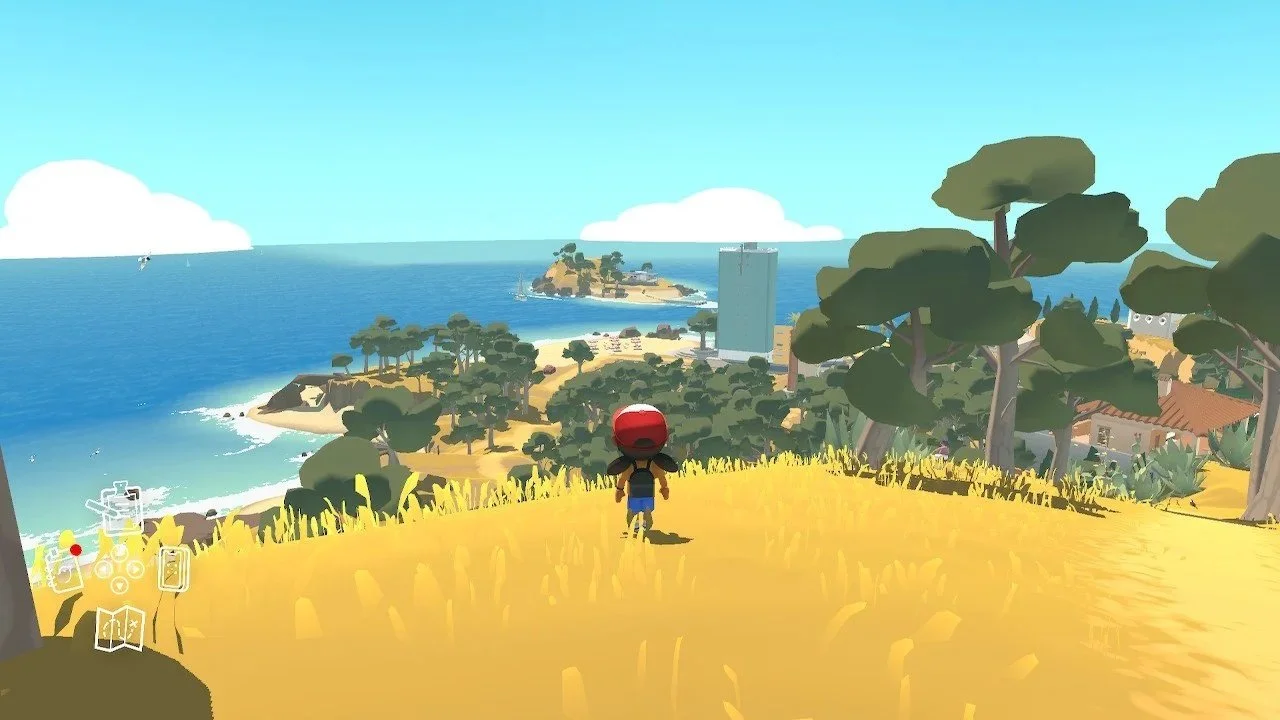
Just recently, while dealing with the emotional weight of the situation, the simple act of playing Island of Illusion with my daughters offered a vital, momentary distraction and a precious connection. The immersive nature of a videogame, regardless of its theme, creates a world where complexity and loss can be understood and momentarily set aside, offering genuine solace during these challenging times.

Megazone 23 Part 1 - Cult Manga Review

Megazone 23 is a cyberpunk OVA that is well regarded. I've known of it for years, seeing it frequently mentioned in Manga Mania, Anime FX as well as on shelves at video stores but I had never got around to seeing it. I thought I'd put aside an hour and a half to check what the fuss was about. 

I saw the film mentioned on numerous occasions in various manga and anime magazines.

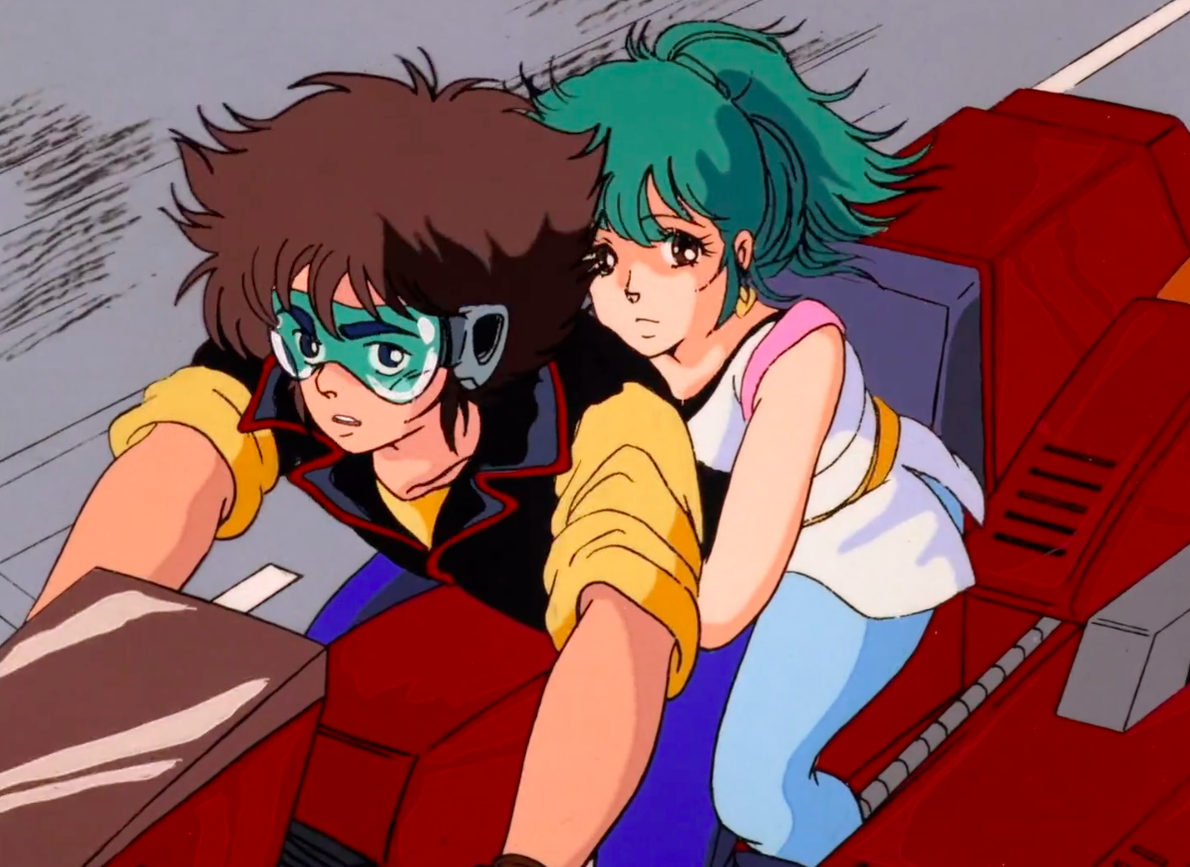
Set in a neon-drenched, eternal 1980s Tokyo, the plot follows brash Shogo Yahagi, a cocky young biker who spends his nights tearing through the city streets. His life takes a sharp turn when an old friend entrusts him with a stolen military prototype: an advanced motorcycle that can transform into a powerful mecha. As the military hunts him down to reclaim their tech, Shogo begins to notice strange glitches in his perfect urban paradise. With the help of a popular virtual idol named Eve, Shogo uncovers a massive conspiracy that suggests the world he lives in - and the history he knows - is a carefully constructed illusion.

Having watched it, I can see now where The Matrix, They Live and Dark City got their ideas from; they are a haunting meditation on The Stagnation of Paradise, where the concepts of nostalgia, technology, and social control aren't just separate ideas, but layers of a singular, claustrophobic trap. The story posits that a society prioritizing comfort over truth is inherently fragile, existing in a "forever summer" designed to prevent anyone from looking closely enough at the seams of their reality - all pretty heady stuff for a 1985 anime.

The animation is stunning and holds up well, especially the amazing mech designs by Shinji Aramaki, who worked on Appleseed, Ghost in the Shell SAC and Metal Skin Panic Madox, and character work by the legendary Haruhiko Mikimoto, who worked on Macross and Gundam. The soundtrack slaps and there is no problematic etchi stuff, although there are a couple of love making scenes, but apart from that you're all good to go.

Overall, if you enjoy the vibe of 80s synth-pop, detailed mechanical animation, and "Big Truth" mysteries, this is essential viewing. Just be prepared as it trades the typical hero’s journey for something much more cynical and thought-provoking.

LINK: Japan: My Journey to the East

LINK: Summer, Fireworks, and My Body

LINK: A Nightmare on Elm Street Boxset - Cult Movie Review

LINK: The Power of Stories and How They Are Manipulated

LINK: The Message by Ta-Nahisi Coates - Book Review (and Some Thoughts)

LINK: The Anxious Generation: Book Review (and Some Thoughts)

LINK: Utopia for Realists- Book Review

LINK: Toxic: Women, Fame and the Noughties- Book Review (and Some Thoughts)

The Ghost in the Machine: Weaponized Nostalgia and Bubble Bobble

Like many, I have been deeply worried by the seemingly unstoppable return of fascism across the globe. It can become somewhat overwhelming and so my primary coping mechanism has been to treat it like a specimen under a microscope, specifically by studying its techniques of persuasion.

Among the most insidious techniques used is what philosopher Jason Stanley terms the "mythic past," or what I like to call weaponized nostalgia. We’ve all seen the AI-generated "sloppaganda"  media flooding our feeds - images of a sun-drenched, crime-free London that supposedly existed before the "wrong" type of people (read: "foreign folks") arrived. The decline porn’s power lies in exploiting the sheltered innocence of childhood; of course you felt safer as a ten-year-old as your world was the size of a postage stamp and you weren't the one paying the bills! You weren't living in a safer era; you were just living in a smaller one. However, the sense of hauntology, of what could have been, seeps through and is a siren song for the disaffected and disenfranchised looking for someone to blame for why it all went so "wrong".

Many far-right actors and grifters promise a return to that sanctuary, provided you trust them and place them into positions of power and influence. Once they’ve successfully convinced you to loathe the present, the suggestion that creating a wave machine in Dover to push back boats and opening "processing centres" in Rwanda might start to sound disturbingly like common sense. We become more susceptible to this as we age, largely because it’s a convenient distraction from the realization that our own lives maybe haven’t quite unfolded in all the cinematic glory we envisioned in our youth.

So, why am I so unconcerned about falling for my own nostalgic indulgences? Simple: I own a collection of vintage computers and consoles and they serve as my personal fact-checkers.

Take Bubble Bobble, for example. In my memory, the version for the Amstrad CPC 464 was a pinnacle of digital achievement - a masterpiece of monochromatic fluid motion (I only had the green monitor on which to play the game). However, when I played the pixel-perfect port on the Numskull Quarter Arcade cabinet I bought as my Covid comfort purchase the reality bit.

This machine was my lockdown purchase and I do not regret anything, except maybe the lack of a haircut!

Sure, the Amstrad version was a valiant effort, but compared to the original 1986 arcade Bubble Bobble game, it was obviously a lesser work. In my head, nostalgia had upscaled my memories to 4K, but the aging Amstrad hardware was only pushing 8 bits and creaking under the effort. It seems a long way from the English Channel to the 8-bit caves of a 1980s platformer, but the mechanics of the delusion are identical; nostalgia didn't just upscale the image; it filled in colors that were never actually there. So, by keeping these relics around, I’m constantly reminded that the "good old days" were often just a lower-resolution version of the present.

Green Legend Ran - Cult Manga Review

I'm a huge Mysterious Cities of Gold fan and had heard that it was part inspired by a series called Future Boy Conan. I had never seen this series before, as it was never shown in the UK to my knowledge, but had heard that it was definitely worth a watch. When a Blu-ray was released, I jumped on it and ordered it on release day. I found that, even though the series was old and I had no personal attachment to it, I was very impressed. I could see the DNA from Conan to MCOG. I say this because it seems like it wasn't the only one as I heard that it had influenced Green Legend Ran, a three-part anime series that was released way back in 1992. I knew of it but had never got around to watching the series. However, I did have the soundtrack CD by Yoichiro Yoshikawa which I'd bought from the original location of Forbidden Planet back in the mid 90s. It had been on sale so if picked it up and listened to it with no context. So, with some time on my hands, I thought I'd finally give it a watch.

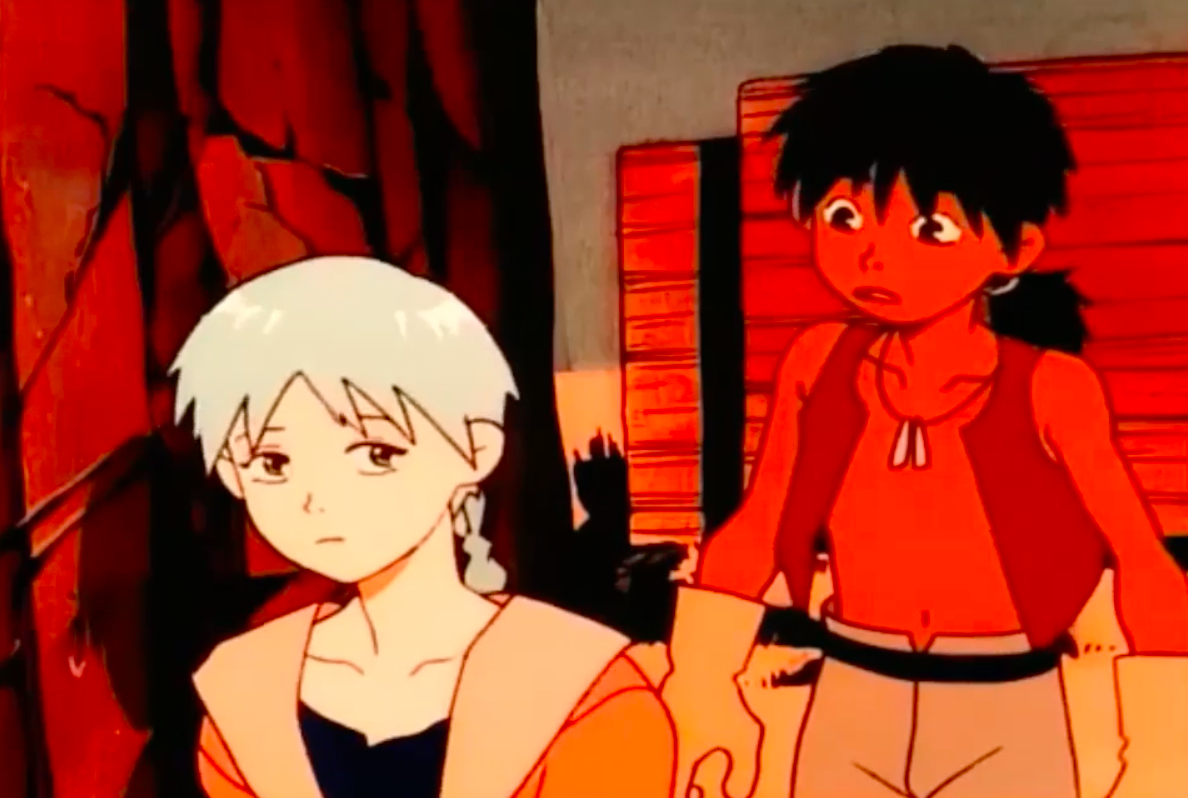
Set on a post-apocalyptic Earth that had been ruined by humans, the world was further transformed into a desert wasteland after alien monoliths, known as the Rodo drained the planet's water and life. The story follows Ran, an angry young man who questions his lot in life. He joins a revolutionary group to track down the scarred man who killed his mother but his personal quest shifts when he meets Aira, a mysterious silver-haired girl with an unknown connection to the Rodo's central monolith, the 'Holy Mother.'

When Aira is kidnapped, Ran pursues her across the desert, becoming entangled in the larger conflict between the oppressive, water-controlling religious cult known as the Rodoists and the anti-Rodo rebels of Hazzard. Along the way he find out what the purpose of the Rodo is and why they have kidnapped Aira.

I have to say that watching this reminded me of the storyline from several Hollywood movies where aliens are terraforming planets by destroying the atmosphere. It happens in The Arrival, Titan A.E, Chronicles of Riddick, Man of Steel and Dune so it's a pretty common trope. Here, it's wonderfully realised as you see the suffering of the people and the disperate societies that have emerged, some seeing the Holy Green Monoliths as a sign from God whilst others see them as oppressors. The Holy Green has its own plans though and it's machinations may not be magnanimous...

I really liked this anime as the animation by AIC is solid, showcasing some creative dystopian scenery of old ruined cities, failing infrastructures and increasing desertification. The soundtrack is great and complements the film well, especially in its more philosophical musing moments.

Green Legend Ran deals with some emotive themes and features swearing, acts of terrorism, violence, gunplay and blood; it is not intended for young kids, which is a shame as I think it has something important to say about blind faith and the environment.

In a world increasingly fragmented and more tribal, at least when looking at online discourse and politics, this story is pretty evergreen as it shows what can happen when fanaticism takes hold on both sides of the divide. This OVA is well worth 150 mins of your time.

LINK: Japan: My Journey to the East

LINK- Battle Angel Alita: And So It Ends

LINK- Fire Tripper: Cult Manga Review

LINK- Akira Soundtrack Vinyl Review

LINK- Manga Exhibition at the British Museum

LINK- The Transportive Nature of Objects (And the Power of Mini Consoles)

LINK- My One True Gaming Constant in Life- Nintendo

LINK- The Mysterious Cities of Gold Retro Soundtrack Review