
Dark City- Cult Movie Review

As the Autumnal nights start to roll in, I thought I'd get into the spirit by watching some suitably moody and dark films. One of the movies I decided to watch was one I vaguely remember from about 25 years ago called Dark City. I remember it being a noirish sci-fi with a cool premise but couldn't remember exactly what it was, only that The Crystal Maze's Richard O'Brien played a scary fedora and trench coat wearing bad guy in it.

Snuggled into my blankie, I watched the movie with my wife. She noped out after 10 minutes when the opening monologue explained the scenario of alien beings having taken over the art deco nourish world.
The first scene features an unconscious man, John Murdoch played by a typically solid Rufus Sewell, in a bathtub waking up to find a slain woman. He has no recollection who he is or how he has ended up in this squalid room with a dead body.

Suddenly, he receives an anonymous phone call telling him to escape as some people are coming to get him. What follows is an incredibly well-done cat and mouse tale as John is trying to find out the truth, the police are chasing him for a series of murders and the alien entities want to catch him for their own nefarious purposes. All this seems to link to a place called Shell Beach, a place everyone knows but no one seems to recall how to get there.

I thorough enjoyed the film as it is a pretty starry cast who are all pretty uniformly excellent; Kiefer Sutherland plays Dr Schreber very well, a creepy psychologist with an ulterior motive who had betrayed humanity to work for the aliens. Richard O'Brien plays an alien in a trench-coated human guise very well-unrelenting in his pursuit for his prey.  However, Jennifer Connelly, who plays the wife of John Murdock, is a bit of a cypher though as she does not contribute much and the love story seems very artificial and tacked on. This is disappointing as Connelly is brilliant in everything she stars in and she seems underutilised.

The set design is immacute, all neo noir goth that reminds me of Tim Burton's Batman or Batman: The Animated Series and the hard-boiled film noirs of the 30s and 40s. The streets are rain slicked, the cars classic, it is constantly nighttime with fog and vented steam in the air that creates startling silhouettes and shadows.

The special effeacts are pretty effective as buildings change size and shape depending on the whims of the aliens - Paprika or Inception style. I watched the film over two nights as on the first night I was so tired and in a fugue state  so, when the buildings start to move, I wasn't sure of it was in the film or I was dreaming.

The film is a semi-forgotton genre masterpiece and deserves much more recognition that it got upon release. It's a shame that there wasn't a longer lasting legacy for this film as I think it should be considered a classic.

LINK- How to be Perfect: The Correct Answer to Every Moral Question by Mike Schur- Book Review

LINK- The Good Place and Philosophy- Book Review

LINK- Utopia for Realists- Book Review

LINK- On And On And Colston ( Or, How We Kinda Sort of Learned to Talk About the Legacy of Colonialism and the British Empire)

LINK: Lost in a Good Game- Book Review

LINK: Blood, Sweat and Pixels- Book Review

LINK- The Anxious Generation: Book Review (and Some Thoughts)

LINK- Utopia for Realists- Book Review

LINK- ‘Natives: Race and Class in the Ruins of Empire’ LINK: Elden Ring- Videogames As Art

LINK- Toxic: Women, Fame and the Noughties- Book Review (and Some Thoughts)
LINK- Pure Invention: How Japan's Pop Culture Conquered the World- Book Review (and Personal Reflections)

Krysař (The Pied Piper of Hamelin) - Cult Film Review

Whilst scrolling through the feed of a Facebook group I follow, Incredibly Strange Films, I heard of a stop motion animated film based on the story of The Pied Piper. I knew of the story of course, and had seen a haunting interpretation of the film in The Sweet Hereafter, which starred a young Sara Polly, that used the motiff as its main through-line. I've spoken before about how Channel 4 and BBC 2 used to show world animation during the daytime, stuff I'd get to see when I was ill at home. I remember unearthly jerky character movement which weirded me out at the time but with time I've come to appreciate the stop-motion art form. So, suitably intrigued by the premise of this short film, I thought I'd jump in and give this a view... but was it worth it

Well, I have to say Jiří Barta's 1986 stop-motion film Krysař (known in English as The Pied Piper of Hamelin) is an animated masterpiece which  distinguishes itself with its unsettling atmosphere and profound reinterpretation of the classic folk tale.

From the first frame, the film establishes a somber tone. The town of Hamelin is portrayed as a decadent place, inhabited by grotesque and selfish characters whose lives are dominated by greed and gluttony. The rats infesting the city seem a natural extension of the moral decay of its inhabitants. When the Piper is called to help resolve the issue he does so but is betrayed by the petty people. As a consequence, he exacts a terrible revenge.

Throughout the 50 minute runtime, the stop-motion animation is exceptional; every movement is deliberate and expressive, and the use of materials like wood and fabric gives the characters and environment a tangible, almost tactile texture that enhances the sense of disturbing realism. The German Expressionism, in the style of The Cabinet of Dr. Caligari, portrays the sharp higgledy piggledy houses as threatening, looking giants for the rats.

The character design is also particularly striking. The faces of Hamelin's inhabitants are exaggerated, almost Cubist, caricatures of avarice and ugliness, while the Piper is an enigmatic and almost spectral figure, with a pale prophetic face and empty eyes that hint at a nature beyond human. His flute is not just an instrument, but an almost organic object that seems to come alive when played, emitting sounds that are both seductive and hypnotic. The stop-motion animation truly excels at portraying the horde of rats; their sharp teeth and twitchy tails create an amazing visual, and the manic fury of their wave-like attacks on the people strongly evokes the feel of A Plague Tale: Requiem.

The narrative has little verbal dialogue, opting instead for a powerful combination of images, music and sound effects. Michael Kocáb's soundtrack is fundamental in building the atmosphere, with minimalist and dissonant pieces that accentuate the tension and mystery. The absence of words forces the viewer to fully immerse themselves in the film's visual language, interpreting emotions and motivations through gestures and expressions.What truly elevates Krysař is its treatment of underlying themes.

The film is not limited to telling the story of a rat-infested town; it is a scathing critique of societal corruption, irresponsibility, and complacency. The Piper's arrival is not just a solution but a judgment, and his revenge is a logical consequence of the villagers' lack of empathy and pettiness. The chilling final sequence, with the town's people blindly following the Piper to their watery fate, leaves a lasting impression about judgement.

Overall, Krysař is a gem of animation, an artistic work that transcends the format to offer a dark and fascinating meditation on human morality. Barta's critique of Western decadence from his communist Czechoslovakia home is pointed in its criticism of greed and decadence and, with the excess of the billionaires and rich, who would disagree?

The films visual style, wordless narrative, and profound thematic resonance make it an essential piece for lovers of more experimental and provocative animated cinema. It is a film that lingers in the memory, inviting reflection long after the credits have rolled.

LINK: Japan: My Journey to the East

LINK- Battle Angel Alita: And So It Ends

LINK- The Moomins 80's Soundtrack Vinyl Review

LINK- Inspector Gadget Retro Soundtrack Review

LINK- Ulysses 31 Retro Soundtrack Review

LINK- The Mysterious Cities of Gold Retro Soundtrack Review

LINK- Sonic Mania Video Game Vinyl Soundtrack

LINK- Thomas Was Alone Video Game Vinyl Soundtrack Review

LINK- Akira Soundtrack Vinyl Review

Possibly in Michigan - Cult Film Review

I'd heard of this short film mentioned on a Facebook Group I'm a part of, Incredibly Strange Films, but I was not prepared, dear reader, for what I watched.

I've seen many musicals like The Umbrellas of Cherborg, Oliver, Hello Dolly and Bugsy Malone but this film defies simple categorisation, being a avant-garde feminist piece that defies simple categorisation. 

Cecelia Condit's 1983 short film, Possibly in Michigan, is a truly singular and unsettling cinematic experience about two women who, during a seemingly mundane shopping trip for perfume, become the targets of a predatory man in a chilling mannequin mask. What follows is a surreal, unsettling chase through the mall environment. 

It's all very weird and mesmeric - intentionally so. It reminding me of a fever dream of shows I might have watched or possibly imagined watching at home on Channel 4 in the daytime whilst sick and in a fugue state in the 80s. What Condit successfully does is tap into the primal sense of feminine vulnerability and resistance, reframing the common trope of the female victim or final girl from horror films. The film’s strange structure and tone may be confusing but in its way it is a potent feminist commentary on gendered violence and agency.

The film’s aesthetic choices are deliberately grating, contributing greatly to its overall sense of unease. The lo-fi, synthesized score is highly distinctive, employing sounds reminiscent of an old Casio keyboard, lending a jarring, almost juvenile soundtrack to the unfolding horror. The farty two keys are also comedic when contrasted with what the film is talking about - Violence against women and cannibalism. Similarly, the earnestly naive sung dialogue, delivered by Karen Skladany and Condit, possesses a raw, unpolished quality that purposely avoids traditional vocal refinement. This intentional amateurism, combined with the over-saturated video effects in the chase sequences, creates a stylized, dreamlike atmosphere that is both chilling and compelling.

So, overall I'd give Possibly in Michigan a hard recommend. It is a weird but effective horror that has a unique soundtrack and abrasive visual style that is undeniably effective and unforgettable. It is an intriguing piece of avant-garde horror which has a hypnotic and experimental quality, guaranteeing it cult classic status. 

LINK: Japan: My Journey to the East

LINK- Battle Angel Alita: And So It Ends

LINK- Fire Tripper: Cult Manga Review

LINK- Akira Soundtrack Vinyl Review

LINK- Manga Exhibition at the British Museum

LINK- The Transportive Nature of Objects (And the Power of Mini Consoles)

LINK- My One True Gaming Constant in Life- Nintendo

LINK- The Mysterious Cities of Gold Retro Soundtrack Review

The Innkeepers - Cult Horror Review

I came across Ti West's The Innkeepers by chance when I saw the cover in a film magazine whilst I was flicking through not WHSmiths; I can never remember what it’s called now and it’ll always be Smiths to me anyways. Suitably intrigued I managed to finagle a copy and sat down one cold, wet Autumnal evening to watch it. So, was my time well spent or was it an evening wasted?

Set in modern day (circa 2010s America, so an age away from the fresh hellscape we currently have over there) the film follows two slacker employees, Claire (Sara Paxton) and Luke (Pat Healy), who are determined to document the legendary paranormal activities of the Yankee Pedlar Inn during its final weekend of operation before it closes forever. However, in this refreshing take on the haunted house genre, what follows over the next hour and a half is a slow-burn supernatural tale that prioritizes atmosphere and character over jump scares and special effects.

The film's greatest strength lies in its masterful use of mood and setting. I’m going use that hoary old saying and say that the old hotel itself becomes a character—a maze of empty hallways, echoing stairwells, and dimly lit rooms that feels both charmingly old-fashioned and deeply unsettling. West takes his time, allowing the audience to soak in the pervasive silence and subtle sounds of the aging building. The scares, when they do arrive, are earned. They are often quiet, brief, and all the more effective for it, playing on psychological dread rather than cheap shocks. This style is a testament to West's control as a director, as he confidently builds a sense of unease that gradually tightens its grip.

Paxton and Healy deliver wonderfully naturalistic performances that anchor the film as their casual, witty banter feels authentic, providing a welcome human element that makes their budding ghost-hunting a believable pastime. Paxton, in particular, shines as Claire, portraying a character who is both quirky yet deeply vulnerable. Her transformation from a wide-eyed amateur investigator to a terrified victim is the emotional core of the film, and it's her relatable fear that ultimately makes the climax so chilling. The addition of Kelly McGillis as a former actress-turned-psychic adds an intriguing, if slightly strange, layer to the story.

Watching The Innkeepers, the atmosphere created by the low, constant drone in the sound design was effective. It wasn't just background noise; it felt like the hotel was breathing, a low hum of anxiety that got under my skin and made me feel like something was always wrong, even when the screen was still and quiet. It was the perfect complement to the way the camera moved. I noticed the Steadicam footage was often at these strange, skew-whiff Dutch angles, tilting the whole picture and making the hallways and rooms feel warped and unsettling; it made me feel the same claustrophobia and unease that the main character, Clare, was experiencing. It was a really effective way to put me directly into her anxious, disoriented state of mind, making the whole film an exercise in creeping psychological horror.

Overall, The Innkeepers is a film for a specific kind of horror fan: one who prefers the quiet terror of a classic ghost story over the flashy spectacle of modern horror. It's a character study first and a haunted house story second, and its deliberate pacing and atmospheric tension rewards patient viewers with a truly unnerving experience. So while it may not appeal to those seeking torture porn, flashy violence or jump-scares, it will reward lovers of old-school horror. This film is an intriguing little gem and pretty enjoyable and so I recommend it!

LINK: Summer, Fireworks, and My Body

LINK: A Nightmare on Elm Street Boxset - Cult Movie Review

LINK: The Power of Stories and How They Are Manipulated

LINK: The Message by Ta-Nahisi Coates - Book Review (and Some Thoughts)

LINK: The Anxious Generation: Book Review (and Some Thoughts)

LINK: Utopia for Realists- Book Review

LINK: Toxic: Women, Fame and the Noughties- Book Review (and Some Thoughts)
Laurin - Cult Film Review

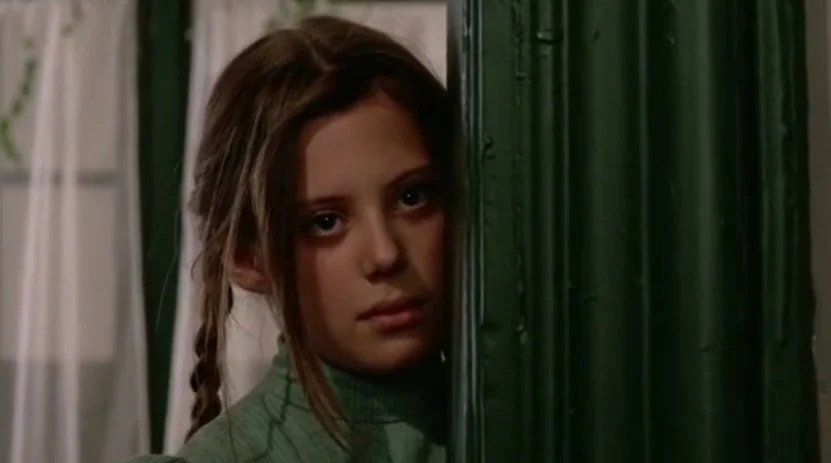
Sometimes the best cinematic discoveries happen off the beaten path and from unexpected sources. I recently stumbled across a mention of a film called Laurin on the Facebook group 'Incredibly Strange Films' and decided to dive in. What I found was a stunningly unique piece of Gothic German cinema that deserves far more recognition.

Directed by Robert Sigl in 1989, Laurin is set in a moody, turn-of-the-century German port town. The story centers on young Laurin (played with beguiling innocence by Dóra Szinetár), a girl living in a state of arrested development following the mysterious death of her pregnant mother. She’s immediately burdened with terrifying, precognitive nightmares that seem to link her mother’s tragedy to a series of escalating child disappearances in the village.

The narrative kicks off when a handsome new schoolteacher, Mr. Van Rees, arrives. Laurin is instantly drawn to him, but her amateur detective work soon pulls her into a dark mystery involving the teacher, the local priest and her bullied friend, Stefan. The film becomes Laurin's intense, personal mission to navigate the unsettling truths and repressed secrets of the adults around her, forcing her through a turbulent and often frightening journey into adolescence.

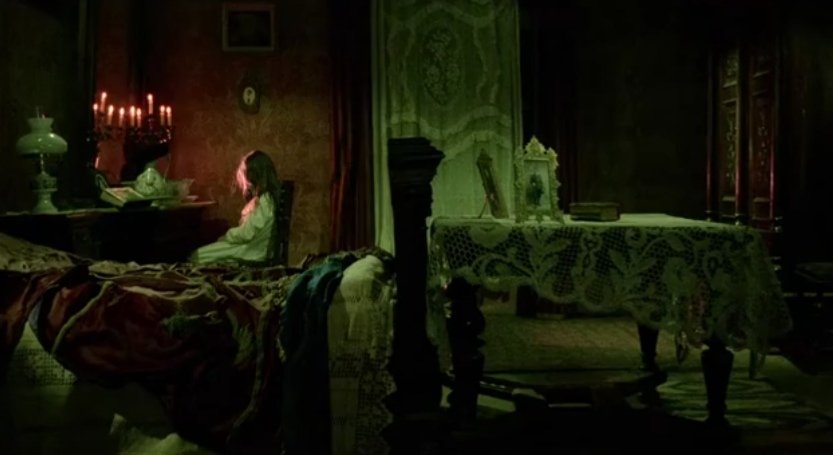
Watching this atmospheric, unsettling film, I quickly felt that Laurin completely resisted simple genre classification; it had horror elements but also dealt with the realm of the surreal, and frankly, I was here for it. Parts of it reminded me of The Company of Wolves, the growing adolescence of a young woman; Paper House, the trauma of abuse and childhood; Moondial, the sense of gothic dread and Suspiria, with its use of claret and greens that pervaded giallo films of old. In my book, this could only be a wonderful thing!

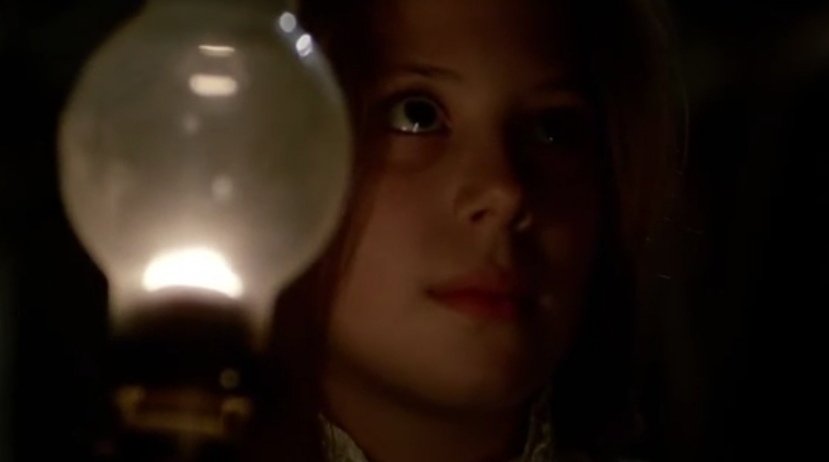
The film is beautifully filmed, using stunning natural landscapes and scenery to establish an immediate tone that is at once idyllic and profoundly fragile. These expansive exterior shots are contrasted brilliantly with interiors defined by carefully chosen lighting. The light here isn’t just illumination—it's a critical tool for generating mood. This strategic use of pervasive gloom and dramatic shadows contributes heavily to the ominous and eerie feeling that permeates every frame, sustaining an inescapable sense of mystery that the viewer is never quite allowed to escape. The set design shows real artistry, and Sigl makes expert use of bold color and visual imagery, transforming the very setting into a central participant in the psychological drama.

This highly stylized world is populated by characters whose eccentricities underscore the central themes of childhood trauma and repressed sexuality. Laurin, sleeping in a crib, is the perfect symbol of willfully stunted development. The ensemble only amplifies this disquiet, including the local Priest and his son, both clearly grappling with profound issues relating to childhood and sexuality.

Further depth is added by peripheral figures—the innocent bullied schoolboy, the dope smoking granny - who collectively frame the narrative not as a straightforward story, but as a descent into a community's deep-seated and often bizarre psychological unrest.

Overall, Laurin is a work that values atmosphere over exposition. It invites the viewer to navigate a dream logic where the boundary between reality and hallucination is irrelevant. For those drawn to cinematic puzzles and films where the environment is as disturbed as the characters within it, this movie is a unique, beguiling and truly unforgettable experience. So, if you’re a fan of unsettling visuals and deep mystery, go track this one down as its definitely worth your time.

LINK- Pure Invention: How Japan's Pop Culture Conquered the World- Book Review (and Personal Reflections)

LINK- The Rise of Retro Gaming During Covid

LINK- Japan: My Journey to the East

LINK- Blood, Sweat and Pixels- Book Review

LINK- Utopia for Realists- Book Review

LINK- On And On And Colston ( Or, How We Kinda Sort of Learned to Talk About the Legacy of Colonialism and the British Empire)

LINK- ‘Natives: Race and Class in the Ruins of Empire’ LINK: Elden Ring- Videogames As Art

I Saw the TV Glow - Cult Film Review

Whilst scrolling through Netflix, I saw the thumbnail for the film I Saw the TV Glow. Now, I hadn’t seen it but vaguely remember hearing that it was worth a watch so I gave it a watch. Jane Schoenbrun’s film is a haunting, deeply moving exploration of identity, alienation, and the lifesaving power of media fandom. Set against the muted, suburban backdrop of the late 1990s, the film captures the unique, isolating trials of growing up queer in an era before the ubiquitous internet, perfectly nailing the period's specific aesthetic texture and emotional weight. At the heart of the narrative is the profound human need to "find your people"—a connection forged for teenage protagonists Owen and Maddy through the flickering glow of a fictional, late-night cult television series called The Pink Opaque. Reminiscent of 1990s supernatural dramas like Charmed or Buffy the Vampire Slayer, the show follows two psychically linked girls fighting monsters-of-the-week alongside a sinister overarching villain, Mr Melancholy.

As the characters and themes from the broadcast begin to bleed into their everyday lives, Owen and Maddy search for a path to authenticity that lies just beyond the veil of their mundane world. Schoenbrun brilliantly utilises The Pink Opaque as a nested narrative that acts as a vital mirror for the characters' internal struggles, serving as a layered, unsettling, and ultimately beautiful allegory for the transgender experience, the terror of burying your true self, and the courage required to step into the light. The television screen isn't merely entertainment here; it is a sacred portal to a world where two lost souls finally feel seen. When Maddy suddenly vanishes—only to return years later deeply changed—the narrative takes on a fierce, haunting momentum.

This complex emotional landscape is anchored by two extraordinary lead performances. Justice Smith delivers a masterclass in quiet, devastating vulnerability as Owen, capturing the suffocating, paralysing fear of lifelong repression. Matching his intensity, Brigette Lundy-Paine is phenomenal as Maddy, radiating a desperate urgency that jumpstarts the film's second half. Together, their on-screen chemistry beautifully conveys the weight of finding someone who speaks your exact language when the rest of the world feels foreign, capturing that specific, hyper-intense period of adolescence where a single piece of media doesn't just entertain you—it defines you.

Visually, the film's period detail is flawless. From the warm, eerie hum of CRT televisions to the dim suburban streets, the production design masterfully portrays how deeply a television show can matter to marginalised youth, transforming media consumption into a shared lifeline. I Saw the TV Glow emerges as a poignant masterwork for anyone who ever felt like an outsider, capturing the exact moment when the static of a television screen felt far more real than the world outside.

The Company of Wolves - Cult Film Review

Years ago, late one night, I caught The Company of Wolves on the BBC. It remained a wondrous fever dream but I hadn’t seen it in over 30 years so I thought I’d give it a revisit.

Now, Neil Jordan and Angela Carter’s 1984 cult classic isn't your average ’80s creature feature. Drenched in gothic romance and Freudian symbolism, it filters Little Red Riding Hood into a haunting, dreamlike descent into dark folklore. Far from a straightforward horror flick, the film operates as a richly symbolic nightmare, weaving together fairy-tale mythos, adolescent anxiety and the primal allure of the wild.

The film opens in the present day with young Rosaleen (Sarah Patterson) falling asleep in her bedroom and dreaming herself into a fantastical, timeless forest. This framing device immediately pulls us into the subconscious, where childhood innocence collides head-on with burgeoning maturity and the dangerous realities of the adult world. Governed entirely by dream logic, the narrative glides effortlessly between eerie, nested vignettes—each serving as a cautionary fable or a dark metaphor for Rosaleen's internal awakenings.

Visually, the film is an absolute triumph of atmospheric studio design. Drenched in heavy fog, eerie lighting, and towering trees, the hyper-stylised forest sets create an unforgettable, fairy-tale gothic atmosphere that punches well above its weight. Then, of course, there are the practical effects. The transformation sequences remain properly skin-crawling, prioritizing psychological body horror over standard creature-feature tropes and delivering a visceral depiction of metamorphosis where the beast literally tears its way out from within the human shell.

At the heart of the film is its clever reinterpretation of the wolf. It isn't just a literal predator lurking in the trees; it’s a multifaceted symbol for masculine desire, forbidden temptation, and the untamed nature inside us all. Anchored by Patterson's quiet curiosity, the narrative is elevated further by Angela Lansbury, who is marvellous as Grandmother. She delivers chilling, darkly humorous warnings about men and their animalistic impulses—most famously offering the immortal advice:

"Never trust a man whose eyebrows meet."

While its heavily allegorical nature means it prioritises mood and thematic resonance over a traditional linear plot, those willing to surrender to its hypnotic rhythm are in for a deeply psychological ride. The Company of Wolves emerges as a visually intoxicating, intellectually provocative piece that transcends its genre—a dark fairy tale for grown-ups that masterfully navigates the fine line between fear and fascination, inviting you to ponder the wolves within and without long after the static fades.

LINK- Toxic: Women, Fame and the Noughties- Book Review (and Some Thoughts)
LINK- Pure Invention: How Japan's Pop Culture Conquered the World- Book Review (and Personal Reflections)

LINK- The Rise of Retro Gaming During Covid

LINK- Japan: My Journey to the East

LINK- Blood, Sweat and Pixels- Book Review

LINK- Utopia for Realists- Book Review

LINK- On And On And Colston ( Or, How We Kinda Sort of Learned to Talk About the Legacy of Colonialism and the British Empire)

LINK- ‘Natives: Race and Class in the Ruins of Empire’ LINK: Elden Ring- Videogames As Art

Sister Midnight - Cult Film Review

For many of us, Bollywood isn't just a film industry; it's a foundational piece of our cultural identity, a vibrant, if sometimes predictable, force that has soundtracked our lives.

That deep-rooted familiarity is precisely what makes Sister Midnight such a startling and exhilarating experience—it’s the maverick film we desperately needed to shake the stagnation of mainstream Indian cinema.

At its core is Radhika Apte, an actress much like Emma Stone in that her career choices consistently show a more adventurous bent. Apte is fearless, choosing scripts that prioritize unusual vision over commercial safety and it is her presence here anchors a story that effortlessly mixes the deeply personal with the gloriously absurd.

The film takes the familiar cultural starting point of an arranged marriage and the modern malaise of ennui, and then violently shoves them off a cliff into the bizarre territory of vampirism and the raw, unflinching search for authenticity. These are waters few mainstream Bollywood productions dare to tread and the film is all the better for its audacity in portraying it in such an unusual and joie de vivre fashion.

What truly elevates Sister Midnight is its jaw-dropping aesthetic ambition. Writer-director Karan Kandhari's debut is a well-crafted visual feast, forging a true genre hybrid in Bollywood. There are elements of an introspective art film, a road movie, folk horror and stop-motion surrealism, all with gentle nods to Ozu, Kurosawa and Buster Keaton. Yup, it's a melange that works surprisingly well. This is all bolstered by an expertly placed soundtrack. This combination of styles and substance isn't just experimental; it’s extraordinary—it tells a story that literally could not be told any other way. Even as the film twists through its darkest and strangest corners, it never loses its pulse.

Sister Midnight is a brilliant, unsettling, and ultimately joyous experience. If there is any justice, this film won't just do well—it will establish itself as a genuine cult classic, carving out a new, surreal and authentic path for Bollywood’s future. Everyone likes masala films but there is always room for an original palette cleanser like this.

LINK: Japan: My Journey to the East

LINK: Please Save My Earth - Cult Manga Review

LINK: Thomas Was Alone Video Game Vinyl Soundtrack Review

LINK: Akira Soundtrack Vinyl Review

LINK: The Power of Stories and How They Are Manipulated

LINK: The Message by Ta-Nahisi Coates - Book Review (and Some Thoughts)

LINK: The Anxious Generation: Book Review (and Some Thoughts)

LINK: Utopia for Realists- Book Review

LINK: Toxic: Women, Fame and the Noughties- Book Review (and Some Thoughts)
Ginger Snaps - Cult Film Review

There are some films that just stick with you, even if you've only ever caught glimpses of them. For me, one such film has always been Ginger Snaps, now considered a bit of a Canadian cult horror gem. Released at the turn of the millennium, the film became a whispered legend among a couple of my friends. However, for years, my experience with it was frustratingly fragmented. Back in the late 90s, my friend Carlena had a knack for finding the most obscure and strange film, she was doing a Film Studies degree after all, so her house was our unofficial cinema, a place where we'd huddle around a flickering TV, armed with popcorn and a healthy dose of teenage bravado. Ginger Snaps was one of those VHS tapes that made the rounds. I remember catching unsettling scenes – a bloody nose, a tail transformation hand, the intense dynamic between the two sisters – but never the full narrative. Life, as it does, always seemed to interrupt. Now, nearly 25 years later, I've sought to rectify this oversight in my filmography. Armed with a proper streaming service (Amazon Prime) and an uninterrupted evening, I settled in to watch Ginger Snaps from start to finish. Now, let me tell you, it was every bit as good, if not better, than those fragmented memories suggested.

For the uninitiated (or those with fogged remembrances), Ginger Snaps follows the morbidly fascinated, death-obsessed sisters Brigitte (Emily Perkins) and Ginger (Katharine Isabelle). Their pact to die together before hitting sixteen is violently interrupted when Ginger is attacked by a werewolf on the night of her first period. What follows is a brilliant, bloody, and darkly humorous exploration of lycanthropy as a metaphor for the horrors of puberty, female adolescence, and the terrifying changes the body undergoes.

What truly elevates Ginger Snaps beyond a typical creature feature is its sharp, intelligent script. It doesn't shy away from the grotesque, but it uses the horror to amplify its themes. The bond between Brigitte and Ginger is the beating heart of the film, a complex tapestry of co-dependency, loyalty, and burgeoning resentment as Ginger's transformation pushes their relationship to its breaking point. Perkins and Isabelle deliver phenomenal performances, embodying their roles with a raw authenticity that makes their bizarre predicament feel eerily real.

The practical effects, a hallmark of horror from that era, hold up remarkably well, adding a visceral punch that modern green screen and CGI often misses. The transformation sequences are genuinely unsettling, a slow, painful unraveling of humanity that mirrors the awkward, often painful experience of growing up. But while it's undeniably a horror film, it's also laced with a biting wit and a surprising amount of heart.

Finally seeing Ginger Snaps in its entirety was like finding the missing pieces to a captivating, gruesome jigsaw puzzle. It's a film that was ahead of its time in many ways, tackling feminist themes within the horror genre long before it became a more common trend. Sure, it is of its time so some of the dialogue is a bit too edge lordy and clunky as was the style at the time ('On the rag' and 'He wants to get down your pants, stupid!') and the casual way a drug dealing dropout can attend a girl's PE lesson and talk to a student does not show the teaching profession in a good light, but it's smart, stylish, and genuinely unsettling, proving that horror doesn't need a massive budget to be impactful. In fact, many film genres, especially horror, can actively benefit from the economy of design due to budgetary constraints.

If, like me, you've only ever experienced Ginger Snaps in tantalizing fragments, or if you've never seen it at all, I implore you to give it a full watch. It's a cult classic for a reason, a howling good time that's as relevant today as it was when Ginger first started to shed her skin.

Daughters of Darkness - Cult Film Review

The dark and disturbing real-life account of Elisabeth Bathory, a Hungarian noblewoman who gained notoriety for the heinous deeds of murdering virgins in order to bathe in their blood to gain eternal youth, is well known. It is a dreadful tale of one of the earliest known serial killers and has been turned into several films, possibly most famously the Hammer Horror Ingrid Pitt vehicle Countess Dracula. However, I'd heard of another film version of the tale but a more controversial one: Daughters of Darkness. Suitably intrigued I tracked down a copy and, vegan sausage roll in hand (that's not a euphemism - I was just hungry) I settled down for a watch.

This big screen version introduces us to a modern incarnation of Bathory in form of the glacially glamorous Delphine Seyrig. Arriving at a desolate, off-season seaside hotel in Ostend, Belgium, with her beautiful and enigmatic young 'companion,' Ilona (a stunning turn by Andrea Rau), the Countess quickly sets her sights on the hotel's only other guests: a troubled pair of newlyweds, Valerie (Danielle Ouimet) and Stefan (John Karlen).

What follows is not a typical horror narrative, but a sophisticated, slow-burn seduction. The Countess, with her legendary legacy of perversion, senses the fragility and deep-seated dysfunctions within the young couple’s marriage. Seyrig, with her impossibly serene and seductive elegance, dominates every frame, her performance a masterclass in quiet menace and manipulation.

The two women subtly and deliberately insinuate themselves into the newlyweds' lives, unleashing a frenzy of suppressed violence, repressed sexuality and depraved desire. This version of the vampire myth is less about fangs and crosses and more about the seductive power of liberation and freedom from the shackles of convention.

Beyond the magnetic performances of its quartet of lead actors - the film’s visual artistry is paramount to its success; Daughters of Darkness is a glorious feast for the eyes. The deliberate pace allows the viewer to absorb the atmospheric set design of the grand, empty hotel, complemented by Eduard van der Enden's stunning, moody cinematography. With vibrant splashes of symbolic red, black, and ethereal blues, the film showcases elaborate sets and truly amazing costumes. Seyrig's wardrobe alone is a legendary aspect of the film’s decadent, timeless style.

Harry Kümel’s 1971 Belgian-French-West German co-produced film is one of the most exquisitely mesmerizing and transgressive films in the adult horror canon; it is a sumptuous, highly erotic psychosexual drama that moves artfully beyond simple titillation to create something truly intriguing and unsettling.

I did a little research after watching the film and found that its overt exploration of lesbianism, sadomasochism and dysfunctional sexuality made it a controversial sensation at the time - it was a picture that genuinely shocked both arthouse audiences and grindhouse crowds worldwide. However, in the decades since, this once-outrageous film has not only endured but grown in stature. Now viewed through a more appreciative modern lens, Daughters of Darkness is admired less for its sensationalism and more for its intelligence, style, and proto-feminist undercurrents, which posit the Countess as a potential liberator for Valerie from a deeply patriarchal and abusive relationship where she is being gaslit by her cad of a husband.

I can now see why this film is considered a true cult classic, revered today as a jewel of European Gothic horror whose style, sophistication, and psychological depth place it leagues beyond its contemporaries. It is a mesmerizing masterpiece.

Häxan - Cult Film Review

I've always been intensely interested in people's beliefs, cultures and the resulting social structures - it's what drove me to pursue a degree in Anthropology at UEL all those years ago. So, when I heard of a silent film from the 1920s that looked into witchcraft and the hysteria surrounding it I knew I needed a piece of that. On a cold October evening, with a cup of tea and a pack of digestives at hand, I settled down to watch director Benjamin Christensen’s Haxan.

The film is a quasi-documentary, exploring the history of witchcraft and superstition from the Middle Ages right up to the 1920s, but it's really a hybrid: part academic lecture, part lurid horror film and part social commentary.

The film opens with an extended sequence that acts just like a historical lecture, using close-ups on images of woodcuts, paintings, and texts to explain medieval cosmology and demonology.

Christensen then leans into a serious, chapter-based presentation, complete with illustrations and diagrams, with utterly terrifying and graphic dramatic re-enactments. These vignettes depict everything from Satanic Sabbaths (with the director himself gleefully playing the Devil) to the brutal torture and confessions of the poor women accused of witchcraft. It’s a shocking, grotesque and unflinching look at the persecution of women and the instruments of torture used to extract their false confessions. It is terribly horrific how these women were treated and living life - being in constant fear of being accused on being a witch - must have been an incredible hardship. Apparently, these scenes made the film so terrifying that it led to it being heavily censored or banned in many countries upon release.

The film's final section is particularly intriguing from an anthropological perspective. It attempts to re-contextualize the alleged 'witchcraft' of the past through the lens of early 20th-century psychology, suggesting that many of the supposed witches were simply victims of mental illness, particularly the diagnosis of hysteria. While this comparison feels dated now, I appreciate that the director was seriously attempting to use contemporary scientific thought to understand historical human suffering and belief system through an effort to contextualise the culture and paranoia.

For a film made over a century ago, one of the most remarkable things about Häxan is how surprisingly modern its technique feels. It’s incredibly prescient; the mix of archival imagery with a guiding, didactic narrative voice (conveyed through intertitles and the occasional wooden stick pointer on screen) is strikingly similar to the style of a contemporary video essay you’d find online today - just obviously more low-key due to the technology available at the time. There are a variety of visual tricks and techniques used including reversing film footage, stop motion and some early animation to convey the information in interesting ways so the 1 hour 45 minute runtime whizzed by.

Watching this, I am reminded of the works of Adam Curtis, in that both use a vast array of historical source material and dramatic re-enactment to construct a compelling, often unsettling, argument about how historical forces (like religious fear and misogyny) shape our present.

Häxan is an essential watch in my opinion as, it's not just showing you facts; it's weaving them into a visually arresting, polemical argument with a definite point of view.

Overall, Häxan is a shocking, brilliant, and still-relevant piece of cinema that has stood the test of time and shows how little has truly changed in the century since its creation.

Belladonna of Sadness - Cult Film Review

I stumbled upon Belladonna of Sadness (Kanashimi no Belladonna) through the intriguing corners of a Facebook group Incredibly Strange Films. The artwork alone, a swirling vortex of colour was enough to pique my curiosity. Little did I know I was about to plunge into a cinematic experience by Eiichi Yamamoto that was as visually stunning as it was emotionally raw, and one that definitely warranted a hefty trigger warning.

Set against a backdrop of medieval feudalism, the film introduces us to the innocent love of Jeanne and Jean. Their hopes for a blessed union are brutally shattered when they seek the Lord of the Manor's approval. Jean is violently ejected, and Jeanne suffers a horrific violation that leaves her broken in spirit and body. In her despair, a figure emerges – the Devil himself. He offers her power, a tempting path to revenge. Initially, Jeanne refuses, clinging to some semblance of her former self. However, as life throws relentless waves of hardship her way, she finds herself increasingly drawn to the dark bargain.

To call Belladonna of Sadness ‘strange’ is an understatement. It's an avant-garde beast, a mesmerizing and often disturbing tapestry woven from lush, flowing watercolors that form the majority of its visual landscape. Yet, this serene beauty is constantly disrupted and enhanced by a kaleidoscope of other animation styles, each transition feeling like a descent into a different layer of Jeanne's psyche.

The psychedelic sequences, particularly those depicting Jeanne's eventual pact with Satan, are a true highlight albeit a deeply unsettling one. The swirling colours and distorted forms, set to a hypnotic soundtrack, create a visceral sense of her descent. Then, out of the blue, a 70s musical number will erupt, somehow perfectly capturing the underlying emotion of the scene, be it anguish, burgeoning power, or a descent into madness.

Despite its artistic flourishes, the overwhelming feeling that permeates ‘Belladonna of Sadness’ is one of profound sadness. It's a lament for the violation and subsequent trials endured by this poor woman. As the narrative unfolds, it becomes clear that the film operates on a deeper level, exploring the historical subjugation of women and the terrifying absurdity of the witch trials.

Jeanne, with her knowledge of natural remedies, is inevitably labeled a witch by a community that ironically claims Christian piety. The hypocrisy of their actions, their willingness to condemn and ostracize her, leads to her loss of faith in their dogma. In its place, a different kind of power begins to bloom within her – a fierce independence forged in the fires of her suffering.

The film resonated with me on a similar level to Robert Eggers' The Witch. Both narratives center on a young woman unfairly blamed for the chaos and misfortune that befalls her community. In both cases, the true source of the darkness lies not within the accused woman but within the fear and prejudice of those around her. Jeanne, like Thomasin in The Witch, becomes a scapegoat, a vessel for the anxieties and insecurities of a patriarchal society.

Belladonna of Sadness is not an easy watch. It's visually arresting but often deeply disturbing. It's a film that will stay with you long after the credits roll, prompting reflection on themes of power, oppression, and the enduring consequences of societal prejudice. It's a testament to the power of animation to explore complex and challenging themes in ways that live-action often cannot. If you're brave enough to venture into its strange and beautiful world, be prepared for an experience that is both unforgettable and deeply unsettling. Just heed that trigger warning – you'll likely need it.

LINK: Video Girl AI - Cult Manga Review

LINK- Pure Invention: How Japan's Pop Culture Conquered the World- Book Review (and Personal Reflections)

LINK- The Rise of Retro Gaming During Covid

LINK: Japan: My Journey to the East

LINK- Blood, Sweat and Pixels- Book Review

LINK- Utopia for Realists- Book Review

LINK- On And On And Colston ( Or, How We Kinda Sort of Learned to Talk About the Legacy of Colonialism and the British Empire)

LINK- ‘Natives: Race and Class in the Ruins of Empire’ LINK: Elden Ring- Videogames As Art

Viy - Cult Film Review

I like to look out for quirky, strange, or cult films, as I find that there are often many fascinating ideas or unique themes that many mainstream films do not typically address or explore in depth; these unconventional movies can lead to intriguing conversations and allow for a deeper understanding of different perspectives within the realm of cinema. And so it was whilst looking through folk horror film lists that I first heard of the 1967 film Viy- a landmark of Soviet cinema apparently. With that kind of provenance it'd be rude not to watch it, so with the wood stove crackling away on a dark, cold and windy winter's night, I partook in this film.

Konstantin Yershov and Georgi Kropachyov created this chilling adaptation of Nikolai Gogol's short story, transporting viewers to 17th-century Kiev, Ukraine. The film follows Khoma Brut, a young seminary student (someone who studies scripture, theology and philosophy) who is more interested in revelry than piety, as he is tasked with performing a three-night vigil over the corpse of a suspected witch. This seemingly simple duty soon unravels into a terrifying ordeal that tests the boundaries between the living and the supernatural as he prays over the corpse of a woman who tried to seduce him in her crone form on one of his debauched nights. Over the course of the three nights, the test becomes sterner and the danger greater but will Khoma make it?

This visually arresting film, directed by Alexander Ptushko, delves into profound themes of temptation, sin, and the power of the supernatural and serves as a cautionary tale, reminding viewers of the dangers of straying from their faith and the importance of resisting worldly temptations.

Looking at the film now, with no nostalgia for it at all, I can say that I thought the story reminded me of Jim Henson’s The Storyteller series which also presented many European tales with a dark edge to them. Also, the section where the young men, freed from the seminary, go forth but get lost in the woods reminds me of Rudyard Kipling's The Way Through the Woods- another deceptively simple but incredibly creepy premise.

The film sets themselves are beautiful with vibrant colours and costumes that are lush and detailed. It looks like an expensive production and this lavishness extends to the special effects, which may look laughable now but at the time, and with I’d imagine a tight budget, were impressive. The film has little dialogue so the Russian vocal track shouldn’t detract non-Russian speakers as the visuals and simple story can be enjoyed by all. The actors, Khoma (wonderfully played with drunken indifference by Leonid Kuravlev) and young Pannochka (played by the beautifully feral Natalya Varley) are excellent in their role and are earnest in their portrayal of the respective characters. The soundtrack, by Karen Khachaturian, is wonderfully eerie in places and cheerful with the daytime countryside scenes or the rare moments of levity.

After nearly 60 years, I can see why Viy continues to captivate audiences with its chilling atmosphere and unforgettable imagery. It stands as a testament to the power of storytelling and the enduring appeal of classic horror.

LINK- Dead of Night: Cult TV Review

LINK- Children of the Stones: Cult TV Series Review

LINK- Tom’s Midnight Garden: Cult TV Review

LINK- Children of the Dogstar: Cult TV Series Review

To The Devil a Daughter- Cult Film Review

My love for old horror films started in my formative teen years. The BBC would show cult horror films late on Friday and Saturday nights in the early to mid-90s and, when we got Sky, late 90s/ early 2000s Bravo Channel. Some were the more salacious films of 60s and 70s European cinema, often in the horror genre but not always-  some were experimental pieces which had a deeply ethereal feel and long moments of quiet where the gorgeous scenery and silence would wash over you. It was here I first saw Circus of Horrors, Twins of Evil, The Pit and the Pendulum and many, many more.

One of the films I'd seen only in passing was the Hammer horror film 'To the Devil a Daughter.’ I'd read the book by Dennis Wheatley in my teens but couldn't remember much about it. The film I only partially remembered as it featured Christopher Lee and a young Natassja Kinski, daughter of the legendary (and later found to be highly problematic for many reasons) Klaus Kinski. I remember her being beguiling in the film but grew to know her later through Paris, Texas. With the dark nights coming in, I thought I'd give 'To the Devil a Daughter' another watch as it had been about 30 or so years since I'd last seen and read it.

The story involves a battle between good and evil, as an excommunicated priest who has turned to Satanism (Christopher Lee as the understated yet evil Father Michael) battles against those who wish to stop his nefarious plans (Richard Widmark playing it straight as occult author John Verney). They want to use a young nun (an ingenue Kinski playing as Catherine) to act as a vessel for Satan's return. There is a constant game of cat and mouse as the opposing forces battle it out during the course of the film for the control of Catherine.

I thought that the premise was interesting enough but it lacks something - a bit of personality maybe. The characters are played straight and there is no hammy acting as in some of the earlier Hammer horror films but it feels very straight-laced and uptight. However, with many great British actors from the time, including a glamorous Honour Blackman and a suitably sweaty Denholm Elliot, so there is still a benchmark of quality.

It's an effective story, feeding into the whole 'Satanic Panic' that emerged from the counter-culture movement in the 1970s but lacks the bite of 'The Exorcist' or 'Rosemary's Baby'. However, the stock footage of old London is quaint and gives me a feeling of nostalgia, even though I was born 5 years after the film was made, as there were many buildings and sights I recognised, even though modern skyscrapers now dominate the skyline.

Overall, it's a strange film and was to be Hammer horror's last before it went into hibernation for over 30 years. It’s an interesting curio and well worth your time.

LINK- Ico and SOTC: Reflections of a Gaming Life

LINK- Shadow of the Colossus (Boss Key): Book Review

LINK- The Last Guardian: Video Game Review

LINK- An Ico Retrospective

LINK- Let’s All Create a ‘New Normal’.

LINK- Ms Marvel Can Change the World

LINK- The Rise of Retro Gaming During Covid

LINK- Japan: My Journey to the East

LINK- Children of the Stones: Cult TV Series Review

Paper House- Cult Film Review

I had heard of Paper House through the recommendations on my Amazon but also through several articles on old British TV serials that petrified kids in the 70s and 80. I had never seen the film but had seen the older 70s show Escape into Night several years ago when I went down a ‘Creepy British TV Shows’ YouTube rabbit hole a few years ago. The show was inspired by the same source material as the later film, Marianne Dreams by Catherine Storr, and tells the tale of a young girl whose drawings come to life in her dreams. So far so Penny Crayon, but when she draws a creepy house with a creepy kid inside, things take a slightly more sinister turn.

The Paper House film adapts Storr's novel further by adding a further layer that is similar to The Company of Wolves in that a young girl, on the onset of tweendom and puberty, is going through an emotional time and, whilst going through a lot of emotional turmoil, enters a dreamlike world which may or may not be real.

The film is more cinematic than the series, obviously, and the economy of design of the house, as well as the rugged landscape, made it more surreal and strange. Faure's Requeim is used effectively to bring this fantasy thriller film alive. The lead actress, Charlotte Burke, plays the role of the confused Anna very well. She starts the film a bit of a naughty pickle but shows growth and depth so that the audience is fully behind her as she tries to get to the bottom of what is going on and support the boy in the house.

I thoroughly enjoyed the film as it was a throwback in terms of fashion and sensibilities, but also because it is a good character study on what an adult’s alcohol abuse does to the child. If you’ve got a spare hour and a half you could do worse than watch this movie.

Young Sherlock Holmes- Cult Film Review

The 1980s was a golden age for cinema, offering something for everyone. From the high-octane action of Schwarzenegger and Stallone to the heartwarming coming-of-age stories of John Hughes, the decade was filled with iconic films that continue to resonate today.

When Young Sherlock Holmes was released in 1985 it looked like it would appeal to the youth demographic as it had some pedigree behind it; it was written by Chris Columbus, produced by Steven Spielberg and had involvement from Kathleen Kennedy. It all looked promising with this dream team of creatives but the film struggled to make back its £15 million budget. I didn't catch the film when it was first released, as I would have been 4 years old at the time, but caught it in my early teens. I liked the film immensely but thought I'd revisit the film and see if it had stood the test of time or whether my nostalgia had filtered an okay film with the golden glow of greatness.

The film has stood the test of time pretty well.

The film uses the characters developed by Sir Arthur Conan Doyle but reimagines them as pupils at secondary school. Narrated from Watson's view, we get a mystery as a successful businessman, a reverend and an ex-professor/ inventor are killed. Nothing seems to connect them except the fact that they all graduated from the same university in the same year. A cloaked figure uses a blowdart to infect the victims with a hallucinatory drug that leads to death but why are these people being killed? Using his powers of deduction, Holmes goes in pursuit of the truth and what follows is a tale of human sacrifice, a secret temple and a cult.

Watching this about 30 years after the first time, I do have to say that I think the film deserves to be remembered and appreciated as it is a bit of a forgotten gem. However, I also think I can see why the film did not find the audience it deserved; it's often the case that films aimed at a specific demographic can struggle to find their audience if they don't quite fit the mould. The scary hallucinations, which are integral to the plot of the film, set it apart from other movies aimed at the youth market but proved too shocking for many. It's a testament to Columbus who created a more complex and thought-provoking story that looked at the ill effects of colonialism and misadventure but when the opening scene, which sees a man hallucinating that his sentient chicken dinner is attacking him, his furniture is alive and that his house is on fire so he jumps from a window to save himself and dies upon impact, it is a pretty darned scary opening.

Later, the Pixar created CGI stained-glass knight and cemetery corpse puppets are very effective and would be too much for many a younger sensitive little soul. This is a shame as the rest of the film is an exciting adventurous tale full of intrigue and tension worthy of Indiana Jones (especially the Kali Ma sacrifice which here is the mummifying of the body of a teen girl, who is still alive, in wax) with the scary puppetry of Gremlins.

The production values are great in this film as the Edwardian Britain setting is well realised and brought to life with excellent sets and costume. The lighting adds a lot to the mysterious atmosphere and the music, created by Bruce Broughton, does much to crank up the tension when required but add levity and a sense of fun.

The actors are excellent all round but particular mention must go to the young actors Nicholas Rowe as Holmes, Alex Cox as Watson and Sophie Ward as Elizabeth, who excel with their roles, even if the script isn't as meaty or as quotable as many other classic films from the time.

Overall, the film was well produced, looked great and was acted and I enjoyed it immensely but won't be showing it to my kids for a few years yet.

Chungking Express- Cult Film Review

I have been a film aficionado for a long time. My father brought me up on classics like David Lean's adaptations of Oliver Twist and Great Expectations as well as the various black and white classic comedies of Charlie Chaplin and Laurel and Hardy. However, I became interested in cult TV series and films whilst attending university. Our campus was media-centered and as a result it had a huge catalogue of videos to rent, free of charge. I ploughed through many often taking the maximum 8 out at a time and consumed them voraciously. As a result I believe that I am quite literate in films and TV. It was also around this time that I really got into foreign language films, devouring the works of Akira Kurosawa, Krzysztof Kieślowski, Shunji Iwai and Wong Kar-Wai.

In the case of Kar-Wai, the first film I remember seeing of his was Chunking Express. I have the film on DVD in its Artificial Eye version and remember liking it. However, it has been 30 years since its release and about 27 or so years since I last saw it so I thought I'd revisit it.

Since watching the film, I have had the fortune and misfortune of staying at the Chungking Mansions twice. The first time, I had intended to stay there for just a couple of days whilst travelling through Hong Kong in 2011 on my 6 months sabbatical from teaching. Unfortunately, the Japanese earthquake put paid to my plans so I remained stuck in Hong Kong for an extra week whilst altering my travel plans to include Shanghai. Now, accommodation is incredibly pricey in Hong Kong and the Mansions were the only really affordable place so I stayed there, biding my time before I could travel on to Sydney, Australia.

The buildings have a bad reputation as a den of inequality and crime and, whilst they are indeed incredibly cramped and a huge fire risk (there was only a couple of lifts for the whole building from my recollections) I found the people there to be friendly, welcoming and reasonable with their prices for tourists like me. In fact, I had some of the most authentic Indian and Asian food from there and all at under £5 (in 2010 prices mind you).

The second time, my wife and I stayed there for a couple of days whilst on holiday for a week in Hong Kong from Cambodia. Indeed, my wife appreciated the food and great location but less so the cramped but clean room and the interminable waiting in the queue for the lift.

Anyways- away from my own personal reverie- watching the film now fills me with nostalgia as I can spot some places that seem familiar to me and feel the vibe that Director Kar-Wai and Cinematographer Christopher Doyle have captured so vividly in this work.

There have been several film movements which revolutionise the language and aesthetics of the medium including Soviet Formalism, German Expressionism, the French New Wave, Italian Neo-realism and Dogme 95. Film movements are the result of a shared common philosophy on the film-making process or a political agenda. The first Hong Kong New Wave included the works of Tsui Hark and John Woo, who were outward looking as Hong Kong and it's financial clout rose in influence in the late 70s and 80s.

The second Hong Kong New Wave, of which Chungking Express is a part of, took the references of Western globalisation but filtered it through a local cultural lens. There were anxieties about Americanisation, growing Western influence, mental health, isolation and, more worryingly, the handover of the territories back to China in 1997. These uncertainties bled into the post-modern films that looked at these concerns in an artistically creative way. The second Hong Kong New Wave style in Chungking Mansions reminds of the French Nouvelle Vague as both movements sought to break free from traditional conventions and experiment with new forms of storytelling- the two stories wend and wind into each other in playful ways.

The first story- such as it is- involves a policeman names Wu, played by Takeshi Kaneshiro, who operates in and around the Mansions. He is broken-hearted after being dumped by his girlfriend of five years, so he tucks into cans of nearly expired pineapples and calls up old girlfriends and acquaintances. It's very sad really. Meanwhile, a mysterious blonde-wigged woman operates a drug running business but when her mules run away she is on borrowed time to get them back. The pair meet by chance late night in a bar and connect after a tetchy initial exchange- both seem like lost souls and connect on this night in a platonic way, revealing a bit of their true self only to part and never see each other again.

In the second story, we meet Faye who works at a takeaway in the mansions. She likes her music loud and plays California Dreaming a lot. She meets a cop (played by a dashing Tony Leung) who is heart-broken after his air stewardess girlfriend leaves him. Faye falls for the cop but he is surrounded by things that remind him of his ex at home so he can't move on. She decides drastic action is needed and manages to obtain his house keys and slowly start to replace the items that illicit hurtful relationship memories as well as watering his plants, buying him new goldfish, getting him new bedsheets and cleaning his house.

Writing that I can see how problematic this sounds now but back in the mid-90s this was considered cute and not stalker-like behaviour. Different times man. Obviously, this is a romantic part of the film so flights of fancy are allowed but in real life this is most definitely a red flag and a long costodial sentence!
However, under Doyle's cinematography and Kar-Wai's direction, this is a whimsical tale of love in the most unconventional sense. The themes of love, loss and remembrance are central to the story but so is the idea that life is an adventure and we must be open to it.

The soundtrack for this film is amazing, taking in the South and East Asian melting pot cultures that exist in the Mansions and adding a dash of Western pop music from The Cranberries and The Mamas and Papas. The latter especially features heavily in this film.

I really love this film as the characters are not stereotypes but seem genuine and bizarre- y'know, real with agency, idiosyncracies and nuance. The storytelling seems freewheeling but is actually poetic, showing the real human interactions that can happen in oppressive big cities where it can be easy to be seen as another faceless person in a sea of people. The film is all about connection and this truth; people are more complex, less shallow and self-absorbed than they may appear at first glance. We are all idiosyncratic and individual in our own ways.

LINK: Japan: My Journey to the East

LINK: Battle Angel Alita: And So It Ends

LINK: Fire Tripper: Cult Manga Review

LINK: Akira Soundtrack Vinyl Review

LINK: The Midnight Library and the Idea That You Can’t Go Home Again

LINK: The Transportive Nature of Objects (And the Power of Mini Consoles)

LINK: Hammer Glamour- Book Review

The 3 Worlds of Gulliver- Cult Film Review

I was doom scrolling through Amazon Prime seeking a new film or series to watch when I came across The 3 Worlds of Gulliver. The cover looked familiar and triggered some long forgotten memory I must have had, either that or some Mandala effect had occured by I was sure I must have seen this film at some point, probably in my childhood on a cold Winters day or Bank Holiday as was often the case when these types of films were often shown. I read that it was a Ray Harryhausen and Charles Schneer production and so I ordered it and waited with excitement. I am a huge fan of their work and had quite recently revisited the three Sinbad films they had collaborated on.

I am aware of Gulliver's Travels but only loosely. The premise of a man who travels and gets shipwrecked on an island where he is a giant to the Lilliputians is well known. However, I did not know that there were further adventures where he travelled to a land where he was small. Either way, the story of a compassionate and caring man dealing with man's vanity and hubris was a powerful political polemic by author Jonathan Swift on release. The ridiculousness and petty-mindedness of the situations Gulliver has to deal with shows the corrosive elements of power.

The first thing to note is that the opening music by Bernard Herrman is amazing, not Seventh Voyage of Sinbad amazing but definitely noteworthy as it sets the mood well. Actor Kerwin Mathews has a strong screen personality and is a likable personality. His fiancée Elizabeth, ably played by the tragic June Thorburn, complements him well and there is real chemistry on the screen but the musical-like interludes are intrusive and don't fit the film that well in my opinion.

The costume, set and sound design are all uniformly great and there are a lot of clever perspective shots using great matte paintings to give the illusion of space. However, there are only two of Harryhausen’s signature Dynamation techniques; one of is a squirrel and one a crocodile. The squirrel is especially impressive as it captures the jittery frenetic energy of the animal well but this is a short animated piece.

Director, Jack Sher, does a good enough job but it lacks the cinematography or director’s eye that stronger directors would have. What comes across is a solid piece of film making but neither dynamic or remarkable.

Make no mistake, this is a relatively low budget affair but economy of design has helped maximise what has been achieved, much like what The Singing Ringing Tree would achieve years later. It's a joyful and pretty innocent film and worth an hour and a half of your time.

The Kiss of the Vampire- Cult Film Review

I have been a film aficionado for a long time. My father brought me up on classics like David Lean's adaptations of Oliver Twist and Great Expectations as well as the various black and white classic comedies of Charlie Chaplin and Laurel and Hardy. However I became interested in cult TV series and films whilst attending university. Our campus was media-centered and as a result it had a huge catalogue of videos to rent, free of charge. I ploughed through many often taking the maximum 8 out at a time and consumed them voraciously. As a result I believe that I am quite literate in films and TV but the series that really attracts me are the more offbeat curios. I've explained my love for old creepy films here before and it is in this vein that I wanted to explore some classic horror films from yesteryear. The Kiss of the Vampire, the 1962 production, is one very such film I sought out as it is a lesser known Hammer horror film.

The story follows a young well-to-do honeymooning couple end up stuck in some backwater in Bavaria. Whilst finding accommodation in a nearby hotel they are invited for dinner by Doctor Ravna, an aristocrat who lives in the nearby castle. It all seems too good to be true as the host and his family are revealed to be the disciples of  vampires. When the wife is kidnapped, bitten and turned into a vampire, her husband looks to rescue her from the clutches of the doctor.

This film is a gorgeous production with a vibrant colour palette, beautifully decorated sets and detailed costumes. The cinematography is excellent and sound design dramatic in just the right way. The actress who plays the wife Marianne, Jennifer Daniel, is beguiling in this and plays the role of the ingenue well. This film is unconventional in its ending too as there is no stake through the heart, great fire or anything of the sort. Rather an incantation brings about the demise of the coven of vampires. The special effects for this section are laughably bad but the idea is a good one- even though it is a deus ex machina

I would recommend this film as it is old skool Hammer and existed before the studio went through its difficult years of excess where there was too much gratuitous sex and violence. I'm not saying that there is no place for these but in short sharp bursts it's more effective than where Hammer ended up.

Excalibur- Cult Film Review

I'd heard a lot about John Boorman's Excalibur but had never seen it before. I knew of Boorman through his masterwork Deliverance but not much more of his ouvre.

Being British, the Arthurian myth is a huge part of our national identity. Myth, legend or based on some part of history, the tale of a boy who draws the sword from the stone to become king is a potent one. I had seen Disney's The Sword in the Stone but had also read a lot about the daring-dos of the knights of the round table in my youth. The animated show Prince Valiant was a firm favourite of my youth and I learned a lot of the lore and mythos from that alongside reading Mallory's Mort d'Arthur.

Excalibur covers the birth, rise and fall of King Arthur. Merlin is a more complex figure in this retelling, rather than a benevolent old father figure, he is sometimes an agent of change who makes some really poor choices for someone who is apparently so intelligent. The actor, Nicol Williamson, plays Merlin straight for the most part but there are flourishes of melodrama and humour. Whether this is a good or bad thing depends upon your tolerance for this broad acting style. Nigel Terry gives a solid performance as King Arthur, a man who dreams big but is betrayed by his greatest knight.

The rest of the cast of the film is impressive and features many actors who would go on to achieve acclaim and success later in their careers including- Patrick Stewart, Liam Neeson, Helen Mirren and Gabriel Byrne. There are also many actors who you will probably recognise from various TV shows from the 80s and 90s, including Hyacinth's Bucket's long suffering husband, Clive Swift.

One of the things I appreciate most about this film is the set and costume design. This film uses practical effects which, when combined with effective cinematography, created a cohesive whole. True, it is messy in places and does feel like a Cliffs Notes of the long and complex Arthurian story but the grime on the faces and costumes, purposeful lack of polish, and general lived-in atmosphere created adds a level of authenticity that many modern fantasy films lack. When Perceval goes on the Grail Quest, the story becomes more cohesive and focussed. The final battle with O Fortuna/ Carmana Burana playing as the knights ride through a recovering landscape with cherry blossoms falling is spectacular.

Overall, I liked the film just fine and, having never seen it before, my opinion is not based on nostalgia. I am nuanced  enough to overlook its 40 plus year old production values in order to appreciate its sheer exuberance and elegance. There are scenes in the film that are true spectacle and I am glad that Boorman reached for the stars. Whilst not achieving the success he would have liked, it is a singular film that is well worth a watch.