Armed With Madness: The Surreal Leonora Carrington- Graphic Novel Review

I feel like this graphic novel was almost created for me as it mixes my appreciation of Bryan Talbot and Leonora Carrington into one heady brew. I knew of Bryan Talbot from his earlier graphic novels like The Tale of One Bad Rabbit, Alice in Sunderland and Grandville. He's a bit of a legend in the British comic scene and has done quite a few graphic novel signings over the years.

Now, Leonora Carrington is another matter altogether. I came across Ms. Carrington's work by proxy of Dorothea Tanning. I went to the Dorothea Tanning exhibition at the Tate Modern in 2019 and her surrealist art really blew me away. Afterwards, I researched the art scene she was part of and found Leonora Carrington's work. Her art style drew me in and I bought a book celebrating her work and art as well as watching a fascinating documentary about her life.

I came across Leonora Carrington: Armed With Madness by chance when I went through to Gosh Comics in London after visiting my family in East London. I like to go comic shopping in person as there is always a chance that you'll find something you never even knew existed or be recommended a read by the people who work there. Whilst browsing the tables, I saw Armed With Madness: The Surreal Leonora Carrington and knew that I had to buy it.

Carrington as a subject matter is difficult to convey in biographical form as she lived a pretty amazing life and saw things a bit differently than most. Her life and work were tumultuous and she often saw people as totemic animals, herself as either a hyena or a horse and her 26 year senior lover, artist Max Ernst, as an eagle. We see young Leonora struggling against the female oppressive norms of Edwardian society and rebelling against her parents. She joined artists in a bohemian lifestyle and was freed from the social hierarchies and expectation as she embraced the Art Life.

Over 144 pages we get a good overview of her life and this is portrayed with a free-flowing art style that dips into surrealness with anthropomorphic animals showing Leonora's state of mind. The art is beautiful and the narrative well presented but it is always difficult to capture a life lived into such limited pages, especially a life as complex as that of Leonora Carrington.

This graphic novel is well worth a read but consider it a primer before delving deeper into the life of this remarkable and singular woman. She remained a forgot woman of the Surrealist scene but found recognition later in life when in Mexico.

Excalibur- Cult Film Review

I'd heard a lot about John Boorman's Excalibur but had never seen it before. I knew of Boorman through his masterwork Deliverance but not much more of his ouvre.

Being British, the Arthurian myth is a huge part of our national identity. Myth, legend or based on some part of history, the tale of a boy who draws the sword from the stone to become king is a potent one. I had seen Disney's The Sword in the Stone but had also read a lot about the daring-dos of the knights of the round table in my youth. The animated show Prince Valiant was a firm favourite of my youth and I learned a lot of the lore and mythos from that alongside reading Mallory's Mort d'Arthur.

Excalibur covers the birth, rise and fall of King Arthur. Merlin is a more complex figure in this retelling, rather than a benevolent old father figure, he is sometimes an agent of change who makes some really poor choices for someone who is apparently so intelligent. The actor, Nicol Williamson, plays Merlin straight for the most part but there are flourishes of melodrama and humour. Whether this is a good or bad thing depends upon your tolerance for this broad acting style. Nigel Terry gives a solid performance as King Arthur, a man who dreams big but is betrayed by his greatest knight.

The rest of the cast of the film is impressive and features many actors who would go on to achieve acclaim and success later in their careers including- Patrick Stewart, Liam Neeson, Helen Mirren and Gabriel Byrne. There are also many actors who you will probably recognise from various TV shows from the 80s and 90s, including Hyacinth's Bucket's long suffering husband, Clive Swift.

One of the things I appreciate most about this film is the set and costume design. This film uses practical effects which, when combined with effective cinematography, created a cohesive whole. True, it is messy in places and does feel like a Cliffs Notes of the long and complex Arthurian story but the grime on the faces and costumes, purposeful lack of polish, and general lived-in atmosphere created adds a level of authenticity that many modern fantasy films lack. When Perceval goes on the Grail Quest, the story becomes more cohesive and focussed. The final battle with O Fortuna/ Carmana Burana playing as the knights ride through a recovering landscape with cherry blossoms falling is spectacular.

Overall, I liked the film just fine and, having never seen it before, my opinion is not based on nostalgia. I am nuanced  enough to overlook its 40 plus year old production values in order to appreciate its sheer exuberance and elegance. There are scenes in the film that are true spectacle and I am glad that Boorman reached for the stars. Whilst not achieving the success he would have liked, it is a singular film that is well worth a watch.

Road 96- Videogames As Art

Road 96 is a first person adventure game in which you take the lives of several individuals trying to escape a despotic totalitarian dictatorship in a made up country (which is definitely America) in 1996. The youths all seek a way out through a passage north to a land of freedom and equality (a definite stand-in for Canada). The game is tense, exciting, hilarious but also sad in places. The message it gives is that change and progress is worth fighting for. The art style is singular with an economy of design that really lends the whole game an artistic bend. I loved it and here are some screenshots of my playthrough.

Hilda- Season 3 Review

Hilda is an amazing 6 part graphic novel series and Netflix animated show which has run for 2 seasons and a feature length movie.

The first season, a 13 part animated series, adapted the multi-award-winning and highly acclaimed graphic novel series by Luke Pearson about a young, blue-haired girl who goes on many adventures. Hilda lived with her mother in a cabin near the woods and mountains, away from people. It is in this landscape that Hilda went on her first few adventures filled with magical creatures and magical worlds that co-exist alongside hers/ours.

When their home is destroyed Hilda and her mother left their cabin and moved to the city of Trolberg. Here, Hilda adapted to life in an urban setting, meeting new people and the complexities that brought. She began to understand the beauty that can exist in the city and developed friendships through the Sparrow Scouts group she joined. It was here that the main thrust of the series pushed forward with each episode being an amazing and whimsical adventure. There were elves, stone giants, a Thunderbird and even a nightmare inducing teen thrown into the mix and it all ended up making sense as the world with a tapestry of story and character with its world-building logic.

I loved the original series and felt that the weirdness and slight tinge of unease was reminiscent of Over The Garden Wall, Gravity Falls and Scooby Doo: Mystery Incorporated.

With season 2, Netflix kicked things up a gear as we had lots of new stories which diverged from the comic series as most of this had been covered in the previous season. However, these original tales were excellent and continued the good work done in the previous season. It deepened the relationships between Hilda and the citizens of her world as they tried to navigate the threat posed by Ahlberg, a narcissistic figure who seeks to destroy the trolls and ascend to some form of power. He proved to be a great foil for our heroine over the course of the show and the season 2 cliffhanger finale, The Stone Circle. It was the final and longest episode of the series and featured the story arc of the final graphic novel which was released at the tail-end of 2020.

I reviewed the graphic novel but this episode was a little different as Hilda and her mum were thrown out by an accident occurring in the Nisse Nowhere Space. They ended up inside a mountain inhabited by trolls and had to make their way out back to Trolberg. In another plot, The Trolberg Safety Patrol end up stranded outside the walls with David and Frida and must survive the night. Both plots complemented each other as they are about surviving against the odds in perilous circumstances. There were some pretty close calls and squeaky bum moments but it all ended up pretty well, until the final moments which set up the feature long movie where Hilda and the changling swap places with the changling now in Trolberg and Hilda stuck with the trolls in the mountains.

With Mountain King, released a year and a half after that season 2 cliffhanger, we finally got closure and a satisfying conclusion. In a very humanist piece, we understood how and why trolls lived and gathered around Trolberg. We gained empathy and understanding to these much maligned creatures and through troll Hilda, who goes native, we understand the cruelty of the bells being placed on their noses and the impositions placed on them by the humans. We also see that individuals can have collective power. The protests, supported by the teacher, makes me think of the current real world situation where the youth movements across the world are leading to change and holding those in power to account. Inversely, we also see how charismatic individuals can lie and manipulate the situation to get people to do what they want. The film ended on a note of hope and there wasn't a deus-ex machina to make everything okay, and I liked that. Life is messy and things don't always reach a neat conclusion and the graphic novel series, animated series and movie showed that.

With series 3, I didn't know what to expect as they had kept their cards close to their chest. The uneasy status at the end of the movie left it open to explore the 'what happens next?' This final series only has 8 episodes but the final one is a feature length one at over an hour and 15 minutes. I'll break down each episode as a synopsis and give my opinions after:

The Train to Tofoten- When Hilda receives an invite from eccentric Great Aunt Astrid, she and the gang go pay her a visit. When she is tasked to return a woff egg, they journey across the woods to find the woff mountain where they nest.
I enjoyed this story as it gave Johanna a chance to shine and offered us a chance to learn a little about her past. Also, it gave us an insight into the woffs and their environment. The flight scene with the gang riding the woffs is a fist-pump-in-the-air highlight.

The Fairy Mound- When Hilda starts to read a book about the Histories of the Fairies of Tofoten she tries to uncover the mystery about their origins. She goes on a quest to find them and finds a fairy mound deep in the woods but gets lost with Frida and David.
This is an exciting story that develops the lore of Tofoten further. We also gain a deeper understanding of Johanna's childhood and what motivated her move to Trolberg. The creepy fairy mound setting is suitably spooky and creepy and leads to an exciting but dramatic change in the family dynamic.

The Giantslayer- With the family returned to Trolberg, Hilda keeps in contact with her Great Aunt. When her charm is broken, Hilda travels deep into the forest to source the wood. She meets the Woodsman and accidentally travels back in time to the age of the giants. The people of the village hate the giants and slay them but Hilda tries to help the communities find peace with each other.
The stories are prescient and looks at how even the smallest individual can change the world. There are some people who always look towards violence but whilst Hilda seems overcome with insurmountable odds, she never gives up and tries to make the world a more equitable and kinder place. This is a message I can definitely get behind: 'Change takes times and we're not always around to see the outcomes of our good deeds'.

The Laughing Merman- Whilst trying to earn their Fish Finding badge for the Sea Scouts, Hilda, David and Frida join up with a new girl and find themselves lost in a river. They meet a chatty merman who is trying to escape from a sea serpent but find themselves going on various adventures along the river.
I love that this episode looks at how the gang always seem to find themselves in ridiculous situations yet want to appear normal. Also, the introduction of a new friend to make the gang the Freaky Four is cute.

The Job- We get introduced to Anders, Hilda's father. He seems to be a bit of a free-spirit and seems to struggle to be a father. When he takes up a job to explore the castle ruins on the outskirts of town, he starts to bond with Hilda whilst on this exciting adventure involving theft from a troll's horde.
I was quite pleased that Hilda's dad was just some random lightly balding bloke rather than the bell keeper or anything lore worthy, it added an element of surprise that he was just an immature deadbeat dad. His efforts to bond with Hilda go well but he does not know how to be a father and ends up putting her in danger through his irresponsible behaviour.

The Forgotten Lake- Hilda is still upset that her father left without saying goodbye so Joanna takes Hilda to the wilderness develop her bonding time. However, a spider/frog-like creature kidnaps her and is on the hunt for Johanna.
This is an exciting and tense cat and mouse-type episode and is exciting to the very end. As a standalone episode it really is excellent and it's brilliant to see Johanna go badass Ripley style!

Strange Sequences- When Hilda hears some weird static sounds on the radio, she goes all Rear Window-y and slightly obsessive. As she deciphers it and goes around canvassing a picture of her dad, she helps Frida and David organise a meeting when the Nisse go on a stealing/ 'borrowing' spree.
This is a cute episode where the idea of sharing rather than stealing comes into play for the Nisse. More importantly, Hilda, David and Frida find out where Hilda's dad is decide to mount a rescue operation.

The Fairy Isle- This is the final episode and a feature length one clocking in at 77 minutes. The longer runtime in necessary to let the story breathe and to let the magical world of the fairies breathe. When Hilda goes back to Tofoten, she enters the fairy mound to rescue her dad. She succeeds but re-enters to find her mum who has gone in to rescue Hilda. She befriends another girl but struggles to find her mother. When she does, she realises that they cannot leave without a price being paid.
The final episode is magical and puts a nice bow on things. Hilda has lots of adventures and realises the truth about her mother and the relationship between this world and the fairy. The relationship between Phinium and Lidia is beautifully represented and the guardianship of Astrid and Johanna is emotional. When the series is all said and done, the triumphalism of the final few minutes is palpable as callbacks and cameos abound. The majestic music carried the whole thing on a swell of positivity and hope.

Hilda is aimed at slightly older kids, it is a PG after all, but it is excellent for older people too as the central story about facing the challenges the world throws at us and being kind and understanding in the face of it all is a universal value worth reiterating. The focus on Johanna, where we learn about the difficulties of growing up and of being a mother, really developed her character and increased our understanding of her away from being a mere scold or nag.

It’s has been a great few years for animation but Hilda is on a whole different level for me as it has more heart and earnestness that many of its contemporaries. It is a masterpiece of world-building, storytelling, music and animation. The Hilda-verse is so very special and magical and I will miss it.

LINK- Hilda Season 1 Review

LINK- Hilda Season 2 Review

LINK- Hilda and the Mountain King- TV Movie Review

LINK- Hilda Comic Series Review 

LINK- Gravity Falls Complete Series Review

LINK- Scooby Doo: Mystery Incorporated Complete Series 1 Review

LINK- Scooby Doo: Mystery Incorporated Series 2 Review

LINK- Ms Marvel Can Change the World

Ratchet and Clank: Rift Apart- Videogames As Art

Ratchet and Clank: Rift Apart is a mascot shooter-platformer game that was much feted on its arrival at the start of the new console generation. I had never played any of the previous games in the series but knew they were well liked. I bought the game whilst it was on discount and enjoyed my time with it- it is an exceedingly beautiful game which is well designed. Here are screenshots of my playthrough.

Startup Toolkit and Name Generator Offers Support from Overchoice

I have been a teacher for nearly 20 years and, in that time, the computing landscape has changed immeasurably. I was the Computing Lead in the mid-to-late 2000s where I used videogames to add and enhance learning in the classroom. Alongside like-minded colleagues in the local authority, we used Big Brain Academy and Dr. Kawashima’s Brain Training to improve quick mental maths strategies. Later on, we used videogames including Endless Ocean, Shadow of the Colossus and Limbo to help create a stimulus for writing. Years later, when PlayStation introduced the PSVR headset, I purchased it for the school and used virtual tourism experience Perfect as tool to help with our setting description work for Michael Morpurgo’s wonderful book Kensuke’s Kingdom.

To share the work, we used QR Codes for parents to access using their mobile phones. We often have a reception area in schools where parents and guests are waiting and my thinking was that having QR codes up on the wall would give the visitors something to do whilst waiting. It proved engaging as it was a simple way to encourage visitors to just scan one of the QR codes and access the appropriate page; this did away with linking to MLEs and proved successful due to its simplicity and intuitive nature.

As time has moved on, it has been difficult to keep abreast of all the tools and resources available in this ever-changing landscape which is why I was asked to look at the website squadhelp. It has links to many resources and services which could prove useful for education or startup businesses.

It has a powerful name generator which I had a fun time with, messing about to come up with a unique brand name that could stand out in an increasingly congested online world. I entered the search terms videogames pop culture and got these results:

I will continue to look through the website and add further articles if I find anything else pertinent or relevant for educators of creative out there. In the meantime, why not have a look as it might be just the ticket!

Britney Spears: Woman in Me- Book Review (and some thoughts)

I've read a lot biographies and autobiographies over the past 12 months, and I mean a lot! Yes, these were often of celebrities who wanted to show their best self and were not your typical lay person but it has been interesting to see how candid they were and actually critical of their own actions or inactions.

I’ve read or listened to the autobiographies of Prince Harry, Oliver Stone, Cassandra Peterson (Elvira), Tegan and Sara, Mel B, Louis Theroux, Reggie Fils-Aime, Simon Reeve, Seth Rogan and Jennette McCurdy as well as the biographies of Peter Falk (Columbo), William Blake and Robin Williams. Additionally, I’ve listened to a lot of podcasts on people including the excellent Dermot O’Leary fronted People, Just People and the perennial favourite Desert Island Discs. I’ve learned a lot from these and, even though many of these people have lived vastly different lives to mine, I found many shared the same worries, concerns and dreams we all have.

With autobiographies, the danger is that what you get is a highly polished and lacquered version of the truth; the rough edges sanded out leaving a gleaming yet lifeless end product. So, when I heard that Britney Spears had an autobiography out I was intrigued. As a teenager, Britney was everywhere in the media landscape. Even though her music wasn’t to my taste, I appreciated what she was doing for pop music. Britney was kind of unavoidable as she was constantly on the music channels or on the front of newspapers and magazines. I was in my Indie/ Britpop/ Trance phase but my younger sister was a fan so I'd often see her on her music magazines she’s buy like Smash Hits etc. B

As the years rolled on, I saw the articles and mood around her change; I’d constant see Britney smears *bows- a thank you!* in the media and tabloids at the time. I remember thinking how I was not sure I would be able to stand up to so much scrutiny and judgements about my appearance. The constant nitpicking would have destroyed my sense of self esteem as I was going through a typically awkward puberty filled with zits, greasy hair and skin, BO and growing pain issues… so how was she coping? Intrigued, I bought the audiobook and listened as Michelle Williams regaled me with the life of Britney Spears after a short preface from the author.

Firstly, I’d like to note that it is a slight book clocking in at only 288 pages so it is not an exhaustive look at every aspect of Britney’s life. It’s only a few hours in length so it is an overview of the key themes that she deems important to cover. They key points I took away from it were:

- Britney had a pretty normal upbringing but her father was an alcoholic and abusive.
- Her Aunt Jean was her favourite person in her childhood and when she died it hit her hard.
- Justin Timberlake was living with her and, when she was pregnant, they had it terminated as he stated that he was not ready. She said JT drifted apart after that and had affairs.
- Madonna offered her support and collaborated on a song.
- She is friends with Paris Hilton and the two were drinking and partying buddies but Britney insists she never did hard drugs.
- The conservatorship took away a lot of her agency and freedom. Her father stated, 'I'm Britney now'.
- Her mum went on a lot of talk shows to publicise her book where she constantly trash talked Britney, even when her sister got pregnant at 16 years old.
- The #FreeBritney really helped her mental health.
- She really looks up to Reese Witherspoon, who she believes is a powerful and strong woman, and had a fling with Colin Farrell, who she dated for a few weeks post-JT.
- Her sister Jamie-Lynn rushed out an autobio of her own to capitalise on Britney's conservatorship ending.

Throughout the book, what comes through is how angry she is that the people who should have had her back the most were the ones to let her down and betray her to ride the gravy train. It is painfully honest account of her life so far but, as with all autobiographies, versions of events are from a singular viewpoint. This is my truth isn't the same thing as this IS the truth; it can't be as there are so many perspectives and viewpoints to consider that that wouldn't be possible.

A life lived isn't empirical but messy and nuanced and so what we have is Britney’s version of events. Whether things occurred as she portrays them, we can't know, but the points she raises against the media I, and I’m sure many of you too, have seen. The constant misogyny and scrutiny about her appearance seem chilling now after the #metoo movement- the 90s and 00s seems like a whole different era but it was only a couple of decades ago.

Something I've learned over the years is Quid Pro Quo, who benefits is probably the most likely proponent of what is occurring. And so, whilst I always take autobio with a a grain of salt, the trashiness level shown by her own family and ‘friends’ to release books and go on talks how's whilst your own family member or close friend is suffering makes me believe Britney's account more than theirs. The disregard shown by her family for her mental health is stunningly awful and the fact that they held her captive for so long is an indictment against the mental health institutions and the systems that allowed it to happen.

The book is very interesting and well worth a read, even for someone like me who’s not really into this kind of thing.

LINK- William Blake vs. The World- Book Review

LINK- The Future Starts Here: An Optimistic Guide to What Comes Next- Book Review

LINK- Utopia for Realists- Book Review

LINK- Natives: Race and Class in the Ruin of Empire- Book Review

LINK- On And On And Colston ( Or, How We Kinda Sort of Learned to Talk About the Legacy of Colonialism and the British Empire)

LINK- Why I No Longer Talk To White People About Race

LINK: Let’s All Create a ‘New Normal’.

Babel- Book Review

I'm an avid reader and keep my ear to the ground when it comes to recommendations. I'd heard the buzz surrounding R. F. Kuang’s Babel for a while, hearing that it was an amazing work that would win prizes and plaudits. I ordered a copy from my local library but found that there was a huge waiting list for it (of 13 people) so I would not be able to renew it. With this fire under me, I consumed the book within a few days and boy, is it an intriguing read, a cross between Harry Potter and His Dark Materials fused with a steampunk alternate timeline. The story itself is very intriguing:

In the midst of a cholera epidemic that is sweeping across China in the early 1800s, a young boy is saved and sent to train in Latin and Greek in England. Upon growing up, the lad, Robin Swift, attends Oxford University where he becomes a ‘Babler’ at the University Institute of Translation known as Babel.
Here, he learns about the silverwork process that helps power the British emperial empire. As a son of Canton, Robin has a decision to make as to whether to continue living his life of luxury or whether to align with an insurgency to stop the insatiable growth of the British empire. What will he choose?

As the West struggles with an identity crisis as the metanarratives about democracy, human rights and values it has projected are falling apart, the themes of this books seem prescient. Kuang looks at how history has been shaped by the victors, often at the expense of ‘the truth’. Of course, with industrialisation and imperial aspirations, magic wasn't needed by the British to create the biggest empire the world had ever known by the 19th century. This story is a fantasy work but that is a thin allegory of what it is truly talking about- imperialism and the power of language.

As a old student of anthropology, the examination of etymology, colonialism, geopolitics, socio-politics and languages appealed to me greatly. As a teacher with over 19 years in the profession so far, the British education system has only recently started a critical self examination of the consequences of empire. The education system has obfuscated the truth and, even now, with changes to cover more black history in light of #BLM, it still has some ways to go but that is progress from nothing at all in my childhood.

This is not a rewriting of history, as some may claim, but a recontextualising based on evidence from then that gives a voice to those that have been voiceless or suppressed. In the novel, Professors Playfair and Lovell are the civil seeming voices of reason, talking eloquently about the benefit of colonialism and 'free trade' but the book is critical of these. As we know, 'free trade' was the euphemism for the East India Company to bring the British rule of India and damage the Chinese people with opium.

With colonialism there is a process: exploration, expropriation, appropriation, exploitation, and justification. However, the power imbalance, reduced worker rights, rise in corporate profits, increase in corporate power over states and then the decline in late state capitalism leads to people fighting for their respected sides. People know the system is broken but not what to do next. We are in a situation of stasis as many are trying to figure where we go from here. The book has a clear message: the politicians might be pulling the strings and making the ultimate decisions but we, the public, are complicit in this unless we stand up against injustices, even if it is inconvenient to us and our way of life. The final couple of hundred pages slows the excitement down as the slow wheels of bureaucracy take hold within the story. The 'Condition of England' question, where the Industrial Revolution created massive inequalities in British society and led to huge wealth disparity, is looked at here critically.

As a British Pakistani, my parents always warned me that the life of peoples of colour was conditional in this country and it was only through growing up and seeing the peaks and troughs of attacks against whatever bogeyman (namely foreign people) by much of the media etc that I saw that this was true.

Kuang is careful and meticulous in showing how change is slow to occur and often is fought against until, quite inevitably,  a shock is delivered that brings about true change. The book is not angry, nor is it a polemic but it does portray the geopolitics that has shaped our world and still has lasting consequences very well.

There is a loaded gun deus ex machina introduced about a third of the way through and I predicted the ending but it is no less thrilling and worthwhile a read for it. Babel ends on an intriguing note and I look forward to seeing whether there is a sequel, prequel or side story as the world building has been done.

For the Love of Cult (and Prohibitive Costs)

I have a deep love of cult films and series and this admiration started a long time ago. When I got into the scene in the mid 90s, it was quite a cheap experience as people were getting rid of their old VHS tapes and so they could be picked up relatively inexpensively from charity shops, which were plentiful in my hometown of Barking. I also watched many films at my university as the University of East London *braap braap etc* had a media course. In between lectures and on my days off, I watched many of my most formative films and shows; it was here that I got into Twin Peaks and the ouvre of Krzysztof Kieślowski, Ingmar Bergman, Werner Herzog, Wong Kar Wai, Shunji Iwai and a multitude of others.

When there was a move to DVD, I found loads more variety in the types of VHS tapes in charity shops in Barking, as people migrated to the newer format with extras such as documentaries, behind the scenes, slideshow and the director and cast commentaries. As time moved on, and streaming became a thing, DVD sets were found for cheap in these shops as well as CEX...that is, until they weren't.

About 5 years ago, I noticed a huge spike in the cost of cult films and TV box sets sets. I used to be able to get old BBC sets for a few quid but now most are over £10. I think the reason is two fold- rarity and an ardent fan base. Let me explain.

Before, many of the series I watched or wanted were deemed niche but with the internet, short and long form video essays on YouTube and hate watching popularised by shows such as MST3K, the cult and niche has become more mainstream. Everything has been commodified, more so than ever before. I know I sound like a hipster, or an old man shouting into the clouds, but it's very annoying to see how much things are marked up from even just a couple of years ago. I noticed the same thing with retro gaming as games and console prices have going through the roof over the past few years; this has been further exacerbated by Covid where the comfort of ‘better times’ and nostalgia has made these products highly desirable. With cult films and series, things are not quite the same- the horror movies in CEX are the premium... especially Hammer and Amicus classics. As a friend said, YouTube is your friend but sometimes it's nice to support the creatives and have a copy of something physical so it isn't scrubbed from a digital service or an ephemeral file downloaded from arrrr friends online.

I have built up quite a good collection but, in this area, there is no way I am or could be a completist. Many companies do small limited edition runs and, unless I feel incredibly strongly about a film or show, I can't justify the outlay. I am glad that many more people are getting to enjoy under-appreciated or semi-forgotten shows but I hope things calm down a little and we don't have a bubble like the retro game scene has had over the past few years. I am an analogue millennial in that I like to have physical versions of some things. I'm not a luddite as I see the benefits of streaming, digital documents and downloadable content but I don’t want it to be ephemeral as streaming services do have a habit of scrubbing stuff.

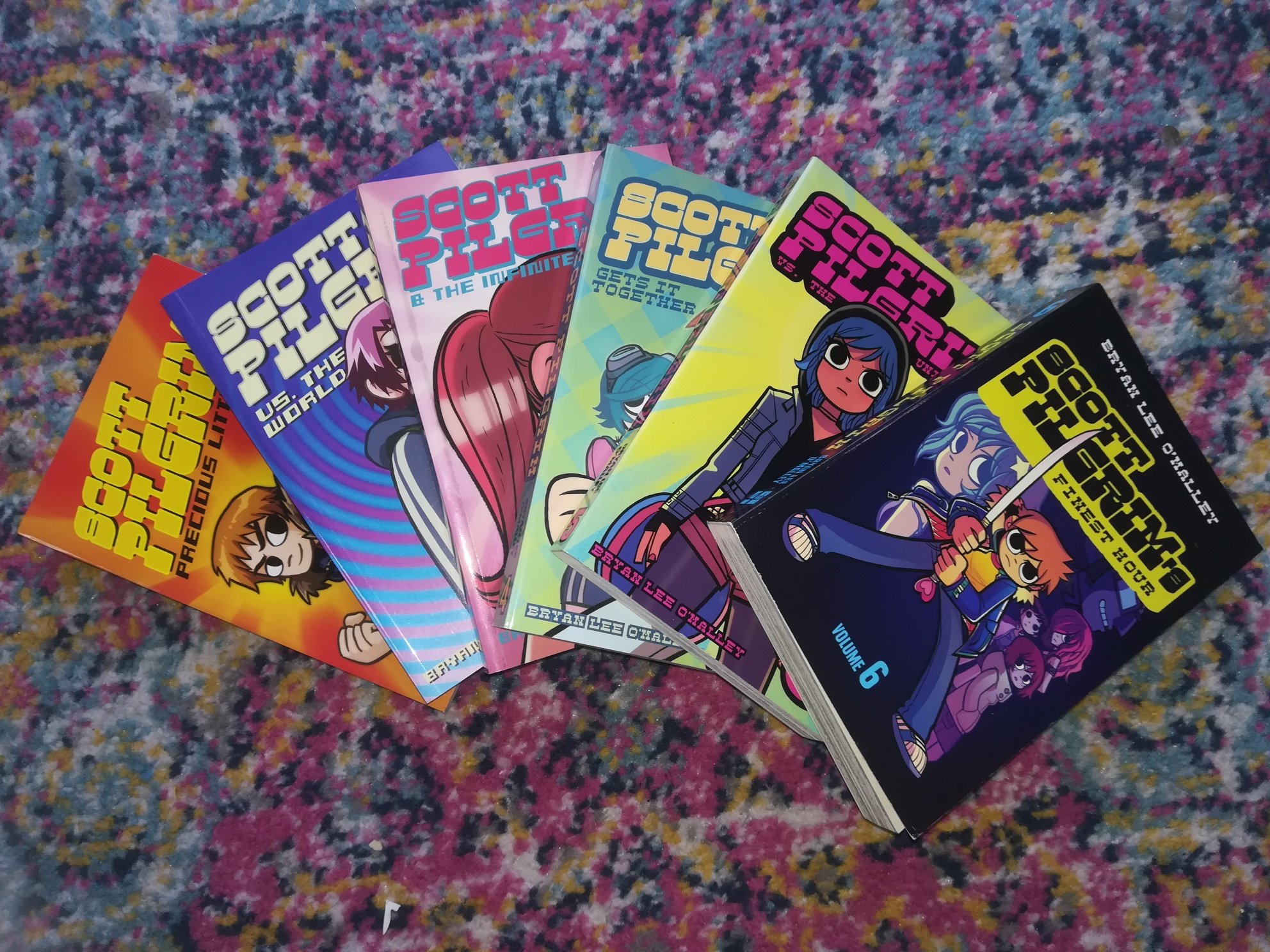
Scott Pilgrim Takes Off- Series Review

I have a lot love for Scott Pilgrim as I got I to it during my formative years. I used to go London monthly in my teens and spend the day there, going to the Gosh Comics (When it was opposite the British Museum), Forbidden Planet, Rathbone Place CEX,  Virgin Megastore and the HMV flagship store.

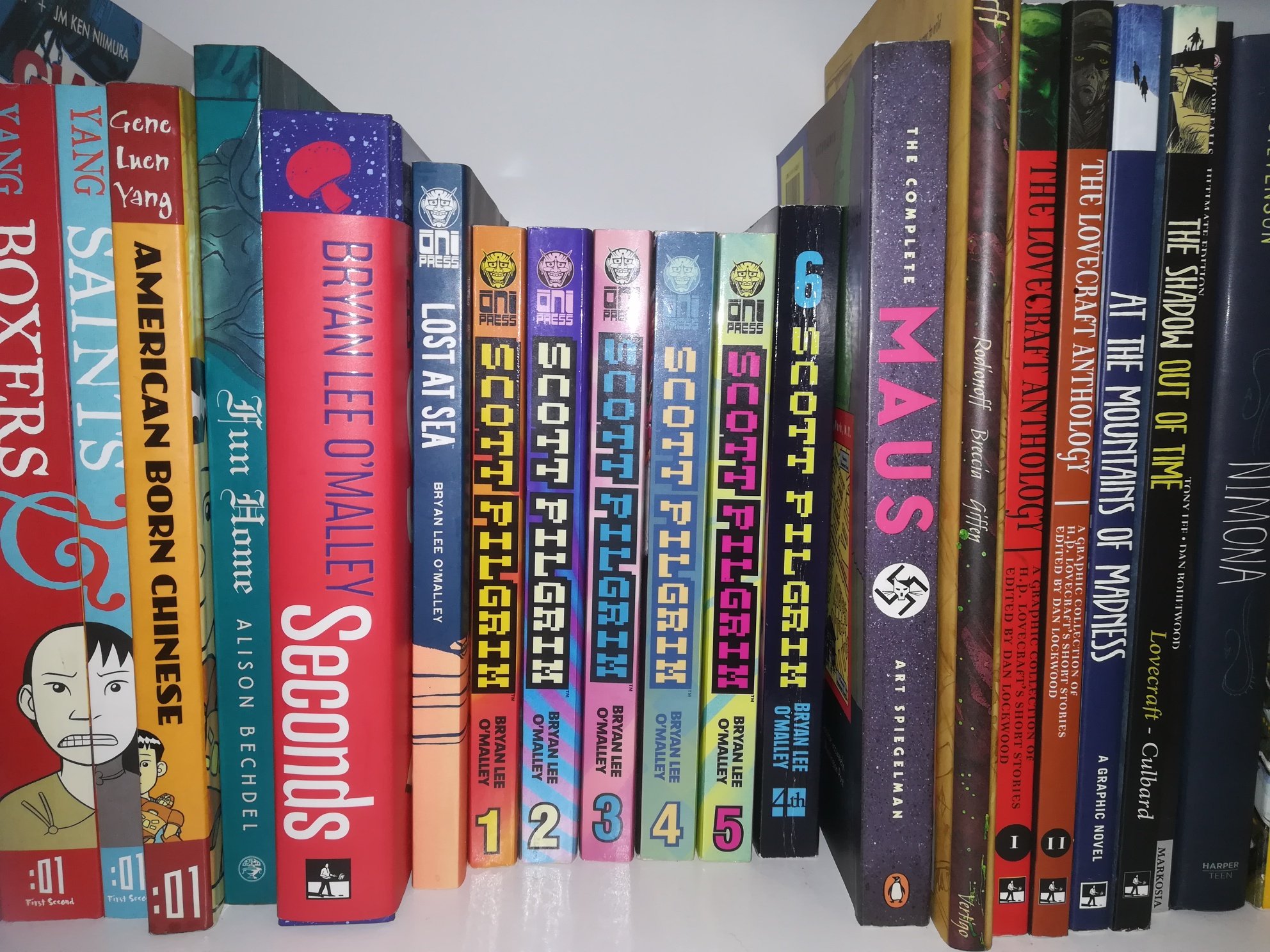
Looking through the graphic novel aisles I used to pick stuff that looked cool to me, and because it was pre-internet, it was a crap shoot. Sometimes I'd get the known classic like Maus, The Sandman, Hellblazer and Alan Moore’s ouvre etc but sometimes I'd branch out and go with my gut. That's why my graphic novel collection is vast but also very eclectic. I found some genuinely bonafide amazing stuff by luck: Blankets, Persepolis and Demo come to mind.

One of the graphic novels I stumbled across was Scott Pilgrim. I liked its slacker vibe but also the pop culture references that didn't try to be too hip or cool. If you knew you knew and if you didn't that was fine, the main story was interesting enough without having to 'get' every reference or nod.

I got all the graphic novels as they came out, loving them all until it's conclusion with the 6th and final novel. Years later I enjoyed watching the underappreciated movie at the cinema and playing the brilliant retro-style belt scrolled beat'em up videogame on my Xbox 360. That banging Anamanaguchi soundtrack blew my mind and I saw them play in Heaven, London all the while risking being stuck when a rail strike was declared. I had to see them though and risked it: I couldn't have missed it.

So, it was with a lot of excitement that I sat to watch the animated series for which I had avoided all reviews and trailer breakdowns. What I can say is that, having watched the series Bryan Lee O’Malley has worked alongside co-writer BenDavid Grabinski, director Abel Góngora, and the Science SARU animation studio to create something different- a remix of his work of sorts.

First off, the animation is on point and faithful to the graphic novels however, the story goes places the graphic novels did not. The new narrative created sort of makes sense in this world: it turns what was a kind of boss rush into a story of loss, growth, rebirth and redemption. It's a modern take on the coming of age story but this time the problematic trope of the woman being the prize is subverted so Ramona becomes the most intriguing character out of the lot. She mentions in episode 1 that she is a Colombo fan and this turns into a procedural with clues as to Scott's whereabouts making up the spine of the show.
The series also gives other characters a chance to shine and expands the lore, eliciting a lot more empathy and understanding, even for the seven evil exes. For some viewers, this will be great news but for others their perspective may be similar to the old bait and switch which angered many Masters of the Universe: Revelations viewers.

I loved the boldness of the direction and, as well as the epically choreographed fights, it is the small moments that really shone; Kim and Knives just vibing and jamming away together, the Roxy and Ramona fight when they go through various movie genres, the meta episode where Edgar Wrong tries to direct the movie but it all goes disastrously, well, wrong and the final epic battle that isn't what you expect it to be.

This is all supported by a stunning soundtrack and great voice acting, which is no surprise considering that they got everyone back to reprise their roles from the movie- this is a definite get.

Overall, the series does diverge quite a lot and quickly from the graphic novel from the first episode and, even though it's a bit of a tangent, I do like that it didn't just slavishly follow the books as we have the movie and the graphic novels for that. I welcome our remixing overlords and hope that many other adaptations, where there are problematic elements such as a 23 year old dating a 17 year old high schooler, do this to make them relevant and appropriate. The series gets a high recommend from me

Dordogne- Videogames As Art

Dordogne may be the perfect game to play in the summer holidays as you play a young woman revisiting her Grandma's home where she spent a formative summer as a pre-teen. The game is presented in a stunning watercolour style and this choice of medium is perfect at conveying nostalgia of the past, vibrant and detailed in places but blurred and fuzzy in others.
It may only be a few hours long, but it's long enough to leave an impression on you, one that'll have you feeling reflective and nostalgic yourself.

Alba : A Wildlife Adventure- Videogames as Art

I was looking for a cozy game to play with my daughters over the summer holidays and bought Alba:  A Wildlife Adventure. The game is by Ustwo studios, the folks behind Monument Valley, and what appealed to me was the idea that you play as a pre-teen girl who is trying to help the environment and save a nature reserve.

My own girls are really into nature trails and love animals, especially birds, so the gameplay loop of traveling around a beautiful island, taking pictures of different species and cleaning the environment, sounded perfect.

We loved playing the game together as the joyful music, simple but effective art style and inclusive nature (there's a woman with a headscarf and people from different backgrounds) really made this a joyful game.

Buying Games Cold

We are constantly deluged with gaming information. If it's not trailers or sizzle reels, it's magazine profiles, social media pics and adverts. We live in very fortunate times in that we have all this content to make an informed purchasing decision. Sure, the various Not E3 streams and trailer drops have been exhausting but think of the alternative; nothing, nada, nowt to look at and make decisions on.

Back in the day, before all this media existed, gamers had to rely on a few magazines off the WHSmith's shelf. In the British microcomputer boom of the 80s though hundreds of games were released and all were not covered in magazines, so you had to rely on either word of mouth, cover art or tiny screenshots at the back of the cassette.

As I was tidying my garage this week, I was organising my Amstrad CPC 464 game cassettes and waves of nostalgia washed over me. I had kept a select few games after getting rid of the rest in a great cull that must have happened at some point but which I now can't seem to recall. There were some bonafide classics in there including Rainbow Islands, Bubble Bobble, Chase HQ and some Dizzy titles. However, there were a few duffers too... Capcom's Sidearms anyone?

Wonder Woman Historia: The Amazons - Graphic Novel Review

On a whim at my local comic shop, and to get over the minimum £5 spend, I splurged £25 to get Wonder Woman Historia: The Amazons. I'm not sure why but I went so over my budget but it's good to support the little guy against the Amazon shopping behemoth. Also, it looked so darned impressive in its dust jacket that I couldn't resist. I didn't even open the book before buying it. In the evening, I sat down with a cup of tea and dived in.

Frustrated by the indifference of Zeus and the other Gods to women's suffering, the various Greek Goddesses come together at the Well of Souls and use the spirit of murdered women through the ages to make a new race of warrior women--the Amazons.
These revitalised women bring retribution to women slavers, rapists and murderers but the Gods, dominated by the Greek male pantheon, are none too pleased with this change of affairs. And so begins an epic war between the Goddesses and Amazonian against Zeus and his followers.

Historia is a beautifully illustrated and coloured book. The detailed artwork is gorgeous and shows the true skill of Phil Jimenez, Gene Ha and Nicola Scott. The lush painterly style deserved to be appreciated and the hardback edition I have has excellent paper stock which really makes the art pop.
However, as well as looking good the story is epic too- in the real sense and not the overused hyperbole. It reads like a Homerian epic with wonderful flowing language which fits the sequential art so well as to be almost symbiotic of the sequential art.

If I had to share a graphic novel with someone who had no knowledge of sequential art, alongside Maus, Blankets, Watchmen and Battle Angel Alita I'd pass along this.

Gley Lancer- Videogames As Art

I have a huge amount of love for shoot 'em ups or *shmups* as they are now commonly called. This genre has always held a special place in my heart as once the enemy patterns are learnt and memorised you can look like a boss completing a game. I have a clear memory of playing R-type at Heathrow airport and getting to level 3, that huge base ship. I bought the game on the Amstrad CPC 464 and felt like a bad-ass as my little ship took down a warship that was bigger than a screen, in fact it was a whole level in and of itself.

Over the years, I bought R-Type again on the Master System and then progressed to the Megadrive where I continued my love of shoot 'em ups. The Thunderforce series was excellent and I felt 3 and 4 were a high benchmark.
After that, bullet hell games became derigeur and traditional shoot' em ups became less popular, especially here in the West. So when I heard that a rare and classic of the genre was coming out on the Switch I bought a digital copy. I had never played Gley Lancer before but had heard it highly praised.

Playing it I was blown away and the sense of nostalgia flooded me-not because of experience with the game but it took me back to the early 90s when the Megadrive hair rock chiptunes were banging, the weapon upgrades were awesome and the speech was crispy and crunchy and left you guessing as to what had been said. The game cutscenes are beautiful and the story anime AF but that's not a knock, it is a product of its time and I'm here for it.

Jean Michel Jarre Oxymoreworks Review

With a career spanning over 50 years in electronic music, Jean Michel Jarre is very much a legend who is still releasing music. His music has been a huge part of my life ever since I heard his music on the Landscape Channel in the late 80s/ early 90s. The track, Oxygene 4 is a masterpiece and I have been enamored with Jarre ever since, having heard all his albums and owning most.

He went through a resurgence nearly a decade ago, releasing his collaboration albums Electronica 1 and 2 before dipping back into his first breakthrough album with Oxygene 3. Then, in 2018, he released arguably his best album in years- the stunning Equinoxe Infinity. Anyone fearing that he was merely trading on past glories need not have worried as he returned to his pre-worldwide success roots in 'musique concrete' (the process of using recorded sounds to create a sound montage which is often abstract in its quality) by creating a sonic soundscape inspired by the Amazon rainforest and the works of photographer Sebastião Salgado. It was a singular album but definitely more or an experience that was best viewed as a whole rather than any individual standout track. His follow up was another leftfield decision, Oxymore, a more boombastic, denser and faster paced affair than what we’ve been used to for quite a while. I liked the album just fine but it didn’t get under my skin like Equinoxe Infinity had. However, I didn’t let that worry me; I appreciate the chameleon like nature of Jarre with all its ups (Zoolook) and downs (Teo and Tea) and always look forward to seeing what the electronica maestro produces.

For a certain contingent of Jarre fans, who expect derivative works based on the Oxygene and Equinoxe albums, Jarre has apparently 'lost it' and is ‘past his prime’ etc, but as Jarre himself said during a Facebook Live session, "Some people are always unhappy". So for those who people, you might want to visit another site as this album may not be for you. Oxymore Works sees Jarre rework the Oxymore tracks with the likes of Brian Eno, Armin Van Buurin and French 79.

The album is a bright and breezy 44 minute and zips along at a cracking pace. A track by track review follows:

Brutalism Take 2 is a banger of an opener that throws the kitchen sink into the mix; there's a driving beat mixed with some John Carpenter level arpeggios and then a wailing electric guitar wending its way through the track. It quietens midway through the track then builds up to the drop... bliss!

Epica Extension features a discordant electronic orchestra wails along to a metronomic beat before a beautifully layered augmented voice kicks in and adds layer and depths to proceedings.

Brutalism Reprise has a banging EDM vibe to it with a nod to Pierre Henry and musique concrete before some whimsical angelic vocals ends the track in a note of harmony.

Epica Take 2 is a gentler take on track with a retrowave influence really lending it a vibe that is super 80s- and I’m here for it!

Synthy Sisters Take 2 is a slice of euphoric peace amongst the boombast of the other tracks, it is calm and soulful.

Epica Maxima is a melodic trance version of this track with the legendary Armin Van Buuren and it really is uplifting and euphoric. This is the most 90s like trance track and, as that’s my sweet-spot, this goes into my all-timer Jarre tracks.

Sex in the Machine Take 2 has a slow melodic beat and some warbly vocals but isn’t really my cup of tea as it sounds like a poor man’s Burial.

Zeitgeist Take 2 is a complex track and one that doesn’t gel with me. It is quite experimental but doesn’t have a through-line or consistent sound. The discordant noises smush together to make an incoherent whole.

Zeitgeist Botanica is a more melodious take on this track with a few vocals but the persistent arpeggio and beat keep it upbeat and flowing nicely.

So, overall, I enjoyed the album I think the first six tracks are good with Brutalism Take 2 and Epica Maxima being my particular favourites, but the tail end of the album didn’t excite or engage me. I’m glad that, at the age of 75, Jarre is pushing his musical boundaries and keeping things fresh. I wonder what he’ll come up with next….

LINK- Jean Michel Jarre Amazonia Review

LINK- Equinoxe Infinity Album Review

LINK- Planet Jarre Celebrates 50 Years of Jarre

LINK- Jean Michel Jarre Oxygene 3 Album Review

LINK- Jean Michel Jarre Electronica Vol. 2 Album Review

LINK- Everybody in the Place- An Incomplete History of Britain 1984- 1992 By Jeremy Deller

Everybody In The Place - An Incomplete History of Britain 1984 -1992 by Jeremy Deller

Everybody In The Place - An Incomplete History of Britain 1984 -1992 by Jeremy Deller is an intriguing documentary about the rise, commoditisation, commercialisation and eventual loss of the rave scene.

Now, when the scene was gaining momentum I was just a toddler so I never saw the scene for myself. However, through pop culture and media consumed at the time I was aware that raves were a thing. For me, my formative years were in the mid to late 90s and this was when the trance and club scene were huge. The Ministry of Sound and Cream Annual albums would typically top the charts and tracks like Saltwater by Chicane and Till I Come by ATB reached #1. Even now, Darude's Sandstorm and Kernkraft 400’s Zombie Nation haunts my nightmares in earworm form.

Deller is an excellent documentarian and is obviously passionate about the subject material. By delivering a lecture and having a dialogue with college students, he is able to explain eloquently that trajectory of the rave scene to a group that were not alive when it was a going concern. I'm not in any way a young college student but this device means the information is delivered in a clear and precise way.

He discusses how the scene started as a way for people to capture the means of production and make the music they wanted to hear. Detroit and its post industrial landscape were a hotbed for musical creativity and we see how the creators of the time were using these derelict buildings to create a sense of community. This scene moved to the north of England but the miners strike created division within the country and struck fear into the establishment and so they went hard against large social gatherings and parties as they feared social unrest. Deller then looks at the Industrial Revolution and how the Condition of England question, where the Industrial Revolution created massive inequalities in British society, led to huge wealth disparity, and is still in effect today.

He also elaborates upon the news media creating a moral panic about the scene. A lot of the MPs representing their constituencies surrounding London were Tory and so hardline about these gatherings. Also, these large gatherings had the political classes worried with flashbacks of the miner's strikes still ringing in their head and so the idea of a politicised and active youth was scary... they preferred docile and easy to corral sheep.

The popularity that followed and then the commoditisation as commercial interests gutted the scene and took out the heart and soul of what had been created by the people for the people... free of commercialisation.

He ends on the hopeful note that although the scene died it remain in the heart of many and changed the face of the country. Deller is very good at articulating, contextualising and celebrating this beautiful scene that only lasted for a while but shone brightly.

After watching the documentary, it got me to reflect about my closest approximation of the 90s and early 00s club scene. The clubs were a venue for me to escape from the cares and worries of my everyday Muslim teen life and reach euphoric transcendence through trance tracks. Obviously I didn't let my parents know about my trips to London clubs as they saw them as hedonistic dens of inequity but for me it was a way to escape the constraints of the religious and communal expectations.

In much the same way that by the early to mid 90s saw the decline in the rave scene, as it had mostly been appropriated and homogenised by corporate money, I remember the trance scene changing and out of that came a new underground including Jungle, Happy Hardcore, Drum and Bass, Garage, Grime, Techno, Dubstep, Trap, Witch house, Drill etc. I'm not into a lot of these scenes but I'm sure that there is a vibrant scene I'm not seeing as an early 40s aged man who lives in a sleepy coastal village in south Devon, England.

I was interested in other peoples' opinions about the scene and so was looking though the comments on YouTube and a lot of the comments talked about missing these halcyon days and the perceived lack of rebellion in youth today. However, I do not agree. In the film, a lot of people who were lined up for the raves in England were homogenous white folk whereas now, through the internet and social activism, youth of all colours and stripes are fighting the system in much more powerful and meaningful ways. Just because they are not rioting it doesn't mean they are not changing the world. Look at some of the most powerful youth figures and you have Greta Thunberg, Malala Yousafzai and the myriad of school Valedictorian speeches that have condemned and shone a light on systems of inequality. Yeah, it's a shame that the club and rave scene is much diminished but the youth are not as compliant as may be assumed... They are fighting for a better future in a different way.

Oxenfree- Soundtrack Vinyl Review

I love videogames and a huge part of the experience is often the soundtracks. In fact, sometimes the soundtrack can often be the only saving grace (NES Silver Surfer is the go to for this one) or can turn a good game into a great game (Nier). Certain game music reminds of places I've been and the people I've been with; game music is the sound of my personal journey and the many worlds I've visited.

One of the best and most recent examples of a videogame that resonated with me was Oxenfree. The epic soundtrack by SCNTFC fitted in so well with the teen horror thriller game about a group of teens trying to get off a haunted island. The quippy dialogue, that didn’t seem too try-hard or Whedon-esque, and the synthy music really landed for me and reminded me of my youth with my friends. Anywho, I pre-ordered the vinyl over a year ago and finally received it today. The tracklist is:

[SIDE A]
Lost (Prologue)
Beacon Beach
Epiphany Fields
Towhee Grove
Against The Rocks

[Side B]
Cleanslate
Alsos
Cold Comfort
Lantern
Argonaut

[Side C]
Catbird Station
Against The Waves
Dead Light
Catchpole Station
From The Leads
The Gate

[Side D]
Kanaloa
Argonaut Atalanta
Days Past
The Beach, 7AM

The soundtrack comes in a heavy cardboard gatefold cover which is embellished with orange foil. The vinyl pressing itself is on translucent bright orange and is good with no jumps or warping at all on my player. The tracks themselves are as gorgeous and eerie as you remember, taking you back to Edward Island.

The Oxenfree soundtrack is an electronica delight, full of whimsy and unsettling soundscapes that suits the moods and themes of the game well.

1. Lost (Prologue) - The first track has a distorted warbly effect, almost like a damaged and stretched cassette tape, to lend it a cursed artefact effect.

2. Beacon Beach - Deep melodic synthy beats pulsate throughout the track. It is slowly layered as it progresses, adding depth and perpetuating the sense of unease.

3. Epiphany Fields - An airy sounding track with a gorgeous chant that wends it's way through a light repetitive arpeggio. It creates a sense of freedom and exploration.

6. Cleanslate - An eerie track with a soft arpeggio repeating over a light mysterious synthy track. It really adds a sense of unease as you are unsure where the track is going to go. You go on a real journey with this piece.

8. Cold comfort - This track sounds glacial and cold, with the synths creating a robotic repetitive beat against a higher pitched arpeggio.

9. Lantern - A haunting melody, almoat like a music box. The sound is creepy and sends the hairs on my neck on edge.

10. Argonaut - The standout track of the album for me. It starts gently with a restrained repetitive thrum but then the main deep driving synth kicks in and sets the whole piece alight. It is euphoric and truly an awesome moody piece.

19. Argonaut Atlanta - A reprise of sorts of the epic Argonauts theme but without the driving synths. However, it does hold its own as an ambient soundscape piece.

I am glad to add Oxenfree to my collection now, it’s been a long time coming but has been worth the wait. Whilst the cost of living crisis and other adulting costs keep my hobby in check, I do continue to pick up a videogame soundtrack vinyl here or there and have amassed quite a good collection (currently 20). My most recent buys have been the soundtracks to Sable, Astro’s Playroom and Nier Automata. I’ve loved wrapping myself in a blanket and reading a book whilst listening to this genre of music as it takes me back to simpler times. Now, onwards with Sayonara Wild Hearts and the Ecco the Dolphin Sega CD OSTs at a reasonable price!

LINK- Videogame Music and Vinyl

LINK- The Moomins 80's Soundtrack Vinyl Review

LINK- Inspector Gadget Retro Soundtrack Review

LINK- Ulysses 31 Retro Soundtrack Review

LINK- The Mysterious Cities of Gold Retro Soundtrack Review

LINK- Sonic Mania Video Game Vinyl Soundtrack

LINK- Thomas Was Alone Video Game Vinyl Soundtrack Review

LINK- Akira Soundtrack Vinyl Review

Vampire Hunter D- Cult Manga OAV Review

In Japan, manga has been a part of the culture for a long time. The origins of manga are debated and The Handscroll of Frolicking Animals by Kitazawa Rakuten is considered a major influence, but generally it gained prominence in the post World War 2 era where artists such as Osamu Tezuka brought some levity and lightness to proceedings with Mighty Atom or Astro Boy as he's known in the West. Tezuka was to manga what Will Eisner was to American comics; the medium existed before their arrival but they brought it to the fore and forever changed it.

As a young boy growing up in east London, England, I didn't know anything about manga or anime but I was consuming it unknowingly through shows such as The Mysterious Cities of Gold and Ulysses 31.
One Saturday, I went into my local WH Smith and saw issue 22 of a magazine called Manga Mania and was taken by the big eyes, spiky hair style and tiny mouth and nose of the cover star that reminded me so much of the animation style I liked. When I picked it up, from the top shelf next to the more salacious magazines, I felt a bit of a rebel but upon opening it the kinetic imagery and artistry blew me away. Flicking through it I saw a mention of The Mysterious Cities of Gold in the letter pages and knew I had found something special.

I was lucky enough to visit Japan in 2013.

My uncle who was only slightly older than me, saw that I had an interest in manga and gave me Devilman and Akira to borrow on VHS- not bad for a 13 year old kid enthralled by this new genre. At the time Akira blew my mind, I didn't understand it then and don't even pretend to now but I knew that I was watching something special.

One of the other manga VHS tapes I was given early on in my journey was Vampire Hunter D. I watched it at the time and loved the moody art style and its similarity to Castlevania, a videogame series I enjoyed on the NES and Megadrive at the time. Since then, I have become more aware of the artist Yohitaka Amano, who contributed to the D design as well as the art for many Final Fantasy videogames. So, on this wet, cold and dark night I thought I’d settle down and watch the Vampire Hunter D OAV film.

In the film, the world's humans live in fear of the vampires and beasts that haunt the land. When a young maiden, Doris, is attacked and marked as the new bride for the evil Count she seeks help from a mysterious swordsman. Known simply as D, the dhampir (part human-part vampire) rides to the castle and an epic battle begins.

Watching the film for the first time in about 25 years, one of the things that struck me is how like a videogame it really is. D goes to the castle to confront the Count but is sent down into the castles depths. He then goes through a sort of boss rush where he fights against various creatures, including the three Midwich Medusa sisters, a ghost wolf, a spider throwing hunchback, before rescuing Doris. However, this continues the story on from where a game would usually end. Doris’ brother is kidnapped so D has to go back and rescue him, then he is killed but rises again before he has a final confrontation with the big bad.

This 1985 OAV is a handsome piece of work, obviously created with a good budget that takes advantage of the format of the time to be a tight 81 minutes. The film does contain lots of gore and there is a bit of gratuitous nudity as the young maiden, Doris, is in the shower for a non-essential scene but, surprisingly for the time it was created, it remains relatively non-offensive.

Manga was one of my first true loves and one that has survived to this day, at least to a lesser extent. Manga is in my lifeblood and even though it doesn't feature as prominently in my daily life as it once did for me, it was formative in my youth and for that I am still grateful. Films like this remind me why I fell in love with the medium in the first place.

LINK- Japan: My Journey to the East

LINK- My Visit to the Cartoon Museum in London

LINK- Manga Exhibition at the British Museum: Review

LINK: Preserving the Spirit of Media Past

LINK- The Transportive Nature of Objects (And the Power of Mini Consoles)

LINK- My One True Gaming Constant in Life- Nintendo

LINK- On, and On and Colston (Or, ‘How We Learned to Talk About the Legacy of Colonialism in GB’)

Yeti- Bonus Episode (Hair Sample DNA Tested)

A while ago, I mentioned that I was listening to a podcast with an intriguing premise: to find the Yeti. Two friends, Andrew Benfield (the believing Mulder of the pair) and Richard Horsey (the cynical Scully of the pair) were investigating the yeti. Over 10 episodes, Benfield talked about the origins of his interest in the yeti whilst the two were schlepping off to numerous Himalayan countries and following old clues and sightings to see if they could get to the truth.

I had issues with it is that any little clue was presented in an over the top 'OMG!' way by the believer; it got rather grating when it is debunked or evidence to the contrary is given. It was not as ridiculously contrived as 'Most Haunted' or that ilk of programme but the 'I want to believe' shtick was definitely there. The fact that the expedition was being closely followed by the Royal Geographical Society means that it has the approval of academia but still.. a pinch of salt would help.

The most fascinating part for me was that it placed the sightings and events into a chronological history and this was a fascinating insight into the evolution of this cryptid. As a former student of anthropology, it made me consider the relationship between folklore, mythologies and the sprititualismof the area.

The finale of the series, where they had found some hair from the ‘yeti’, had yet to be revealed but I was not expecting much from this grand reveal which kind of reminded me of Jeremy Kyle envelope opening, after the break of course. So, on the 10th October 2023 the reveal happened and, whilst I won't spoil it here, the fact that you haven't see the Yeti's face all over Time magazine as Cryptid of the Year or had The Sun release an exclusive interview with the woman who apparently had a love child with the creature should tell you that it didn't go to plan.

Overall, this is an interesting thought experiment but works less well as a 10 part series. The fact that it ends with the typical, 'There are different ways of thinking about the creature, for the West it's a search for a physical creature whereas for much of the area where the yeti has been sighted, it is a mystical creature who is symbolic of their spirituality and our connectedness to nature' shtick is aggravating.

This finale pretty much sums up the orientalism that the topic is dealt with and it doesn't sit right with me. Anyways, if you have an interest in the topic as a whole go for it but if you want a Western man trying to go on a modern Grand Tour and be a bit 'I've read The Alchemist so I'm profound now' then this is for you.

LINK: Kolchak: The Night Stalker- Cult TV Series Review

LINK- Twin Peaks Retrospective

LINK- The Transportive Nature of Objects (And the Power of Mini Consoles)

LINK- My One True Gaming Constant in Life- Nintendo

LINK- On, and On and Colston (Or, ‘How We Learned to Talk About the Legacy of Colonialism in GB’)

LINK- ‘Natives: Race and Class in the Ruins of Empire’

LINK: Let’s All Create a ‘New Normal’.