American Born Chinese- Season 1 Review

About 15 years ago, I came across American Born Chinese, a graphic novel about the immigrant experience in America. I loved the book back then and revisited it again recently in preparation for the series. In terms of story, we have three tales all dealing with the themes of alienation, discrimination and being true to yourself. The first deals with Jin and his burgeoning friendship with recent immigrant Wei-Chen Sun. The second tale looks at the Monkey King (he of Journey to the West fame) who wants to become more human and attain godhood. The final tale deals with Asian-American Danny and his cousin Chin Kee, who represents all of the worst racial stereotypes about Chinese people that Danny is trying to distance himself from.

The stories all weaved and supported each other to reach a highly satisfying and thought-provoking finale. I was intrigued to see how they would adapt it into a series for television, especially in light of how much change there has been in the world since the 2006 book release.

Over the past few years, in wake of the Covid pandemic, there has been a rise in anti-Asian sentiment. There was a huge spike in attacks against this community, especially in America, as Covid ripped through the country. Asian- Americans were scapegoated by some and it led to this community feeling under seige. In this way, the story of Jin Wang, the main protagonist in American Born Chinese by Gene Luen Yang may offer some people from that community the same joy I felt at finally seeing a more rounded representation of my faith and culture in Ms. Marvel.

I can now say that, after watching the entire run, it stays true to the source material but adds an important thread about racism and how it manifests. In a bold choice, the word racism and its many synonyms is never mentioned but characters like Suzy, the head of the Culture Club talks about this eloquently when she says '... there are a lot of people out there who don't have a voice, it's up to people like us to speak for them'.

In the series, rather than 3 separate stories, featuring respectively: Jin, Chin Kee and Cousin Dannee and the Monkey King, this show interweaves the plots into one cohesive whole centred around Jin's personal and school life. We also have Ke Huy Quan skits as a bad Chinese stereotype in an old 80s style sitcom which shows how much we have moved forward as a society. Ke Huy Quan nearly steals the show in episode 7 when he is confronted with his racist stereotype character 30 years after the fact. He struggles to move on from the role and sees the negative impact it has had on the Asian community and feels remorse for bringing this highly successful role to the masses. It's a complex situation, one where BAME actors and actresses often felt like they had to take earlier roles which demeaned their heritage, however it was often the only job open to them to get on the career ladder. It must be a tough cross to bare.

Riz Ahmed spoke about it eloquently and Ke Huy Quan has spoken about it recently with his recent renaissance after Everything, Everywhere, All At Once, including his impactful Oscar speech; everyone wants to make something impactful, something that speaks to the human condition but sometimes people were not treated as equals.

I loved the way American Born Chinese was done. The actors were all uniformly excellent but the two older actors who portrayed the Monkey King and Bull King were phenomenal, showing nuance in their roles as wannabes trying to make good with the Gods. Also, the show is shot well throughout but the wuxia fight scenes are excellent for a television series, especially the close combat battle between Michelle Yeoh and the Bull King in a small apartment building. The soundtrack is banging and really adds to the emotions of the story.

American Born Chinese is a very watchable and though-provoking show . It asks for those who are struggling to fit into both worlds to be brave and bold and believe in themselves whilst understadning that the world has changed for the better (for the most part).

I loved the show and thought that, whilst very different from the graphic novel experience, it carried a lot of the same messages and themes. This show gets a huge thumbs up from me.

Marvel Lego Minifigs

I have quite an extensive graphic novel and comic collection. I started collecting when I was 8 years old and haven’t really stopped. I now am more selective with what I buy, what with time and money both being precious, but I do like to keep up with current events.

My eldest daughter is getting into comics but seems to prefer the slice-of-life/ indie scene more with Lumberjanes, Hilda and the Raina Telgemeier graphic novels being firm favourites. She’s finished all of them though so I’m getting her onto the superhero comic scene and, to mark this event, I purchased some Lego figures of my favourite Marvel heroines. We made them together and I think they look pretty cool!

The Watch House- Cult TV Series Review

British children’s television series during the late 70 right up to the late 80s period were quite interesting; slightly spooky but not too spooky, with a tinge of creeping dread. I'd never heard of ‘The Watch House’ but, had heard it mentioned in the same tones as Moondial, Children of the Stones and The Owl Service. Just hearing it mentioned with those greats had me interested and so, over the course of an evening, I watched all three 30 minute episodes.

The story is quite simple:
Following the difficult break-up of her parents, young teen Ann is left to stay with friends of the family at an old life-brigade watch-house. Whilst cleaning it up, she realises that the place is haunted but what is the spirit (or spirits) trying to tell her?

No-one does creepy folk horror quite like the British and this sort-of ghost story is effectively produced, featuring lots of location shoots that add some sense of place and atmosphere to proceedings. For a 1988 production, I can imagine it costing quite a bit but the shoot really adds a gorgous setting in which to set-up this ghost story. The special effects are obviously dated and we're made on a limited budget but, when the shipshead comes alive and the flashback of the ghosts is revealed, they are effective.

Whilst some of the adult actors do come across as quite hammy and theatrical, and some of the child actors precocious to the point of annoying, the whole thing generally works. Sure the story is quite basic and doesn't linger in the memory like the shows that left their endings more open (such as Children of the Stones), but what we do have is a short serial with a feisty female protagonist (played by Diana Morrison) trying to get to the bottom of a mystery.

As an adult with no nostalgia for this show, it is pretty forgettable but I don't feel like I wasted my time on this. Not every show has to be an all-time classic and this is pretty basis but effective enough.

LINK- Dead of Night: Cult TV Review

LINK- The Stone Tapes: Cult TV Review

LINK- Tom’s Midnight Garden: Cult TV Review

LINK- Children of the Dogstar: Cult TV Series Review

LINK- On And On And Colston ( Or, How We Kinda Sort of Learned to Talk About the Legacy of Colonialism and the British Empire)

LINK: Japan: My Journey to the East

LINK- Pure Invention- Book Review

LINK- God of War: Ragnarok- Videogames As Art

Scooby Doo and the Witch's Ghost- Classic Animation Review

1969s ‘Scooby Doo! Where Are You?’ was a television animation milestone. Many children around the world watched the Hannah Barbara show over the years, mostly through syndication, and as a result it had constantly gained new generations of fans. It's impact on pop culture was vast too, from its oft-quoted, "I would have got away with it too, if it wasn't for you pesky kids" to "It's old man xyz" to popularising the chasing through different doors sequence, you know the one; the chaser is pursuing the chasee(s) as they enter through one door only to emerge from a different or opposite door.

The show was hot stuff and it was doing well but over the years it lost its lustre and when ‘A Pup Named Scooby Doo’, released in 1991, was not well received it looked like the end of Scooby Doo. Due to the popularity and relative cheapness of shows like ‘Power Rangers’, ‘Saved By the Bell’ and its live action ilk there was a lull in television animation in the mid to late 90s and Scooby Doo looked like it was going to join the limbo of syndicated satellite cartoon show for all posterity.

However, in 1998 the straight to VHS Scooby Doo on Zombie Island animated movie released and helped to revive the series, winning over a whole new legion of fans and reviving interest in the characters. Due to the overwhelming success in sales, a follow up film was commissioned and so, we had ‘Scooby Doo and the Witch’s Ghost.’

The Mystery Incorporated gang meet horror writer Ben Ravencroft (voiced by the inimitable Tim Curry, playing the role to the hilt) and are invited to his peaceful hometown of Oakhaven, Massachusetts. Upon arrival, they see that the town is awash with tourists as the ghost of persecuted witch, Sarah Ravencroft (Ben’s ancestor) is apparently haunting the town. And so, it is up to the gang to get to the truth and find out if it really is a ghost or another case of ‘Old man xyz’.

The first thing to note is that the animation is gorgeous as it is the same Japanese studio that worked on ‘Scooby Doo on Zombie Island.’ Also, the music and soundtrack are pretty banging, particularly the Hex Girls song (which I’ve placed below for your auditory pleasure- you’re welcome!)

The story itself starts off okay but does build up towards an exciting conclusion. The final reveal is quite beautifully animated with the power revealed but it does lacks the intrigue and bite of Zombie Island.

The film overall is definitely worth a watch and not too scary for the little ones; my 5 and 8 year old daughters enjoyed it and were not too scared at all.

LINK: Let’s All Create a ‘New Normal’.

LINK- Ms Marvel Can Change the World

LINK- Mysterious Cities of Gold Complete Series 3 Review

LINK- Hilda Complete Series Review

LINK- Disenchantment- Complete Series 1 Review

LINK- Gravity Falls Complete Series Review

LINK- Scooby Doo: Mystery Incorporated Complete Series 1 Review

LINK- Scooby Doo: Mystery Incorporated Series 2 Review

Ghost of Tsushima- Videogames As Art

Over the past year, I've been overwhelmed with the sheer choice of amazing AAA games. I working my way through the unholy trinity: Elden Ring (167 hours), God of War: Ragnarok (31 hours) and Horizon Zero Dawn: Forbidden West (31 hours). I found myself at a bit of a loose end after completing these and, after taking a bit of break, thought I’d work my way through games I’d had my eyes on but never got around to. So, I bought and played through Ghost of Tsushima, an Akira Kurosawa inspired open-world game. I loved the experience and thought the clever hidden HUD, which used the wind to guide you, was an ingenious idea. I enjoyed the story and though the story of growth of protagonist Jin was very well done.

Here are some screenshots from my playthrough:

Captain Kronos: Vampire Hunter- Cult Movie Review

I've been reading Hammer Glamour, an impressive art book about the many actresses who played roles in the multitude of Hammer films. Hammer Horror actress Caroline Munro, an iconic cult movie figure from her time on The Golden Voyage if Sinbad as well as a kickass Bond girl, discussed her love of Captain Kronos, one of the films she starred in. I'd heard the film mentioned elsewhere and it was described as a bit of a cult classic so I thought I'd seek it out. Luckily, it was available on a streaming service I subscribed to so, snacks in hand, I settled down to watch it one evening.

I'd heard that it was a vampire killer movie so expected the usual Van Helsing thing but this is a different beast; it felt like an old Leone Spaghetti Westerns or Kurosawa films, where a lone traveller helps a people against seemingly impossible odds.

The film starts off with a cold open. A couple of young women are discussing beauty and vanity when a mysterious hooded figure approaches one of the women whilst the other is occupied. When the friend returns, she sees her friend has aged and is a husk of her former self. This startling opening is a great start to Captain Kronos: Vampire Hunter.

We then see a mysterious stranger riding across lush landscapes. He is followed by a wagon pulled by 4 white horses, riden by a man in a smart black suit laden with various tools of the trade- vampire hunting. On their way, the rider (revealed to be handsome Horst Jansson) frees a woman (Munro) who has been placed in stocks for 'dancing on a Sunday'. The dramatic music kicks in and the opening credits roll as the party travel across the country through beautiful landscapes and vistas. The film opening kind of reminds me of Aguirre: Wrath of God but this film doesn't have the sublime Popul Vuh soundtrack but rather Laurie Johnson’s boombastic and effective sound pallette.

We find that Kronos, and his colleague Grost (played with aplomb by John Cater) have been called for by an old comrade to investigate the death of the young girls in the area whose youth has been drained from them by a vampire. What follows is a cat and mouse game as Kronos closes in on the threat, but not before encountering some aggressive locals who don't like outsiders in their village.

I really quite liked this quite original take on the old vampire myth as it challenged a few of the old tropes and conventions; for example, when a young woman seeks solace and safety in a church a crucifix shadow, the crucifix shape moves and she is killed. This scene is pretty amazing and raises the stakes (dad joke-sorry/not sorry) as it shows that nowhere is safe.

The dialogue is pretty basic but I did like Munro's characters aphorism: 'Beauty fades eventually, but a kind soul remians forever.'

I thought the cinematography was well done too and the set design shows an economy of design; Hammer films were cheap and often reused old costumes and sets. However, this frugality lends the film a feel of authenticity with the grime and rot of the olden days that feels really lived in.

Overall, I thought it was a great watch, not a masterpiece but definitely worth your time at only 90 or so minutes.

LINK- The Golden Voyage of Sinbad- Cult Movie Review

LINK- The 7th Voyage of Sinbad- Cult Movie Review

LINK- Into the Unknown Exhibition Shines Bright at the Barbican

LINK- Ray Harryhausen: Titan of Cinema Virtual Exhibition Experience- Review

LINK- Children of the Stones: Cult TV Series Review

LINK- Tom’s Midnight Garden: Cult TV Review

LINK- On And On And Colston ( Or, How We Kinda Sort of Learned to Talk About the Legacy of Colonialism and the British Empire)

LINK: Japan: My Journey to the East

LINK- Pure Invention- Book Review

Ask Iwata- Book Review

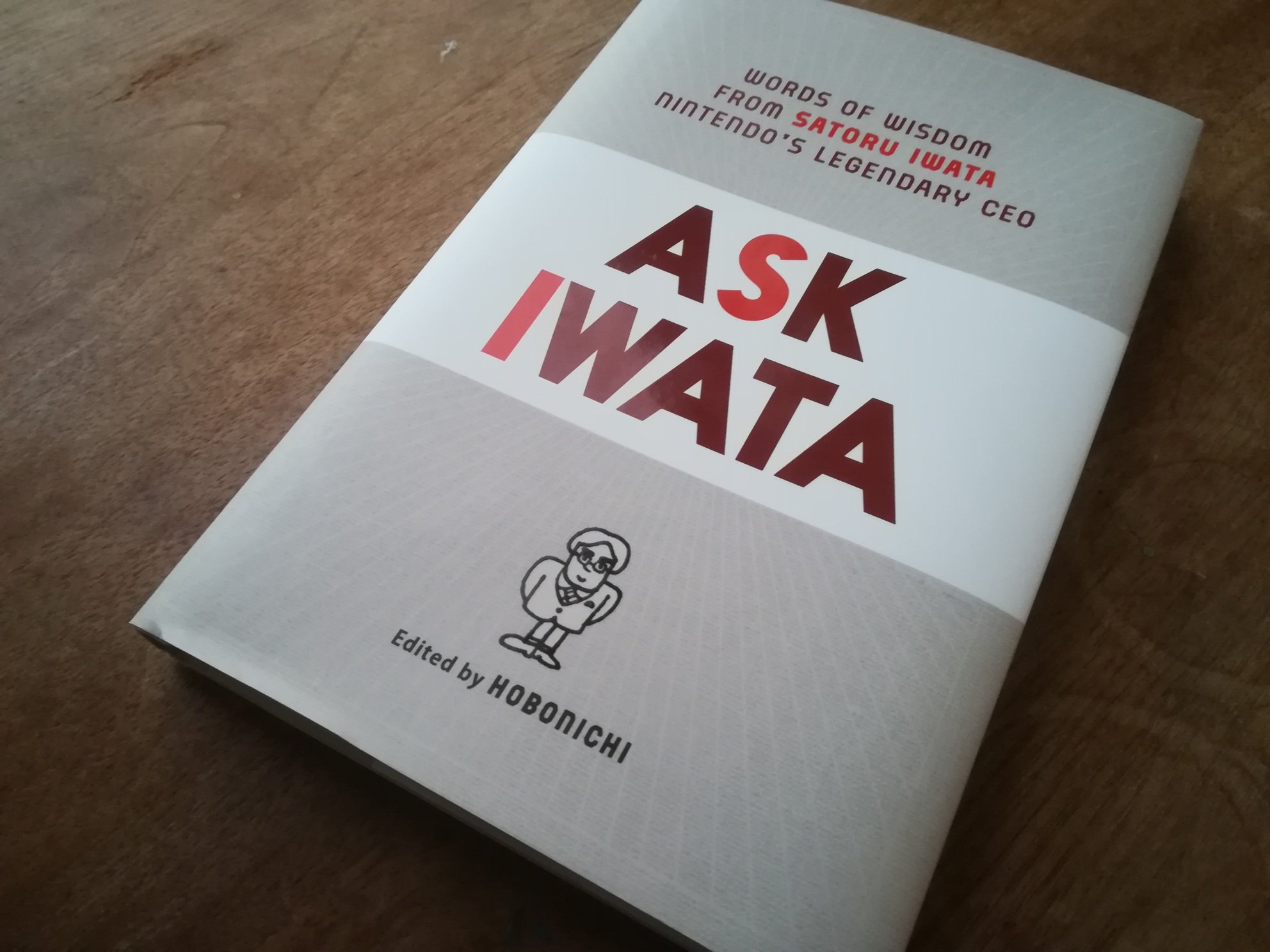
Satoru Iwata was the president of Nintendo, formerly president of HAL and beloved coder and innovator who oversaw the success of the Wii and DS. Upon his early death from cancer in 2015, the outpouring of respect and love for the man was immense. Many loved his human approach to leadership, exemplified by his taking a paycut himself to save staff when the Wii U underperformed, as well as his willingness to participate in fun promotional work, such as the memorable muppet show in the 2015 E3.

Ask Iwata is a collection of his thoughts and ideas about his approach to business and people; It not an autobiography with photos but rather is similar Nintendo of America’s Reggie Fils-Aime's book on business practices. This book has a more human touch and is thus more approachable for the layman not looking at business jargon and theories. What comes across is that Iwata was a humble man who worked his way through the ranks through sheer diligence and hard work - sprinkled with a little luck.

Here are some of the thoughts that really stuck with me:

As human beings, unless we have someone to compliment our work and enjoy what we've created, we're not apt to go out on a limb. Which is why meeting this friend in high school had such a positive effect on the course of my life.

... Decision-making means gathering and analysing information and managing priorities, and that as you discover your priorities, you should see where they take you as you work though your decisions.

... I never want to work under a leader who fails to understand that people can evolve... pays attention and acknowledges my growth.

.. Management depends on an ability to minimise your personal agenda...

The books end with thoughts from colleague and close friend Shigeru Miyamoto (creator of Mario and Zelda) and Shigesato Itoi (Earthbound) and these are tales of Iwata, the man, away from business. It is clear that he was a much loved and gentle man. The book is an interesting read and we get an insight into the great man who made sure that Nintendo continued to march to the beat of its jaunty own Wii Music drum.

LINK: Gamesmaster: The Oral History- Book Review

LINK: Heaven’s Vault- Book Review

LINK: Elden Ring- Videogames As Art

LINK- The Transportive Nature of Objects (And the Power of Mini Consoles)

LINK: Japan- My Journey to the East

LINK- On And On And Colston ( Or, How We Kinda Sort of Learned to Talk About the Legacy of Colonialism and the British Empire)

LINK- An English Geek in Saudi

LINK- Streets of Rage 2 on Vinyl Review

Love, Death + Robots- Season 3 Review

Love, Death + Robots is a Netflix backed anthology series of sci-fi stories that mixes cutting-edge animation styles with quick fire storylines. Each episode is stand-alone and with the longest episode clocking in at just over 18 minutes, you’re never too far away from a new world and new ideas. Obviously, this means that some episodes will chime more than others depending upon your tastes but they are all uniformly solid. I liked season 1 just fine but felt that, given the freedom to create, a lot of the short films were trying to be too edge-lordy and reminded me of the anime and manga often released in England in the early 90s when it was trying to gain a foothold; the more violent, gratuitous stuff wasn't always representative of the best the medium had to offer and so it is was with season 1.
I felt that season 2 was okay with a lower episode count. Also, they had toned down the sex and violence but many of the stories were not that interesting. So, season 2 had built on the solid work of season 1 but it make incremental steps forward rather than huge leaps. I went into season 3 hoping that this would be the one to really nail it. Here are my thoughts on the individual episodes:

Three Robots: Exit Strategy
The three likable robots travel around the remnants of human culture to find out what happened when the robots uprising began. Along the way they look at how society broken down in a Lord of the Flies way.

A hilarious yet deeply depressing animation about the way humans would rather destroy each other than work together to find a solution. This ending is real surprising too.

Bad Travelling
When a ship is attacked by a giant crustacean, they listen to its request to gain passage to a busy island nearby. The captain doesn't want to unleash the beast upon the innocent people and so plans a trip to a deserted island, but can he convince his crew?

A very dramatic episode with gorgeous darkly stylised art and lashings of gore. It's powerful as it looks at the value individuals put on their own lives above others.

The Very Pulse of the Machine
The story is based on a short from Michael Swanwick and looks at the journey of a lone astronaut, Martha, stranded on the moon of Io, trying to find her way out whilst her oxygen slowly depletes. It is a psychological piece as we have Martha, superbly voiced by Mackenzie Davis, having a conversation with an invisible entity, or it could delusions caused by a mixture of hypoxia and morphine.

It's a very existential piece, not just because of the isolation of the astronaut, but because the individual is in conversation with something greater than herself. I found that very interesting as the dialogue was very philosophical and profound in places. I won't spoil it but the film evokes memories of 2001: Space Odyssey and the Star Child; death is not the end but a new part of the journey and that's a beautiful thought. The crescendo of the soundtrack at the denouement is spectacular and still sends shivers down my spine when I hear it.

The Very Pulse of the Machine is my favourite of the season but Jibaro is very close second.

Night of the Mini Dead
When a randy couple commit lewd acts in a cemetery, their unholy behaviour awakens a zombie apocalypse.

I loved this episode as it was done in an isometric minifig style with lots of cute voices. Don't get me wrong, the end of the world was apocalyptic but it was just gosh darn cute.

Kill Team Kill
When a military team is attacked by a rogue cybernetically enhanced experiment, their sense of humour and devil may care attitude might just be enough to see them survive.

I lived the cel shaded animation style of this episode as it reminded me of Otomo's work, especially Magnetic Rose from Memories. I think the cocksureness of this episode is a direct response to the macho gung-ho attitude of previous seasons of the show as it was a nod and wink at the audience as to how stupidly shallow the violence is.

Mason's Rats
In the near future, after WW3, a farmer struggles to survive with the ratocalypse. He invests in machines but the rats fight back harder, the situation escalates but who will emerge the victor.

This is a great short animation with a witty story about the casualties of war and how talking and reaching out can be enough.

In Vaulted Halls Entombed
A military unit of a mission to find and secure a taken hostage find an eldritch elder God held captive in an underground complex. One by one the crew get picked off except a lone warrior; will she survive?

This is a very effective and dark short, feeling at times like a videogame like House of Ashes or Eternal Darkness, which dealt with similar subject matter. It's a solid episode and poses many question about humanity's place in the cosmos.

Jibaro
When a group of Conquistadors encounters a siren, they all lose their heads to her deadly voice. However, a deaf Knight isn't swayed and what follows is a deadly cat and mouse game; an elaborate dance to the death, as the siren seeks her prey whilst the soldier seeks the gold covering her body.

This is one episode I heard a lot about with some citing it as the best LDR episode in season 3 and I can sort of see why. The animation is astonishing and the art direction is phenomenal, with the siren being beautifully haunting like a spooky Klimt piece come to life all shimmering and gold. The dialogue is pretty non-existent and it reminds me in style to The Black Knight in that the artistry and cinematography is king. The music adds so much and the flashy, frenetic edits and cuts make it a powerful piece where the images will stay in your mind for a long time.

This LDR season was probably the most consistent in my opinion with all episodes offering something. The Very Pulse of the Machine, Bad Travelling and Jibaro are the obvious highlights but overall, it's a solid season that shows the anthology series had some legs. I like the maturity the series seems to have gone through as the stories and worlds presented are more interesting. I am very much looking forward to season 4.

LINK- Love, Death + Robots- Season 1 Review

LINK- Love, Death + Robots- Season 2 Review

LINK- The 7th Voyage of Sinbad- Cult Movie Review

LINK- How to be Perfect: The Correct Answer to Every Moral Question by Mike Schur- Book Review

LINK- The Good Place and Philosophy- Book Review

LINK- Utopia for Realists- Book Review

LINK- On And On And Colston ( Or, How We Kinda Sort of Learned to Talk About the Legacy of Colonialism and the British Empire)

LINK- ‘Natives: Race and Class in the Ruins of Empire’ LINK: Elden Ring- Videogames As Art

Heaven's Vault - Book Review

“Stories don’t have tidy beginnings, the past is always present.”

With this, Heaven's Vault the videogame had truly sunk its claws into me. I had played through to the end and loved the experience.

Often I've seen historical based games reduced to simply killing the next bad guy and trashing the ancient ruins, which is fine in a power fantasy I suppose, but as an armchair anthropologist (with a degree in the subject) who has a love of archeology, linguistics and ethnography, a game where you felt like a real archaeologist had me excited. Luckily, Heaven’s Vault did not disappoint; the deep dive into archeology with a vast open-world to explore, underscored with excellent narrative beats held me captive for the 20 or so hours until completion.

When I heard that there were two novels based off the videogame by Inkle's narrative director Jon Ingold, I bought both and consumed them voraciously over the course of a couple of weeks.

For the uninitiated, Heaven's Vault has the protagonist Aliya Elasra, a space archaeologist, tasked with finding the missing University faculty roboticist, Janniqi Renba. Along the way, Aliya and her robot companion Six, discover clues to the ancient past of the Nebula that may impact the current political situation where the Protectorate of Iox may not be as benevolent as it presents itself. Throw in Aliya's contradictory theory about the cyclical nature of the Nebula for good measure and what you have is an intriguing narrative.

There are two books in the Heaven’s Vault series and they contain the complete story.

The central conceit is an interesting one as it builds upon the narrative of the videogame but takes it further. The books are very much about how history is largely written and shaped by the ‘victors’. Aliya is a threat to all this as, by using the artefacts from the past, she is able to reinterpret what actually occurred and challenge the circumambient narrative that is prevalent in the cosmos and challenges the systems that perpetuate it.

I liked how Ingold shows how archeology is not just about the collection of artifacts or visiting dead sites but more a discipline dedicated to helping us understand our collective past and what it means for our future. Archaeology has the power to shape the future as by looking into the past, we can look forward and challenge the accepted norms; controlling access to the past controls people in the present by affecting thought and behaviour. Misappropriation and manipulation of the past is a real issue even now and so it is in this story where the status quo is challenged.

The two books were enthralling and I fell in love with the characterisation and world.

LINK: Elden Ring- Videogames As Art

LINK- The Good Place and Philosophy- Book Review

LINK- Humankind: A Hopeful History- Book Review

LINK- On And On And Colston ( Or, How We Kinda Sort of Learned to Talk About the Legacy of Colonialism and the British Empire)

LINK- ‘Natives: Race and Class in the Ruins of Empire’ LINK: Elden Ring- Videogames As Art

LINK- The Transportive Nature of Objects (And the Power of Mini Consoles)

LINK: Japan- My Journey to the East

LINK- An English Geek in Saudi

LINK- Streets of Rage 2 on Vinyl Review

Love, Death + Robots- Season 2 Review

Love, Death + Robots is a Netflix backed anthology series of sci-fi stories that mixes cutting-edge animation styles with quick fire storylines. Each episode is stand-alone and with the longest episode clocking in at just over 18 minutes, you’re never too far away from a new world and new ideas. Obviously, this means that some episodes will chime more than others depending upon your tastes but they are all uniformly solid. I liked season 1 just fine but felt that, given the freedom to create, a lot of the short films were trying to be too edge-lordy and reminded me of the anime and manga often released in England in the early 90s when it was trying to gain a foothold; the more violent, gratuitous stuff wasn't always representative of the best the medium had to offer and so it is was with season 1.

Would season 2 be better? I have written a brief synopsis and my views of those episodes briefly.

Automated Customer Service- When an automated vacuum cleaner goes rogue and turns into a killbot, an elderly lady and her pet dog fight for their life whilst waiting in the dreaded customer service queue.

The animation is distinctive with human looking faces but small extremities, it's a bit distracting and unsettling. The story is darkly humorous and relatable, I mean who hasn't been kept waiting with some 'Your call is important to us... You are number 265 in the queue' etc. It's felt dystopian for us all at some point, right?

Ice- On a cold planet, where most people have been modded and augmented, a teenage Earth boy struggles to fit in. Going out to see the frost whales with his younger, augmented brother he meets a motley crew of locals who do a death run against the creatures.

The art style is noirish and angular with a lot of dark colours. The animation is chromatic in style and didn't really appeal to me but different strokes for different folks eh. The made up 'foreign' language and mixed up English adds a further dimension.

Pop Squad- In the future people can prolong their lives but this inhibits their reproductive capability. Some choose to forgo their immortality to breed but they are hunted by the police and terminated. A cop struggles with the toll of taking the lives of children.

This is a beautifully cgi animated short and reminds me of Blade Runner with the constant rain and decaying metropolis motif. It's quite powerful and is a strong episode.

Snow in the Desert- A traveller with regenerative powers is sought by officials and the more unscrupulous elements of society. So, he lives off grid, trying to survive by himself until a chance meeting with a cop changes all that.

The animation is realistic but the main character looks a cross between Rutger Hauer and Boris Becker. No knock against it but it is off putting in this well realised short tale about the journey being more important than the destination. In this case, the journey to find connection.

The Tall Grass- When a train is stopped in its tracks by a shortage of steam a passenger explores the lights in the tall grass nearby. However, this leads to dire consequences.

This is an effective story and the painterly rotoscoped animation lends it a certain distinctive style. The drama is intense and at times it feels like a QTE in a videogame; this is meant as a compliment.

All Through the House- When two young children hear noises on Christmas Eve, they think it's the jolly man. Instead, what they encounter is a totally different festive beast.

The stop motion animation style is big and expressive and the story is darkly humorous.

Life Hutch- When an astronaut crash lands on a planet and seeks refuge in a life hutch, he faces off against a maintenance robot that has malfunctioned. Will he find a way to stay alive?

This is a very strong episode as Michael B. Jordan is a very strong actor and the CGI works well around his central performance.

The Drowned Giant- A dead giant's body washes up on the beach and enthrall the people of the island. As the slow decay of the body occurs, a documentarian shares his thought on life, the Universe and everything.

This is an odd duck indeed, very surreal like you are watching a nature documentary complete with voice over. Very affecting and effective indeed.

Overall, the season is okay with less sex and violence but many of the stories are not that interesting. The highlight for me was 'The Drowned Giant' as it tried something unusual and the documentary style of presentation drew me in. Overall, season 2 builds on the solid work of season 1 but it make incremental steps forward rather than huge leaps. Here's hoping season 3 nails it.

LINK- Love, Death + Robots- Season 1 Review

LINK- On And On And Colston ( Or, How We Kinda Sort of Learned to Talk About the Legacy of Colonialism and the British Empire)

LINK- Nintendo: My One True Gaming ConstantLINK- Children of the Stones: Cult TV Series Review

LINK- Dead of Night: Cult TV Review

LINK- The Stone Tapes: Cult TV Review

LINK- Tom’s Midnight Garden: Cult TV Review

LINK- The Future Starts Here: An Optimistic Guide to What Comes Next- Book Review

LINK- Uncharted 4- Video Games As Art

LINK: Japan: My Journey to the East

Sackboy: A Big Adventure- Videogames As Art

I'm a bit of a platforming fan. Nintendo has been a huge part of this as its creativity and uniqueness in creating wonderful gaming experiences that you can play with your family has been pretty much unchallenged for years; Super Mario 3D World, Yoshi's Crafted World and Kirby's Epic Yarn are all great fun. The sheer creativity and wealth of ideas on show has been crazy.

In the past few years, there have been a few challengers to the throne. Rayman Origins, A Hat in Time and now, I’d like to add Sackboy: A Big Adventure. The game is bursting with personality but the soundtrack is what really sets this game apart. As well as unique tracks there are bangers like Britney’s Toxic, Bowie’s Let’s Dance and Bruno Mars’ Uptown Funk. The gameplay is usually reactive to the soundtrack and it just really pulls you in and helps the gameplay flow very well. Check out screenshots of my playthrough.

Sinbad and the Eye of the Tiger- Cult Movie Review

Sinbad and the Eyes of the Tiger is the third and final trilogy of Sinbad films that stop-motion maestro Ray Harryhausen made for Columbia, the others being The 7th Voyage of Sinbad (1958) and The Golden Voyage of Sinbad (1973). It was not a commercial success apparently but I have fond memories of watching it in my youth, either on a rainy weekend or some national holiday or half-term. Of the three Sinbad movies created by Harryhausen and director Charles H. Schneer, this movie is the one I remember the most because of the iconic bronze minotaur creature but was my fondness well placed or was it sepia-tinted memories of a poor film? To answer this, on a typically rainy Easter half-term afternoon, I decided to watch it again and see- thus completing my journey of the three Sinbad films.

The story is quite simple, as it has been in each time; A sorceress (and evil stepmum) wants her son to ascend to the throne and so curses the actual prince of the land, turning him into a baboon. Along the way, she tried to kill Sinbad and his crew to prevent them from helping the prince but he prevails. He also learns of a way to transform the prince back in order to repay a favour and make himself a hero worthy of the princess. He travels to an island to seek advice from a wise man, Melanthius, who might be able to turn the prince back but they need to travel to the icy north. Will the plan work though?

Patrick Wayne plays Sinbad but, whilst he certainly looks impressive with his groomed beardline, curly hair and gold earring, his acting it a bit wooden and lacks charisma, a major flaw when you are the main protagonist who is known to be dashing, swashbuckling and daring. Jane Seymour is Princess Farah and does okay with what she is given, speaking earnestly and with a slight accent to make herself suitably 'Arabian'. Margaret Whiting chews the scenery as the evil sorceress Zenobia and is effective in a Mighty Morphin Rita Repulsa kind of way. Meanwhile, Patrick Troughton's Melanthius plays the old wise man well but makes ridiculous choices like giving a hornet a potion that makes it grow larger and it then proceeds to attack him: not so wise then…

There is earnestness in the acting but the plotting is wonky at best and the special effects are not as effective as they were in the earlier film. Harryhausen is still a master but the imagination isn't flowing fully here, sure the Minoton bronze minotaur is impressive looking (and is pretty much a glorified rower) but Talos in Jason and the Argonauts was better (and done earlier). The other fantastical creatures such as the gryphon and cyclops from the earlier Sinbad films are lacking here, being replied by a huge walrus and hornet, hardly the special effects showcase we'd come to know and love from the myths and legends of the Arabian Nights. However, the final battle between the smilodon and troglodyte is well staged and suitably dramatic but is too little to late to save this film from mediocrity- a sin with a world as ripe for interpretation as Sinbad.

That said, the matte art is impressive and the location shooting in Petra, Jordan and some Balearic isles makes it a pretty journey. The costumes are great too and the soundtrack and sound effects suitable for this type of movie.

Taking the movie as a whole, it is simple daft fun; it is still worth a watch but it does lack the heart and, dare I say, fun and creativity shown in the earlier Sinbad films.

Out if the three, I'd say this was the worst of the bunch but it isn't bad per se, just underwhelming.

LINK- The Golden Voyage of Sinbad- Cult Movie Review

LINK- The 7th Voyage of Sinbad- Cult Movie Review

LINK- Into the Unknown Exhibition Shines Bright at the Barbican

LINK- Ray Harryhausen: Titan of Cinema Virtual Exhibition Experience- Review

LINK- Children of the Stones: Cult TV Series Review

LINK- Tom’s Midnight Garden: Cult TV Review

LINK- On And On And Colston ( Or, How We Kinda Sort of Learned to Talk About the Legacy of Colonialism and the British Empire)

LINK: Japan: My Journey to the East

LINK- Pure Invention- Book Review

The Golden Voyage of Sinbad- Cult Movie Review

The Golden Voyage of Sinbad is the second of the trilogy of Sinbad films that Dynamation stop-motion monster movie creator Ray Harryhausen made for Columbia, the others being The 7th Voyage of Sinbad (1958) and Sinbad and the Eye of the Tiger (1977). In the three movies created by Harryhausen and director Charles H. Schneer, it often sits comfortably in the middle or at the top but it's all relative and heavily based on nostalgia. Nonetheless, what it does have is a popular b-list cast of actors, amazing mythical monsters and a simple but engaging enough story.

The plot follows Sinbad as he comes into possession of part of a tablet which is dropped by a mysterious homunculus. He finds out that the tablet is a single part of three which shows a nautical chart to the mysterious land of Lemuria and a special treasure. Ably supported by the Grand Vizier Of Marabia, a slave girl (played by genre favourite Caroline Munro) and his loyal crew, Sinbad attempts to get to the Fountain of Destiny before the evil magician Koura (an effectively villainous pre-Dr Who Tom Baker) who wishes to extend his life and use the power for his own nefarious means.

I remember watching the film in my youth and falling in love with the Harryhausen monsters (as well as stunning Munro). The sweeping cinematography and Arabesque music lent it all a sense of the exotic and, I can say even after all this time, it is still thoroughly watchable.

Even though the production was made on a shoestring budget you wouldn't know it as the film has some stunning matte art for the backgrounds, seemingly inspired by the Angkor complex in Cambodia, giving it a sense of grandeur and space. The costumes are sumptuous and present the atmosphere of Arabian Nights. The dialogue is basic but does feature some great one-liners like, 'My heart is full of bravery but I have very cowardly legs.'

However, once again, it is the Harryhausen Dynamation process that raises the whole production as we see a possessed ship's figurehead come to life as well as mythical beasts like a centaur and griffin and the goddess Kali.

If you're looking for a quick matinee fix for a rainy afternoon over Easter, this is the movie for you.

LINK- The 7th Voyage of Sinbad- Cult Movie Review

LINK- Into the Unknown Exhibition Shines Bright at the Barbican

LINK- Ray Harryhausen: Titan of Cinema Virtual Exhibition Experience- Review

LINK- Children of the Stones: Cult TV Series Review

LINK- Tom’s Midnight Garden: Cult TV Review

LINK- On And On And Colston ( Or, How We Kinda Sort of Learned to Talk About the Legacy of Colonialism and the British Empire)

LINK: Japan: My Journey to the East

LINK- Pure Invention- Book Review

The 7th Voyage of Sinbad- Cult Movie Review

The word myth comes from the Greek word 'mythos' which means 'to tell a story'. Myths are the oldest and most powerful of all story forms; they were usually passed on through spoken word as books had not yet been invented. They often carry an important message for a culture or group, their function was to explain, to teach lessons, and to entertain. Every culture has its own myths that are centuries old and even now through various mediums the creatures and monsters from myths and legends emerge.

For a certain generation of people the name Ray Harryhausen is synonymous with myths and legends. The mere mention of his name conjures up many images of wonderful creatures from such matinee classics as 'Jason and the Argonauts,’ 'Clash of the Titans' and the various Charles H. Schneer helmed Sinbad movies from the 50s, 60s and 70s.

Harryhausen was a legend, a genius, an artist, a filmmaker, a magician, but more than all of that he was an inspiration whose work inspired many generations of film-makers including such luminaries as James Cameron and Steven Spielberg.

I recently rewatched 1958 film The 7th Voyage of Sinbad for the first time in many years and was pleasantly surprised at how well the film held up.

The story has Sinbad and his crew travelling past the island of Colossa when they see a cyclops attacking a black-robed man. They come to his aid and rescue him, finding out that the man is a magician named Sakurah who was on the island seeking a lamp. He wants to go back but Sinbad refuses. In revenge, the magician shrinks Sinbad’s betrothed and slyly offers to restore her to her normal size if they go back to the island and retrieve the ingredients needed for the potion. Thus, Sinbad and his crew travel back to the island and battle the cyclops, the Roc, a dragon and the signature skeleton. Can Sinbad save his beloved and find out the truth about the evil magician?

Director Nathan H. Juran and Harryhausen are obviously having a lot of fun and turn Sinbad (played by a dashing Kerwin Matthews) into a swashbuckling Errol Flynn type hero. The Dynamation process, which combines video footage with the stop-motion beasts and shrunken princess (earnestly played by Kathryn Grant), is impressive and must have blown minds nearly 70 years ago. Sure, in this day and age the special effects have dated but what was achieved back then was mighty impressive. Throw in an impressive score, which I have been humming since seeing this film in my youth but could never quite placing until seeing this film again, by genius Bernard Herrmann, and you have a truely impressive audio-visual treat. Sure, it would be eclipsed by the later Sinbad films but what a great rainy Sunday afternoon film to watch with the family!

Gaia Exhibition at Exeter Cathedral Enthralls

A few weeks ago, my daughters and I went to Exeter Cathedral to see Luke Jerram's gaia exhibition. The exhibition consisted to a giant detailed Earth suspended from the ceiling which rotated slowly whilst sounds of the vox populi shared their loves, worries and concerns about the planet we call home.

Exeter Cathedral is a gorgeous building.

Going into a sacred space carries with it all the aura and wonder that these places are reknown for; they are transportative and meditative for believers and - for unbelievers of this faith (like me)- liminal and magical.

It was interesting to see how different people reacted to the exhibition; some people were lying down looking at the globe from underneath deep in thought, others were having a hot drink and whispering with friends, others, like my kids, were exclaiming in wonder at the sight of the globe floating in such a spectacular place with dramatic lighting. The colours from the stained-glass windows added further magic to the proceedings and the thing felt transportative.

Looking up at the globe created feelings of worry for me and the tiny blue dot. As we wandered the sacred space there were a few specific exhibits that made you consider your links to the planet in a spiritual and philosophical way:

Fire-  this station had you make notes on regrets and worries and burn them.

Earth- had you feeling different stones and think about your own rough edges.

Water- images of rivers and the power of water for life were shared.

All these station were simple yet efficient at looking at the interconnectedness of the planet, our physical and spiritual selves. It was a good exhibition and we'll worth a visit. I wasn't blown away or anything but it was effective and provided my daughters with a sense of awe and wonder.

American Born Chinese- Graphic Novel Review (and thoughts).

In a medium that had been pretty homogenic in portraying powerful white heroes, the past decade has seen a huge rise in representation in mainstream comics. I believe that art is of its time but it can have a long-lasting cultural and societal impact on the world. By encouraging a sense of community and a forum for discussion, change can occur and comics are an excellent medium for showing or even introducing that change.

Over the past few years, in wake of the Covid pandemic there has been a rise in anti-Asian sentiment. There was a huge spike in attacks against this community, especially in America, as Covid ripped through the country. Asian- Americans were scapegoated by some and it led to this community feeling under seige.

In this way, the story of Jin Wang, the main protagonist in American Born Chinese by Gene Luen Yang may offer some people from that community the same joy I felt at finally seeing a more rounded representation of my faith and culture in Ms. Marvel.

As a longtime comic book fan, I first started collecting when I was 7 in 1988 and Iron Man and Spiderman were my first loves, however I was beyond excited at the announcement of Ms. Marvel in 2013.

The fact that the main protagonist, Kamala, was the child of immigrant parents from Pakistan, Muslim and a millennial changed the hitherto well tilled soil of fertile comic tropes. I had loved comics for years and certain aspects I could identify with; Peter Parker being picked on by Flash Thompson in High School, the various aspects of loss in the Death of Superman and striving to achieve against all odds, which was a common comic book trope but with Ms. Marvel it was different. I could identify with her, even though I'm not a millennial teenage girl I am a Millenial Muslim comic book geek who enjoys pop culture. I remember what it was like as a young teen trying to find my way through school and life where balancing my home life and religious beliefs and practices with those of my mostly white Christian friends was difficult. I wanted to go to parties, go out clubbing and have relationships. Other comics have covered these aspects but the fact that the struggle Kamala has in balancing her home and life outside rings true for me.

In American Born Chinese, we have three tales all dealing with the themes of alienation, discrimination and being true to yourself. The first deals with Jin and his burgeoning friendship with recent immigrant Wei-Chen Sun. The second tale looks at the Monkey King (he of Journey to the West fame) who wants to become more human and attain godhood. The final tale deals with Asian-American Danny and his cousin Chin Kee, who represents all of the worst racial stereotypes about Chinese people that Danny is trying to distance himself from. The stories all weave and support each other and help to reach a highly satisfying and thought-provoking finale.

The artwork is effective, colourful and detailed when it needs to be. Like Raina Telgemeier's work, there is an illusion of simplicity in the images but the emotions conveyed are true but the story is king here.

Kolchak: The Night Stalker- Cult Movie Review

Recently, I've finally watched the 20 episode television series of Kolchak, after having had the DVD collection for years. I had heard it mentioned often when The X Files was at its peak. I thought the series was excellent and could understand why it had achieved cult status over the past 50 or so years; it had a late night pulpy horror charm. However, I'd never seen the made-for-television movies which predated the series so, whilst in the right mindset, I thought I'd give it a go.

This movie is over 50 years old and has aged pretty well.

Kolchak: The Night Stalker is the 1972 movie which follows a down on his luck investigative reported Carl Kolchak, exploring the murders of young women in Las Vegas. He sees it as a modern day vampire case whilst the local law enforcement see it as a serial killer. Kolchak is determined to find out the truth, which is indeed stranger than fiction.

The first thing to note is that the production values on this are high; the crowd scenes, the main strip car scenes and creepy house setting are well realised. It also offers a window into the past of Las Vegas, showing areas that, I'm sure, have changed and either been cleaned up and gentrified or left to decay.

Also, Kolchak's enlightened attitude to his girlfriend's showgirl night work is enlightening and especially ahead of the curve from the time. His characters attitudes are more forward facing than the inspector who claims the murderer must have been 'high on pot.' I'm not sure the murderer would have any enthusiasm and I'm sure there would be a case of the 'munchies' but this is an extreme case.

The movie is also a slower paced affair and cranks up the tension quite a bit, it's a lot less jokey than the television series would become but it is an interesting watch and has aged pretty well. The outside shots are well done and lends the film a sense of place, whilst McGavin's acting gives the character of Kolchak a likeable personality. The tightness of the film makes it watchable and exciting, even now. Okay, the makeup effects are dated but at least they don't look like dated Dorito-effect CGI (I'm looking at you ‘The Scorpion King’). Watch this film if you can, it’s a blast.

LINK: Kolchak: The Night Stalker- Cult TV Series Review

LINK- Children of the Stones: Cult TV Series Review

LINK- Dead of Night: Cult TV Review

LINK- The Stone Tapes: Cult TV Review

LINK- Tom’s Midnight Garden: Cult TV Review

LINK- Children of the Dogstar: Cult TV Series Review

LINK- How to be Perfect: The Correct Answer to Every Moral Question by Mike Schur- Book Review

LINK- The Good Place and Philosophy- Book Review

LINK- On And On And Colston ( Or, How We Kinda Sort of Learned to Talk About the Legacy of Colonialism and the British Empire)

LINK- ‘Natives: Race and Class in the Ruins of Empire’ LINK: Elden Ring- Videogames As Art

Overwhelmed With Choice of Media

Over the past year, I've been overwhelmed with videogames to play, books to read, audiobook and podcasts to listen to and TV shows and films to watch. So, over the past several months, I've been using most of my spare time (about a couple of hours before bed each evening) playing videogames. There's been a plethora of amazing AAA games so most evenings would find me working my way through the unholy trinity: Elden Ring (167 hours), God of War: Ragnarok (31 hours) and Horizon Zero Dawn: Forbidden West (18 hours in, when I stopped for my annual videogame detox).

Every year, I abstain from gaming for a period of at least a month. I find it gives me a chance to engage in my other hobbies which may get overtaken by videogames. We've never had it so good, what with the constant sales, discounts, demos and the drip feed of big name and hot-new-indie releases but it can become overwhelming. There's always another game to buy, another 'must play' to experience, a huge discount for a game on the Wish List that would be silly not to buy... always something or another.

This year, I used January as my appointed time away from gaming to read a couple of books, catch up on my pile of gaming and cult TV and film magazines, listen to loads of podcasts and write stuff for this blog. In short, it was a very productive time that lightened my soul and lifted my eyes away from the screen, apart from the film watching and blog writing of course.

As February hit, I worked my way through Horizon and finished the game after a total of 37 hours. It was a great game and I'm glad I played and completed it, but after 2 other open-world games, I was glad to just play a platformer or something more focused. I definitely have open-world fatigue so will use the time from now to Zelda: Kingdom of Tears, to play my shorter titles that have languished in my download pile. First up is Sackboy: A Big Adventure; a great platforming game without huge lore  but I love the banging music, including Chemical Brothers, Bruno Mars and David Bowie.

I still have a huge pile, both digitally and physically, of stuff to work through but sometimes time away from it all offers perspective and you realise... does it even matter? No, this is not a feeling of ennui but more a feeling of freedom- it'll still be there when you decide to get around to it y'know. It doesn't all have to be done right now is all I'm saying.

To quote my favourite film, Kieslowski's masterpiece Trois Colors Rouge, ‘Etre.’

LINK: Japan: My Journey to the East

LINK- The Future Starts Here: An Optimistic Guide to What Comes Next- Book Review

LINK- On And On And Colston ( Or, How We Kinda Sort of Learned to Talk About the Legacy of Colonialism and the British Empire)

LINK- Nintendo: My One True Gaming Constant

LINK: Let’s All Create a ‘New Normal’.

LINK- Battle Angel Alita: And So It Ends

LINK- Ulysses 31 Retro Soundtrack Review

LINK- The Mysterious Cities of Gold Retro Soundtrack Review

Videogame Music and Vinyl

I love videogames and a huge part of the experience is often the soundtracks. In fact, sometimes the soundtrack can often be the only saving grace (NES Silver Surfer is the go to for this one) or can turn a good game into a great game (Nier).

Certain game music reminds of places I've been and the people I've been with; game music is the sound of my personal journey and the many worlds I've visited. The fact that videogame music can be diagetic and react to your actions also makes it seem personal and unique to your playthrough, even if it isn't really it seems personal to you.

I've attended a few concerts in my time including the Dear Esther (Barbican), Zelda: Symphony of the Goddesses (Wembley Arena) and the PlayStation in Concert (Royal Albert Hall) and the sight of seeing some of the worlds most prestigious orchestras playing these iconic scores is truly amazing. I was lucky enough to see Anamanaguchi perform at Heaven, London, way back in 2014 and their chiptune inspired music and seminal Scott Pilgrim soundtrack brought videogame music to the mainstream as there was a cross-pollination of pop and chip tunes. Meanwhile, Austin Wintory's BAFTA winning score for Journey brought videogame music to the classical music aficionados, a venn diagram that doesn't often overlap. Ever since then, we have been living in a bit of a golden age of video game music with Sound of Gaming, High Score and Game Play offering radio airtime and podcasts for the formally niche genre on major radio stations like Classic FM, BBC Radio and the BBC Sounds app.

What was a cottage industry of VGM vinyl companies is now a thriving business with many companies including Black Screen Records, Data Discs and Mondo being a few amongst many. I personally buy the soundtracks to games I've played and loved or have fond memories of, thus my abundance of Sega Megadrive game soundtracks. Like my curated videogame collection, I only buy what I really want. I'm not a completist but just get what resonates and matters to me. What's wonderful is discovering arranged soundtracks where the composers are given another chance to rework their class scores with full orchestras or instruments that were unavailable due to technical limitations. It's great to see what the original composers and fans of these pieces come up with. The Grammy's seem to realise that this is a thriving scene that is here to stay and have created a new category for videogame soundtracks in 2023, whilst Kirby Super Star by the 8-bit Big Band won the Grammy this year. The statement of intent is clear; videogame soundtracks are here to stay. Add the fact that the Proms held their first ever VGM night and we can see there has been a change in attitude to VGM, no longer classified as bleeps and bloops.

I've bought a few videogame CD soundtracks in my time including Shadow of the Colossus and Ico but in England the availability of these was difficult. However, over the years, there has been a boom in video game soundtracks being sold, especially on vinyl. There is pleasure in having something so digital and ephemeral as VGM presented in vinyl, an old analogue format and I guess many people want something physical to show their fandom.

There are a couple of white whale soundtracks that I'd love to own including the Sayonara Wild Hearts and Ecco the Dolphin Sega CD soundtrack. Both ARE phenomenal yet prohibitively expensive and, whilst I played and completed Sayonara, I discovered the Ecco soundtrack whilst listening to a game music podcast.

Whilst the cost of living crisis and other adulting costs keep my hobby in check, I do pick up a vinyl here or there and have amassed quite a good collection (currently 18). My most recent buys have been the soundtracks to Sable, Astro’s Playroom and Nier Automata. I’ve loved wrapping myself in a blanket and reading a book whilst listening to this genre of music as it takes me back to simpler times. Waves of nostalgia wash over me but, importantly, the music is just amazing!

LINK- Ico and SOTC: Reflections of a Gaming Life

LINK: Japan: My Journey to the East

LINK- The Future Starts Here: An Optimistic Guide to What Comes Next- Book Review

LINK- On And On And Colston ( Or, How We Kinda Sort of Learned to Talk About the Legacy of Colonialism and the British Empire)

LINK- Nintendo: My One True Gaming Constant

LINK: Let’s All Create a ‘New Normal’.

LINK- Battle Angel Alita: And So It Ends

LINK- Ulysses 31 Retro Soundtrack Review

LINK- The Mysterious Cities of Gold Retro Soundtrack Review

LINK- Akira Soundtrack Vinyl Review

Spare (Prince Harry Autobiography)- Book Review

There's been a lot written about Prince Harry's autobiography over the past few months, some of it good but a lot of it bad. Accused of bragging about his kill record in Afghanistan, oversharing about his Elizabeth Arden face-creamed appendage and whatnot. I think I said in a post I wrote a couple of months ago that I'd been reading lots about 'celebrities' and well known personalities to get to know people better so I thought I'd dive in to this one and what comes across is someone who seems to have gone through a lot of talk therapy and is opening up about his journey. These are the key points I gleaned from the book:

He was obviously devastated when he heard that his mum had died in a car crash but he believed that she had faked it to get a bit of peace quiet away from the constant media coverage. He expected her to return, even after 4 years.

He wasn't very academically able as he was dealing with his mental health issues brought about from his mum's death and the whole Royal thing of not showing emotions.

William ignored him in school, like most older brothers would their siblings, but he didn't take it well.

He enjoyed physical sports like rugby as this was his outlet.

Even when the media tried to make him seem like an angry, thick rebel, he was actually trying to be a regular guy who was mourning his mum.

For his gap years he went to work on a farm in Australia and Lesotho, an AIDs hit country in Southern Africa to build schools, homes etc.

He was driven through the tunnel in Paris where his mum had died and said the thing was short and unremarkable. He believes that the paps may have contributed to his mother's death by blinding the driver... but it's all guesswork.

His spirit animal is a red fox as he saw one late at night and many years later, once it was reported in the media where Harry was serving his tour in the Helmand province, it was the codename the Taliban gave him as they sought to assassinate him.

He talks about unconscious bias as he called one of his compatriots of South Asian descent a 'Paki'. He owns his error as says he had heard it a lot and didn't know it was a racial slur, likening it to 'Aussie'. He realised his mistake and apologised to the individual who took it in good grace. His Nazi costume gaff was a poor choice and he has regretted it ever since.

He had a frost-nipped penis (which was circumcised at birth, apparently for class rather than religious reasons) from his walk in the Arctic Circle. To help it heal, he put Elizabeth Arden face cream, the scent of which reminded him of his mum.

He thought of the Invictus Games after seeing how sports helped to focus and ease the pain of wounded soldiers in America but he wanted a bigger event to raise the profile.

To help his mental health he took up psychedelic drugs like ayahuasca and magic mushrooms but also meditation.

He really likes Botswana and it is his happy place.

William was jealous that Harry was allowed to keep his beard for the wedding and was allowed to wear his preferred military uniform.

William and Kate and Charles and Camilla seemed to be vying for the limelight, but whereas they will put up with fake news and libelous claims, Harry would not tolerate that and broke royal protocol to protect Megan. As a result, he upset the palace and the media.

Charles and Camilla needed to keep their 'brand' at the front so when the row about the bridesmaid dresses and Kate making Megan cry was told to them, someone from their comms team informed the media ensuring a feeding frenzy around the young couples. This led to a worsening of relations between the House of Cambridge and Sussex.

The security detail was completely removed for Harry and his family, this meant that he and his family would not get any security at all even though they were at a high a risk as the Queen was from attack. The security cost around £6 million a year.

Charles cut off Harry's funding, leaving him as a man in his 30s with very few marketable skills and heavily infantalised. Considering Charles' Duchy of Cornwall earned millions, Harry felt this was a huge insult.

He decided to do the Oprah interview as he didn't want to do things on the sly. He asserts his father and Camilla had spoken to the authors to create their curated biographies whilst denying being participants, but Harry wanted to be upfront and chose an interview who he considered beyond reproach.

So these are the main points I got from the autobiography. I've read a lot biographies and autobiographies over the past 12 months, and I mean a lot! Yes, these were often of celebrities who wanted to show their best self and were not your typical lay person but it has been interesting to see how candid they were and actually critical of their own actions or inactions. I read the autobiographies of Oliver Stone, Cassandra Peterson (Elvira), Tegan and Sara, Mel B, Louis Theroux, Reggie Fils-Aime, Simon Reeve, and Seth Rogan as well as the biographies of Peter Falk (Columbo), William Blake and Robin Williams. As well as this I listened to a lot of audiobooks on people including the excellent Dermot O’Leary podcast People, Just People and the perennial favourite Desert Island Discs. I learned a lot from these and, even though many of these people lived vastly different lives to mine, I found many shared the same worries, concerns and dreams as I and, I assume, many other people have.

With autobiographies, the danger is that what you get is a highly polished and lacquered version of the truth; the rough edges sanded out leaving a gleaming yet lifeless end product. What we have here is different though, it is painfully honest but, as with all autobiographies, version of events from a singular viewpoint. This is my truth isn't the same thing as this IS the truth; it can't be as there are so many perspectives and viewpoints to consider that that wouldn't be possible. A life lived isn't empirical but messy and nuanced and so what we have is Harry's version of events. Whether things occurred as he portrays them, I can't know, but the points he raises against the media and their portrayal of Megan I have seen. I've seen the playing off of Megan vs. Kate, the rancid tabloid articles about avocados, Megan's staff leaving etc. It does reek of snobbery and racism and I agree with him on that. As for the rest, I don't know and to be honest it's not my concern. I wish them well and hope that they find the peace and happiness they seek, preferably away from the media spotlight.

LINK- William Blake vs the World- Book Review

LINK- The KLF: Chaos, Magic and the Band who Burned a Million Pounds- Book Review

LINK- The Future Starts Here: An Optimistic Guide to What Comes Next- Book Review

LINK- Utopia for Realists- Book Review

LINK- Natives: Race and Class in the Ruin of Empire- Book Review

LINK- On And On And Colston ( Or, How We Kinda Sort of Learned to Talk About the Legacy of Colonialism and the British Empire)