Guts- Comic Book Review

Raina Telgemeier may not be a familiar name, even amongst comic fans, but she’s an extremely accomplished writer and artist in the medium. On May 10, 2015, Raina’s works took all of the top four spots on the New York Times bestseller list for paperback graphic books- a first in the medium but because Raina's books are mostly for teens and young adults many of the older comic fans will not know her.

I do love Raina’s work as it is accessible and honest without being edgy for the sake of it.

I do love Raina’s work as it is accessible and honest without being edgy for the sake of it.

It’s a shame for them though as they are missing out. Since reading her award winning memoir-ish book Smile a few years ago and the follow up Sisters I have been a big fan. She talks with honesty and candidly about matters but always at an appropriate level which isn’t patronising or edge-lordy. She created Drama, a very human story which dealt with issues such as identity, sexuality and friendship and also Ghosts, a tale about a family moving to a haunted town where the ghosts are not scary spooks but rather ancestors who offer the living a connection to their past. Drama and Ghosts showed that Raina could flex her muscles in tales based on wider aspects of life but with her latest book, Guts.

With Guts, the author delves into her past again to look at the trials and tribulations of youth, specifically anxiety and stress and the impact this can have on your life. The story doesn’t feature much of a storyline but there is the over-aching theme of dealing with anxiety, panic attacks, developing food intolerances, having a very sensitive stomach, and connecting with the ‘mean girl’ in her class . Through various vignettes we see that she ends up in therapy, which the book makes clear is no big deal and nothing to be ashamed of.

I liked the book and the underlying message is sweet and well executed- we all have our fears and we have to be brave to face them. The personal reflections of the author at the end, which discuss how she still has many of the same problems- even as an adult, will be valuable to many people who read it as it is honest and heartfelt. That’s why so many people connect with Raina’s work as it speaks to us.

I really liked the book and, whilst not my favourite, it is definitely worth a read.

LINK- Comics in the Classroom

LINK- What Comics Have Taught Me

Röki- Video Games As Art

Röki is a point and click adventure game inspired by Scandinavian tales of yore, but there is no Thor or indeed any Gods from the Norse pantheon. Rather this is the local folklore of the region which has been untapped in gaming (with the exception of the wonderful ‘Year Walk’).

You play as Tove, a young girl touched by magic and the heroine of the story. Over the course of around 12 hours, you are tasked with unraveling the mysteries of a mystical forest and its hidden pathways as you seek to save your brother, captured by a dark spirit. Along the way you find curious items, engage with intriguing creatures, and journey into Tove’s memories to directly confront her past as she attempts to save her family.

The game is presented in a beautiful picture book style, which is complimented with the cel art style, whilst the gameplay is rooted in non-violent environmental puzzle solving. I thoroughly enjoyed the game and liked the button click which made items glow, this prevented the frustration of pixel hunting for random items which plagued older titles in the genre.

A Short Hike- Video Games As Art

I've been playing a lot of open world games lately and whilst it has been amazing to explore the 9 realms of Norse mythology (God of War), the skyscrapers of New York (Spiderman) and a post-apocalyptic world strewn with robotic animals (Horizon: Zero Dawn), I was getting 'stunningly rendered world with amazing bloom lighting effect' fatigue. So I decided to take a bit of a break, by playing 'A Short Hike', an open world game where you explore an island with the purpose of scaling a mountain to receive reception for an important phone call. The difference between this open world game and the others is that it a tightly contained 1 1/2 hour game with no extra padding. It has a few fetch quests but I can count them on one hand and all are achievable in a couple of minutes. There isn't a map and as a result there isn't a splooge of icons like an irritating shopping list. No, it's concise and relaxing... Just what was needed after the intensity and demands of the other games. I love the colourful isometric Nintendo 3DS art style and the cute but concise dialogue. It's a charming game and well work the few quid on investment. 

Mysterious Cities of Gold Season 4 Part 1 Review (No Spoilers)

*Since writing this post, I have written an updated article with a review of the whole season 4. You can find that here*

The Mysterious Cities of Gold started in 1982 and this year was set to mark the conclusion with the forth and final season. Closure, at last, after 38 years. Or so we thought…

Unfortunately, Covid had different plan and has delayed the complete season release. Instead we only get the first part of the season which consists of 11 episodes with the remaining episodes are set to air early in 2021. The show is available to stream on French and Swiss channels but there has been no word on the English language dub yet.

Luckily, I was able to download the available episodes through the hard work and diligence of the members of the Gold List, a MCOG Yahoo Group created in the late 90s that I had been a member of since 1996. I also received translated English subtitles (thanks Kevin!) which were converted and retouched for fluency from the original French to watch alongside the downloaded episodes from the streaming sites of those channels. Whilst not my ideal way to watch the show I am grateful that I have been able to view it and appreciate it alongside other fans in real time.

So, over the course of a few days I watched the show and these are my reflections on the forth series so far. This is a spoiler free article but I do gently brush over themes covered in the season. Season 4 part 1 propels the story forward and picks up from the slight slump of the tail end of the third season, where I felt that the characters started to act out of character and the plot became a little convoluted.

The final series starts with Ambrosius, Gaspard and Laguerre travelling to Africa to find the next city (the fifth of seven), armed with the two gold medallions found from the previous golden city. Building on the legend of the Queen of Sheba, they are seeking the city of Ophir and a treasure that could be a game changer for the possessor, granting them potentially god-like powers. Ambrosius covets it but Esteban and the team are not too far behind him. With Zia's growing ESP abilities, as well as the moxie of the team as a whole, they overcome many of the traps set by Ambrosius to find the Doorway of the Ancients, a Mu-en (Mu-vian? Mu-enite? Mu-tian? ) portal which allows them to teleport across continents in an instant. It is with this development that the series grows in scope.

The Doorway of the Ancients

The Doorway of the Ancients

We get an introduction to the Order of the Hourglass, an organisation set up to find out more about the ancient Mu/ Hiva culture. As a former pseudoscientific theories/ conspiracy buff by way of Graham Hancock, Erich Von Daniken et al. and to a much lesser extent Dan Brown's Da Vinci Code, it's great to see how the writers of the series have interwoven so much lore, theories and alternate timelines together to make a cohesive and intriguing mythos.

Notable figures from this period in history make appearances and add a new layer of intrigue into the mix with quasi-history. What I liked was that, as well as these real figures from history, we also see the return of a few old faces from seasons past who are all eager to get to the fifth city and are as unscrupulous as ever. One reveal in particular has a WTF moment where I actually gasped and then whooped for joy.

When the fifth city of Ophir is finally discovered, the reveal is spine tinglingly good. Its obvious eventual demise is a given, as is this shows wont, but no less dramatic against its backdrop.

Overall, I think that the setting and portrayal of Africa is very well done and the peoples are treated with respect and dignity, something that comics (remember Tintin in the Congo, oof!), and some other mediums (many, many anime and manga series), have often not handled well with broad stereotypes and ethnocentric racism usually depicting the land and people as 'savage' and 'other'. There is the exception of Princess being infatuated with Pedro which is played for laughs. I believe it is meant to show a strong female character but could come across as quite stereotypical of the problematic 'Jezebel' trope. However, this is only a small slight against the show which is very positive about Africa in the 16th century, as it should be. After all, the continent was home to many kingdoms and empires that were independent, prosperous and successful in trade before the onset of European colonialism and empire.

I learned a lot watching this series; I never knew about such amazing historical sites as the 13th century Lalibela monestry, hewn from a single rock, or the great gold mines and trade of the Mutapa Kingdom in Zimbabwe. The documentaries shed more light on these and I've now got a few more books on my wishlist to buy to research more on the matter as a result.

Another plus for the series is how on this journey the children see the harsh realities of colonialism and the start of the slave trade. They struggle to reconcile with a world where men are sold as commodities and the topic is treated with sympathy and respect. MCOG is a deeply humanist work and over the course of the 4 seasons it has always made each peoples sympathetic and flawed. After all, even the Olmecs were just trying to keep their race alive--even if it was through questionable means. As Pedro says, "There are some things that are worth sacrificing, good deeds make you better people" and for his character that is quite the development from season 1. The end of show documentaries discuss the matter somewhat and, whilst aimed at children, it is enlightening and will hopefully get young people thinking more about the legacy of empire.

As with the previous season there are moments of stunning artistry and beauty and for fans of the series to enjoy. The Golden Condor again is given centre stage and there is pure GC adoration as the machine is lovingly shown from all angles, usually accompanied with a huge swell in dramatic synth music. And that's something to mention too; the quieter contemplative moments have some stunning music that is modern but more than just an homage to the past soundtrack It is its own beast and very worthwhile.

And so, as we head into the final straight our team are down to the final 2 cities and I'm not sure how the story will end. I wonder if it'll do the Twilight Zone's, "Man is brought down by his own hubris" *shakes fist in the air* thing as the 5 cities so far have presented clean transportation, energy, medicine and technology but always it has been destroyed by warring factions. I think it'll end on a note of optimism with ‘the kids shall inherit the Earth, and make it better’ but we shall see.

This has been an excellent start to the end of the series and I can't wait for the last few episodes to drop as in this complex 4D chess game, it's all to play for.

LINK- MCOG Season 4 Streaming (French Dub and French Subtitles)

LINK- Mysterious Cities of Gold Season 3 (English Dub) -Complete Series Review

LINK- Watch MCOG Season 1, 2 and 3 on SBS On Demand Australia

LINK- MCOG Series 2 Review

LINK- MCOG Nostalgia

LINK- MCOG Retro Soundtrack Review

LINK- MCOG Soundtrack on Vinyl Review

LINK: Japan: My Journey to the East

LINK- Ulysses 31 Retro Soundtrack Review

LINK- An English Geek in Saudi Arabia

Hilda Season 2 Coming Soon

Hilda is a graphic comic series and Netflix animated show about a young adventure loving girl. The original 13 part animated series was adapted from the multi award winning and highly acclaimed graphic novel series by Luke Pearson in 2018 and I loved it.

Hilda-+Graphic+Novel+Series+Review.png

Now season 2 is about to drop on 14th December and I am so here for it! I loved the original season and have read all the graphic novels. Check out the trailer below and whilst you are at it, check out my complete season 1 review as well as my graphic novel series review.

The Once in a Generation Gaming Question

As Winter approaches a difficult decision will have to be made.... no, not about lockdown and a Covid Christmas (although that's very important too of course) but as regards the purchase of either the PlayStation 5 or Xbox Series X (pending availability of course).

Decisions, decisions!

Decisions, decisions!

I'm not sure what I'm going to go for as neither Sony nor Microsoft have shown me any launch titles that have convinced me I need to buy the system on the day it drops. To be honest only Nintendo usually have something as a Day 1 release that make it a system seller which usually makes make me an early Nintendo adopter.

Don't get me wrong, I'm no Nintendo fan boy ( even though I always buy a Nintendo system for its exclusives) as I do also always buy either a Sony or Microsoft system too to ensure I have access to a wider variety and quantity of games, but this time the choice is a little more complex.

I have a PS4 currently as I like the exclusives and the focus on games rather than what Microsoft was pushing this generation initially , which was an all-round media machine with a Kinect focus. This is despite me being a huge Xbox 360 fan in the previous generation as its push on Live Arcade swayed me, alongside an ecosystem that was well integrated with indie titles and online marketplace.

The new consoles coming out seem to offer a bit of a starker choice this time round; 'more Sony exclusive' vs 'Tonnes of games with Game Pass'. It seems like a no-brainer that Xbox seems like the better option, and for many it probably is, but as an aging gamer with limited time I value the amount of time I have available for my hobby. I'd rather spend time playing the games I really wanted to rather than sifting through the sheer number of games that Microsoft will have available. Now some might say, 'Get the Xbox and play the games you want' but having Netflix I know that when there is too much choice I get paralysed and end up consuming not much at all as my mind starts to wander onto my 'pile of shame' watch list and I dip in and out, not committing to anything or racing through it without appreciating it fully. Imagine that with gaming? I'd always be worried about the next shiny thing. Although with the acquisition of ZeniMax and potential exclusives of titles like Elder Scrolls, Doom, Wolfenstein and Fallout is a huge boon for Microsoft, I’m still not sure that they’ll be system exclusives, maybe being timed exclusives or being released multi-platform, so I’m not too concerned about this.

So it's not you Microsoft, it me. At least that's how I feel at the moment but you never know, Sony might bugger it all up like they did with the PS3 and I might go cap in hand back to Xbox. One things for sure, in these unusual times things are as unpredictable as ever and that applies to the gaming space too. However, one certainty is that Nintendo will remain my one gaming constant.

Now to continue working through my pile of shame before the next gen drops.

LINK- My One True Gaming Constant- Nintendo

LINK- Pure Invention: How Japan's Pop Culture Conquered the World- Book Review

LINK- Japan: My Journey to the East

LINK: Preserving the Spirit of Media Past

LINK- Why I Collect

Mysterious Cities of Gold Season 4 Starts to Air

*The Mysterious Cities of Gold Season 4 has just concluded and you can read my review here*

As a huge Mysterious Cities of Gold fan, I’ve been eagerly awaiting the final season but news of its release had been quiet. There had been rumours on the Les Cités d'Or blog that the series was projected for a mid-2020 release but that Covid had delayed production. However, I can now happily say that the complete series is available in some territories but only in the French language. However, fan-translated English subtitles have been created and I have them available upon request. The srt. subtitle files are not mine and I do not take any credit for the hard work of the fans but know there is a keen demand to access the final series.

Moominpappa at Sea- Book Review

Moominpappa at Sea is about Moominpappa's midlife crisis, he has a sense of ennui as he feels he has done all that needs to be done. What's a Moomin to do, eh? Why, take the whole family off to sea to live on a small island with an abandoned lighthouse that resonates with a dream you've had of course! Joining them for this ride is the usual menagerie of beloved characters as well as the Groke, a mysterious figure that longs for light and warmth. Little My wryly observes, "This is no ordinary island... I bet things'll happen here!" and indeed they do over the course of the story.

The book is a welcome addition to the family collection of Moomin paraphernalia.

The Moomin characters are all recognisable archetypes but this is a thoroughly 'modern' fairytale (it is 50 years old but it’s not as old as Grimm of Hans Christian Anderson old) as lessons are learned and characters develop; the island is a place of transformation and change, much like the woods of old tales.

Although primarily a children's book, this story will resonate with adults as it does cover heavy themes such as depression, having a 'purpose' and fulfilling dreams. This is one of many reasons as to why I love Tove Jansson; whilst writing seemingly frivolous tales, she gets to the heart of the human condition with a very open hearted philosophy of humanism where there is more that unites us than separates us. Maybe in these challenging times we need this optimism?

When you consider that the Moomin books were written in the aftermath of World War 2, you can see that her tales portray friendship and acceptance, she was trying to create a world of unity and isn't that all people truly desire?

Moominpappa at Sea is an astonishing book and should be read by all, young and old alike, as it carries the universal message of kindness and familial love. And when it drops aphorisms like:
’The world is full of great and wonderful things for those who are ready for them,’ you know you're onto something special.

Moominvalley- Season 1 Review

The Moomins- Retro Vinyl Release

The Moomins- Stopmotion Series Review

LINK- Tove Jansson Exhibition at Dulwich Picture Gallery

Pure Invention: How Japan's Pop Culture Conquered the World- Book Review (and Personal Reflections)

As an anime and manga fan in the late 80s, 90s and early 00s I was a Japanophile and thought the country a fascinating place, full of the coolest games, best technology and innovations. However, programmes about Japan in the 80s and 90s made the country seem strange, kooky and this was sometimes mixed with a bit of exotic 'otherness' with a smidge of racist undertones. Even recently, a *groan* content creator with multi-million YouTube subscribers went into the country and made fun of Japan, even sharing video footage of a dead suicide victim in a forest known for people ending their life and making fun near a corpse. So I am really pleased that ‘Pure Invention: How Japan's Pop Culture Conquered the World’ by Matt Alt treats the country and culture with respect and examines the land with a more anthropological lens but via the medium of its technological innovations.

I visited Japan in 2013 and visited Tokyo and Kyoto. I fulfilled one of my dream!

I visited Japan in 2013 and visited Tokyo and Kyoto. I fulfilled one of my dream!

Where its economy and technology gained Japan prominence and financial muscle in the 1950, 60 and 70s, much to this chagrin of many Boomers who railed against a Japan that they saw as either producing inferior products or producing good at a much cheaper price due to lower labour costs, it was arguably the video games, anime, manga, fashion and fantasy delivery devices that made it culturally change the world and perhaps has a larger global impact in the 1980s, 90s and 00s,

In an interesting gambit as Alt looks at how each of these fantasy delivery devices saw Japan emerge from its insular nature to take over the world through pop culture rather than just through purely economic or financial means with companies like Toyota or Honda etc. The Gameboy, Sony Walkman and video games were all inessential, inescapable and influential and this meant that they changed the way we saw the world rather than being refined products of what went before.

It also asserts that the late state capitalism, which the Japanese society has been experiencing since the bubble crash in 1989, has been prescient for much that is occurring in the West; adults consuming 'childish' media, digital pets, a love of kawaii (cute things) and hakikomori, where people stay at home as ‘shut-ins’ and avoid society Japan did it first and we are now feeling that wave in the West with 'adulting' meaning playing at 'growing up', shut-ins, a love of geek culture becoming the norm rather than the unique. Heady and profound stuff indeed!

The book's prologue starts with a discussion of how Final Fantasy 7 represented a confident Japan looking outward after the economic bubble burst in 1989 which led to years of political and financial instability.

I like how Alt discusses that even before the devastation wrought by the bombs of WW2, Japan always had a sense of playfulness and fun with a heavy emphasis on toys. In fact Japan was one of the primary supplier of the world's toys, alongside Germany and Britain. It prided itself on artisanal pieces and after the war it used scrap materials to create new toys, starting with Jeep models created from scraps of tin. Alt tackles the misconception that Japan only became playful post-war due to the influence of American military rule. In fact Japan had for many centuries had a child-centric culture where wrapping, boxes and gorgeous presentation were considered as important as the gift itself.

Part I is entitled 'The Fall 1945' and Alt starts with the tin toy market that exploded post war, as toy creator Kosuge et al. recycled used tin cans and metal waste from military compounds to create new tin toys which they sold in Japan and in America.

The next big event was the release of the Osamu Tezuka classic, Mighty Atom or Astro Boy as he's known in the West. This was a landmark affair and forever changed the manga/ comic scene. However, during the 60s there rose a more gritty and violent manga art style - Gekiga- and this was not one beholden to the restrictions of the Comic Code that limited its American counterparts.

The late 60s is where student riots and protest took place as the youth felt disenfranchised and disempowered from an establishment that was complicit in the bombing of Vietnam. After the government tried to pass a law prohibiting large protests, a large protest took place to protest against this. It was a time of financial stagnation for many in the country as too many graduates and not enough jobs affected the prospects of the youth.

The 1970s saw the popularisation of karaoke machines. The idea of karaoke singalongs were not invented by the Japanese but rather had existed in many forms, including singalong Fleischer cartoons where viewers sang along to the bouncing red ball, juke boxes and various 8 track contraptions. What Japan did was popularise the concept by making it easy, portable and intuitive to use by simply adding a microphone to a 8-track player and speaker. It was crude and simple but had appeal for the salaryman (a portmanteau of 'salaried office worker') as these workers had the unenviable task of building Japan back up after the war. They often worked crushing hours in dull offices with no chance for their personality to come through but karaoke was their chance to shine and experience a kind of freedom and camaraderie. Karaoke machines were initially found in 'Love Hotels' but spread across the country as it offered the fantasy of being a singer, primarily in bars and watering holes and then from the privacy of your own home.

The chapter on Hello Kitty is amazing as she is one of the most licenced products in the world and earns revenues of over half a billion dollars, more than the NFL! It started innocently enough with cute and small pocket purses and now extends to kawaii (cute) stationary, toiletries and even onto the notepad of a feared rebel Jihadist leader. You gotta admit, this feline’s got reach! We learn that the minimalist design was created to shift everyday kitchen and homewares but then moved onto more frivolous items such as packs of tissues, erasers and pretty much anything as the young girls from the 70s became independent, financially responsible adults with cash to spare, much like the 00s and 10s fad in the West to repackage nostalgia from the 90s at a premium (remember all those 'Top 100 cartoons/ TV programmes/ 90’s moments etc programmes). This economy of design was influential in Japan as it led to similar economy of design moments across media, such as with the creation of Pacman, Digdug or Mario, which were also hampered with technical limitations that necessitated creativity, the mother of invention.

I particularly enjoyed the chapter on the rise of Sony and its portable electronic goods. It was a fascinating listen as it showed that rather than being inferior, as many in the West claimed out of jealousy and worry, the portable Sony radio used the most innovative technology of the time, including transistors, to create a fantasy device that was coveted by all around the world. In fact, Frank Sinatra was given one alongside a Walkman as he was the first real Sony brand ambassador. Fascinating stuff!

We then get a quick insight into arcade and pachinko machines and specifically how Space Invaders took arcade games to the world, being the first Japanese fantasy device to sweep the world.

It was after riding this wave for so long that we get the Lost Decades, the era when Japan's economy was in freefall after the bubble burst in 1989. I remember this from my childhood as the image of a Japanese banking guy crying and asking for forgiveness was shared across news channels. As a kid I didn't quite get what was going on but seeing an adult crying in the news was seared into my memory. This is a very interesting topic for Alt and he covers this dark time in Japan.

He shares how the film 'Battle Royale' captured the mood of the nation as it showed the youth rebelling against authority and the dystopia consequences. The film isn't obviously based on a real life situation but captured the mood of the country well. As companies went bankrupt and suicide rates spiked the youth looked for an outlet, which led to heightened personalised fashion, a rise in cosplay and fandom in public spaces (esp. Harajuku), a growth in video games but also hakikomori, a process of shut-ins who subsisted with the barest minimum but managed by being plugged into their interests at home.

However, from this darkness rose schoolgirls and young women who helped pick up the pieces of their shattered country. Chapter 6, Empire of the Schoolgirls, looks at how they it was this demographic embraced a chance to be a more active part of economic society and became taste makers in things thought juvenile, Hello Kitty, highly kitsch cheap fashion, cute (kawaii) fashion and expensive but playful jewellery. It was they who embraced new technologies better and more voraciously than anyone else, for example when the iPhone launched it was a huge success across the world, except in Japan where girls didn't like it as it didn't have emojis. Apple learned their lesson and made sure they included emojis from there on out... Lessons about the buying power of this market were learned. Also fashion brands learned from Hello Kitty about ‘Communication Cosmetics’, providing practical or fancy goods with a logo or icon that brought about a collegiate or group atmosphere. I experience this sometimes when I wear my video game themed tops, which have a subtle detail harkening back to video games of my youth and I occasionally have someone chat to me. My clothing is like an affiliation or a collective memory of a tribe.


Chapter 7, The New Anime Century, is all about manga and anime. As an Evangelion fan, the chapter on the release of the much hyped 'End of Evangelion' was interesting as it showed how an emotionally scarred and impotent main character, Shinji Ikari, chimed with many of the youths of 1995. With the economy still in tatters and the prospects looking gloomy, Ikari embodied the emasculation that many in the patriarchal society felt. In fact, when I travelled to Japan in 2013 Evangelion adverts still proliferated, shilling new perfumes. The show has had a looong tail and when it was brought over to Netflix earlier this year after years of legal wrangling about various rights issues it was considered a huge coup. Evangelion stood on the shoulders of giants as a giant robot existential series, Gundam. Gundam came out in the early 80s and was a phenomenon. Similar to Star Wars in style but more akin to Star Trek with its long syndication and iterative series, the original Gundam aired for 39 episodes out of a projected 52 and was considered a failure as it failed to shift toys, the measure of anime success. However, protests, marches and gatherings led to new movies, syndication and the rise of ‘Otaku’, obsessive fans. As usual wider society condemned this and there was plenty of youth bashing but what was not realised was that Gundam has created a new way to celebrate fandom as cosplay became the norm and the ephemera of comics, novelisation, models and other collectables based on an intellectual property became the norm. This was new.

We then get a short discussion about how Akira brought 'mature' animation to the art houses of America and Europe, garnering much respect and awe for its music, attention to detail and creativity. What interested audiences was that the art style Was one many recognised from shows in their youth like

This led to many Western countries buying, editing and dubbing old anime and bringing it to their audiences, we had the likes of Star Blazer (Battleship Yamato), Robotech (Macross) and many others. Being American centric, this chapter misses out on the fact that DIC produced many French-Japanese co-produced shows like Mysterious Cities of Gold, Ulysses 31 and the like and so in Europe the anime art style was a huge part of my and many childhoods. The ascent to Akira wasn't so out of left field as we had been brought up on the art form, even if we didn't necessarily know it. My uncle gave me Akira and Devilman on VHS as an 12 year old and it blew my mind. Alt does have a discussion about VHS and how copies of anime and manga shows were shared and grew from cult to mainstream so he is on point there.

This culminated in the Oscar success of Hayao Miyazaki's Spirited Away which brought anime into the mainstream and Western public consciousness. This was quickly seen in the Animatrix, the Wachowski's sideward tip of the hat at the Matrix's anime and manga forebears. Anime influence also crept into Kill Bill and in series such as Avatar: The Last Airbender the animated series (forget the godawful Shyamalan movie).

Chapter 8 entitled 'Gaming the World' looks at how Nintendo rose to prominence but with the usual American-centric 'Video Game Crash'. It's a compelling if oft told tale which didn't affect Europe which was thriving with its microcomputer scene but in this telling Mario saved the day. As well as the usual retread of the console wars of the 90s with Sega vs. Nintendo duking it out, we get an interesting section on the rise of Pokemon as the unlikely Gameboy system seller in 1998 (a decade after its first release), as well as a look at this multi-media success story which still successfully earns billions every year.

Chapter 9, ‘The Antisocial Network’, looks at the Internet and how it brought different tribes together. 2chan was originally an otaku site where people could share stories, anime and manga but morphed into a more chaotic force, embracing all that is good and the bad. This reached a crescendo with #Gamergate which under the guise of ethics in video game journalism was more like a misogynistic screed against women in the industry. I remember at the time being embarrassed to be a gamer as this became world news as many in the industry were threatened with real world violence whilst also enduring horrific online abuse. This hate hidden under the pretense for 'Freedom of Speech' was tapped into by Steve Bannon, Brietbart and the alt-Right and led to a huge wave of Republican support. However, much good has come out of this forum including Anonymous and its support for Occupy Wall Street, the Arab Spring and support for Hong Kongers against draconian Chinese extradition laws. To be sure 2chan was the progenitor of these online chat spaces and forums but it has had a long tail and its effects are reverberating worldwide.

The Epilogue ends with a look at Haruki Murakami's magical realism and how he taps into the confusing and often surreal situations that exist in the world; there is universality in his works about the human condition that appeals and speaks truth about our existential angst.

Alt says that the world has been led by an attention economy, clicking tapping and swiping away on our phones, but that Covid has created a a state of worldwide hakikomori, but in this case enforced ahut-ins and people have consumed video games, streamed shows via Netflix or Amazon Prime, read and listened to music but more than that, it has led to a spike in creativity.

He ends on a note of optimism that while Japan no longer is at the cutting edge of pop culture and technology, due in part to globalisation and the rise of China and South Korea, there is still much to learn from the country as many conditions in the West were first felt in Japan 2 decades ago, it was the true pioneer. However the success of Animal Crossing during the pandemic, Pokemon Go and hologram concerts (which originated in Japan with Hatsune Miku over a decade ago) shows Japan is still a potent cultural force.

Alt’s book is essential reading for anyone with an interest in Japan and the look at the subcultures is fascinating stuff. A worthwhile read and highly recommended by me!

LINK- Japan: My Journey to the East

LINK: Preserving the Spirit of Media Past

LINK- Why I Collect

LINK- The Golden Voyage of Sinbad- Cult Movie Review

LINK- The Transportive Nature of Objects (And the Power of Mini Consoles)

LINK- My One True Gaming Constant in Life- Nintendo

Moominvalley- Season 2 Review

I have a deep love for the Moomins which only came around in the mid 2000s with the release of the comics. Tove Jansson's comics were published in the 1950s in the Evening Standard and it was here that the characters became popular, however the collected volumes weren't released until 2006. As a comic collector I noticed the first 4 volumes on sale and decided to buy the set and it was here that the whimsical stories with heart and street philosophy entered my life. I have previously watched the creepy stop motion animation in my youth and it haunted my dreams with its jerky style and strange music (which I purchased and have a new-found appreciation for), but I did watch the 90s animated show occasionally and liked that just fine.

Last Easter, Sky and Finish Channel YLE release of the first 13 Moominvalley episodes and I had an opportunity to enjoy the show with my family; my two young daughters and my wife. They knew the characters from the various items strewn around the house, the children's books and our visit to Moomin World in Finland but had never seen the show so this was exciting for them. They loved it but I thought the show was attractive enough but not remarkable. I felt at the time that whilst the lush vistas of Moominvalley and the crystal clear rivers and lakes were wonderfully realised in computer animation, there was something lost in translation as the texture and expressive lines that bring comic characters and the world were missing. However, over the past year my family and I have had many multiple viewings of the show and my appreciation and affection for the show has grown and I have grown to love it and judge it less harshly.

So, it was with much excitement and anticipation that my family and I waited for the second series to drop. We watched a couple of episodes a night, tucked into our blankets before our girls went to bed and loved it. I’ve written a short synopsis and my thoughts on the episodes below:

Moomin's Winter Follies
When a winter sport athlete and showoff, Mr. Brisk, challenges Moomintroll to a skiing competition, Moomintroll learns to ski to win the affections of Snorkmaiden. Not all goes as planned though...

This is a great episode as it links to season 1's Midwinter Ancestor episode as Moomintroll's success is undermined by an outsider mooching in on his neighbour’s hut (That’s a Simpsons reference btw)

The Fire Spirit
When a volcano is about to erupt, Moomintroll sets out on a rescue mission to find Snufkin. Along the way they find a Fire Spirit and set to take her back home at the mouth of the volcano.

This episode is particularly beautiful and reminds me of LOTR as they ascend the slopes of the volcano. The orangey redy glow is stunning to watch on the big screen as the choral music come in. This is a visually splendid episode and the artistry is spectacular. In fact, I’d go so far as to say that this is the standout episode of the series.

Moominpappa and Son
After the Fillijonk accuses Moominpappa of being a layabout wastrel, he sets out to find a new career path. Moominmamma gets in on the act and soon the carefree life is changed in the Moomin household.

This is a sweet episode as it shows what is important in life and makes one think how we measure success.

Little My Moves Out
After losing his temper with Little My, Moomintroll gets Mymble to take her daughter back. However, he realises that Little My is a true friend and looks to make amends and sets off to get her back.

This is a cute episode as it looks at the nature of friendship and how the people who know you best may speak truths that you don’t want to but need to hear.

The Strange Case of Mrs. Fillyjonk
After Mrs. Fillyjonk goes missing, Moominmamma is accused and sent to prison. Moominpappa takes it in himself to clear her name and find the culprit, but can he?

This is a character study as we learn a little more about Moominmamma before she married Moominpappa and the usually irascible Mrs. Fillyjonk.

The Hobgoblin's Hat
When Moomintroll and friends go hiking they find a mysterious hat. When the hat starts to cause trouble they decide to find out who it belongs to, including a Myroomian stranger who may have done Moomintroll harm…

This heartwarming episode recognises how, no matter how you change, your loved ones will always recognise you.

Thingumy and Bob
When 2 young strays are taken in by the Moomins all seems fine, but the visitors guard a secret contained within the suitcase. When things go missing a secret is unearthed.

I liked this episode as it is linked to the larger story from the previous 2 episodes and also shows the Moomins taking in young innocents.

The Trial
After finding the secret of the suitcase there is a trial to see who the rare item belongs to. The Groke and Thingumy and Bob both lay claim to the rare object and it is a tough decision to see which way the jury will go. When a deus ex machina comes into the valley, bringing calamity the intrinsic value of things is questioned.

This is a lovely episode about honesty and integrity as the Moomin characters role play as a court. The ending is very sweet as Sniff undergoes a profound transformation.

Farewell Snorkmaiden
As Autumn begins in the valley, Moominpappa starts to feel a sense of ennui. He decides to take the family to an isolated island which houses a mysterious lighthouse where he, and his family, can 'find themselves'. Moomintroll is naturally upset to be saying goodbye to Snorkmaiden but then decides to move in with her. Moominmamma struggles with cutting the apron strings but can Moomintroll be able to say goodbye to his family.

It's a heartfelt episode about saying goodbye to loved ones and forging your own path during times of uncertainty. This episode and the next are based on the book 'Moominpappa at Sea', which I am currently halfway through reading.

Mooominpappa's Island
The Moomin family end up on a mysterious island and explore their new home. They find an abandoned lighthouse and set to work to make it light once again, but can they?

This is a wonderful exploration about a family going on a journey to help a loved one who is undergoing an existential crisis. This is a wonderful study of depression and fulfilling ones dreams.

Moominmamma's Mural
Whilst the family settle into island life, Moominmamma struggles with finding her place in the lighthouse and aims to make it more homely. She starts to paint a mural and this transports her back to Moominvalley, but can she be happy in the past or does she have to embrace the future.

This is a profound episode about following your dreams and not living in the past. It's quite an emotional journey and captures the feeling of depression and sadness well, quite an achievement for a kids show.

Moomintroll and the Sea Horses
Moomintroll tries to return the horse shoe to its rightful owner but she is flighty and unkind, exactly Moomintroll's type! Meanwhile we finally find out what happened to the light housekeeper, just as a storm and the Groke hit the island.

This is a stunningly animated episode, particularly where Moomintroll and the Seahorse frolic in the starlit reflected waters. Also I like the message of self discovery and growth, it's an important message to share.

November
The residents of Moominvalley meet up and reminisce about the Moomin family, realising how missed they are. The Moomins do not even show up in this episode!

It's a deep episode about the impact that people can have on a community and the idea that you may have a profound effect on people around you without realising it. I loved that this was the final episode of the series as it was full of heart and the message that we are all part of a social fabric is much needed in these difficult times.

I really loved this series as it is a slow, meditative half hour of animation that is a tonic in this golden age of media. With the hyper-kinetic energy of other shows often being an assault on the sense, Moominvalley is a slow paced oasis of calm. It is a sweet and wonderful show that can be enjoyed by all the family. Overall, the show isn't going to set the world alight but it has interesting stories to tell which are heartfelt and gently affecting. The fact that they spent about 5 episodes on the ‘Moominpappa at Sea’ storyline- which tackled deep themes such as depression, ennui, dealing with loss and change- is excellent as it makes these uniquely human feelings more palatable to approach with your children. I did find that as a family we talked about these issues but in a child friendly way. Also I gained some more street wisdom and aphorisms:

Kindness spreads like wildfire, we just struck the match.

What is duty really? Duty is doing something you don't want to do.

You have to be careful of poetry. Dangerous stuff in the wrong paws.

Making a journey by night is more wonderful than anything else in the world.

As strange as it sounds, people can be sad or a little bit angry because life is too easy.

Since I've written this review, Sky and YLE have announced that there will be a third series of Moominvalley with resident badboy and fan favourite, Stinky will make his debut. I can’t wait as my daughters have a stuffy of him and my daughter Jasmine was terrified of him when we met him in Moomin World.

Masters of Doom: How Two Guys Created an Empire and Transformed Pop Culture- Book Review

I'm not one for biographies really as I find them either too broad, often lacking detail, like a poor Wikipedia page, or I find them sensationalist with exaggerated detail, like a Wikipedia page. However having heard amazing things about Masters of Doom by David Kushner, I thought I'd give it a whirl and downloaded the audiobook read by Wil Wheaton on Audible.

The biography is focused on the creation of the iconic game Doom through exploring the history and unique working dynamic between its creators John Romero and John Carmack, or the 'Two Johns' as they are known.

Masters of Doom

The book starts off with Romero's tough upbringing at the hands of his military step-dad and cowed mother, his escape being the arcades and Dungeons and Dragons. We also hear about Carmack struggling with mainstream education as it was too boring and uninteresting for his analytical mind. We learn how both fell in love with coding and programming, how they created their own games for video game magazine covers and then the American Dream is realized as they recognise a kindred spirit in the other. With their coding prowess and outsider status granting them a certain amount of creative freedom, they decided to create their own video game company.

Initially this meant borrowing equipment from the company they were both working at but, once rumbled, they forged their own path creating Id Software and releasing games such as Wolfenstein 3D, Doom, Quake 1, 2 and 3- all revolutionary games that created and then iterated on the FPS formula they helped create.

However, like all tales of fast success there is the downfall which is brought about by a heady cocktail of arrogance, hubris and jealousy. The 'Two Johns' find their personalities and visions for the future are different and as such they split, with Romero leaving the company to create his own studio Ion Software, creators of Deus Ex (yay) and Daikatana (Boo) whilst Carmack iterated with Doom 2 and 3 and Quake 2 and 3. The book end with the 'Two Johns' kind of reconciliating and moving on with their lives.

Masters of Doom is a fascinating read about the heady days of programming and the crazy crunch that the team put themselves through to realize their vision. Their pioneering method of releasing Doom as shareware shook the established publishing world and offered a glimpse of a halcyon future where creators and audiences could connect whilst avoiding the middle men of publishing. By interviewing and meticulously researching video game magazines and resources from the time, Kushner offers us a real insight into a period of seismic gaming shift where video games had 'matured' and took over the world.

This book is a great and compelling read for anyone interested in this rock n roll period of game development when anything seemed possible. Alongside Leigh Alexander's 'Breathing Machine', where the author creates a memoir of sorts about 'Growing up internet', the book is a great reflective read of this unique time when video games were no longer just for kids but took over the world and brought the gaming community through LAN parties. A highly recommended read!

LINK: Blood, Sweat and Pixels- Book Review

LINK- The Offworld Collection- Book Review

LINK- Uncharted 4- Video Games As Art

LINK: Japan: My Journey to the East

LINK: Breathing Machine- Book Review

11-11: Memories Retold- Video Games As Art

War! What is it good for? Well, apart from when it is actually the last resort to protect freedoms and yourself, not much apart from making money for the military industrial complex but that’s by the by… it’s a pretty effective scenario for video games. However, often the games like ‘Call of Duty’ and ‘Battlefield’ have you play as soldiers and have you gun down the enemies, there is little nuance or empathy to understand the motivations for either side.

With ‘11-11: Memories Retold’ you play as both a Canadian and German soldier and the narrative for both intertwines as the lead characters are connected through chance and happenstance. The game is a little annoying as the controls are tank-like and laborious but the narrative is heartfelt and resonates.

At about 4 hours play the game is slight but worth it if only to see the painterly impressionist art style and excellent voice acting from Elijah Wood (Frodo from the ‘Lord of the Rings’ movies). It is a reflective look at the horrors of war and the common humanity that connects us.

Chill Out Games for Lockdown 2.0

So, another lockdown is in full swing here in England, the weather is a bit rubbish and you're feeling stressed. What to do? Why play games of course! I've selected a few games that I believe will help you feel calm and relaxed during these most turbulent of times.

Journey- go on a spiritual journey to the top of a mountain, communicating only in dulcet metallophone tones and symbols as a mysterious hooded figure.

Abzu - explore an underwater world full of life as you revive the oceans and solve the mystery about what has happened to its mysterious creators.

Monument Valley - a pastel coloured adventure in which you try to guide a girl to her destiny by shaping and manipulating an Escher style landscape of impossible shapes.

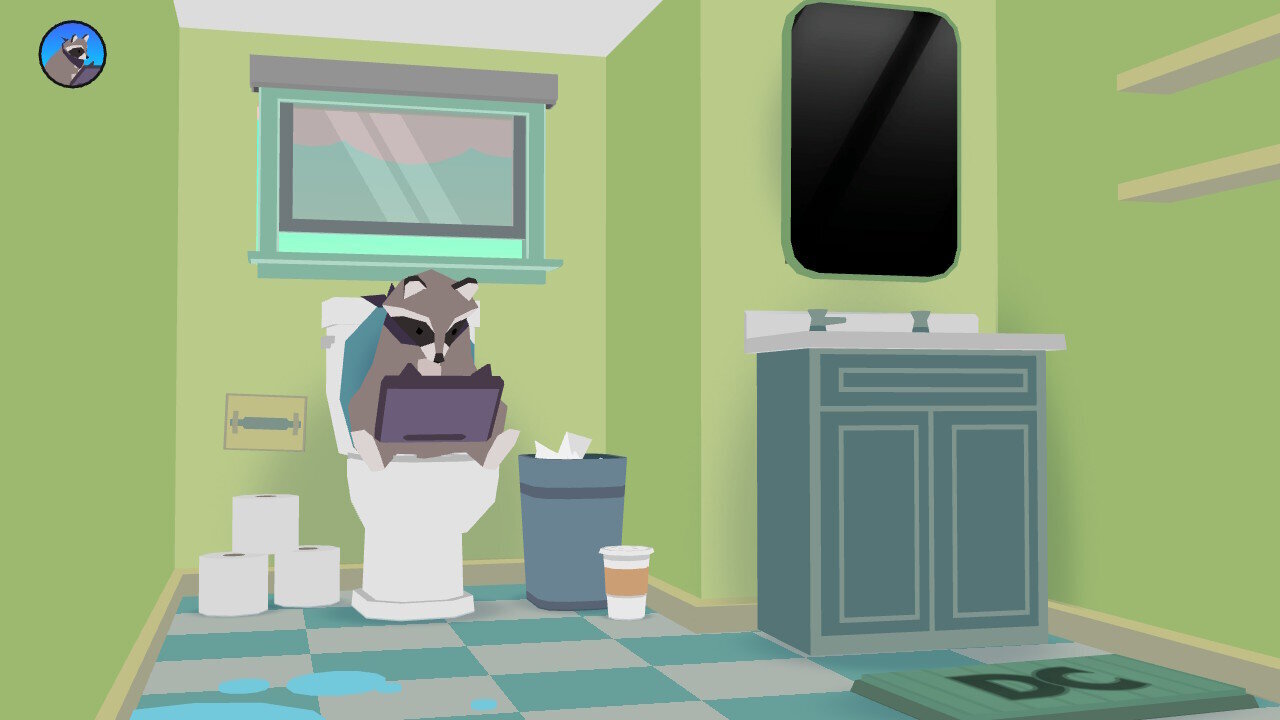
Donut County - you play a sinkhole which is trying to grow by eating as much as you can. Raccoons and physics play a huge part in this unique game.

Tetris Effect - it’s Tetris with Tetsuyogichi’s trippy synaesthetic effects in the style of Rez. It calming, zen-like and addictive... In short, it's Tetris with bells on.

Thomas Was Alone - a puzzle platformer in which you play as sentient AI with differing abilities. The music by David Housden is sublime and the storyline is emotional and affecting; you'll never look at quadrilaterals in the same way again.

Firewatch - missing the great outdoors and the wide open expanse? This is the game for you as you patrol the forest area and travel through stunningly picturesque woodland, rivers and caves to solve a light mystery and fall in love slowly with someone you have only spoken to over a walkie talkie. Lovely stuff.

Jayce and the Wheeled Warriors- Soundtrack Review

A warm fuzzy feeling fills my heart whenever I watch television shows and cartoons from my childhood. However, there are only a few that quicken my heart and make me yearn for simpler times, well, t least simpler as a kid and those include Ulysses 31, The Mysterious Cities of Gold, Inspector Gadget, Dogtanian, Around the World With Willy Fogg and… Jayce and the Wheeled Warriors.

Thundering across the stars,
To save the universe from the Monster Minds!
Jayce searches for his father,
To unite the magic root,
And lead his Lightning League to
Victory over the changing form of Sawboss!
Wheeled Warriors explode into battle!
Lightning Strikes!

With these words Jayce and his Lightning League battled the Monster Minds and Saw Boss for 65 episodes. Produced by the hilariously named (at least I thought at the time) DIC studios and overseen by Jean Chalopin (of Mysterious Cities of Gold, Ulysses 31, Inspector Gadget and tonnes of other formative cartoons from the 80s) the show was grand and cheesy operatic drama and a big part of this was due to the epic music, created by Shuki Levy.

The soundtrack for the series has never been released… until now. Tele 80 crowdfunded the soundtrack and I backed it. After a seemingly long wait (it wasn’t that long actually but it seemed that way due to anticipation and slight Covid delays) I finally received my vinyl and CD.

I first came across the show when it was first shown in the mid 80s on Channel 4 but I saw it in my formative years again in the early 90s on Channel 4, where it was shown at weekends. I remember thinking how cool and ahead of it's time the animation was and how moody, mature and rocky the synthesizer soundtrack was.

Since getting the soundtrack I've listened to the album a few times now and the majority of the themes I remember are all here, however the soundtrack isn’t as ingrained into my mind as much as The Mysterious Cities of Gold, Ulysses 31 or Inspector Gadget are.

I'm not going to go through every single track here as that would be long and incredibly tedious for you to read so I'll pick out the highlights.

The album starts with the French opening credits. It has the instrumentation that we all know and love but with the French vocals. The track is okay but holds no real nostalgia for me, that'd be track 21, the English vocal track that played over the opening of the show, but this is the extended cut. Track 23 is the instrumentation of the opening credits, whilst track 22 has the ending vocals (‘Keep On Rolling’) and track 24 has the instrumentation of that, so you can get your hair rock on!

Now onto the back ground music (BGM):

Track 2 (The Fight of the Light Force) - starts off all mystical and woozily dreamlike but quickly the synthy beat, violin and jazz flute kick in and it's a veritable smorgasbord of pure 80s euphoria.

Track 4 (The Cunning of the Monster Minds) - lots of oboe and unsettling string picking make this a suitably creepy piece.

Track 6 (A Hope) - a light, chilled piece which wouldn't be out of place in a romance scene from some forgettable 80s movie.

Track 7 (The Fight Against the Monster Minds) - a consistent drum beat which is followed by a fluttering flute before a jazzy brass section comes in to add some uptempo jam before a crescendo of strings swells and hits.

Track 10 (All Together) - a relaxing piece which is sort of like a redux of track 9.

Track 11 (Moments of Clairvoyance) - breezy and airy sounding with a gentle wind chimey sound.

Track 12 (An Unknown World) - creepy and unsettling as a quick rhythmic mood sets in with heavy synthesiser sounds wend their way in and out. This track wouldn't be out of place in a John Carpenter film as it fits his ouvre.

Track 13 (Mysteries of the Universe) - upbeat funk with wailing guitar and jazzy brassy freestyling.

Track 18 (Imminent Danger) - sounds like an end of level boss from a PS1 game which is no bad thing. Heavy drums and waning guitar give way to moody rhythmic guitar.

Track 19 (Musical Bridges)- This track is a collection of 5 to 10 second bridged that are dramatic and concluded fight or action sequences. They are dramatic and bombastic, ending with a flourish.

Overall, there are plenty of tracks here for Jayce fans but the track that I most miss due to its omission is the darkly sinister driving imperial march sounding one that is reminiscent of St. Elmo's Fire/ La Passage Secret from the MCOG soundtrack. It was the track used when a discovery was made and is one of the most spine tingling tracks from the show and the Jayce equivalent, which shares a lot of the same DNA, is missing too. I’ll link it below so you can have a listen to both tracks.

Battle Angel Alita: Iron City- Book Review

I've been a Battle Angel Alita fan ever since I was knee high to a grasshopper (I'm now 39 so that's a fair amount of time) and when the movie dropped it was with a sense of trepidation that I watched it in the cinema. I went in expecting the worst as Hollywood hadn't done manga and anime adaptations any favours. Often they were notoriously bad (just think of Death Note, Blood: The Last Vampire, Priest and Dragon Ball Evolution *shudders*) or merely passable (think Ghost in the Shell), however I was pleasantly surprised when Alita: Battle Angel was really rather good and remained true to the source material.

I have the entire collection but the eagle eyes among you might notice the ‘Mars Chronicle’ series missing… it’s in storage and I don’t have a picture to hand but I do have them. Check the review of the series in the links below.

I have the entire collection but the eagle eyes among you might notice the ‘Mars Chronicle’ series missing… it’s in storage and I don’t have a picture to hand but I do have them. Check the review of the series in the links below.

So it was with a renewed sense of optimism that I approached 'The Iron City' by Pat Cadigan which is the prequel novel of the movie. Now this isn't the novelisation of the movie but rather events before the movie takes place. Some details are taken from the graphic novel series and stitched together into more a more concisely readable, cohesive whole for those who may be unfamiliar with Yukito Kishiro's sprawling Gunnm series (which has over 30 graphic novels as of Oct 2020). I have all the graphic novels but as the series is nearly 30 years old even I can't remember all the details and so this novel is a good primer for old guard Alita’s Army fans like me but also for a newer audience who may only have met the character on the silver screen or maybe seen the one off OVA from the late 80s.

Cadigan is obviously a fan of the comic series and from the huge cast of characters focuses on Vector, Hugo, Shirin and Ido. The main story here deals with Hugo's crew stealing Ido's super chip which reduces lag between the brain signal and robotic parts. Cadigan looks at the hierarchy that exists within the Scrapyard and details the machinations of corruption and influence as we see how Vector is able to control and maintain influence, he's a fixer and can get what you want... at a price.

In this dog eat dog world we get a deeper insight into Hugo’s motivations. He aspires to ascend to Tiphares/ Zalem, the floating city due to a tragic backstory that is deftly handled. His role as the de facto gang leader who is trying to get a million credits to buy his way to the floating city is an interesting journey to follow but it is how Cadigan handles Ido that deserves special mention. We get to hear his inner turmoil about doing the right thing whilst having regret about his frayed relationship with his wife, Shirin. Other peripheral characters from the comics are given a chance to shine too and some have their roles and relationships tweaked but it still makes sense in this world.

Cadigan does a great job of recreating an immersive world from the huge comic series and making it palatable for a YAA audience. As a reader of Haruki Murakami and David Mitchel (Cloud Atlas) don't go in expecting florid magical surrealist flights of fancy or florid language or prose but the novel is effective and well worth a read as it adds to the larger tapestry of Kishiro’s world.

LINK- Alita: Battle Angel Movie Review

LINK- Battle Angel Alita: Mars Chronicle Vol. 3- Comic Review

LINK- Battle Angel Alita: Mars Chronicle Vol. 2- Comic Review

LINK- Battle Angel Alita: Mars Chronicle Vol. 1- Comic Review

LINK- Battle Angel Alita: And So It Ends

LINK- The Moomins 80's Soundtrack Vinyl Review

LINK- Inspector Gadget Retro Soundtrack Review

LINK- Ulysses 31 Retro Soundtrack Review

LINK- The Mysterious Cities of Gold Retro Soundtrack Review

LINK- Sonic Mania Video Game Vinyl Soundtrack

LINK- Thomas Was Alone Video Game Vinyl Soundtrack Review

LINK- Akira Soundtrack Vinyl Review

Children of the Stones- BBC Podcast Drama Review

The ‘Children of the Stones’ audio podcast is a modern retelling of the classic spooky 1977 children's series and book. I watched the original series in 2015 after hearing lots of people talking about how wonderful and scary the series was and how formative it was in their childhood so I thought if give it a go. I wasn't disappointed and became an instant fan. The general premise is simple- an archaeometrist (person who looks at carbon dating, mathematics and other data to study historical objects and sites) and his teenage son move to Milbury, a village framed by an ancient stone circle. Over the course of a few weeks the new visitors discover that the town is hiding a dark secret and things are not as they seem as people seem unnaturally happy and cheerful (Yup Toto, we were not in Barking anymore)

The original show dealt with heady concepts like time loops, predetermination and time travel but what really got me was the eerie atmosphere and the sense of unease. I was surprised it was a show aimed at kids as it is genuinely unnerving and gets under your skin. So it was with some excitement (and some trepidation) that I listened to the new audio production; would the drama podcast be as good as the series?

Well, the high calibre of voice acting and moody sound design meant that the creeping dread of the original series has been retained. The sonorous, cacophonous sound design gives the whole podcast an unsettling atmosphere which is perfect for the subject matter of old world magic and eldritch otherwordly beings- it drew me right into the world of Milbury again. The story itself remains pretty much the same but the main protagonist, Matthew, is now a girl called Mia. There are also a few mod-cons added to place it in a more current setting; mentions of WiFi, podcasts and mobile phones don't alter the wider story but does give Mia a reason to be carrying out research for her podcast about unusual and paranormal activities.

This is a very British show and when phrases like piss off, bugger me and arse are all dropped it makes me chuckle and proud to be British (in spite of Brexit).

Overall, I thoroughly enjoyed the 2 or so hours I had with the audio drama and would recommend it. It's no 'The Sandman' but then it's production budget is significantly smaller and it doesn't have an all-star cast, but with a solid story and earnest cast, 'Children of the Stones' is well worth a listen. Oh, Happy Day!

Children of the Stones- Podcast Drama Review

Carmen Sandiego- Complete Season 3 Review

It's been a long wait since the cliffhanger end of season 2 but finally, after 12 months it's finally here, series 3 of Carmen Sandiego has dropped... sort of as this season is only 5 episodes long. Whether that is due to the fallout from Covid causing delays in production or whether it is a design choice to release the first part of the series to create excitement and have a short hiatus before showing the remaining episodes remains to be seen. Either way, the episodes on show are excellent as Carmen tries to find the identity of her mother whilst VILE promotes some new recruits to bring la femme rouge down. We have adventures in Mexico City with a luchadora, a couple of Halloween and Dios De Los Muertos themed episodes, an episode in Venice and the final cliffhanger based in London.

The series continues the usual outstanding capers with beautifully balletic battles between Carmen and VILE recruits which are all wonderfully timed to music and showcase stunning cinematography. The artistry in the animation is still very beautiful and singular, all angles and edges with chromatic colouring but what really shines is the familial warmth of the unconventional surrogate family supporting Carmen in the search for her mother. I would also like to give a shout out to the designers of Carmen's wardrobe as her Halloween party witch costume is amazing and super cute but the rest of her costumes and disguises are also excellent.

So once again, Series 3 changes the status quo and continues the already sterling work from previous seasons. Carmen Sandiego is a series not to be missed!

LINK- Carmen Sandiego- Complete Series 1 Review

LINK- Carmen Sandiego- Complete Series 2 Review

LINK- Scooby Doo: Mystery Incorporated Season 1 Review

LINK- Scooby Doo: Mystery Incorporated Season 2 Review

LINK- Gravity Falls Complete Series Review

LINK- She-Ra and the Princesses of Power Season 1 Review

LINK- She-Ra and the Princesses of Power Season 2 Review

Horizon Zero Dawn - Video Games As Art

Horizon Zero Dawn is a beautiful open-world game which puts you in the shoes of Aloy, a young woman who is an outcast from her tribe in an apocalyptic future where nature has taken back the remnants of discarded destroyed cities and technologies. Wild robot dinosaurs and creatures roam the land as you try to uncover what happened to this world. I’ve been playing a few open-world games recently and this (alongside God of War) have been compelling as the voice acting has been top notch, the graphics stunning and, most importantly, the game designers have had respect for my time and haven’t padded out the experience with nonsense and pointless tasks that add nothing to the game. Listen up modern Ubisoft, this is the way it’s done son!

Check out my screenshots from the playthrough as this is one of the most gorgeous looking games I've ever played and is well worth a looksie.

Murrain- Cult TV Review

It's no secret that I’m a big fan of Nigel Kneale, writer of such works as ‘Quatermass’, ‘The Stone Tapes’ and ‘Beasts’ (a series I am currently watching). I've been working my way through his works over the past several years and it was whilst falling down the YouTube rabbit hole I discovered an hour long short film called ‘Murrain’, which he wrote for ITV when he had a falling out with the BBC over something (what, I don’t know).

It’s a lesser known Kneale work and formed part of the 'Against the Crowd' series which were short anthology collections that were all the rage in the 70 and early 80s after the success of the ‘Play For the Day’ and ‘Armchair Theatre’ series. The anthology is not well regarded as it was pretty lacklustre apparently but this is one of the standout pieces.

The story is quite simple, a vet visits a small town which is blighted by a mysterious disease that is killing their livestock. The locals blame old lady Clemson who lives in a ramshackle cottage, accusing her of being a witch. The rational ‘man of science’ vet visits the old lady and sees that she is living in terrible conditions and endeavours to help her. However, when the mob get angry they attack the cottage with dreadful results.

The production is very cheap and there is very little cinematographic flair on show, it is all very bread and butter but then it's a simple story where special effects don’t matter as they are not needed- the story is king. Over the course of the hour, I had a sense of dread in the pit of my stomach as I feared for the old lady and thought it wasn’t going to end well. The conclusion is ambiguous but that's all part of the charm that’ll have you thinking about the story long after the viewing. Director John Cooper does a great job creating an effective atmosphere with obviously limited resources, there is an unsettling claustrophobic, insular feeling to proceedings.

The actors themselves are solid with no-one I recognise apart from M from James Bond (Bernard Lee) who has a key role as the landed gentry leading the witch hunt, whilst Una Brandon-Jones (someone I’m unfamiliar with but who is quite well known apparently) is riveting as the accused witch.

Murrain is no ‘Quatermass’ or ‘Stone Tapes’ but for a short 60 minute films with a tiny budget it is simple, effective and worth your time.

By Night- Complete Comic Series Review

I’m a huge fan of John Allison’s ‘Giant Days’ and have all the graphic novels in the series. I eagerly await each new arrival like an old friend, which is kind of what it is about, the power of friendship in university. ‘Giant Days’ has a very likable trip of quippy young women and a couple of easily identifiable male characters too. The interplay between the ensemble is dynamite and it was their endearing personalities that made them so wonderful. So, I'd hoped to see similar bantery Whedon-esque wordplay and British-isms on show in Allison’s 'By Night' a new limited series comprised of 3 graphic novels, but this is a very different beast indeed.

It’s only 3 graphic novels long but the comic is strangely too long yet not long enough…

It’s only 3 graphic novels long but the comic is strangely too long yet not long enough…

The story is quite simple; two friends in their late teens/ early 20s friends find an inter-dimensional portal to a fantastical world with trolls, goblins and a creepy mountain with one eye… What to do? Why make a documentary about the place, of course! However, plans go awry and there is a larger conspiracy involving an old industrialist, a conglomerate and the rust belt town. 

There is potential here but having read the complete series it’s all really ... bland and lacking something.  I think a big part of that is that the characters are a bit meh, there are no real character quirks or individuality that makes you root for the characters, in fact, some are just plain annoying and unlikable. Also, the issue of a decaying town in thrall to its industrial past has been covered extremely well in video game 'Night in the Woods' and the fantastical alternate world has done extremely well across media, especially cartoon series like 'Adventure Time', 'She- Ra' and 'Over The Garden Wall' but what's on show in this comic series is so generic that I felt disappointed.  Don’t get me wrong, the artwork by Christine Larsen is solid overall but again, there is nothing really standout to rave about. The town is presented in hue of blacks, greys and oranges so there isn't much potential for flourish or embellishment. The Otherworld is a little more creative but nothing to write home about. 

So, overall 'By Night' is an okay read but I'm disappointed with the whole thing as it had potential. The conclusion is not very conclusive and it felt like a rushed ending. Much like this review!

LINK- Comics in the Classroom (article)

LINK- What Comics Have Taught Me

LINK- The 13 Best ‘Are You Afraid of the Dark’ Episodes

LINK- The Secret Garden (BBC 1975 Review)

LINK- Children of the Stones Review

LINK- Dead of Night: Cult TV Review

LINK- The Stone Tapes: Cult TV Review

LINK- Tom’s Midnight Garden: Cult TV Review

LINK- Children of the Dogstar: Cult TV Series Review