The Juniper Tree - Cult Film Review

I stumbled across The Juniper Tree while scrolling through the BFI Player, and the blurb immediately hooked me: a Grimm Brothers retelling, shot in black and white and starring a 21-year-old Björk? Sign me up! This is the Björk before the world knew her as a Sugarcube, the Debut era pixie, the infamous swan dress egg laying savant, or the emotional wreckage of the abuse lead in Dancer in the Dark. Seeing her here is like watching a proto-icon in the wild; she has the raw feel of ethereal whimsy and wonder which feels totally unforced, like she just wandered onto the set from a different dimension. So, how is the film?

Well, the story is a slow-burn meditation on survival and the supernatural. After their mother is burned for witchcraft, two sisters—Margit (Björk) and the older, more calculating Katla (Bryndis Petra Bragadóttir)—flee across the rugged Icelandic landscape. Katla uses a bit of "magic" to charm a grieving widower, Jóhann (Valdimar Örn Flygenring), into taking them in. While Katla tries to secure their place in the home, Margit forms a gentle, fragile bond with Jóhann's young son, Jónas, all while being haunted by spectral visions of her mother.

Visually, the film is arresting, even if the film is a bit of an endurance test story wise. The stark black and white cinematography strips Iceland of its "Land of Fire and Ice" postcard vibes and replaces them with something primordial and punishing. It gives the glacial acting style an evergreen, timeless feel - like you’re watching a folk memory rather than a 1990 movie. This film wouldn't feel out of place in some fever dream you might have had in the 80s after watching one too many of those eerie Eastern European stop-motion animations that used to show on Channel 4 when you were ill and at home recovering but looking for something on daytime tv.

To be totally honest, I feel like I "experienced" this film more than I "enjoyed" it: it’s heavy, somber, and the pacing is as slow as a retreating ice sheet but the visuals and the soundtrack are breathtakingly beautiful, creating a vibe that’s both claustrophobic and vast. If you want to see where Björk’s cinematic DNA began, it’s all right here in this strangely beautiful film.

Horror Express - Cult Horror Film Review

There’s something inherently exciting about claustrophobic horror, where some people are stuck in a small space and have to survive against a creature or worse - each other. Set on a moving train, Horror Express (1972) is one of the best examples of the sub-genre. 

Directed by Eugenio Martín, this Spanish-British co-production offers an unusual and wonderfully original premise that completely bypasses the standard tropes of vampires, werewolves, and haunted houses. Instead, it serves up a two-million-year-old part-man, part-ape fossil from deep back in our evolutionary chain that turns out to be far from extinct.

The story kicks off aboard the Trans-Siberian Express, where anthropologist Professor Alexander Saxton (Christopher Lee) is transporting his frozen discovery back to Europe. Naturally, things go wrong almost immediately as the crate is opened and bodies start dropping with their eyes burned completely white. It quickly becomes apparent that the creature isn't just alive and well but it's lethal.

What makes Horror Express so brilliant is how it handles its threat. Even though the original creature is killed off surprisingly early on, it possesses the terrifying ability to transfer its consciousness and energy—and all the ancient, stolen knowledge it holds—into another human host. If that parasitic, body-hopping dynamic sounds familiar, it's because it feels like a clear, direct precursor to John Carpenter's 1982 classic The Thing.

Despite the modest budget, the film looks gorgeous. The vivid colours and striking cinematography by Alejandro Ulloa masterfully capture the claustrophobic, suffocating feel of a steam train hurtling through the freezing Siberian wilderness.

The acting is top-notch across the entire cast, but the real heart of the film lies in the iconic pairing of Christopher Lee and Peter Cushing. Both legendary actors play it completely straight as men of science—erudite, learned gentlemen—rather than the occultists, mad scientists, or outright villains they were so frequently cast as during their Hammer Horror days. Their on-screen chemistry is effortless and a joy to watch.

The script is also packed with cracking one-liners. Telly Savalas turns up in the third act as a boisterous, ruthless Cossack officer who completely steals every scene he's in. But the absolute highlight of the dialogue comes during a moment of peak paranoia:

"But what if one of you is the monster?"

An aghast Cushing, without missing a beat, replies: "Monster? We're British, you know!"

The final 15 minutes of Horror Express are insanely good. As the true cosmic nature of the creature is revealed and the body count spikes, the tension escalates into pure, unadulterated madness. Chaos erupts on board, complete with resurrected eye-bleeding Cossacks, a desperate race towards a literal cliff-end, and Christopher Lee basically going full Rambo with a rifle to save the day.

Horror Express is insanely good fun and has stood the test of time remarkably well. By combining sci-fi cosmic horror with a classic Agatha Christie - style mystery setting, it stands out as one of the best, most unique old-school horror films of its era.

If you've somehow missed this one over the years, do yourself a favour: turn down the lights, get the kettle on, and jump aboard.

LINK: The Argument for Videogames As Art in the Age of Mechanical Reproduction

LINK: Akira Soundtrack Vinyl Review

LINK: The Power of Stories and How They Are Manipulated

LINK: The Message by Ta-Nahisi Coates - Book Review (and Some Thoughts)

LINK: The Anxious Generation: Book Review (and Some Thoughts)

LINK: Utopia for Realists- Book Review

LINK: Toxic: Women, Fame and the Noughties- Book Review (and Some Thoughts)

Battle Royale High School - Cult Manga Review

If you're a fan of classic '80s OVAs that throw caution (and coherent plotting) to the wind in favor of non-stop action, gore, and sheer absurdity, then Battle Royale High School is a must-see. This 1987 one-shot anime, not connected to the popular film duology (starring Beat Takeshi) or manga, is an hour-long, unhinged journey that somehow manages to cram just about every genre imaginable into its runtime.

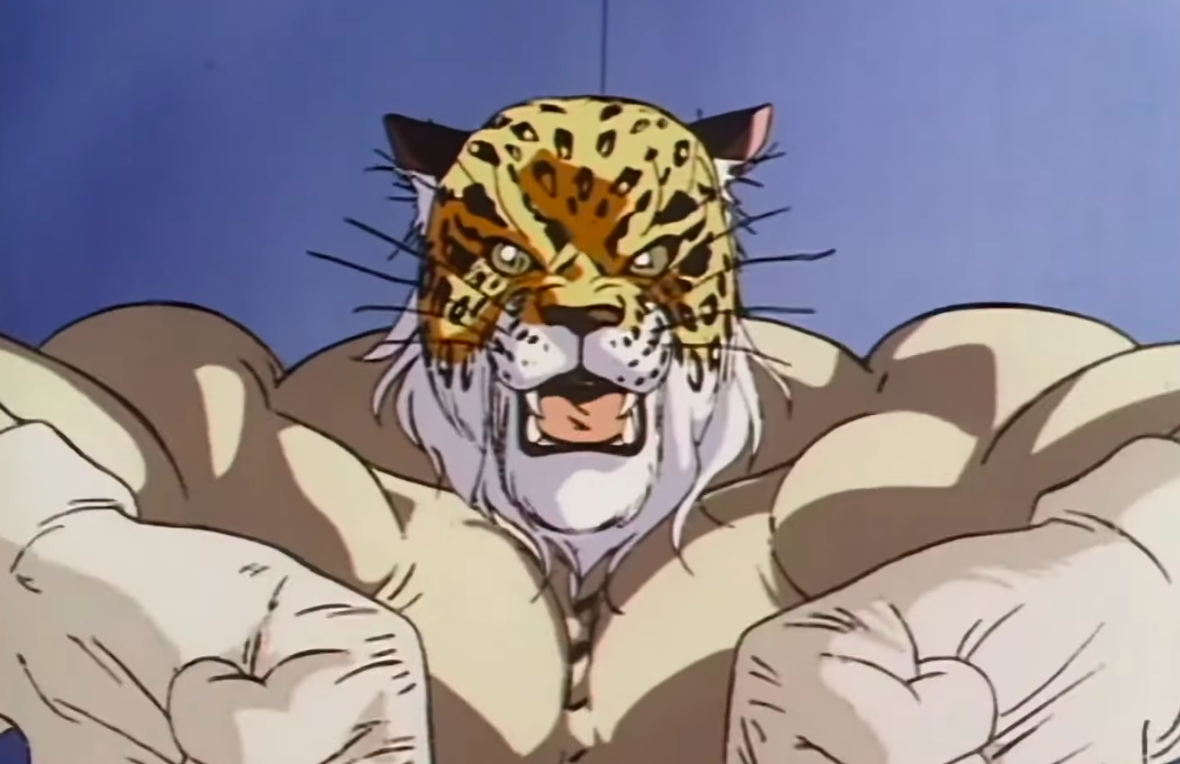
The story, such as it is, centers on Riki Hyoudo, a high school karate champion with a penchant for wearing a leopard mask. Riki's martial arts prowess, it turns out, is tied to an ancient interdimensional prophecy. He's psychically linked to Byoudo, the demon king of the Dark Realm, who, thanks to some fairy mischief and a lightning ball reminiscent of Arnold's first appearance as the Terminator, finds himself on Earth and eventually possesses Riki. From there, things spiral gloriously out of control. We're introduced to a stern demon slayer, a space/time continuum inspector in power armor, a love triangle, grotesque monsters, and enough exploding bodies to make your head spin. The plot is less a cohesive narrative and more a series of escalating, wildly entertaining events designed to facilitate as much over-the-top violence as possible.

This OVA delivers on its promise of ultra-violence as the fight scenes are frequent, well-choreographed, and genuinely brutal. There's plenty of blood, dismemberment and exploding demons. The pacing is a non-stop assault of events and there's rarely a dull moment as the story rushes from one ridiculous scenario to the next.

The animation and character designs are a fantastic blend of '80s and early '90s aesthetics, with Nobuteru Yuki who would later work on the stunning The Vision of Escaflowne, handling character design. Hideaki Anno and Shirō Sagisu, who worked on Evangelion several years later, both worked on this too so there is some pedigree. However, don't go in expecting a deep or logical story as characters appear and disappear, motivations are thin, and the plot often feels like an afterthought to the action. It's less a narrative and more a series of connected set pieces. There's virtually no time for character development; everyone is an archetype, serving simply to move the carnage along. The sheer absurdity of it all, especially in the English dub, can lead to some genuinely laugh-out-loud moments, though not always intentionally.

So, if you can turn off your brain and just enjoy the ride, Battle Royale High School is incredibly fun. It's the kind of "so bad it's good" experience that cult classics are made of.

Battle Royale High School is absolutely worth watching if you appreciate the wild, untamed spirit of '80s anime OVAs. It's not a masterpiece by any means but it's a fantastic example of spectacle and immediate gratification in lieu of any real meaning. It's a loud, bloody, and thoroughly enjoyable hour of anime that embraces its own ridiculousness. It's well worth an hour of your time.

Green Legend Ran - Cult Manga Review

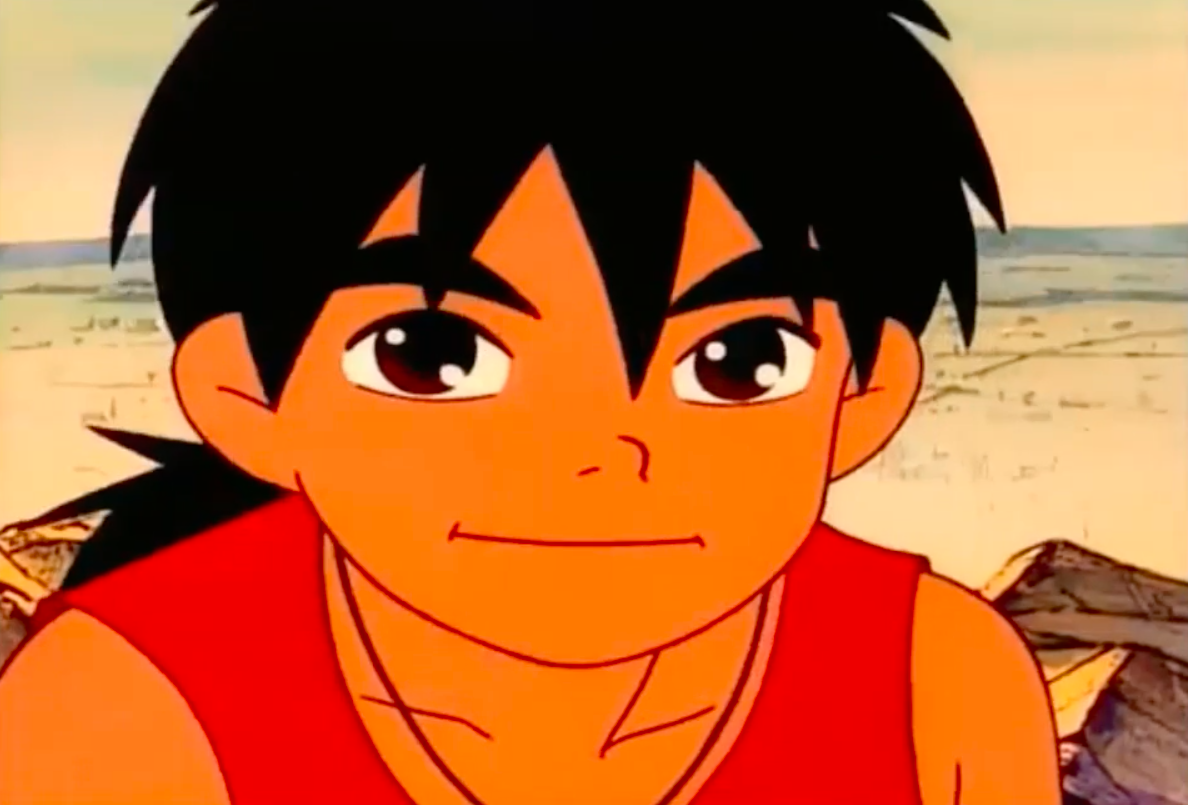
I'm a huge Mysterious Cities of Gold fan and had heard that it was part inspired by a series called Future Boy Conan. I had never seen this series before, as it was never shown in the UK to my knowledge, but had heard that it was definitely worth a watch. When a Blu-ray was released, I jumped on it and ordered it on release day. I found that, even though the series was old and I had no personal attachment to it, I was very impressed. I could see the DNA from Conan to MCOG. I say this because it seems like it wasn't the only one as I heard that it had influenced Green Legend Ran, a three-part anime series that was released way back in 1992. I knew of it but had never got around to watching the series. However, I did have the soundtrack CD by Yoichiro Yoshikawa which I'd bought from the original location of Forbidden Planet back in the mid 90s. It had been on sale so if picked it up and listened to it with no context. So, with some time on my hands, I thought I'd finally give it a watch.

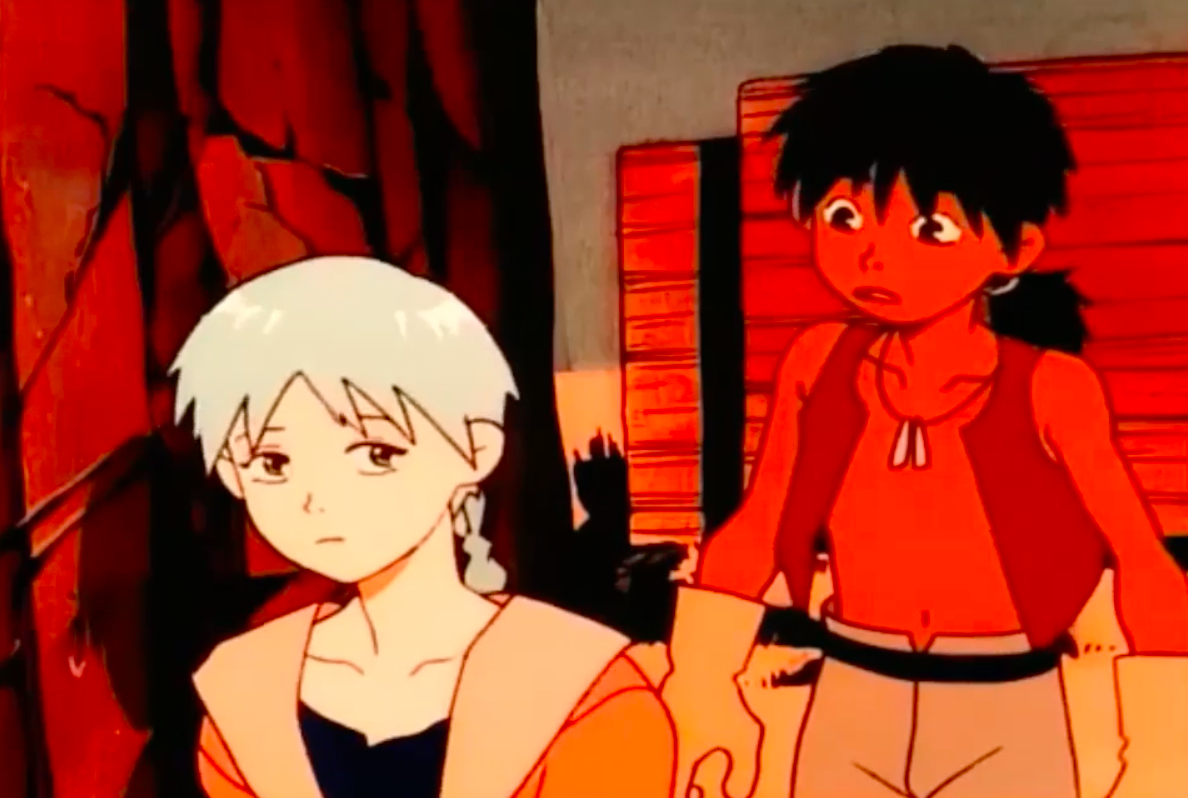
Set on a post-apocalyptic Earth that had been ruined by humans, the world was further transformed into a desert wasteland after alien monoliths, known as the Rodo drained the planet's water and life. The story follows Ran, an angry young man who questions his lot in life. He joins a revolutionary group to track down the scarred man who killed his mother but his personal quest shifts when he meets Aira, a mysterious silver-haired girl with an unknown connection to the Rodo's central monolith, the 'Holy Mother.'

When Aira is kidnapped, Ran pursues her across the desert, becoming entangled in the larger conflict between the oppressive, water-controlling religious cult known as the Rodoists and the anti-Rodo rebels of Hazzard. Along the way he find out what the purpose of the Rodo is and why they have kidnapped Aira.

I have to say that watching this reminded me of the storyline from several Hollywood movies where aliens are terraforming planets by destroying the atmosphere. It happens in The Arrival, Titan A.E, Chronicles of Riddick, Man of Steel and Dune so it's a pretty common trope. Here, it's wonderfully realised as you see the suffering of the people and the disperate societies that have emerged, some seeing the Holy Green Monoliths as a sign from God whilst others see them as oppressors. The Holy Green has its own plans though and it's machinations may not be magnanimous...

I really liked this anime as the animation by AIC is solid, showcasing some creative dystopian scenery of old ruined cities, failing infrastructures and increasing desertification. The soundtrack is great and complements the film well, especially in its more philosophical musing moments.

Green Legend Ran deals with some emotive themes and features swearing, acts of terrorism, violence, gunplay and blood; it is not intended for young kids, which is a shame as I think it has something important to say about blind faith and the environment.

In a world increasingly fragmented and more tribal, at least when looking at online discourse and politics, this story is pretty evergreen as it shows what can happen when fanaticism takes hold on both sides of the divide. This OVA is well worth 150 mins of your time.

LINK: Japan: My Journey to the East

LINK- Battle Angel Alita: And So It Ends

LINK- Fire Tripper: Cult Manga Review

LINK- Akira Soundtrack Vinyl Review

LINK- Manga Exhibition at the British Museum

LINK- The Transportive Nature of Objects (And the Power of Mini Consoles)

LINK- My One True Gaming Constant in Life- Nintendo

LINK- The Mysterious Cities of Gold Retro Soundtrack Review

Dragon's Heaven- Cult Manga Film Review

I had heard about Dragon’s Heaven - an OVA that was apparently incredibly expensive due to hubris and arrogance of the director involved. Makoto Kobayashi was heavily influenced by the work of Moebius and Hayao Miyazaki's early output - especially Nausicaä - and it shows in this quirky and unique OAV that could only have been a product of Japan's Bubble Economy.

This is a tale about two robots who battle across the sands of time, in conflict for over a thousand years. When our robot protagonist SHAIAN is damaged in a battle, he rests to recover, only to wake up to a very different world. People are eking out a living in harsh conditions, but the war is still going on and his enemy, Elmedain, is still out there. Luckily, he meets Ikiru, a strong-willed and charismatic teen orphan who agrees to help end the war and defeat Elmedain.

I really enjoyed this animation as it shares the same sense of creative audacity as The Thief and the Cobbler, which took three decades and an innumerable number of artists to nearly complete. But man, what a vision and idea! It's good to reach for the stars and push the boundaries of what's possible. The fact that the first five minutes are all done with practical models, lighting, and effects is mind-blowing; while it looks quite amateur now, it would have looked awesome at the time, I'm sure. The character of Ikiru is also well done, as she seems to be a woman of agency who steps up, has her own mind, and says what she thinks. She's flirty with SHAIAN and makes him uncomfortable at times, which is a real power move.

Overall, I highly recommend this 30-minute OAV as it is a true oddball piece of filmmaking and animation.

Lawn Dogs - Cult Film Review

The late 1990s was a heady time for blockbuster films as they dominated the screen while independent and world cinema films vied for attention. One of these smaller films was Lawn Dogs which I came across the film by accident whilst channel hopping on the BBC in the early 00s. I recognising a young Mischa Barton, who I knew from The OC as it was a big deal at the time, but hadn't heard of this film at all. I watched it and loved it at the time, thinking that it was a bit of a forgotton or underappreciated gem. A few years ago, I bought the DVD on a whim from Amazon, but it had a weird cheesecake sexy Kathleen Quinlan cover (which I didn't recognise from the film) but, like so many things it my pile of shame, it sat on my shelf for years waiting to be viewed. So, with a bit of time on my hands this Winter, I decided to give it a rewatch to see if the film was as good as I half remembered. So, how was it and can you indeed go back home again?

The heart of Lawn Dogs lies in its two central performances with an early career Sam Rockwell playing Trent, a reclusive and enigmatic lawn mower who lives in a caravan in a secluded forest. He works in a privileged gated community, with all the melodrama that entails, where he meets Devon, a young Barton, who is a precocious and imaginative girl who has recently moved  in to this wealthy community. They bond, their friendship forged out of a feeling of mutual alienation and a shared need for understanding as they recognise their mutual alienation in their respective worlds. Rockwell and Barton’s chemistry is remarkable, making their strange (not at all predatory but rather sibling-like) bond entirely believable and deeply affecting.

The film is a poignant exploration of social class, prejudice and the loss of innocence. It critiques the polished façade of suburban life, contrasting it with the perceived 'otherness' of those who don't fit in. The most withering line is delivered by Devon when she reversed the toy gun into an annoying boy's mouth and states, "You'd be doing the community a favour." He is the instigator of many of the issues but, due to his privilege, is never a suspect.

The narrative is infused with an element of magical realism, a subtle touch that elevates the story from a simple drama. The fantasy world Devon creates, built on the tale of Baba Yaga, sometimes bleeds into reality, serving as both a refuge and a lens through which to view the harshness of her world. This stylistic choice is what makes the film so special and distinct, leaving a haunting and memorable impression long after the credits have rolled in an emotive final act.

This film, directed by John Duigan, never achieved widespread commercial success, but I reckon that those who have encountered it, have found it an enduring experience. It's a film that asks its audience to step beyond preconceived notions and find beauty in the most unexpected of places. The fabulism and magical realism are all about the human condition as, through the guide of the fantastical, we get an understanding of some harsh societal truths.

Ultimately, Lawn Dogs is more than just a character study; it's an unconventional fairy tale for adults. It’s a film that resonates because it finds humanity in its most flawed and misunderstood characters. For anyone interested in a thought-provoking, beautifully acted, and genuinely original piece of cinema, Lawn Dogs remains a highly recommended, albeit challenging, watch.

Shadow Star Narutaru- Cult Manga Review

I knew of Shadow Star as the series ran for a while in Manga Mania back in the late 90s. I liked it's naive, laidback art style that looked different from the other, more stereotypical stuff that we wee getting. Manga-ka Mohiro Kitoh's art and storytelling belies the dark heart of the story underneath. The story was never complete in Manga Mania and, even though I bought the 7 graphic novels, the rest of the series was never released in the UK so I never got closure. Finally, after nearly 30 years, I got access to the 13 part the anime series and had a chance to see if it was as graphic, dark and violent as I remembered.

With the cheerful opening credits I second guessed myself thinking I was misremembering the series. The jaunty theme tune, the colourful paper cut art style and cute characters made it look more like a slice of life comedy series in the vein of Hamtaro or Shin Crayon rather than what we have here.

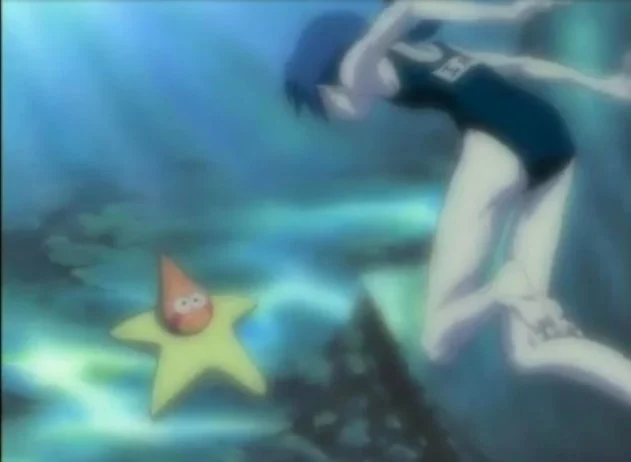
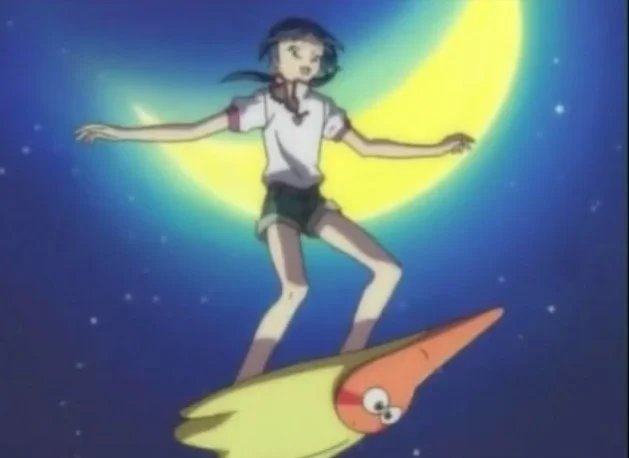
The first episode starts of cheerful enough as Shiina, a young tween sent to holiday with her Grandparents near the coast, finds a strange star-shaped creature in the sea next to a torii gate. She bonds with it as it flies her all around the coast. She names it Hoshimaru and takes it back home with her, keeping it a secret from her father. Great, a buddy story of two new friends from different world, a modern day ET you might think... but no, by episode 2 the darkness of the series is revealed and it gets progressively beaker, violent and misanthropic. There are several of these alien beings and they all have owners who are bonded with them, the problem is that a few of the teenage keepers of the 'Children of the Dragon' ETs are maniacs who want a Khymer Rouge style Year Zero where there is a genocide of the educated elite to allow for a 'peaceful and strong society  that lives off the land'.

Shiina and her friend Akira want to fight back but there are a group of teens who are more bonded with their dragons and in their mind might is right.

Over the course of 13 episodes we have an ongoing battle between Shiina, Akira and Horoko and the Japanese Airforce against  those with evil intent. However, along the way we deal with real big issues such as self-harm, neglect, emotional abuse, mental health,.... it's all pretty heady and heavy stuff and you'd like for it to be handled well but the show is tonally everywhere. It's light and breezy one moment and in the next minute very bleak.

The art style in Shadow Star will not appeal to everyone but I quite like that it is quiet distinctive in the manga space. The characters are all gangly arms and legs but I suppose to convey tween and early teens that'd be accurate. Shiina is a bit of a tomboy so her supposed gracelessness, which her career-driven mum criticises her about in episode 3, is understood to be a trait we can get behind as she is our plucky heroine. Shiina is very endearing and a sympathetic character as she wants to help and do the right thing. The character design of the other people is pretty forgettable, including the dragon children who all look a bit uninspired.

The series asks a lot of questions and is intriguing but the motivation of the evil cabal of teens here is not clear. I get the world is not great so the whole 'let's start afresh' seems like a bold idea... until you take into account the hundreds of millions of people you would need to kill in order to possibly achieve this. These youths don't come across as sympathetic or idealistic, more psychopathic with Stalin's attitude of 'You can't make an omelette without breaking a few eggs'.

It's a shame the series ends where it does as there is definitely something here. Sure, there's a dark heart here but the story of power corrupting youth and lack of impulse control is one we can all understand both in real life and through literary examples like Lord of the Flies. Sure, Shadow Star Narutaru isn't the finest work of anime or manga but I enjoyed the story that was presented. I need closure but I suppose with no chance of a second series being commissioned it'll be a case of finding English translations of graphic novels volume 8 to 12 to get that. Oh well!

Sister Midnight - Cult Film Review

For many of us, Bollywood isn't just a film industry; it's a foundational piece of our cultural identity, a vibrant, if sometimes predictable, force that has soundtracked our lives.

That deep-rooted familiarity is precisely what makes Sister Midnight such a startling and exhilarating experience—it’s the maverick film we desperately needed to shake the stagnation of mainstream Indian cinema.

At its core is Radhika Apte, an actress much like Emma Stone in that her career choices consistently show a more adventurous bent. Apte is fearless, choosing scripts that prioritize unusual vision over commercial safety and it is her presence here anchors a story that effortlessly mixes the deeply personal with the gloriously absurd.

The film takes the familiar cultural starting point of an arranged marriage and the modern malaise of ennui, and then violently shoves them off a cliff into the bizarre territory of vampirism and the raw, unflinching search for authenticity. These are waters few mainstream Bollywood productions dare to tread and the film is all the better for its audacity in portraying it in such an unusual and joie de vivre fashion.

What truly elevates Sister Midnight is its jaw-dropping aesthetic ambition. Writer-director Karan Kandhari's debut is a well-crafted visual feast, forging a true genre hybrid in Bollywood. There are elements of an introspective art film, a road movie, folk horror and stop-motion surrealism, all with gentle nods to Ozu, Kurosawa and Buster Keaton. Yup, it's a melange that works surprisingly well. This is all bolstered by an expertly placed soundtrack. This combination of styles and substance isn't just experimental; it’s extraordinary—it tells a story that literally could not be told any other way. Even as the film twists through its darkest and strangest corners, it never loses its pulse.

Sister Midnight is a brilliant, unsettling, and ultimately joyous experience. If there is any justice, this film won't just do well—it will establish itself as a genuine cult classic, carving out a new, surreal and authentic path for Bollywood’s future. Everyone likes masala films but there is always room for an original palette cleanser like this.

LINK: Japan: My Journey to the East

LINK: Please Save My Earth - Cult Manga Review

LINK: Thomas Was Alone Video Game Vinyl Soundtrack Review

LINK: Akira Soundtrack Vinyl Review

LINK: The Power of Stories and How They Are Manipulated

LINK: The Message by Ta-Nahisi Coates - Book Review (and Some Thoughts)

LINK: The Anxious Generation: Book Review (and Some Thoughts)

LINK: Utopia for Realists- Book Review

LINK: Toxic: Women, Fame and the Noughties- Book Review (and Some Thoughts)

Häxan - Cult Film Review

I've always been intensely interested in people's beliefs, cultures and the resulting social structures - it's what drove me to pursue a degree in Anthropology at UEL all those years ago. So, when I heard of a silent film from the 1920s that looked into witchcraft and the hysteria surrounding it I knew I needed a piece of that. On a cold October evening, with a cup of tea and a pack of digestives at hand, I settled down to watch director Benjamin Christensen’s Haxan.

The film is a quasi-documentary, exploring the history of witchcraft and superstition from the Middle Ages right up to the 1920s, but it's really a hybrid: part academic lecture, part lurid horror film and part social commentary.

The film opens with an extended sequence that acts just like a historical lecture, using close-ups on images of woodcuts, paintings, and texts to explain medieval cosmology and demonology.

Christensen then leans into a serious, chapter-based presentation, complete with illustrations and diagrams, with utterly terrifying and graphic dramatic re-enactments. These vignettes depict everything from Satanic Sabbaths (with the director himself gleefully playing the Devil) to the brutal torture and confessions of the poor women accused of witchcraft. It’s a shocking, grotesque and unflinching look at the persecution of women and the instruments of torture used to extract their false confessions. It is terribly horrific how these women were treated and living life - being in constant fear of being accused on being a witch - must have been an incredible hardship. Apparently, these scenes made the film so terrifying that it led to it being heavily censored or banned in many countries upon release.

The film's final section is particularly intriguing from an anthropological perspective. It attempts to re-contextualize the alleged 'witchcraft' of the past through the lens of early 20th-century psychology, suggesting that many of the supposed witches were simply victims of mental illness, particularly the diagnosis of hysteria. While this comparison feels dated now, I appreciate that the director was seriously attempting to use contemporary scientific thought to understand historical human suffering and belief system through an effort to contextualise the culture and paranoia.

For a film made over a century ago, one of the most remarkable things about Häxan is how surprisingly modern its technique feels. It’s incredibly prescient; the mix of archival imagery with a guiding, didactic narrative voice (conveyed through intertitles and the occasional wooden stick pointer on screen) is strikingly similar to the style of a contemporary video essay you’d find online today - just obviously more low-key due to the technology available at the time. There are a variety of visual tricks and techniques used including reversing film footage, stop motion and some early animation to convey the information in interesting ways so the 1 hour 45 minute runtime whizzed by.

Watching this, I am reminded of the works of Adam Curtis, in that both use a vast array of historical source material and dramatic re-enactment to construct a compelling, often unsettling, argument about how historical forces (like religious fear and misogyny) shape our present.

Häxan is an essential watch in my opinion as, it's not just showing you facts; it's weaving them into a visually arresting, polemical argument with a definite point of view.

Overall, Häxan is a shocking, brilliant, and still-relevant piece of cinema that has stood the test of time and shows how little has truly changed in the century since its creation.

Belladonna of Sadness - Cult Film Review

I stumbled upon Belladonna of Sadness (Kanashimi no Belladonna) through the intriguing corners of a Facebook group Incredibly Strange Films. The artwork alone, a swirling vortex of colour was enough to pique my curiosity. Little did I know I was about to plunge into a cinematic experience by Eiichi Yamamoto that was as visually stunning as it was emotionally raw, and one that definitely warranted a hefty trigger warning.

Set against a backdrop of medieval feudalism, the film introduces us to the innocent love of Jeanne and Jean. Their hopes for a blessed union are brutally shattered when they seek the Lord of the Manor's approval. Jean is violently ejected, and Jeanne suffers a horrific violation that leaves her broken in spirit and body. In her despair, a figure emerges – the Devil himself. He offers her power, a tempting path to revenge. Initially, Jeanne refuses, clinging to some semblance of her former self. However, as life throws relentless waves of hardship her way, she finds herself increasingly drawn to the dark bargain.

To call Belladonna of Sadness ‘strange’ is an understatement. It's an avant-garde beast, a mesmerizing and often disturbing tapestry woven from lush, flowing watercolors that form the majority of its visual landscape. Yet, this serene beauty is constantly disrupted and enhanced by a kaleidoscope of other animation styles, each transition feeling like a descent into a different layer of Jeanne's psyche.

The psychedelic sequences, particularly those depicting Jeanne's eventual pact with Satan, are a true highlight albeit a deeply unsettling one. The swirling colours and distorted forms, set to a hypnotic soundtrack, create a visceral sense of her descent. Then, out of the blue, a 70s musical number will erupt, somehow perfectly capturing the underlying emotion of the scene, be it anguish, burgeoning power, or a descent into madness.

Despite its artistic flourishes, the overwhelming feeling that permeates ‘Belladonna of Sadness’ is one of profound sadness. It's a lament for the violation and subsequent trials endured by this poor woman. As the narrative unfolds, it becomes clear that the film operates on a deeper level, exploring the historical subjugation of women and the terrifying absurdity of the witch trials.

Jeanne, with her knowledge of natural remedies, is inevitably labeled a witch by a community that ironically claims Christian piety. The hypocrisy of their actions, their willingness to condemn and ostracize her, leads to her loss of faith in their dogma. In its place, a different kind of power begins to bloom within her – a fierce independence forged in the fires of her suffering.

The film resonated with me on a similar level to Robert Eggers' The Witch. Both narratives center on a young woman unfairly blamed for the chaos and misfortune that befalls her community. In both cases, the true source of the darkness lies not within the accused woman but within the fear and prejudice of those around her. Jeanne, like Thomasin in The Witch, becomes a scapegoat, a vessel for the anxieties and insecurities of a patriarchal society.

Belladonna of Sadness is not an easy watch. It's visually arresting but often deeply disturbing. It's a film that will stay with you long after the credits roll, prompting reflection on themes of power, oppression, and the enduring consequences of societal prejudice. It's a testament to the power of animation to explore complex and challenging themes in ways that live-action often cannot. If you're brave enough to venture into its strange and beautiful world, be prepared for an experience that is both unforgettable and deeply unsettling. Just heed that trigger warning – you'll likely need it.

LINK: Video Girl AI - Cult Manga Review

LINK- Pure Invention: How Japan's Pop Culture Conquered the World- Book Review (and Personal Reflections)

LINK- The Rise of Retro Gaming During Covid

LINK: Japan: My Journey to the East

LINK- Blood, Sweat and Pixels- Book Review

LINK- Utopia for Realists- Book Review

LINK- On And On And Colston ( Or, How We Kinda Sort of Learned to Talk About the Legacy of Colonialism and the British Empire)

LINK- ‘Natives: Race and Class in the Ruins of Empire’ LINK: Elden Ring- Videogames As Art

Serial Experiments Lain - Cult Manga Review

"No matter where you are, everyone is always connected."

That line, whispered by Lain in the hauntingly prescient anime Serial Experiments Lain, has stuck with me for decades. Back in the late 90s, when I first encountered this strange anime on bootleg DVD purchased from my go-to Goodmayes guy I got to know from eBay, the internet was a relatively new frontier, a weird and exciting wilderness. Now, the 'Wired' is less a frontier and more like the very air we breathe, making Lain's words ring with an almost unsettling familiarity.

Lain’s ephemeral self makes quite an appearance on the Wired.

But, let's head back to the start. Lain, a seemingly ordinary schoolgirl, is drawn into the Wired after the suicide of a classmate, Chisa. She receives a message from Chisa from the great beyond saying she has found God online. Lain wants to know if it is real or a trick of some kind and so, she is propelled into a bewildering exploration of virtual identity, online communities, and the increasingly blurred lines between the real and digital realms.

Revisiting this cult classic after about twenty years, what struck me most wasn't just its cyberpunk aesthetic or its exploration of virtual identity. It was how acutely the series captured the paradox of our hyper-connected age: profound social pressure existing alongside deep-seated isolation. Lain foresaw this strange duality, highlighting how technology, while promising to bridge distances, can ironically amplify our sense of being alone. The relentless barrage of information, the carefully curated online personas, the constant pressure to be connected – it can all lead to a profound sense of alienation. Serial Experiments Lain was diving headfirst into the rabbit hole way back in 1998 with its unsettling foreshadowing of our current internet landscape, where conspiracy narratives thrive with alarming ease. We've all been tempted to follow those winding threads online, even if just for a little while, and Lain was already mapping that territory.

The series also fearlessly grapples with the darker undercurrents of our digital existence: suicide and mental health. Chisa's tragic fate and Lain's subsequent investigation reflect a growing awareness of the mental health challenges facing young people in an increasingly digital world. The addictive pull of screens and the potential for disassociation, themes that felt somewhat abstract in the 90s (with the notable exception of Fight Club), are now painfully real. We're witnessing a generation navigating the psychological toll of constant connectivity, a phenomenon Jonathan Haidt explores in his recent and much-discussed book, The Anxious Generation. Lain was sounding the alarm long before the data backed it up.

Lain tries to connect with the Wired but finds it all too overwhelming.

Underpinning the entire series is a subtle yet potent critique of late-stage capitalism. The commodification of identity, the relentless drive for connection as a product, the erosion of genuine human interaction – it all speaks to the isolating and alienating forces shaping our society. Released in Japan in 1998 against a backdrop of economic uncertainty, a major earthquake, a horrific terrorist attack, and the approaching end of the millennium, Lain tapped into a deep-seated cultural anxiety. It masterfully blended horror and creepiness with the burgeoning internet, pulsating club music, and mind-bending science fiction. Building on the cultural impact of The X Files, episode 9 of Lain goes full on conspiracy theory on the origins of the 'Wired' with Roswell, The Manhatten Project, the sensory deprivation experiments of John C. Lilly, E.C.C.O. and (not the) dolphins and hypertext. In 1998, these unconnected points were connected in Lain in a grand maniacal scheme. It was the right story at the right time, a prescient work that foreshadowed so much of our current digital reality where people see the Deep State and a sinister cabal everywhere.

Special mention must be made of Yoshitoshi ABe's distinctive character designs. They would later grace the ethereal beauty of Haibane Renmei, but this first work perfectly complement the series' complex themes. His style melds seamlessly with the avant-garde, cyberpunk digital backgrounds, where dominant purples and blues amplify the pervasive melancholic atmosphere. The sensory experience is profound – a tapestry woven from the hum of powerlines and the rhythmic clacking of keyboards, punctuated by the vibrant energy of the club scenes at Cyberia and the indie-rock pulse of Boa's opening theme. Even Lain herself is visually presented in three distinct styles, a clever way to illustrate her fracturing sense of self as she navigates the Wired and perhaps even transcends into something akin to a digital deity. Ah, the Japanese and their enduring fascination with Christian iconography in their storytelling!

I love the final episode and have remembered the sentiment of, "If it isn't remembered, it didn't happen," after all this time as it's a thought that continues to echo in our digital age. It's a chilling precursor to our "pics or it didn't happen" mentality and the very real challenges of erasing our digital past, as poignantly explored in Jon Ronson's ‘So You've Been Publicly Shamed.’

Serial Experiments Lain isn't just a piece of nostalgia; it's a vital, unsettling mirror reflecting our present and perhaps even our future. The writer of the series, Chiaki Konaka seems to have stared too deeply into the abyss and seems to be aligned to many conspiracy theories and theorists now - such a shame for someone who looked so deeply at radicalisation and cult brainwashing strategies, only to succumb to them himself, or at the very least, get his information from the same main source.

As we continue to navigate the ever-evolving landscape of the Wired, Serial Experiments Lain remains a haunting and incredibly relevant reminder of the profound questions lurking beneath the surface of our seemingly connected world. It's a call to question, to reflect, and to remember that even in the digital age, our humanity remains our most precious connection. Lain has earned its cult status for a reason. It's not just a cyberpunk anime; it's a philosophical exploration of the human condition in the face of rapid technological advancement. This is a series that demands multiple viewings, each time peeling back another layer of its unsettling truths about our digital existence. It is very much a series about the Present Day, Present Time.

LINK- The Anxious Generation: Book Review (and Some Thoughts)

LINK: Japan: My Journey to the East

LINK- Utopia for Realists- Book Review

LINK- On And On And Colston ( Or, How We Kinda Sort of Learned to Talk About the Legacy of Colonialism and the British Empire)

LINK- ‘Natives: Race and Class in the Ruins of Empire’ LINK: Elden Ring- Videogames As Art

LINK- Toxic: Women, Fame and the Noughties- Book Review (and Some Thoughts)

LINK- Pure Invention: How Japan's Pop Culture Conquered the World- Book Review (and Personal Reflections)

The Book of Horror: The Anatomy of Fear- Book Review

I love horror films as I find that the genre encapsulates so much in its broad church; it is many things to many people often reflecting societal anxieties, cultural shifts, and technological advancements. The genre offers a fascinating historical context for the scares as they are a product of their time.

The book is a hefty tome and the paper stock quality is great.

For example, the classic monster movies of the early 20th century dealt with fears of the unknown, reflecting a world grappling with rapid industrialization and scientific advancements. Then came the Cold War era, and suddenly we have anxieties about nuclear annihilation and the loss of individuality, which manifested in films about alien invasions and body snatchers. It's not just big, sweeping societal issues either as horror can also reflect more personal anxieties, like those surrounding family, relationships, and even our own bodies. The slasher films of the 1980s, for example, often played on anxieties about changing social norms and the breakdown of traditional family structures.

Most recently, we've had horror films based on the theme of technology as we're living in a world increasingly dependent on technology, and with that dependence comes a whole new set of anxieties.

It's fascinating how the horror genre constantly evolves to reflect our changing world and looking at this evolution, we have Matt Glasby's The Book of Horror: The Anatomy of Fear in Film to guide us. Glasby, a seasoned film journalist, brings a wealth of knowledge and a palpable passion for horror to this project, resulting in a book that's as informative as it is engaging.

The book is a meticulously crafted exploration of the genre, dissecting the very essence of fear on screen by looking at the core films he sees within the genre, starting chronologicalally from Psycho all the way to It: Chapter 2.

The structure is both logical and accessible, with a grading system based on dread, the unexpected and other key theme and a graph of the key moments. Glasby's writing style is clear and concise, avoiding academic jargon and technobabble while still maintaining a level of intellectual depth for cinephiles. He manages to be both informative and entertaining, making the book a pleasure to read even for casual horror fans.

Given the wide expanse of horror content out there, Glasby can not cover the entire genre but he does cast his net wide and the recommended viewing lists provide plenty of avenues for further exploration for those so inclined.

Overall, The Book of Horror: The Anatomy of Fear remains an essential addition to any horror fan's library.  It's a beautifully designed, intelligently written, and thoroughly engaging exploration of the genre.  Whether you're a seasoned aficionado or just beginning to explore the world of horror cinema, this book is sure to provide you with new insights and a deeper appreciation for the art of fear.  It's a book that you'll likely return to again and again, discovering new details and perspectives with each reading.

Genocyber- Cult Manga Review

Genocyber is an enfant terrible of the manga world. I had never seen it before but knew of its reputation through the fact that it was part of the Cyberpunk Collection boxset, alongside AD Police and Cyber City Oedo 808. I thought I'd correct this oversight and give the series a watch. Woah boy, was it a strange 2 1/2 hour ride.

Coming hot off the heels of Akira, Genocyber offers a pretty similar dystopian vision of the future with mega corporations, kids with psionic powers and violence brought to the fore. The 5 part series looks at how scientific research and corporate espionage leads to the creation of powers beyond human kinds control- yup, it's the old 'man's hubris brings down society' tale.

The first, and most well known episode concerns two sisters who have been scientifically altered. They develop psionic powers and, together, they can form a killing machine called the Genocyber. Their military use is obvious but rather than be blunt tools for violence, the younger girl Elaine fights back with grizzly and gorey results against the older Diane. The story is a pretty straightforward tale of sibling rivalry, revenge and a quest for freedom of choice.

The second and third episodes continue the story arc with Elaine rescued by a navy ship. Onboard, she is befriended by a nurse who lost her own daughter in a tragic accident. However, when a scientist is experimenting on a bio weapon he realises that Elaine has powers and wants to utilise it for his own means. He creates an amalgamation of the Genocyber with is own reaseach but it gets out of control and Elaine uses her powers to become a protective hero to the nurse.

The final story arc of episodes 4 and 5 moved the story forward a few years and we see that society has risen up after the devastation of the previous episodes. The new city looks to be a modern paradise but is beset by an authoritarian leader, a religious cult and a poor, repressed working class. Underground, Elaine's Genocyber is worshipped as an angel of redemption but when a young couple discover the corruption of the city, they awaken Elaine and chaos ensues.

Overall, the premise of a man-made creature losing control and wreaking havok is interesting but the execution is uneven; it is no Akira. Episode 1 is the most consistently animated of the three arcs with use of live action and early CGI but the quality can be varying in quality, even within the same episode. Arc three has the worst animation of the series, which is a shame as its Beneath the Planet of the Apes premise of an underground religious resistance had great potential for artistry but, alas, it's all just dark and murky with no real flair in animation or scene setting shown.

The other issue I had was that the characterisation was paper thin; you don't know who you should root for. When you also factor in a wonky and stilted English dub, the lack of empathy or sympathy for the characters means you don't feel invested in their fate.

Genocyber is rightly remembered as an early example of ‘Japanimation’ hyperviolence and excess but it doesn't move beyond that into something profound. I'm no prude but violence just for the sake of violence seems to me pretty pointless. Overall, Genocyber is not fondly remembered or highly regarded within the anime community and, having watched it, I can see why. I do not recommend this series at all.

LINK: Japan: My Journey to the East

LINK- Blood, Sweat and Pixels- Book Review

LINK- The Offworld Collection- Book Review

LINK- Ico and SOTC: Reflections of a Gaming Life

LINK- The Rise of Retro Gaming During Covid

LINK- Japan: My Journey to the East

LINK- Children of the Stones: Cult TV Series Review

Paper House- Cult Film Review

I had heard of Paper House through the recommendations on my Amazon but also through several articles on old British TV serials that petrified kids in the 70s and 80. I had never seen the film but had seen the older 70s show Escape into Night several years ago when I went down a ‘Creepy British TV Shows’ YouTube rabbit hole a few years ago. The show was inspired by the same source material as the later film, Marianne Dreams by Catherine Storr, and tells the tale of a young girl whose drawings come to life in her dreams. So far so Penny Crayon, but when she draws a creepy house with a creepy kid inside, things take a slightly more sinister turn.

The Paper House film adapts Storr's novel further by adding a further layer that is similar to The Company of Wolves in that a young girl, on the onset of tweendom and puberty, is going through an emotional time and, whilst going through a lot of emotional turmoil, enters a dreamlike world which may or may not be real.

The film is more cinematic than the series, obviously, and the economy of design of the house, as well as the rugged landscape, made it more surreal and strange. Faure's Requeim is used effectively to bring this fantasy thriller film alive. The lead actress, Charlotte Burke, plays the role of the confused Anna very well. She starts the film a bit of a naughty pickle but shows growth and depth so that the audience is fully behind her as she tries to get to the bottom of what is going on and support the boy in the house.

I thoroughly enjoyed the film as it was a throwback in terms of fashion and sensibilities, but also because it is a good character study on what an adult’s alcohol abuse does to the child. If you’ve got a spare hour and a half you could do worse than watch this movie.

Vampire Circus- Cult Film Review

My love for old horror films started in my formative teen years. The BBC would show cult horror films late on Friday and Saturday nights in the early to mid-90s and, when we got Sky, late 90s/ early 2000s Bravo Channel. Some were the more salacious films of 60s and 70s European cinema, often in the horror genre but not always-  some were experimental pieces which had a deeply ethereal feel and long moments of quiet where the gorgeous scenery and silence would wash over you. It was here I first saw Circus of Horrors, Vampiros Lesbos, The Witchfinder General and many, many more.

Whilst flicking through the ITVX app, I saw the image for Vampire Circus. I vaguely remembered the film so decided to revisit it for the first time in 30 or so years.

Vampire Circus was produced in 1971 which was the start of the period of decline for Hammer. Hammer had risen to prominence in the two decades before with its gothic top tier b-movie films which were rich in detail and storytelling. However, by the 70s the audience’s tastes were changing and the drop in production quality led to a glut of poorer Hammer movies that seemed to be poorer imitations of what had come before. Luckily, Vampire Circus is not one of these films as it still stands as a great film- maybe one of the last great Hammer films before its decline. Taking inspiration from post-modern European films, it is an erotic dreamlike venture with lashings of gore thrown in for good measure.

The film is about a small town in a forest which is beholden to the evil Count Mitterhaus (played in bohemian Byronesque fashion by Robert Tayman). He feasts on the blood of children and preys on the beautiful women within this community. When the people rise up and kill him he curses them, saying that they and their children, and their children’s children etc will die. Cue the title card and the beginnings of an intriguing story.

We fast forward 15 years and see that the village is in decline as the neighbouring villages know about the curse and do not want the isolated village to spread the curse further. However, a travelling circus troupe, The Circus of Night, visits the village and performs for the people whilst secretly exacting revenge by killing the children of the families and dripping their blood onto the corpse of their cousin Count Mittterhaus. Will the village discover what is happening or will all the children of the village die and the Count resurrect?

I throughly enjoyed the film. Even though any film with child death is challenging to watch the overall plot of the story and the sheer sense of place in this Germanic town is well realised. Sure, there are bare bodies aplenty and lots of gore but the story at its heart of a class battle between the aristocratic class against the poorer and middle classes is still a relevant one even today. This film is not for the faint of heart but is well worth your time.

LINK: Kolchak: The Night Stalker- Cult TV Series Review

LINK- Dead of Night: Cult TV Review

LINK- The Stone Tapes: Cult TV Review

LINK- Twin Peaks Retrospective

LINK- On, and On and Colston (Or, ‘How We Learned to Talk About the Legacy of Colonialism in GB’)

LINK- ‘Natives: Race and Class in the Ruins of Empire’

Maris the Wondergirl- Cult Manga Review

I do love the works of Rumiko Takahashi and her Rumik World anthology series. Her Fire Tripper run in Manga Mania was the first complete manga series I read and I purchased quite a few of the OAV adaptations including Fire Tripper and Laughing Target. One of the OAVs I had not seen was Maris the Wondergirl so, with 50 minutes to spare, I sat down and watched this short film.

Maris is a super strong lieutenant in the Intergalactic Space Patrol but when she damages her third ship through her super Thanatosian strength, she has to take on part time jobs to pay the organisation back. When the playboy son of a  billionaire is kidnapped Maris dreams of romance as well as a big payday. The only thing standing her way is fellow super strong warrior Sue, who defeated Maris in a wrestling match once by cheating. As Maris makes her way to the fortress where the hier is kept all is not what it seems in the final showdown.

The 1986 animation is very impressive.

This is a cute and disposable OAV. It doesn't really stay long in the memory but is fun with good animation and great 80s hair rock music complementing the fight scenes. The opening two minutes are impressive as the Maris is involved in a dramatic dogfight. Maris is a goofy and flawed character and the moral of 'money doesn't buy happiness but it does make life easier' is a message I can get behind in this humorous 50 minute diversion. This is a great slice of mid 80s animation and is well worth a watch.

LINK: Fire Tripper- Cult Manga Review

LINK- Akira Soundtrack Vinyl Review

LINK- Monster City- Cult Manga Review

LINK: Japan: My Journey to the East

LINK- The Offworld Collection- Book Review

LINK: Manga Exhibition at the British Museum

LINK- The Midnight Library and the Idea That You Can’t Go Home Again

LINK- The Transportive Nature of Objects (And the Power of Mini Consoles)

Hammer House of Horror- Cult TV Series Review

I have been a film aficionado for a long time. My father brought me up on classics like David Lean's adaptations of Oliver Twist and Great Expectations as well as the various black and white classic comedies of Charlie Chaplin and Laurel and Hardy. However I became interested in cult TV series and films whilst attending university. Our campus was media-centered and as a result it had a huge catalogue of videos to rent, free of charge. I ploughed through many often taking the maximum 8 out at a time and consumed them voraciously. As a result I believe that I am quite literate in films and TV but the series that really attracts me are the more offbeat curios.

I've explained my love for old creepy films here before and it is in this vein that I wanted to explore Hammer House of Horror, the 13 episode anthology series which was shown on ITV in the early 80s. I had never seen the series before so thought I'd dive in. What intrigued me was how the 50 minute short films were shot in the style of the times rather than the usual Hammer fare that had been famed over the previous couple of decades. The provinciality of it all recalls Minder or the kitchen sink melodrama Play for the Day rather than glamourous Dracula, Twins of Evil or the more desperately lustier affairs that precipitated the studio going into receivership.

The series was the idea of Roy Skeggs and he wanted to create a grittier, more realistic (and cheaper) horror that blended slice of life with the supernatural or eerie, a modern gothic if you will. Local problems for local people. The result is an interesting time capsule that captures the fashion, sensibilities, technology and dour mood of the time. By doing away with the 'genre crap' that Hammer had helped to create and codify, it prevents the series from being the usual campfire stories or folklore and turns it more into urban legends or friends of friend tales- a much more horrifying prospect as there were definite social messaging contained upon it's release in the early 80s.

The series tweaks the 'tenets of genre' to create something all together more interesting. Anyways, here are my thoughts on the individual episodes:

Witching Time
On a dark and stormy night, whilst home alone, married man David finds a beautiful woman in his barn claiming to a witch from the 17th century. Thinking her a kooky eccentric, he humours her before locking her in a room and calling for a doctor.
Upon arriving, the witch disappears and the doctor thinks David is overworked and hallucinating. He gives him some stronger pills but the witch comes back and starts to wreak havok upon him and his returning wife. Things quickly go downhill as we don't know if David is self-sabotaging or if there actually is a witch who has a hold of him.

This is an interesting episode as it is quite meta in that David is the sound mixer for horror films and he is being haunted himself. The slow deterioration of his mental health as the witch takes hold is interesting to see. It's a pretty solid episode and had me intrigued throughout.

The Thirteenth Reunion
When a new dieting clinic seems to be getting astonishing results, a roving reporter goes undercover to investigate the secret of their success. She sees a tough love affair where people are insulted into 'thinking themselves thin'. She bonds with a fellow 'fatty' but when he unexpectedly dies after a road accident her suspicions are raised as this seems to be happening quite regularly.

This episode goes some places and what I initially thought of as some body harvesting scam definitely ends up something much more sinister and weird. The tension is cranked up all the way through and the ending is not what I expected at all.

Rude Awakening
When an estate agent is given a property to put up for sale, he visits it but gets more than he bargained for when the manor is a state of ruin. What follows is a weird mystery about a recurring nightmare and whether the agent is losing his mind or maybe his subconscious is suffering from guilt from the murder of his wife.

Denholm Elliot shines as a cocky cockney everyman estate agent who ends up getting himself caught up in a bit of a mess when visiting the property. He plays it well, sliming it up with his young secretary in various states of fantasy attire as he tries to work out what is going on. The ending is typically dark and catches you off guard as dreams and reality merge.

Growing Pains
A young boy dies after trying some of the growth formula that his research scientist father is using on rabbits to end world hunger. A short while later, the parents adopt an orphan who has a rabbit toy and an interesting personality. When visions of the dead son appear and the pet dog starts to behave strangely, the parents question their sanity.

This is a quirky episode as the boy who eats the medicine is dopey. I mean, who goes into their father's scientific lab and scoffs strange liquids and powders from a random jar on a shelf? The boy is about 10 years old so should definitely know better. Anyways, the replacement boy plays a slightly creepy role well and the setup is intriguing. The story goes place you would not think it would go and that keeps you on your toes.

The House That Bled to Death
When a young couple and their daughter move into a house, little do they suspect that their house was the scene of a gruesome murder some years ago. As they try to bed in, unsettling things seem to be happening around them... almost as if the house wanted revenge.

This is a solid episode with lots of shocks and scares as the tension slowly escalates. The blood flows generously but, once again, the episode goes to a different place.

Charlie Boy
When a friend dies, a photographer and his friends get a chance to rifle through his things and take souvenirs home. When the photographer takes an African fetish doll, known for being used in witchcraft, people start to die. Will he make it in time before his wife and he succumb to its dark power.

This is a great episode about the power we give objects. Is it the fetish or is it the paranoia and coincidence of it all? This episode is great and it was wonderful to see the young familiar face of Angela Bruce as the wife of the photographer. The relationship between the interracial couple was loving and they treated each other like equals which was surprisingly more sensitive than what I have been used to from shows from that era. Fair play to the show for doing that.

The Silent Scream
When a habitual petty thief is released after two years inside, he finds a job at a local petshop run by Peter Cushing. When tasked with feeding the trained exotic animals he keeps at the back whilst he's away, the thief tries to open a safe and is caged. Will his wife help him get out or will the thief be trained to curb his thieving ways.

Cushing is excellent in his role as a mad scientist who looks at creating a prison without walls. He is seemingly sane and his idea has merit in principle but at what cost to civil liberties and freedom?

Children of the Full Moon

After their car careens out of control, a young couple find themselves out in the sticks in the late afternoon. They find refuge in a creepy old country house in the care of an old lady and loads of orphan children. As the night draws in, the sound of wolves can be heard and the children start to act strangely. Whatever can it all mean?

This is a great episode with Diane Dors camping it up as the old lady of the creepy manor house. This is considered one of classics of the series and is so highly regarded due to the gothic feel of the mansion, creepy woods and quite good makeup work.

The Carpathian Eagle
When a series of men are murdered, with their hearts ripped out, an old legend seems to be bubbling to the surface. A police officer and a murder-mystery author try to get to the bottom of the serial killers crimes on this short thriller.

The central conceit of this episode is great as it plays out like a crime procuderal but has the obvious supernatural elements, much like Kolchak: The Night Stalker. This episode was a firm favourite of mine as there is a great central mystery.

Guardian of the Abyss
When an antique dealer comes across a scrying glass his world is turned upside down as satanists and an escaped sacrificial victim cross his path. When his scrying glass- which may have been Dr Dee's original one- is stolen, he goes on a hunt to find it and save the glamourous sacrifice at the same time.

It's an intriguing episode as the poor guy just wants to flip the item to get some moolah but he's caught up in a demonic mess involving Enochian, Choronzon and Aleister Crowley. Fascinating stuff with a dramatic and powerful ending.

Visitor from the Grave
When a rapist is killed by his prospective victim, his body is concealed to hide the crime. However, as she struggles to reconcile her life  with the crime she slowly starts to unravel as she sees the face of the rapist in her everyday life. Maybe a Swami from India can help, for a high fee of course.

This is a slow burn episode as the action happens right at the beginning and it's all about the trauma and unravelling as the victim goes all swiveleyed and anxious. This episode is not very sensitive at all but it isn't as egregious as much other media from the time- the portrayal of a woman who has gone through a traumatic experience isn't very sensitively handled whilst the brown face of the Swami is pretty racist but this was par of the course for the time and should be considered through those optics. Thank gosh things have moved on somewhat and we live in more enlightened times.

The Two Faces of Evil
When a family on a country drive pick up a hitchhiker during a storm it doesn't go well as he attacks the family. Waking up in a hospital the family try to get back to normal but life is forever changed. The question is: has the hitchhiker gone for good?

This is an excellent episode as the sense of  claustrophobia is achieved through tight and unusually low camera angles. It disorients you as you watch the episode and even the staff at the hospital look sinister from that angle. It's quite an achievement on such a low budget. The concept of a doppelganger is intriguingly covered in this episode and the chase at the end suitably dramatic.

The Mark of Satan
When a novice who works in a morgue is accidently pricked with the bloody neddle of a corpse who claimed to have been protecting his soul through self-drill applied trepanning, he undergoes an interesting transformation. He starts seeing patterns everywhere and is worried that there is a conspiracy against him.

I liked this episode as the number 9 is a recurring motif and occurs frequently throughout. I wonder if the creators of Inside Number 9 were inspired by this particular episode as they do cite this series as a foundational text within their ouvre.

Overall, I really enjoyed this anthology series. I can see how it has influenced many shows including Inside Number 9, Black Mirror, The League of Gentlemen and The Mighty Boosh. It's a quirky series that looks at the evil that lurks beneath the normal veneer of polite (and not so polite) society.

The series can be pretty bleak and I think a lot of it is to do with the way it represents an empire in decline. Britain held much of the world in its grasp for hundreds of years and the stripping away of this worried much of society. This anxiety brought fears of class, eugenics and 'replacement theory' to the fore- maybe that's why so many of the shows of the time are to do with class, a structure that very much exists in Britain but many will deny whilst claiming that we live in a meritocracy. Looking at the sorry state of current politics puts paid to this veneer as vestiges of this illusion are removed-as  it was in the 80s when this show was create and aired.

The cultural vandalism, misappropriation and bastardising of certain principles, values and societal narratives are things that happen all the time. One only has to look at social media with its 'the way things were' photographs of yesteryear to see the guise of nostalgia wrapped in right wing anemoia. Read the comments to see the vitriol spewing forth. This show looks at the worries and concerns from the time and amplifies them through the lens of horror.
Mermaid's Scar- Cult Manga Review

Rumiko Takahashi might be better known for her quirky comedies and romance tales but her Rumik World series showed her sharper, horror tinged edge. Her Fire Tripper run in Manga Mania was the first complete manga series I read and I purchased quite a few of the OAV adaptations from the Rumik World anthology series including Fire Tripper, Laughing Target and Maris the Wonder Girl.
One of the Rumik World films I had not seen but had read a bit of was Mermaid's Scar. I had picked up a grab bag from my local comic shop and it contained an issue of Mermaid's Scar comic in it but this was not the whole run. I'd only read this one comic and wanted to read more but never found any other issues. Also, I don't think the film was released in the UK. Setting out to right this wrong (and to gain closure after nearly 30 years), I sat down to watch it alongside it's companion piece Mermaid Forest. This is my review for Mermaid's Scar as I have already reviewed Mermaid Forest before.

Whilst doing some research about the film, I found that Mermaid's Scar is one of the many tales that makes up the Mermaid Saga. The series apparently ran sporadically in Japan and the premise is based on the Yao Bikuni, or Happyaku Bikuni legend, where eating the flesh of a mermaid will grant immortality or turn you into a terrible monster called a 'lost soul'.

The series follows Yuta, a young man of about 18 years old, who eats the flesh and is thus immortal. He seeks a way to gain his mortality whilst undergoing The Littlest Hobo or The Incredible Hulk TV show style adventures where he helps people before moving on in his quest.

In Mermaid's Scar, Yuta is joined by Mana, a young woman of similar age and affliction. In this OAV, we are not told how they met but they pass each other off as siblings and travel together.
They meet a young boy, Masato, who is travelling alone to meet up with his mother who lives in a mansion on top of some dramatic cliffs overlooking the ocean. The pair find work at a local building site nearby and see that the relationship between the boy and his mother is terse and abusive. Is there more to this ralationship than meets the eye? Well, when a Lost Soul turns up I'd say yup!

This is a darkly violent OAV with its fair share of blood including someone being shot, piano wired, tied in barbed wire, stabbed with scissors, strangled and then potentially beheaded with an axe. So yes, this isn't (or rather IS) very much your grandpa's Takahashi. The tale is about the perils of losing your humanity when you live forever and  Masato comes across as a real price if work, selfish and self-centred, like any 800 year old 10 year old would be.

This OAV is well animated and the music really sells the mood. It's a shame we didn't get more of this series in the West as I would definitely have invested in it. If you have a spare 50 minutes, this manga is well worth your time of you like twisted little horror films.

I'm now hoping to watch the 2003 Mermaid's Scar series and see if that is a more complete offering of the saga.

LINK: Fire Tripper- Cult Manga Review

LINK- Akira Soundtrack Vinyl Review

LINK- Monster City- Cult Manga Review

LINK: Japan: My Journey to the East

LINK- The Offworld Collection- Book Review

LINK: Manga Exhibition at the British Museum

LINK- The Midnight Library and the Idea That You Can’t Go Home Again

LINK- The Transportive Nature of Objects (And the Power of Mini Consoles)

The Rise of the Niche Book Scene

The physical books industry went through a torrid time in the 90s with many independent shops closing due to multiple factors. Competitors offering discounted books, supermarkets selling at a discount and the burgeoning online marketplace all ate their lunch and so the industry seemed in terminal decline, especially within niche interest books. However, something truly amazing has happened in recent years as small, niche publishers have been able to create a business for themselves by selling directly to their consumer or by being able to more easily reach their audience through targeted marketing online. It's been amazing as over the past few years I've contributed to a few Kickstarters or crowd funding projects to purchase books on such niche interests as diverse videogame essays (Offworld) and the animation of DIC (creators of series such as Mysterious Cities of Gold, Inspector Gadget and Jayce and the Wheeled Warriors).

Book publishing has evolved and, whilst it can't beat the experience of browsing a well-stocked bricks and mortar store, I appreciate that all tastes can be catered for.

This has faltered somewhat as in late 2023 (which will date this article) there has been a huge rise in paper and energy costs. The closing of pulp mills, rise in energy costs across the world and the slow economic rise post-Covid has had a knock-on effect but I foresee things settling and things getting better. Now, excuse me as I tuck into my book about the series The OA.

The Laughing Target- Cult Manga Review

I do love the works of Rumiko Takahashi and her Rumik World anthology series. Her Fire Tripper run in Manga Mania was the first complete manga series I read and I purchased quite a few of the OAV adaptations including Fire Tripper but also the adaptation of a curious one shot comic adaptation called Laughing Target. The cover was suitably sinister in this short horror tale and back then I had no idea what it would entail.

The cover of the film is quite dramatic.

This OAV holds a special place in my heart, even if it isn't even close to being creator Takahashi's best work. It is arguable what is but it's probably a toss up between Urusei Yatsura, Maison Ikkokou, Ranma 1/2 or Inuyasha but back then I didn't know any of that. All I knew was that this was an edgy horror anime featuring a fight to the death with bows and arrows. Looking back now, I can see that it is about trauma and how we process it.

The story outline is pretty straightforward: During her childhood, a young girl named Azusa goes missing. She encounters something sinister in the woods and comes back different- changeling style. When she turns 6, Azusa is betrothed to her cousin Yuzuru and they are set to marry when they are grown up. Fast forward 10 years and Yuzuru is a confident archer with groupies and a girlfriend, Satomi. When Azusa arrives, keen to keep to the promise, Yuzuru's world is turned upside down as malevolent forces seek to ensure Satomi's end and the union of Yuzuru to Azusa.

Laughing Target is an effective short horror film.

Laughing Target is well worth a watch as it stands the test of time as an intriguing horror OAV with enough chills to still genuinely unsettle. Rather than just a stereotypical evil shrew, the film elicits sympathy for Azusa, a survivor of abuse at the hand of three boys as well as an isolated girl by her eccentric and overbearing mother. The latent powers of summoning the ghosts of death when she is angry or scared seems understandable under these circumstances! The promise to her betrothed kept her anchored but when she sees that he has given his heart to another, and assaulted her in defence of his love Satomi , it triggers memories of past abuses and untethers her. It is quite powerful but I hadn't read it like that 30 or so years ago.

Rumiko Takahashi might be better known for her quirky comedies and romance tales but her Rumik World series shows her sharper edge. Laughing Target is a well done story, presenting difficult concepts at a time when they were often poorly represented.

The film is well worth 50 minutes if your time. Also, stay for the credits as it ends on a downbeat note that will linger long in the mind.