Black Fairy Tale by Otsuichi - Book Review

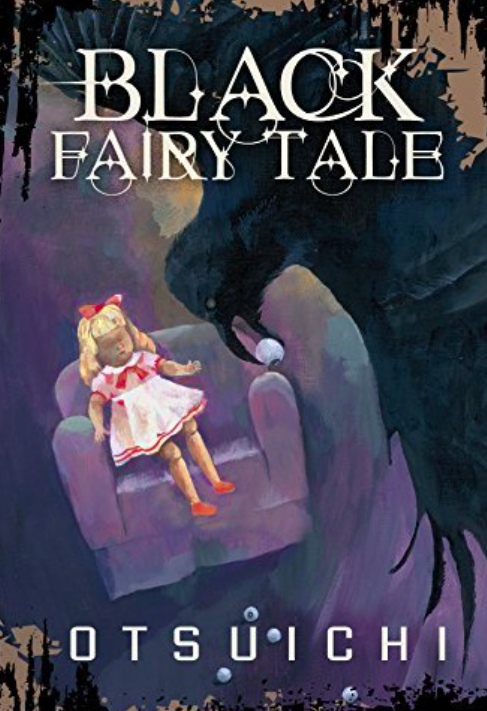
Otsuichi is a celebrated Japanese writer who perfectly blends dark and unsettling themes with a style that appeals to both young adults and seasoned readers. After thoroughly enjoying his earlier work, Summer, Fireworks, and My Corpse, I dove into Black Fairy Tales with high expectations, but was it any good?

The book weaves together several seemingly unrelated tales into a single, cohesive narrative. It begins with a dark, fable-like story about a loyal crow who collects eyes for a blind girl. The story then transitions to Nami, a high school student who loses her memory and an eye in a bizarre accident. After receiving a transplant, she starts experiencing eerie visions from the perspective of her donor.

Black Fairy Tale by Otsuichi

As Nami delves into the mystery behind her new eye, the story introduces us to Miki, a character with a disturbing past and a chilling scientific fascination with torture. These two narratives converge in a thrilling and suspenseful climax. Ultimately, Nami's quest for the truth leads her on a dangerous path, culminating in a tense, cat-and-mouse chase with a truly sinister villain.

Otsuichi is a master of blending the bizarre with the believable. In Black Fairy Tales, he crafts a murder mystery with fantastical elements like talking crows, living corpses, and a strange, inverse phantom eye syndrome where a donor's eye offers glimpses of their lived experience. The way he weaves these disparate elements together—from a dismembered "found family" to the unsettling, everyday realism of his characters—is what makes his work so unique.

While the prose itself is functional and not particularly ornate, there are occasional moments of beauty such as;

The past flows on. You die and fade away. Like streets and railroads vanish from a town, so too do people become no more. And the world becomes a little different.

Wonderful stuff indeed when it does pop up but it's clear that the story is king here. The plot's continuous momentum and shifting perspectives had me absolutely gripped from beginning to end. If you're looking for a genre-bending tale that is both strange and compelling, you'll want to add Black Fairy Tales to your reading list. It's a dark, unsettling, and thoroughly unique experience. Righto - I'm off to disinfect my body with swarfega as this story was icky in the best possible way.

Legenda by Janina Ramirez - Book Review (and Some Thoughts)

Historian and author Janina Ramirez has gained an excellent reputation for looking at history through the lens of women, who are often left out or have their contributions entirely forgotten. I very much enjoyed Femina, and the follow-up, Legenda, promised to look through the history of iconic women who had their names and reputations modified, manipulated, used, and abused down the centuries, often for political ends. So, how was it?

Well, Ramirez starts with an anecdote about far-right agitator Jean-Marie Le Pen and his bastardisation of the actions and sayings of Joan of Arc to build a case against Islamism. However, he misquotes the Maid of Orléans to suit his agenda, and he wouldn't be the first to do so.

Ramirez states that:

"Nationalism, by nature of setting one group of people against those outside that group, feeds on nostalgia and weaponises it, harnessing it to notions of separatism, racism, elitism and misogyny."

She is critical of the history curriculum taught and the complicity embedded within the reframing of national narratives. By looking at the stories and legends of these women, we can learn more of the truth, rather than the accretions and myth-making that have occurred centuries after their passing.

Ramirez looks at seven countries or regions—including France, the Iberian Peninsula, Greece, Germany, Italy, and Britain—to pair and contrast a modern figure with one from the eighteenth or nineteenth century. She states that she is compelled to do so because:

"As a historian I do not just deal with the past but also try to understand how humanity can come together peacefully to build inclusive societies that value equality, in hope of a better future."

She starts off with a great point: many countries have female personifications designed to represent a whole, unified people in one female form—think of the Statue of Liberty, Britannia with her lions and Union Flag shield, or Germania with her sword and armour. Yet real, flesh-and-blood women are often forgotten about, overlooked entirely, or have their biographies suitably altered to cater to the nationalistic and religious needs of certain parties. Take Elizabeth of Thuringia, who is venerated in Germany, Hungary, Czechia, Slovenia, Austria, Slovakia, and Croatia; many of these nations did not even exist when she was born, so she has been thoroughly co-opted.

Along the way, we meet the following women who helped shape history:

France: Revolution and Reinvention

  • Charlotte Corday: The murderess who killed Marat, a writer and government policymaker who sent many people to the guillotine and worsened life for the general populace during the Reign of Terror after the French Revolution. She is remembered for being upper-class, highly educated (especially in classical history), and deeply religious.

  • Joan of Arc: The young maid who led French forces, very successfully at first, against the English. There was a prophecy about a warrior woman from her home region and she leant into that, claiming that holy voices were guiding her. When captured, she was burnt and her ashes scattered in the Seine to prevent martyrdom. She lives on in sainthood and is represented across the country with many statues and monuments, far away from her home village of Domrémy.

    Linked to her were other female mystics, including Hildegard of Bingen and Marie Robine, who predated Joan but had a similar modus operandi of mystical visions and voices. Julian of Norwich and Catherine of Siena also heard voices, but relayed them to religious authorities rather than keeping them secret for a period like Joan did; as a result, they received guidance and advice, whereas Joan (like Margaret of Antioch) was seen as a maverick and unpredictable in the eyes of church authorities.

    Joan was also linked to Joanna of Flanders, another warrior woman who broke a siege and gained an unexpected victory. She was admired by Christine de Pizan, who wrote a poem about her, though this was largely ignored until the French Revolution brought a revival of Joan and the celebrated power of women.

    Ramirez believes that "... the story of the poor, illiterate peasant girl who single-handedly saved a nation is a construct, not a reality."

    Joan has gone through many mutations over the centuries—initially reviled, then revered—showing a chameleon-like ability to be all things to all people without truly belonging to either extreme (be it the alt-right asking for a "return to an authentic France" or the far left calling for an uprising against the bourgeoisie, technocrats, and autocrats).

The Iberian Peninsula: Dynasty and Discovery

  • Agustina: A soldier during the Spanish War of Independence who inspired many during frontline and guerrilla battles. She served her country well, but after the war found herself in the difficult position of having to return to civilian life and adopt the traditional role expected of women.

  • Isabella of Castile: Her reputation has grown through the centuries as Queen during the Spanish Golden Age and the Age of Discovery. However, her history is far murkier and warrants careful study, as she was a powerful woman from an era that demanded an acute awareness of court intrigue and shrewd politicking.

    Her reign saw the completion of the Reconquista (the seven-century-long period of driving Muslims out of Spain), the persecution of Jews, and the rise of the Spanish Inquisition. An incredibly pious monarch, she ensured her Catholic faith came to the fore under her rule. Alongside this, she consolidated economic, legal, military, and political influence around herself and her husband—creating a new national identity that later rulers like Franco would exploit for their own gain.

    Ramirez ends this chapter by noting that history often erases the multi-ethnic, culturally, and religiously diverse nature of the Iberian Peninsula, presenting Spain historically as a monocultural entity instead. Make no mistake, however: Isabella was an authoritarian who wielded incredible influence and power, leading to the enslavement and genocide of indigenous peoples across the Americas.

Greece: Autonomous and Atypical

  • Laskarina Bouboulina: Also known as the 'Greek Joan of Arc', Bouboulina was a fierce warrior widow who fought for Greek independence from Ottoman rule. Philhellenism (the love of ancient Greek culture) and the return of ‘Romaiko’—the rebirth of the imperial political glory of the Byzantine Empire—were alive and well in the 18th century, with many across Europe seeking to excise the Ottomans from the continent.

  • Anna Komnene: An 11th-century historian who wrote The Alexiad. Her monumental work documented the reign of her father, Byzantine Emperor Alexios I Komnenos, and the First Crusade. However, her contributions to the field were often credited to her husband, as it was believed a woman was incapable of authoring such a text. Coming from royal blood gave her the privilege and freedom to research and write. She was a Byzantine woman who followed in the footsteps of powerful empresses like Irene of Athens (co-regent, regent, and sole empress from 780 to 802), Euphrosyne (empress from 823 to 829), and Theodora (empress regent and monarch in her own right from 830 to 856), challenging rigid societal norms where the roles of men and women were strictly defined.

The Low Countries: Exceptional and Extreme

  • Julie Billiart, Françoise Blin de Bourdon, and Catherine Duchatel: The first three Sisters of Notre Dame de Namur, who maintained a secret Catholic school even under threat of death after the French Revolution in the early 19th century. This group also guarded centuries-old treasures and relics of their faith, which survive to this day.

  • Marie of Oignies: A 14th-century ascetic who gave up her middle-class family's wealth to serve lepers and the poor, striving to live as humbly as Christ. She experienced visions and engaged in self-harm to suffer as Christ suffered (imitatio Christi).

  • Hildegard of Bingen: An Abbess and legendary polymath who promoted a healthy body to foster a healthy soul—a century prior to the mortification and 'anorexia Christi' movement that swept across Europe and glorified suffering for Christ.

  • Christina the Astonishing: In the 12th century, Christina was declared dead, but during her funeral, she came back to life. She would throw herself onto fires and emerge apparently unscathed, hang herself from gallows and survive, and so forth. She was a true force of nature, but her extreme behaviour led to most religious organisations ignoring her.

  • Elizabeth of Spalbeek: She suffered stigmata on Fridays and performed exhausting, painful displays of Christ's suffering.

  • Lutgardis of Aywières: Another ascetic who went to extreme lengths to feel close to Christ.

These women inspired the Beguines movement, where communes of women joined together to help the poor and needy while imitating Christ's life. They also gained financial and social independence during a period (the 13th to 16th centuries) marked by a shortage of men and dowries due to constant Crusades and wars. The Beguines offered them a better life and a deeper spirituality. Key figures in this movement included Mechthild of Magdeburg and Marguerite Porete.

Germany: Bonds and Bloodlines

  • Lola Montez: A woman who became the courtesan of King Ludwig I of Bavaria and championed many liberal causes—including the plight of schoolteachers, wage increases, and investment in education—alongside a strong anti-Jesuit sentiment. She was an agent provocateur whom the Catholics and Jesuits deeply disliked.

  • Empress Adelaide: This 10th-century widow was promised the throne upon the death of her husband, the King of Italy. Imprisoned in a castle, she escaped and remarried, becoming the Holy Roman Empress and ruler of the Ottonian Empire in Germany. She ruled alongside King Otto and, through their children's alliances and marriages, became highly influential and respected. From Burgundian princess to Italian queen, German co-ruler to Holy Roman Empress and, finally, regent of an empire, Adelaide was extremely capable and powerful.

Italy: Piety and Papal Power

  • Anna ‘Nina’ Morisi: In the 19th century she worked as a maid, but when a Jewish child in her care became ill, she illicitly baptised him for fear of his soul entering limbo. The child recovered but was forcibly removed from his family, as Catholics could not live with non-Catholics at the time. This sparked international outrage over a child taken from his family through no fault of his own. The Pope was seen as the spiritual and secular ruler, but this overreach united disparate factions calling for a unified Italian state.

  • Catherine of Siena: The Patron Saint of Rome since the 19th century, Catherine was a great self-promoter in high demand from various church factions due to her numerous visions. She declared that she was married to Jesus and that he gave her a ring made of his foreskin (don't ask!). She also claimed to have the stigmata, though only she could see the marks.

    I must say, out of all the women I've read about, Catherine of Siena seems to be the one who huffs her own guffs, and pretty hard at that. She was an avid self-promoter of the 'trust me bro' celebrity variety, and I find it rather vulgar. To each their own, but it leaves a bad taste in my mouth. True, she sought to weed out corruption and accretions that she felt had corrupted the true Catholic faith, but she placed herself firmly at the centre of it all.

  • Bridget of Sweden: Catherine of Siena's senior by 40 years, Bridget played a similar role and held significant influence over Pope Urban V, eventually being sainted by his successor, Pope Gregory.

Britain: Traditional and Transnational

  • Lady Godiva: The story of Godiva riding naked through Coventry on a dare to convince her husband to lower the tax burden is a hoary one. In truth, the eleventh-century Godiva was a formidable Anglo-Saxon ruler who held vast swathes of land before the Norman Conquest caused untold damage and altered England forever. Her historical reality was quickly erased to serve the myth of a passive, submissive noblewoman.

  • Rani of Jhansi: Like Godiva, the Rani saw her territory ruthlessly annexed by an external power—in her case, the British East India Company under the Doctrine of Lapse. Rather than submit, she led her troops from the front lines during the 1857 Indian Rebellion, becoming an enduring symbol of anti-colonial resistance even as British historians attempted to paint her as a bloodthirsty villain.

The Verdict

Ramirez leaves us with an urgent warning and a powerful call to action: legends are fluid, but the complex, real human beings beneath the myths are far more illuminating than any edited propaganda. In an era where history is routinely weaponised by politicians and extremists—and truth itself is threatened by digital manipulation—reclaiming these forgotten stories is essential.

Nation-building does not belong to the powerful few; it belongs to all of us. By seeking out cross-cultural truths and uncovering women’s hidden pasts, we protect historical reality from manipulation and reclaim a far more inclusive future.

LINK- Toxic: Women, Fame and the Noughties- Book Review (and Some Thoughts)

LINK- Pure Invention: How Japan's Pop Culture Conquered the World- Book Review (and Personal Reflections)

LINK- The Rise of Retro Gaming During Covid

LINK- Japan: My Journey to the East

LINK- Blood, Sweat and Pixels- Book Review

LINK- Utopia for Realists- Book Review

LINK- On And On And Colston ( Or, How We Kinda Sort of Learned to Talk About the Legacy of Colonialism and the British Empire)

LINK- ‘Natives: Race and Class in the Ruins of Empire’ LINK: Elden Ring- Videogames As Art

The Game Narrative Kaleidoscope - Book Review

I'm a huge Inkle fan; the studio has produced some of my favorite games over the past few generations, including Heaven's Vault and A Highland Song. They are masters of deeply narrative experiences. So, when they requested short essays on the craft of game writing and received a couple of hundred responses from industry insiders, my interest was piqued.

The essays are uniformly interesting, capturing the distinct thoughts and personalities of the individual writers. They are well worth a read, whether you choose to go page by page or navigate through the "choose your own adventure" style choice-based system. There are over a hundred essays in total, each a maximum of two and a half pages, but a few stood out:

I very much enjoyed reading the wide variety of essays on game narrative.


Josh Boykin's ‘Choose Yourself’ is a call to arms to industry compatriots to not let the system destroy them:

"... There's no game that's worth your soul... None of this damn industry is worth the friends I've seen it chew up and spit out, the people thrown out at the mere whiff of shareholder profit, the layoffs hot on the heels of even successful launches not to mention the cottage industry of grift and graft propped up by toxic people who see a game with a person of color as protagonist as a shortcut to a rage bait paycheck. How dare they take our stories. They don't fuck deserve them."

While it is angry in tone, I totally get it and agree that those who create games have been shafted over the last few years.


Wojtek Borowicz's ‘The Platform is the Message’ uses Marshall McLuhan's nugget of wisdom, "The medium is the message," to discuss how push notifications and emails can be used to bring fascinating stories to life using technology outside of traditional computers and consoles. The concept of games like Lifeline and Thousand Lives - where you interact with a single character to guide them and deal with the permanent consequences of your actions - is highly appealing because there is no redo.


Yao Chang's ‘Embrace the Brutality of Being Human: By Writing Games’ explains how games can act as a catharsis to explore perspectives less spoken about in the world. For Chang, games can look at the short and brutish lives we can lead, but they can also capture the beauty contained within that brutality: a kindly touch for a rape survivor, or the offer of freedom from a psych ward.

I like how they end on a note of dark optimism: "Embrace the brutality of Being Human by writing games! Shed light on our perils and triumphs..."


Sam H's ‘Dissecting Game Dialogue as Characterisation’ looks at how non-voice-acted dialogue can convey character and emotion. She highlights many great examples, such as Deltarune, Chicory, and Wandersong - all games I have played and which perfectly exemplify her points. By manipulating font, text speed, and shaking certain words, games can convey far more meaning than simple syntax allows.


Lisa Hunter's ‘10 Reasons Your Writer is Crying in the Office Bathroom’ is a brutal breakdown of the common issues faced by writers, featuring amazing nuggets like: Deep Down You Hate Narrative, We Monetised Our Therapy and Mom Called.

It is pure gallows humor, but like the best black comedy, it contains a large element of truth.


Morgan Jaffit's ‘Play Like Hartley’ is a powerful and incisive piece about how the video game industry is on fire, and pretending otherwise is the last thing on Jaffit's mind. He shares how many of his friends have been doxxed and lost their jobs, how his brother suffered a stroke, and how the anti-Semitic attack on Bondi Beach made him feel increasingly unsafe. However, he passionately asserts that, despite it all, the goal of a writer is to "Play your heart out as the waves crash in. In the end, that is what matters."

I admire his honesty and resolve during such bleak times, even as the ship sinks and the water laps at our feet.


Alice Kent's ‘Did You Just Feel That?’ considers Aristotle's theory of catharsis and how a narrative lead must carefully manage the pacing and emotional journey of the player.

I found it a well-written and introspective piece on how stories shape and mold us, especially in video games where we are active agents in the journey.


Ashley Poprik's ‘The "A" in "Game": Education in Play’ looks at edutainment and how video games can serve as educational tools without wearing that explicit label. By virtue of their interactivity, many video games naturally encourage experiential learning. This is something very close to my heart, as I have used video games as a contextual hub for learning for many years.


Gregory A. Wilson's ‘Implied Storytelling and Moral Messages’ looks at how games can convey powerful messages in nuanced ways without over-explaining. He uses the example of Brothers: A Tale of Two Sons and its powerful ending which—irrespective of your faith or lack thereof—conveys a profound message through a gentle vibration of the controller.

It is powerful stuff indeed, and it had me reflecting on my own playthrough of the game over a decade ago.


The Strange Works of Yoko Taro: From Drakengard to NieR: Automata - Book Review (and Some Thoughts)

Yoko Taro is a true auteur. He produces singular, philosophical video games that leave you questioning the big questions: life, the universe, and everything in between. While he occasionally appears on the publicity circuit, he does so famously wearing a giant Emil moon mask to hide his face. So, when I discovered there was a dedicated book exploring this enigmatic creator, I knew I had to pick it up.

Emil’s face is quite a startling visage but is the guise Taro wears for interviews.

The book opens with an introduction by Taro himself, where he expresses a characteristically dry surprise at being the subject of such a work. He playfully questions the sanity of the author before rolling with it in his usual philosophical style:

"In the end, we find ourselves in the following situation: some eccentric wrote a book on games designed by another eccentric and played by people who are equally eccentric. Frankly, I worry about the future of our planet."

Preface

We are treated to a short history of games as an essential pillar of human development, referencing Jean-Jacques Rousseau. Turcev argues that games represent the world more clearly than the world represents itself because they strip away the "background noise" of reality to isolate meaning.

While most popular games focus on the visceral thrill of violence, Turcev argues that Taro stands out because his work is inherently existential. The author suggests that Taro "...perceives entertainment as a hope, a horizon, a bulwark against evil." He even goes as far as to say that by creating these games, Taro is "trying to save the world." I’m not sure I’d go quite that far, but it’s certainly a provocative thought to ponder while slashing through robots.

Chapter 1: Creation

This chapter provides essential context on the Japanese gaming industry in the early 2000s—a landscape of economic stagnation and studio mergers. It was during this period of consolidation that the idea for Drakengard was born: Ace Combat, but with dragons.

We get a brief, self-deprecating biography of Taro, who describes himself as a "dark, short otaku" who wasn't exactly part of the "in-crowd." This outsider perspective clearly fueled his writing, which often explores the dangers of tribalism. The development of Drakengard was a struggle; feature creep from management pushed a modest team to their breaking point. The result was a buggy, glitchy mess, yet it possessed a spark of something special—a mature, complex story influenced by Evangelion and Berserk.

The book then tracks the series' evolution through the 2008 economic crisis, leading to the original NieR. Taro’s inspiration for NieR was the aftermath of the September 11th attacks—the idea that killing often stems from a conviction that one is doing the right thing. This led to the game's famous multiple-ending structure, which forces players to view the conflict from the perspective of their enemies. I’ve linked a couple of videos below that explain the story and themes of the Nier games in detail (all credit goes to their awesome creator)

Chapter 2: Music – Monaca’s Angels

The soundtrack to NieR: Automata sold over 30,000 copies in its first week, catapulting composer Keiichi Okabe into the spotlight. As someone who owns the vinyl boxset (the jewel of my collection), I appreciated the focus here. Turcev notes that JRPG soundtracks are often more scrutinized because players spend dozens of hours immersed in them.

We learn about Okabe’s background in pop music and his work on Tekken, and how he teamed up with the Monaca collective to create a sound that is poppy yet baroque. A major highlight is the discussion of the "Chaos Language" used by singers Emi Evans and Nami Nakagawa. By using a made-up language, the music transmits pure emotion directly to the listener, unburdened by the specific meaning of words.

Chapter 3: Universe

Taro’s worlds are a pell-mell of medieval fantasy, sci-fi, eugenics, and otaku culture. Interestingly, the book notes that much of this was built on vibes and floating ideas rather than a rigid master plan—much like Hideaki Anno’s approach to Evangelion.

The book dedicates over 100 pages to breaking down the interconnected lore of Drakengard and NieR. Even for a fan, the Gestalt and Replicant projects can be a headache, but Turcev’s retelling clarified several points I hadn't thought about in 15 years. It was a joy to revisit characters like Kainé; her foul-mouthed, aggressive exterior remains one of the most memorable character designs in gaming history.

Chapter 4: Analysis

In the final section, Turcev peels back the trickster persona Taro adopts in public. He argues that Taro is a humanist at heart who believes games can influence the real world. His work isn't mature because of the blood or the character designs, but because he puts his characters under extreme pressure to unveil truths about the human condition.

Turcev uses the Socratic maieutic method to describe Taro’s style: breaking and converging perspectives until the player reaches an aporia—an intense dilemma where there is no easy right answer. We see this through the lens of various philosophers:

  • Freud: The struggle between Life and Death drives.

  • Gestalt Psychology: How society functions as a system that dominates the individual.

  • Sartre & Camus: The struggle for meaning in a deterministic world.

Final Thoughts

Nicolas Turcev has done an incredible job of synthesizing the chaos of Taro’s career into something academic yet accessible. The Strange Works of Taro Yoko is more than just a making-of book; it is an interrogation of why we play games and what they say about our soul.

Whether you are a person who has played every ending, or a newcomer who just liked the combat in Automata, this book offers a profound look at a creator who dares to use a "silly" medium to ask the most difficult questions. It reminded me that even in a world that feels like a never-ending spiral of life and death, there is beauty in the struggle—the Agaku. If you’ve ever finished a Taro game and sat in silence as the credits rolled, wondering what it all meant, this book is the companion you’ve been looking for.

LINK: Videogames As Art - Nier: Automata

LINK: The Evolving Fears of a Horror Gamer

LINK: The Power of Stories and How They Are Manipulated

LINK: The Message by Ta-Nahisi Coates - Book Review (and Some Thoughts)

LINK: The Anxious Generation: Book Review (and Some Thoughts)

LINK: Utopia for Realists- Book Review

LINK: Toxic: Women, Fame and the Noughties- Book Review (and Some Thoughts)

LINK: Pure Invention: How Japan's Pop Culture Conquered the World- Book Review (and Personal Reflections)

LINK: Japan: My Journey to the East

LINK: Blood, Sweat and Pixels- Book Review

Keza MacDonald's Super Nintendo: A History of Play - Book Review

Keza MacDonald’s latest work doesn't begin in a boardroom or a lab; it begins in 1994 with a six-year-old girl and a Super Nintendo. It’s a vivid, sensory recollection of the joy that a grey plastic box can elicit - and it sets the stage for a book that is less a dry corporate timeline and more an exploration of a company’s "soul."

Nintendo is a developer that succeeds by zigging while the rest of the industry zags. While competitors engage in an arms race for teraflops and photorealistic grit, Nintendo leans into an economy of design. They find the extraordinary in the ordinary, prioritizing the human impulse to play over raw processing power.

As Johan Huizinga posited in Homo Ludens, we are defined by play. MacDonald has the additional benefit of being able to speak and understand Japanese, providing insights that many of her journalistic peers miss because translators often shorten or soften the original responses.

Chapter 1: Ultra Hand

MacDonald discusses the origins of Nintendo through it's history with hanafuda cards and visits a keen collector in France who has rebuild a copy of the original 19th century Nintendo studio in his home country, much to the surprise and delight of his neighbours.

She then does a quick timeline of primitive games and discusses how they evolved from chess and beyond.

Created by the legendary Gunpei Yokoi, this simple, extendable lattice toy sold millions and signaled Nintendo's shift from a card company to a toy titan. It perfectly encapsulates "lateral thinking with withered technology" - using simple, affordable parts to create something magical.

Chapter 2: Donkey Kong

MacDonald discusses the origins of the game, with Shigeru Miyamoto joining Nintendo in 1977. He was an avid Space Invader fan and, when presented with an opportunity to make a game came up with Donkey Kong. 

MacDonald highlights how Miyamoto’s lack of technical baggage allowed him to focus on character and personality over mere mechanics. This section shines because it treats Miyamoto not just as a developer, but as the architect of modern joy. The quotes and insights from the great man enliven this section to prevent it from being a dry potted history of the origins of the game. 

Chapter 3: Super Mario

The story of Mario is not merely a chronicle of successful game releases; it is a narrative of an industry being defined, challenged, and reinvented. As MacDonald illustrates, Mario’s journey began not as a global icon, but as a flexible design concept. Originally envisioned by Shigeru Miyamoto as Mr. Video - a character intended to cameo in every game—he first found fame as "Jumpman" in the 1981 arcade hit Donkey Kong. The unexpected success of that title transformed a pixelated carpenter into Nintendo’s official mascot, providing the company with the face it needed to conquer the global stage.

As the American video game market struggled to find its footing following the crash of 1983, Mario became the catalyst for Nintendo’s ascent. Through the NES and SNES eras, he didn't just sell consoles; he established the vocabulary of platforming and game design. However, this dominance was tested as the industry transitioned into 3D. Macdonald notes the friction of the N64 and GameCube years, where Nintendo faced a significant identity crisis. While Mario continued to innovate, the company struggled against the rising tide of Sony’s PlayStation 2, which captured a more "mature" audience and shifted the market's center of gravity.

The narrative of Nintendo’s resilience is best seen through the pendulum swing of the 21st century. The Wii represented a massive expansion of the medium, inviting non-gamers into the fold through intuitive motion controls. Yet, this peak was followed by the commercial and conceptual difficulties of the Wii U. Throughout these highs and lows, Mario served as a lodestone - a constant, reliable guide that showcased the pure possibilities of interactive entertainment. Even when the hardware faltered, a new Mario title served as the benchmark for what play should feel like.

What distinguishes this history from a standard timeline is the focus on the creative process. Through interviews with the designers and developers who have steered the franchise, MacDonald reveals a philosophy centered on "fun first." These insights show that Mario’s longevity isn't due to brand recognition alone, but to a rigorous commitment to movement, physics, and tactile joy. By focusing on the perspectives of the people behind the screen, the history of Mario is revealed as a human story of iterative genius, proving that while consoles come and go, great design remains.

Chapter 4: Zelda

MacDonald explores the evolution of the Zelda series through an internal Nintendo concept known as the Zelda Touch. This is the intangible magic that persists across more than twenty games. While players will always find a magical sword, a princess, a figure in green, and a mystic wood, these elements serve a deeper purpose. They are vessels for recurring themes of good versus evil, the thrill of adventure, the process of growing up, and a persistent sense of melancholia.

These concepts are so deeply entwined into the mythos that they feel both fresh and ancient in every new entry. Much like a classic fairytale, the icons are brought out to play and then placed back in the toy box once the adventure is over, ready to be reimagined for the next generation. This analysis is grounded in MacDonald's direct access to the architects of these worlds. Her insights come straight from the source, drawing on interviews with key players like Shigeru Miyamoto, Yoshiaki Koizumi and Eiji Aonuma. This provides a rare look at how these teams balance the weight of a legendary timeline with the constant need for mechanical innovation. 

Chapter 5: Metroid

MacDonald aptly describes this series as the black sheep of the Nintendo stable: a moody, eerie, and strikingly hands-off experience. For a company typically dedicated to delivering immediate joy and family-friendly fun, Metroid represents a significant tonal pivot. It offers a more nuanced and cinematically mature approach to the medium, abandoning traditional guidance to let players forge their own path through an unfriendly alien world. By leaning into its "Metroidvania" roots, the game transforms exploratory adventuring into a lonely, high-stakes puzzle where the environment itself is the primary antagonist.

Chapter 6: Pokemon

MacDonald goes into an amazing statiatic that, since its debut in 1996, Pokémon has grossed more than $100 billion, cementing its status as the undisputed heavyweight champion of media franchises. To put that number into perspective: Pokémon doesn't just lead the race; it’s running a different marathon entirely. She states that the secret sauce isn't just the games or the anime—it’s the merchandise as licenced goods (toys, apparel, home decor) account for the vast majority of that total. That brand has transcended being a "game" to become a lifestyle. 

Pokémon’s success comes from its uncanny ability to reinvent itself for every generation. It survived the transition from 8-bit handhelds to augmented reality, consistently finding new ways to make "Catching 'Em All" feel like a fundamental human instinct. The fact that in 2016, a terrible year of the toxic Brexit vote, Trump's first term, the war in Syria and multiple celebrity deaths added to the fact that hundreds of millions found solace in the Pokemon Go! world. Pokémon isn't just a nostalgic relic of the 90s; it is a multi-generational bridge as well as a  financial engine that shows no signs of slowing down.

Chapter 7: Kirby 

The chapter looks at the growing popularity of Kirby but is really a deep dive into Satoru Iwata, a HAL employees who would go on to lead Nintendo as its President. In his tenure, he would introduce the DS, Wii, WiiU and start work on the Switch. This is a heartfelt chapter where we learn about the great man, his philosophy and his enduring legacy. 

Chapter 8: Wii Sports

MacDonald captures the lightning-in-a-bottle moment of Wii Sports, illustrating how Nintendo successfully dismantled the "gamer" stereotype. By prioritizing intuitive motion controls over complex button layouts, they shifted gaming from a niche, solitary hobby to a universal social language. The Wii didn't just sell consoles; it brought together disparate cultures and generations, proving that the true power of gaming lies in its ability to bring people into the fold rather than shut them out.

Chapter 9: Animal Crossing

The chapter takes a poignant turn with Animal Crossing, a franchise ironically born from the creator's own feelings of loneliness. MacDonald highlights how this series became the "game of the pandemic," serving as a vital digital town square when the physical world shut down. During the height of COVID-19, the game's core pillars - family, friendship, and community - provided a much-needed emotional anchor, turning a simple life simulator into a global support network.

Chapter 10: Nintendo Labo

MacDonald explores Nintendo’s "quirky" side through Nintendo Labo. While the cardboard DIY kits weren't a commercial powerhouse, they perfectly encapsulate the company’s "toyetic" DNA—a philosophy that prizes tactile play and experimentation above all else. This chapter serves as a tribute to Nintendo's willingness to fail in the pursuit of innovation, reflecting on "forgotten" experiments like the Virtual Boy, the Vitality Sensor, and the Wii Fit Board as necessary steps in their creative evolution.

Chapter 11: Super Smash Bros

The influence of early videogames influenced Masahiro Sakurai and so he put these Easter eggs into the Smash Bros. series of games. The influence of Huizinga and Roger Caillois published Les Jeux et les Hommes (translated as Man, Play, and Games) is considered as the types of play are looked at by MacDonald. She looks at the Caillois formalized and classified types of play (Agôn, Alea, Mimicry, Ilinx) that Huizinga had described more abstractly. She believes that the series taps into a couple of these at the same time and so, it is a great series for newbies and old hands alike.

Chapter 12: Splatoon

This chapter looks at the younger generation of Nintendo creators (who average about mid 30 years old, so not really young tbh). The game jam idea, where teams explore creative avenues, is looked at as an example of how game ideas are shared and iterate upon. The passions and hobbies of the creatives is built into a cohesive whole which allows Nintendo to create games which ooze individuality and personality. MacDonald looks at how the production artwork was exhibited in the Victoria and Albert Museum in London in 2018. I visited the Design. Play. Disrupt. exhibition and thought it was amazing and Splatoon featured quite heavily.

Chapter 13: Epilogue:

MacDonald looks at the passing of the old guard and the newer generation taking up the mantle. She shares how Nintendo moves ever forward, however the Switch 2 is iterative and she shares her concerns about this but is hopeful about Nintendo's future.

MacDonald ends by sharing her top 50 Nintendo created games and, listening in, I realised that I'd played most of them!

Overall, I really enjoyed the book as it was a timeline of Nintendo but through the lens of its evolution. The first-hand interviews added much more detail and make this a cut above most other gaming history books.

I Know How This Ends by Holly Smale - Book Review

While browsing Audible for something to break a streak of heavy, depressing reads, I stumbled upon I Know How This Ends by Holly Smale. Best known for the Geek Girl series, how did my first audiobook of 2026 stack up? And did it take me out of my funk?

Well, the story follows Margot, an online meteorologist whose journey through heartbreak is as messy as it is profound. We meet her navigating the wreckage of a life upended after being jilted at the altar. Just as she begins to patch her heart back together, the narrative takes a sharp turn into the surreal: Margot begins receiving visions of her future. As a protagonist, Margot is wonderfully flawed—reactive, easily overwhelmed, and deeply relatable. The core tension of the book rests on a fascinating question: is she seeing a predestined fate, or merely one of many possible forks in the road?

What makes this novel particularly compelling is its tonal tightrope walk. While Smale deals with heavy themes of loss and identity, she ensures the experience remains energetic and genuinely fun. It is a fun read in the truest sense—not because it avoids pain, but because it finds the humor and absurdity within it. There is a raw honesty to Margot’s voice that grounds the high-concept structural shifts. Her visions never feel like a mere gimmick; instead, they feel like a natural extension of her internal state. As she navigates a new reality involving a new love, a child, a pet, and a career, her growth feels hard-won and incredibly earned. It is nearly impossible not to cheer her on, hoping the weight of her circumstances won't pull her under.

From the perspective of a man in his mid-40s, it might be easy to assume this book wouldn’t be for me but that would be a mistake. As a modern reader open to diverse perspectives, I found the book’s outlook to be deeply humanistic. It transcends gendered labels to speak to universal experiences: the sting of regret, the necessity of resilience and the terrifying beauty of starting over.

The narrative carries a specific, polished strain of British storytelling. It sits comfortably in the lineage of One Day, The Midnight Library, and the parallel paths concept of Sliding Doors. Yet, it also carries the surreal, emotional weight of the standout Inside No. 9 episode, The 12 Days of Christine. Think of this as a swearier, more modern-day It’s a Wonderful Life. It swaps out black-and-white sentimentality for a vibrant, honest, and wibbly-wobbly, timey-wimey exploration of the human heart.

I Know How This Ends is a beautiful reminder that while we can't always control the timeline of our lives, there is immense power in how we choose to inhabit the present. It is a triumph of character-driven storytelling that manages to be both intellectually stimulating and emotionally resonant.

La Horde Du Contrevents (The Horde of the Counterwind) - Book Review (In Progress)

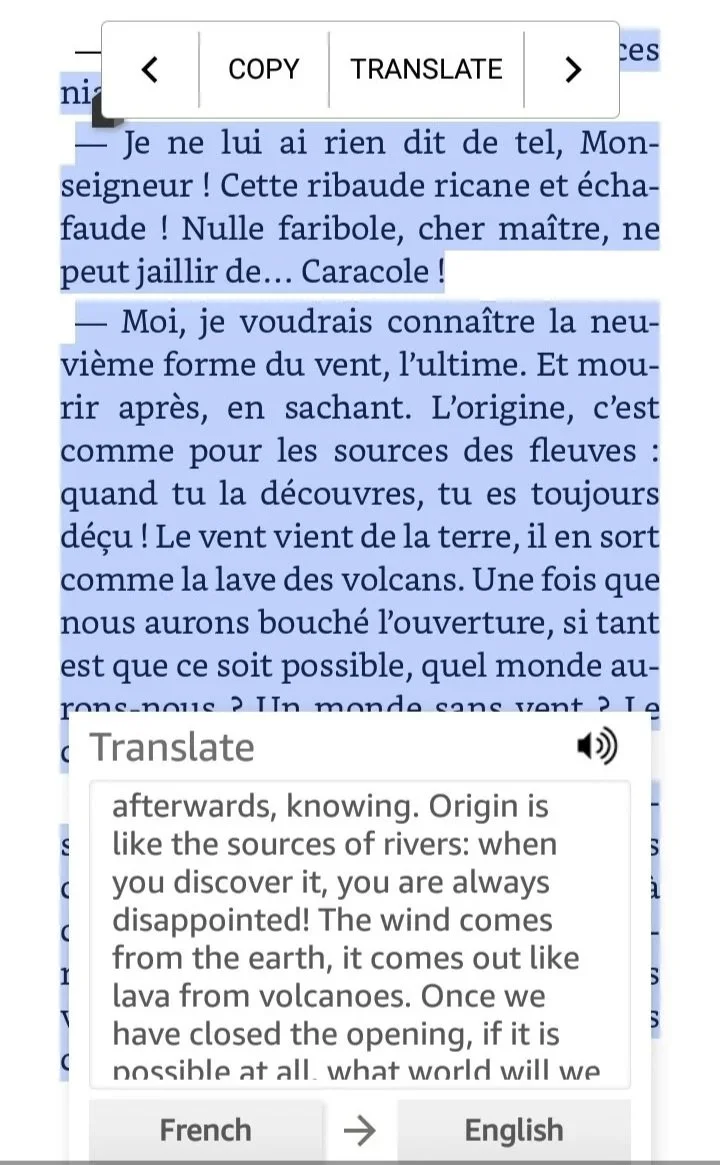
I wanted to read the book that inspired my favorite game reveal of last year, Clair Obscur: Expedition 33, but there was a major hurdle: it wasn't available in English. Determined to experience the source material, I bought the French edition on the Kindle store and have begun the painstaking process of translating it page-by-page using the in-app tool.

Sure, I’ll miss the nuance and linguistic gymnastics of the French language, and it would be a bit of a ball ache to highlight, translate, and digest every single page in its "Fringlish" form. However, I if it was the only way to get the gist of the core themes and understand the text that birthed the game's world, so be it. Ironically, this arduous process has made me feel like a member of the Horde itself—struggling against a linguistic gale just to gain a few inches of progress.

Alain Damasio's 2004 novel, La Horde du Contrevent (The Horde of the Counterwind), is an epic tale of perseverance and futility. It centers on a group of specialists seeking the "Extreme-Reach," the supposed source of an eternal, destructive wind. The narrative follows the 34th Horde—one of many expeditions across generations—as they journey against an all-consuming wind that shapes their world and threatens their existence. Every previous expedition has failed, yet each successive group learns from the remnants of their predecessors. They push on with the somber mantra, "For those who come after." But will any Horde actually make it? And if so, what will they find?

The novel grapples with themes of collective endeavor, the nature of progress, and the cyclical futility of human effort. It’s a story of desperate hope, where even in failure, a kind of knowledge is gained—a small step toward comprehending the incomprehensible. It is a profound meditation on humanity’s relentless pursuit of understanding in the face of insurmountable odds. In the words of the game it inspired: "We continue."

One of the many aspects I’m enjoying is the innovative narrative structure. Each character is given a unique voice, signaled by a specific typographical symbol (like Ω for the leader Golgolth or π for the scribe Pietro) rather than a name at the start of a paragraph. This isn't just a stylistic choice; it mirrors the specialized roles within the party. Much like an RPG, which features a diverse party of characters, the distinct viewpoints of wind-tappers, fighters, and scribes create a multi-layered tapestry of a world experienced from twenty-three different angles. This approach makes the characters feel genuinely distinct, immersing me in their individual triumphs and burdens.

The first chapter, Pharéole XIX, utilizes a "scattergun" approach where perspectives shift constantly. It was breathtaking and confusing, especially as I was parsing Bing-translated text on a phone screen. I realized later that this chaos is intentional; Damasio uses the prose to simulate the physical battering of the wind. With a little focus, the rhythm has become more intuitive. By the time I reached the following chapter, Chrones XVIII, the narrative settled into a more straightforward flow. Thank goodness, because a 700-page "tough hang" in the style of the opening would have been a monumental challenge.

I can now see why a full English translation is a daunting proposition. For a cult book that requires such a high level of linguistic precision, the return on investment might seem risky. However, I believe this book would excel not just within the gaming community, but in the wider literary sphere. Its premise is utterly novel and told with incredible structural ingenuity.

While a translation can never fully capture the intricate wordplay of Damasio’s French, a professional English release would finally provide readers access to this powerful narrative. Even with my janky, onerous translation method, the story's depth shines through. I intend to continue braving these linguistic winds to see if the source of the gale is worth the effort. Once I've reached the end, expect a detailed review.

There Is No Antimemetics Division - Book Review

There Is No Antimemetics Division is a masterclass in conceptual horror—a subgenre that posits the most lethal monsters aren't lurking in the shadows, but in the corners of our minds that we can no longer access.

Building upon the collaborative mythos of the SCP Foundation, author qntm’s novel shares a creative lineage with the Remedy-verse (Control, Alan Wake), the ergodic disorientation of Mark Z. Danielewski’s House of Leaves, and the fragmented storytelling of Christopher Nolan’s Memento.

The narrative follows Marion Wheeler, the director of a department that, by its very nature, cannot exist. Her team’s mandate is to contain antimemes: ideas that possess a self-censoring quality. An antimeme is a secret that actively defends itself; to perceive one is to immediately purge it from memory. To be targeted by one is to have your entire existence redacted from the consciousness of everyone you’ve ever known.

Wheeler’s world is defined by a permanent sense of intellectual vertigo. The narrative structure is brilliantly fragmented, mirroring the characters' fractured psyches as they utilize mnestic drug regimens—chemical catalysts that force the brain to retain information it is biologically wired to reject. They are fighting a war of attrition against an enemy they cannot remember. The stakes are ontological in the truest sense: if the enemy triumphs, humanity won’t just perish; it will be retroactively erased from the historical record.

Writing as qntm, Sam Hughes employs a lean, clinical style, cutting through the complex techno-babble of information theory with an administrative efficiency that makes the horror feel grounded in a chilling, bureaucratic reality.

The story is a meditation on the isolation of competence; Wheeler is a protagonist defined not by destiny, but by a dogged, sacrificial refusal to look away from the abyss, even as it erodes her sanity. As the narrative expands, we meet concert violinist Quinn, who becomes an unlikely but relatable journeyman. Alongside a general knowledge eating antimeme, Quinn tries to salvage the remnants of humanity. It is a story grand in scale and scope, yet intimate enough to make the reader feel the weight of small victories against impossible odds.

Conceptually, the story feels like a dark evolution of Steven Hall’s The Raw Shark Texts. Both novels explore a conceptual ecology where ideas are apex predators. Where Hall gives us the Ludovician—a conceptual shark that swims through the stream of human consciousness—qntm presents SCP-3125: an ideatic entity so aggressive that to even comprehend its geometry is to be consumed by it.

These U-category anomalies further echo the surreal horror of Neon Genesis Evangelion; like the Angels, they are unique, incomprehensible entities seeking to break the human AT Field and trigger a terminal singularity. qntm offers a clinical, high-stakes iteration of the linguistic predator concept, evoking a profound sense of cosmic dread.

Reading this book forces a playful, if unsettling, reframing of our own reality. It invites the reader to look at holes in our known history through a lens similar to the one used by figures like Erich von Däniken or Graham Hancock - not as an endorsement of their specific theories, but as a thought experiment in how easily a real history could be suppressed.

The idea that cyclopean, non-Euclidean structures could exist all around us, hidden for millennia by our own inability to perceive them, is a hauntingly effective narrative device. (To be clear: this is an appreciation of qntm's world-building, not an admission that I believe the Giza Pyramids were built by aliens!)

As a work of the New Weird, the novel challenges the reader to navigate recursive loops and intentional narrative gaps, delivering a conclusion that is as tragic as it is intellectually profound. It is a book that demands to be remembered in a reality that incentivizes forgetting.

Overall, There Is No Antimemetics Division is a brilliant, haunting read that will linger in your mind—assuming, of course, you’re allowed to remember it.


LINK- Pure Invention: How Japan's Pop Culture Conquered the World- Book Review (and Personal Reflections)

LINK- The Rise of Retro Gaming During Covid

LINK- Japan: My Journey to the East

LINK- Blood, Sweat and Pixels- Book Review

LINK- Utopia for Realists- Book Review

LINK- On And On And Colston ( Or, How We Kinda Sort of Learned to Talk About the Legacy of Colonialism and the British Empire)

LINK- ‘Natives: Race and Class in the Ruins of Empire’ LINK: Elden Ring- Videogames As Art

Moral Ambition: Stop Wasting Your Talent and Start Making a Difference- Book Review (And Some Thoughts)

I have been following historian Rutger Bregman for a while now and had enjoyed his previous books including Utopia for Realists and Humankind: A Hopeful History and so was interested in his follow up Moral Ambition: Stop Wasting Your Talent and Start Making a Difference. In my review for Utopia I stated that Bregman doesn't pretend to be a man of destiny with all the answers but he does present some intriguing counter-points to illusory truths. So, would Moral Ambition follow this trend?

From the outset, Bregman challenges the conventional pursuit of personal happiness, epitomized by the 30-year meditator Matthieu Richard, by asking a crucial question: ‘What did he do for the world?’ This sets the stage for a compelling argument that true meaning and legacy are found not in self-absorption, but in addressing global challenges.

Bregman introduces the concept of ‘Moral Ambition’ as the drive to dedicate one's working life – a precious 80,000 hours – to solving the world's most pressing problems, from climate change to future pandemics. He insightfully categorizes professional aspirations, illustrating how many fall short of this ideal. There are those trapped in ‘bullshit jobs,’ writing reports no one reads or managing unneeded personnel, their roles exposed as superfluous during the COVID-19 pandemic. Then there are the ‘ambitious but not idealistic,’ individuals who strive for personal success measured by superficial metrics like a corner office or a large salary. Bregman laments how some of the brightest minds are drawn to industries like finance or tech, where their efforts are channeled into optimizing ‘clicks’ rather than societal good. A third group comprises the ‘idealistic but not ambitious,’ who desire to help the world but primarily through local efforts or personal choices. Bregman sees this as a ‘Gen Z mentality’—a generation with strong ideals but often lacking the means or knowledge to become agents of large-scale change, preferring the passive ‘Love. Live. Laugh’ ethos over active engagement. The pinnacle, and the focus of Bregman's advocacy, are the ‘idealistic and ambitious’—individuals who actively seek to change the world and work tirelessly towards their goals, exemplified by the unwavering commitment of abolitionist Thomas Clarkson.

Bregman then delves into the practicalities of fostering moral ambition, suggesting that extraordinary acts are not exclusive to ‘Hero genes.’ In Lower Your Threshold to Take Action, he argues that such acts often stem from individuals being asked to step up, witnessing the impact of their actions, and then being compelled to do more. This snowball effect, he believes, is how revolutions are born. Further emphasizing the power of collective action, Join a Cult (or Start Your Own) champions the influence of small, committed groups, echoing Margaret Mead's famous saying. Bregman highlights figures and organizations from the Quakers to modern technologists, though he shrewdly notes that being "on the right side of history" doesn't automatically equate to successfully instigating change.

The complexities of achieving impact are further explored in See Winning as a Moral Duty. Here, Bregman examines the Overton Window concept—how radical ideas can become mainstream—and critically analyzes the pitfalls of well-intentioned but ultimately ineffective actions, such as Ralph Nader's presidential run that inadvertently led to an undesirable outcome. He highlights the often counterproductive nature of ‘noble losers’ and the ‘whataboutism’ and ‘quest for purity’ that can splinter protest movements. Bregman observes a striking increase in protest groups since 2006, yet notes a disheartening lack of legislative change, advocating for long-term, organized efforts over fleeting bursts of activity. This underscores his belief that surface-level awareness often fails to translate into tangible policy shifts.

The book truly shines when Bregman presents compelling examples of moral ambition in action. Learn to Weep Over Spreadsheets tells the inspiring story of Rob Mather, who leveraged meticulous organization and entrepreneurial spirit to transform a simple Mumsnet fundraising swim into the Anti-Malaria Fund, which became the world's largest organization tackling the disease, responsible for donating over 600 million nets and eradicating malaria in some regions.

Similarly, Enrol at a Hogwarts for Do-Gooders introduces Joey Savoie’s Charity Entrepreneurship, an organization dedicated to maximizing impact and efficiency by training morally ambitious students to create projects with measurable outcomes. Bregman also celebrates scientific breakthroughs driven by moral ambition, from immunizations for smallpox and polio to the recent malaria vaccine, contrasting these with the private sector's tendency to capitalize on life-saving innovations with exorbitant markups.

However, Bregman does not shy away from the ethical complexities. In Save a Life. Now only $4,999, he confronts the uncomfortable ethical dilemma posed by Peter Singer: if one would save a drowning child at the cost of new shoes, why do we not donate to causes that prevent diseases like measles or malaria, which cost a similar amount to prevent? Bregman attributes this empathy fatigue to the overwhelming scale of global misery. He critically examines certain interpretations of ‘Effective Altruism,’ which encourages high-paying jobs to maximize donations, but questions its ethics when such jobs involve practices like tax havens, effectively perpetuating the very systems they claim to alleviate. He draws a historical parallel to medieval indulgences, suggesting a similar self-serving loophole.

Expand Your Moral Circle challenges the notion that any single society holds the pinnacle of ethics, asserting that while societal norms evolve, some fundamentals remain universally abhorrent. Bregman acknowledges the difficulty of judging historical figures by contemporary standards, yet points out that even enlightened individuals of the past held views now considered abhorrent. He cautions against the self-congratulatory belief that one would have been an abolitionist in the past, highlighting the significant social and professional costs of being a ‘moral pioneer.’ Instead, he advocates for finding like-minded individuals to collectively drive change. To guide aspiring moral trailblazers, Bregman provides six ‘alarm bells’ for identifying morally questionable practices: rumbling protests, justifications of practices as ‘normal, natural, and necessary’ without detailed defense, avoidance of unpleasant facts, angry responses to moral ambition, difficulty explaining the position to children, and consideration of how future generations will view the practice. He uses factory farming as a compelling example where all these alarm bells ring true, particularly in light of emerging technologies like stem cell meat production. This point resonates strongly in the current global climate, as evidenced by Bregman's own public stance on the ongoing Palestine conflict, acknowledging the difficulty of speaking out against widely accepted narratives.

Finally, in Make Future Historians Proud, Bregman addresses chronocentrism, conceding that humanity indeed faces unique and very interesting times due to three existential threats: nuclear war, AI, and lab-created pathogens. He concludes with an urgent call to action, emphasizing that despite immense challenges and limited resources, many of these problems are solvable through a ‘coalition of the willing,’ urging readers to aim for moonshots rather than succumbing to despair.

Moral Ambition is a powerful, inspiring, and challenging read that urges individuals to not just live, but to live meaningfully, by actively contributing to a better world. It's a book that will make you rethink your career, your consumption habits, and your role in shaping a more just and sustainable future.

LINK- ‘Natives: Race and Class in the Ruins of Empire’

LINK- On And On And Colston ( Or, How We Kinda Sort of Learned to Talk About the Legacy of Colonialism and the British Empire)

LINK: Let’s All Create a ‘New Normal’.

LINK- Ms Marvel Can Change the World

LINK- The Rise of Retro Gaming During Covid

LINK- Blood, Sweat and Pixels- Book Review

LINK- The Offworld Collection- Book Review

LINK: Japan: My Journey to the East

LINK- Children of the Stones: Cult TV Series Review

LINK- Tom’s Midnight Garden: Cult TV Review

The League of Regrettable Superheroes by Jon Morris - Book Review

I'm a huge comic nerd and have been since the age of about 7. My collection of comics and graphic novels is pretty impressive and I know quite a lot but when I received my Secret Santa gift of The League of Regrettable Superheroes by Jon Morris, I realised I didn't know that much at all.

The book is a delightful and often hilarious deep dive into the forgotten corners of comic book history. It's a real treasure trove for anyone who's ever wondered what happened to the heroes that didn't quite make the cut. It's a look at the evolution of the superhero genre as well as a reminder that for every Superman or Wonder Woman, there were countless others that fell by the wayside. I mean, the veritable smorgasbord of characters includes Funnyman (a guy dressed like a creepy clown), The Eye (who is an omnipotent eye), Madam Fatal (a bereaved actor who dressed like an old lady to battle crime) and Doctor Hormone (a guy who can control hormones to de-age himself).

The book is well-presented with panels from the comics as well as information about the debut, creative teams involved and their final release. Morris's writing is witty and engaging, balancing genuine historical research with a playful, almost sarcastic tone that perfectly suits the subject matter. He doesn't just present these characters; he dissects them, highlighting their absurd powers, questionable costumes, and often baffling backstories. It's clear he has a genuine affection for these oddballs, even as he gleefully points out their inherent ridiculousness. The organization and brief commentary on each character keep the book moving at a brisk pace as the entries are concise and entertaining, making it easy to dip in and out of.

So overall, The League of Regrettable Superheroes is a must-read for comic book fans, history buffs, and anyone who appreciates a good dose of the absurd.

Somebody Told Me: One Man’s Unexpected Journey Down the Rabbit Hole of Lies, Trolls and Conspiracies by Danny Wallace - Book Review

Danny Wallace is just one of those people who you just know, not for anything specific but just because he's done a lot and a lot of it is blooming great. I knew of him through his voice work on the videogame series Assassins Creed and from his podcast Awkward Situations for Men but mostly for his emotionally resonant voice work on Thomas Was Alone, an existential videogame where he is the narrator telling the tale of sentient  quadrilaterals. That game man... it broke me and remains one of the most powerful games I've ever played.

Anyways, this is a deep dive into lies, falsification and untruths and is done in the usual conversational fun tone that Wallace usually conveys. We live in interesting times, and Wallace seeks to peel back the layers to see why and how this has happened. Over the course of next 340 pages (or 8 hours and 40 minutes in the audiobook I listened to) we slowly see Danny Wallace lose himself, albeit hilariously, down the rabbit hole of conspiracy theory and paranoia.

He starts off with an apocraphal tale of Coco, the gorilla who learned to sign, crack a joke or two and then... lie. Wallace discusses how it may be an innately human thing to lie and this should have served as a warning sign of decline. He then hits the big stuff over 5 sections.

Section I: Trust No One

The Old Chinese Man: Spies, Lies and Chicken Thighs
He starts off on a sombre tone as he discusses the death of his father and the tidying up of affairs and correspondences. He then goes down a rabbit hole where he sees a 12 year correspondence between his father and an old Chinese man he'd met for 10 minutes whilst presenting a lecture in China in 2009. They remained in contact and the messages get weirder, very Pro-China and very garbled. Wallace seeks to look into the purpose of them and thinks that there was a chance that either his dad was a spy or was asked to be a spy.

The Rabbit Hole: I Did My Own Research
Wallace starts the chapter discussing how the world became more suspicious of their neighbour and how the pandemic exacerbated this with the concept of 'truth' and 'I did my own research' being more fluid. He runs through the processes he went through to find out about the Old Chinese Man and ends up with his own personal conspiracy theory.

May You Live in Interesting Times: 2020 Vision and the Year the World Lost Its Mind
Wallace then considers where conspiracy theories became the norm and pins it on 2020 and the Covid Pandemic which turned people at home into nutters. He breaks down briefly multiple conspiracies including 5G, Bill Gates, The Great Reset and how a similar thing happened in the past with cholera, the Russian flu and Spanish flu.


Section II: Family Lies

'You'll See': When Bad Information Divides a Relationship
Wallace discusses the conspiracy theory spiral that many individuals go through and how social media and algorithms hone in on this fact to provide you with similar content creating a filter bubble. He provides some startling facts from America about their belief in a Globalist Conspiracy and QAnon and how often it is linked to the old antisemetic trope.
A therapist who deals with conspiracy theorists says that it is often women in the wellness realm that get hooked on the disinformation spiral as they are more distrusting of Big Pharma and medicine.

Going Viral: How the Worst News Can Attract the Worst People
This covers the idea that crisis actors are used to help perpetuate the agenda of the shadowy elites. It incorporates anti-vaxxers, global elites and pedophile rings.
We hear the tragic story of an immunised man in Wales who lost his parents and brother, all who were anti-vaxxers and died within the same week.
We also hearing from a scientist who is an expert in the area of Virology and he speaks about how bad-faith actors like Lawrence Fox were using Covid as a platform to speak into a more right wing leaning ideology.

Information War: When You're Told What's Definitely Happening is Not Happening
Wallace speaks about how the counter-narrative culture and gaslighting was used by the Russians  state when they attacked Ukraine. Even when bombs were raining down within the country, the influencers and youth of much of Russia were claiming that it was lies and Western propaganda.
Interestingly, and unknown to me, Russians really are into astrology. The belief that the celestial movements can foretell the future has been an old favourite for years but in Russia, post Communism, it came back in a big way and has never really left since.


Section III: The Believers

Building a Brand: You Can't Say Anything These Days (But You Can for Money)

Wallace looks into the whole brand grifter scene where people become more right wing to earn money and influence, even if they don't believe half of what they spout.
He discusses how even news is full of opinions and extreme left and right wing pundits to have a barney on air as it'll get more views and maybe even go viral.
Wallace has a deep dive into Russell Brand and how his pivot from overly verbose porkswordmeister 'truthseeker' to weird pseudo-conspiracy theorist to born again Christian - all conveniently timed with the release of allegations against him.
Wallace also calls out grifters in the entertainment industry and the rise of the 'I'm just saying' and 'You can't say that anymore.'

Brent: Extreme Beliefs - The Man Who Believed It All, and How He Got Out
This chapter looks at Wallace's early career forays into conspiracy theories including time spent with Alex Jones (pre big time Info Wars) and Gareth Icke (David Icke's son) before looking at how YouTube acted as a conduit to main-streaming fringe views.
He explains that 9/11 truthers, wary of trusting their government, came out with increasingly outlandish claims about what happened that day and why. Inevitably, it leads to the Globalists, Shadowy Elite, Bankers etc... I mean, doesn't it always?
He then talks to Brent, a truther who gave his head a wobble post Sandy Hook, and discusses how he found his way out of the conspiracy mire. It came at much personal cost as many of his connections now think he is in the pay of the devil but what do you do with that?

Terry: It Starts Small - A Man at the Beginning of His Journey
To counter this Wallace meets Terry, a 50 something man from Ipswich who is adding a conspiracy lens to the proposed regeneration of the crumbling city centre.
As always, what it boils down to is the simple fact  that the town in different from how it was and he thinks it's part of the plan for the shadowy elite to control us. Maybe Terry and his pals should think about the past couple of decades of chronic underinvestment in infrastructure and services, which is the root cause for a lot of societies ills than some unnamed but stereotypically implied shadowy group.

Section IV: The Other Side of the Screen

Veronika: Local Media and When You Just Don't Know Who's Who
Wallace looks at troll farms and does a deep dive into how they are seeking to undermine the reporting of truth by seeding false stories and politically sensitive articles that are also patently false. The Internet Research Agency is a shit posting agency that looks to sow distrust within society and so erode our social fabric. That's why we get emails trying to blackmail us about our 'salacious' we searches and you get strange Spanglishy sentences like 'what a load of cheeky nonsense' after a serious email.

Natascha and the Troll Factory: The Troll Factory: The Race to Amplify Lies and Silence the Truth

The 1997 book Foundations of Geopolitics outlined a Russian plan to bring disorder to American politics by encouraging isolationist policies and broadening secretarian and racist ideologies to create a schism. Over the last few years with MAGA and Brexit I'd say it's a huge that. 

The Goebels 60/40 method is discussed where 60 is truth and 40 percent lies with an occasional whopper thrown in-all create disyltrusf of public agencies. 

He then talks to a journalist, Jessica Arrow, who investigated the IRA troll factory and is now fearing for her life. 

Section V: It Will All Get Much Worse

Lonely Boys: The Dangers of Isolation, Rejection and Sexy Robots

Wallace looks at Nastia, a Russian lovebot, who aims to manipulate lonely men with her patter and create the conditions perfect for right wing  incels to thrive. When Covid hit, isolation and loneliness increased as people went online and got caught up in conspiracy groups online. This especially affected single middle-aged men as they didn't have anyone to call out their bullshit theories and redirect them in their thinking.

The Grown Ups: What Are We Doing to Protect Our People? 

The British civil service get a bit of a bad rap amongst many in the media circuit but generally, they are experts or people well attuned to their area of expertise. The Cabinet Office of The Rapid Response Unit for Identifying False Narratives (or fake news in common parlance) tracks the false narratives, the responses and then suggests an appropriate response. It is doing this work constantly and so, in the UK, we have a keep calm and carry on situation with this operating in the background. Does it deal with everything? No. But the approach of amplifying truth with its soft power seems to be the approach taken. 

Okay. So How Screwed Are We?: Hope in the Never Ending Unease

There is a concern that there will not be many democracies left within 5 years as social media, news channels with experts and some random person with opinions but no knowledge are the main drivers. We are polarised as a society because everyone wants to find a tribe. 

There are a few suggestions to help stem the lies including regulation, crowd sourcing notes and education. Wallace discusses how there are plans underway to prepare the youth of today to counter such nonsense and be more discerning with the online world but, as with climate change, we need to be doing things now so we can't wash our hands of it. Similar to Haidt, Wallace says regulation is key and will set the standard for what happens in the future. 

The Old Chinese Man: And the Great, What If...? 

Wallace goes back to the Old Chinese Man story from before and, knowing all he knows, starts to get to the truth. I thoroughly enjoyed the book as Wallace follows clue, thread and hunch to their logical conclusion and ends up at a denouement we knew it would end up - it was all nonsense and he saw and sought patterns where there are none. Humans are always seeking patterns.

This audiobook feels like a companion piece to Jon Ronson's podcast Things Fell Apart, where ordinary folk have been affected by lies and nonsense and there are real world consequences, and The Anxious Generation by Jonathan Haidt where he talks about the negative impact of social media and big tech. 

I particularly liked his examination of how easy it is to fall down the rabbit hole as it nearly happened to me. In my teens years, I struggled with the same pressure as everyone else but also the code switching of my British-Islamic life. I used to visit a youth centre in town and got talking to a charasmatic worker there. After several drop-ins he mentioned I that I should check out David Icke and I did. And the Truth Shall Set You Free seemed to answer a lot of questions but blew my mind in terms of social norms and history. I fell for it for a few weeks until a friend on my Anthropology course questioned the logic and made me think it though. I came out of the other end relatively unscathed but armed with the knowledge that falling for nonsense is easily done, moreso if you have destabilising anchors and lack deep interpersonal relationships. 

Reading the reviews for this book on Amazon, which range from 5 to 1 star with very little in the middle, you can see how split the opinions are from those who think Wallace is shining a light on a real issue from those who think he is part of the elite playing us. Wherever you stand on this, this book is essential as over the 5 sections it covers pretty much all you need to know about how conspiracy theories started, grew and are now part of the geopolitical and social landscape. Interesting times indeed! 

LINK- Pure Invention: How Japan's Pop Culture Conquered the World- Book Review (and Personal Reflections)

LINK- The Rise of Retro Gaming During Covid

LINK: Japan: My Journey to the East

LINK- Blood, Sweat and Pixels- Book Review

LINK- Utopia for Realists- Book Review

LINK- On And On And Colston ( Or, How We Kinda Sort of Learned to Talk About the Legacy of Colonialism and the British Empire)

LINK- ‘Natives: Race and Class in the Ruins of Empire’ LINK: Elden Ring- Videogames As Art

Our Wives Under the Sea - Book Review

Julia Armfield’s Our Wives Under the Sea had been on my radar for over a year, patiently waiting its turn while I finished other reads. Once I finally picked it up, it consumed me, proving a haunting companion that kept me enthralled and seeped into my dreams.

The story centers on the married couple Leah and Miri, whose lives are forever changed when Leah, a deep-sea explorer and researcher, goes missing after her research submarine suffers a catastrophic failure. For months, Miri is left to cope with the agonizing uncertainty of Leah’s fate. Eventually, Leah and her crew are found, but they are undeniably changed, different somehow, setting the stage for a truly unique and disturbing narrative.

Armfield employs a dual point of view, with the narrative seamlessly shifting between Miri and Leah. The story unfolds in a non-linear fashion, with flashbacks and memories colliding against the unsettling present, creating a sense of disorientation that mirrors the characters' own experiences.

Miri's perspective delves into the profound impact of long-term relationships under duress, featuring unsettling Cronenbergian body horror elements as Leah undergoes a disturbing metamorphosis. While other characters drift in and out, the core of Miri’s narrative focuses on the evolving dynamic between her and Leah—from their initial meeting and falling in love to the profound shifts brought about by Leah's transformation. Concurrently, Leah's story slowly unravels, detailing the terrifying ordeal of her five months lost beneath the water. These sections evoke a tense, Alien-esque claustrophobia as she, cocooned with two other crew members, grapples with escalating psychological trauma.

This is an unsettling tome about the human condition, set against the unfathomable depths of the ocean. Armfield masterfully explores themes of love, loss, and the extremes of the human spirit to survive. It's a novel that lingers, a disquieting symphony of domestic intimacy and oceanic dread that is anything but cheerful, and all the more compelling for it.

Beyond the narrative, Armfield's writing is a standout feature, masterfully blending moments of profound horror with tender intimacy, all while crafting a truly unique reading experience. Her prose can be lyrical and insightful, as seen in her poignant reflection on grief: "Grief is selfish: we cry for ourselves without the person we have lost far more than we cry for the person – but more than that, we cry because it helps. The grief process is also the coping process and if the grief is frozen by ambiguity, by the constant possibility of reversal, then so is the ability to cope." Yet, she can also be brutally precise, delivering lines that resonate with chilling clarity: "What you have to understand... is that things can thrive in unimaginable conditions. All they need is the right sort of skin.”

Armfield is a master at drawing the reader into the increasingly claustrophobic world of Miri and Leah as they navigate the aftermath of traumatic events against an unknowable force. The novel refrains from providing firm answers, instead immersing the reader in an atmosphere that is both beautiful and threatening, much like the sea itself, echoing the evocative and ambiguous work of David Lynch. Our Wives Under the Sea is a truly unique and unusual literary achievement that deserves widespread praise for its bold vision and unsettling brilliance.

If you're seeking a novel that will challenge your perceptions and linger long after you've turned the final page, this is it.

Dr. Who: Exterminate/Regenerate by John Higgs- Book Review (and Some Thoughts)

John Higgs, known for his quirky deep dives into cultural phenomena like The KLF and William Blake, has turned his analytical eye to a British institution: Doctor Who. As someone with a passing interest in the Doctor (I watched the show on occasion but my best childhood friend had a friend who was the real Whovian, bless him and Rodney's Books and Games), I was intrigued to see what Higgs would uncover.

Higgs, in his signature style, doesn't just rehash the show's history. Instead, he uses Doctor Who as a lens to explore broader themes: science, religion, history, philosophy, and the very nature of storytelling. He begins with a Tom Baker anecdote that beautifully captures the show's enduring power.

What follows is a fascinating journey through the show's evolution, from its shaky beginnings in the 1960s to its modern-day revival. Higgs delves into the surprising origins of the series, highlighting the contributions of key figures like Verity Lambert and the groundbreaking work of Delia Derbyshire on the iconic theme music. But he doesn't stop there as he meticulously examines how each Doctor's era reflected the socio-political landscape of its time:

  • William Hartnell's era establishes the Doctor as a mysterious, almost alien figure. Higgs explores Hartnell's own complex personality and connects the early TARDIS travels to mythical journeys in British folklore.

  • Patrick Troughton's Doctor emerges as a ‘cosmic hobo,’ a trickster figure who reassured audiences during a time of social change. Higgs delves into Troughton's personal life and how it informed his portrayal, and examines the rise of iconic monsters like the Cybermen.

  • With Jon Pertwee, the show shifts to a more action-oriented, ‘Boys' Own Adventure’ style. Higgs discusses Pertwee's background in naval intelligence and the era's reflection of a changing Britain, including the emergence of social issues in the storylines.

  • Tom Baker's long and influential run sees the show embrace a darker, more gothic tone, reflecting the anxieties of the 1970s. Higgs explores Baker's unique personality and the growing influence of fandom, both positive and negative.

  • The Peter Davison era is presented as a deliberate move towards a more grounded and vulnerable Doctor. Higgs analyzes the reasons behind this shift and its impact on the show's popularity.

  • Colin Baker's time in the TARDIS is marked by controversy, both on-screen and behind the scenes. Higgs delves into the behind-the-scenes turmoil, the criticism of the character's treatment of his companion, and the show's near-cancellation.

  • Sylvester McCoy's Doctor sees a return to mystery and manipulation, with a darker undercurrent. Higgs connects this era to broader cultural trends and the show's eventual departure from television in the 1990s.

  • The wilderness years and the Paul McGann TV movie are portrayed as a time of uncertainty and unfulfilled potential. Higgs discusses the film's shortcomings and the continuation of the Doctor's adventures in other media including audiobooks.

  • The 21st-century revival, spearheaded by Christopher Eccleston, is examined as a successful attempt to bring the Doctor to a new generation. Higgs highlights the contributions of Russell T Davies and the show's renewed popularity.

  • David Tennant's era is presented as a peak in the show's modern popularity, with Tennant's charismatic portrayal of the Doctor resonating with a wide audience.

  • Matt Smith and Steven Moffat bring a ‘wibbly wobbly, timey wimey’ complexity to the series, with a focus on intricate storytelling. Higgs discusses the impact of social media on the fandom during this era.

  • Peter Capaldi's incarnation is analyzed for its darker, more intense tone, and the increasing influence of streaming on the show's viewership.

  • The casting of Jodie Whittaker as the first female Doctor is explored in detail, including the backlash from some fans and the show's attempts to diversify its cast and crew.

  • Finally, Higgs brings us to the present day, with Ncuti Gatwa taking on the role of the Doctor in an increasingly globalized and politically charged landscape.

Critical Hits: Writers on Gaming and the Alternate Worlds They Inhabit - Book Review ( and some thoughts)

I was intrigued by the premise of Critical Hits because, unlike the typical gaming publications, this collection was showcasing writers who, while not professional game critics, possess a genuine love for the medium. These 18 essays, born from personal experience, promised to offer a welcome departure from the 'gaming bubble,' and reveal the powerful influence of individual games on a diverse range of lives. I've long held the belief that videogames are unique in media as you don't just consume them as passive observers but you act within them and that sense of agency is key. The effect this can have on individuals can be profound and that's what I found within these 18 essays.

Elissa Washuta- I Struggled a Long Time with Surviving

Elissa recounts her time playing The Last of Us during the first lockdown in America whilst suffering from an illness that was not Covid. She discusses the apprehension and fear of the changing real-world with the events mirrored in Naughty Dog's videogame world after a cordycep virus spreads, making zombie like creatures.

Elissa discusses her diagnosis of an autoimmune disease and recounts her road to recovery via the timeline of The Last of Us, going through the various chapters within the game to process her feelings.

I felt this was a very powerful and personal chapter that discusses the resilience of the human condition. Videogames can offer us a way to process our own emotions by proxy and, for Elissa, this seems to be the case.

Nana Kwame Adjei-Brenyah - This Kind of Animal

Nana discusses how Disco Elysium made him consider the choices we have during the course of our life and the reflections we have as we approach death. Entropy means we are dying from the moment we are born.

Nana has a beautiful way with words and the '... our (dead) bodies are not us. They are an echo of an echo' really struck me about the legacy and memories we leave behind. We all try to avoid thinking about death but Nana argues that Disco Elysium makes us embrace our choices and looks deep within our inferiority to show our true self.

Max Delsohn- Thinking Like a Knight

Max discusses the body dysphoria they suffered and how Undertale represented a wonderful lesbian love story for two of its characters. They talk about how Hollow Knight offered them a way to focus and redouble their efforts to conquer the challenge.

Max is very honest about their mental health struggles and discusses the importance of being seen in media. The Outsider (which they describes as a feeling of 'Outside-ness') is often excluding but they state that there are ways to feel a part of something bigger and, for Max, Hollow Knight does that by its carefully crafted lore.

I liked the self-reflection of Max in this essay but it didn't chime with me as the outsider and Hollow Knight connection wasn't clearly explained but for others this might be just the ticket.

Keith S. Wilson- Mule Milk

The essay starts in an unusual way with the author contemplating the genealogy of mules and whether they occur naturally in the wild. He then looks at nature and wonders about what is classified as nature. It seems a bit random but then he reveals that he is a 'mulatto' and it all suddenly comes together what is considered natural and unnatural. He discusses his love for Final Fantasy VI and Terra, the half-human, half esper being who is seen as a commidity in this colonial realm. For an 11 year old Keith, it blew his mind that a videogame was talking about slavery and the commodification of peoples, colonialism and the fight for equality.

I really liked this essay as I love Final Fantasy VI for precisely this reason; the critique of the military industrial complex and the social hierarchy of races to justify bigoted world views is one I could relate to post Operation Desert Storm and the dehumanisation of certain Middle Eastern people.

Octavia Bright - Staying With the Trouble

The essay looks back at the author's childhood spent trying to crack the 5 question test to allow her to enter an illicit adult game. She fails but later finds out from Tomorrow and Tomorrow and Tomorrow author Gabrielle Zavin that the game she sought was Leisure Suit Larry. Bright plays the game and sees a sad story about a man on the verge of suicide as he can't get 'laid'. She reflects on sociatal expectations of men and how the media landscape in the 80s and 90s was very incel-ly, it was all about getting laid. She then pivots to Stray, a videogame where you play as a cat in a dystopian world and discusses the power of staying curious.

Bright captures the mood of playing something you know you are not supposed to, wishing you could grow up quicker to explore the adult world before realising that adulting is a trap. Back in the day, there was a version of Samantha Fox's Strip Poker for the ZX Spectrum but I never knew of it until years later reading Retro Gamer. For my brother and I, the most illicit game we played was Barbarian on our green monochrome Amstrad CPC 464 where you could chop off the heads of your enemies with the signature roundhouse sword move. Pre-Mortal Kombat this was as violent as videogames got for me. Bright touched upon the feeling of wonder we all felt when realising that there were digital worlds, which we could interact with, possible within this screen. Her sense of wonder at Stray is infectious and even though I finished the game to completion and didn't really enjoy it as much as she obviously did, I enjoyed her message of hope and wonder when all seems grimy and seedy.

Charlie Jane Anders- Narnia Made of Pixels

This is a bit of a quirky essay as Anders looks at videogame portal stories, where a character enters a videogame world. Using this premise she covers quite a few titles including TRON, Jumanji: Welcome to the Jungle and Free Guy. They discuss how often the story is about IP and brand recognition and how the 'badguy' is the nefarious corporations.

Obviously, this book was written in 2023 so pre- The Super Mario Bros. Movie and Minecraft, but I'd like to hear her take on the isekai genre as they both cover people entering new digital worlds.

Jamil Jan Kochai- Cathartic Warfare

The author discusses the social and collegiate atmosphere of playing Call of Duty with his friends and then his discomfort then the enemy began to look more and more like him, an Afghan American immigrant. He mentions how the various atrocities like the torture of Dilawar, the Uruzgan wedding bombing and the Shinwar Massacre left a bitter taste in his mouth ans recontentualised the game series for him, showing jingoistic American Imperialism tones. The author Frantz Fanon's book Black Skin, White Mask is mentioned and the principle of collective catharsis, where a focus of aggression is aimed at a 'common enemy' is the norm usually from the colonising to the colonised.

I enjoyed reading this essay as I got it, but I've not really played many 'realistic' GPS games as it seems too realistic to me. It's the reason the only games I do play in the genre are more fantastical like Doom or part of a wider genre like Metroid or Bioshock.

Ander Monson - The Cocoon

Ander discusses how Alien vs. Predator blew his mind as a youth. The Atari Jaguar was much unloved yet this game (as well as Jeff Minter's Tempest 2000) were the breakouts that have stood the test of time. Ander then discusses his time with other games within the Alien and Predator world.

I enjoyed this essay as it captures the idea that the right game at the right game can be transformational. It doesn't have to be the best but if it drops and hits you in the feels then it matters.

Marinaomi - Video Game Boss

This is a comic strip about how the author fell in and out of the videogame industry, working her way from tester to localiser. She discusses the misogyny she experienced and how she moves away to the comic scene. 

The issues raised in this comic are apparently still prevalent within the industry from the creators I follow but there is more awareness now so that's something. 

Vanessa Villarreal- In the Shadow of the Wolf

This is quite a powerful essay about the racial purity often projected onto Vikings and Scandinavians in videogames, films and TV shows. Villarreal discusses how this theory, linked to eugenics, seems to have thrived and grown stronger in recent times even though it is based on untruths. 

She discusses how Dragon Age: Inquisition and Assassin’s Creed Valhalla both consolidate the myth of racial purity although that is not their intention as Ragnarok is a racial purity war. It's an intriguing essay but I've played neither game so cannot comment about the content or context. 

Tony Tulathimutte- Clash Rules Everything Around Me 

The author discusses the addictive and demanding nature of Clash of Clans, a monkey on their back they cannot get rid of. The time sink and cash demands to make the game flow quicker are an indictment of late state capitalism and, when there are people sploodging lots of dollaridoos, other is no way you can compete on the same level. 

Even though he acknowledges that the game is a waste of time, many still find it intoxicating enough to have a sunk cost fallacy and cognitive dissonance mentality. 

Eleanor Henderson - The Great Indoorsman

This essay is about how Eleanor, a mother of two children, who is trying to raise well-rounded boys. She shows how she is trying unsuccessfully to balance her children playing videogames with outdoor pursuits. She discusses her live of gaming and the great outdoors whilst her children are into videogames and indoor pursuits like stop motion, Lego etc. 

What she realises is that the videogames they play are teaching them a lot about the world as well as other life skills so she's pretty chill about it. The story of her son working with her to finally complete Super Mario Bros. from the NES is sweet as was her hunt for a PS5 during lockdown. 

Nat Steele - I Was a Teenage Transgender Supersoldier

This was an insightful essay as the author discusses how they related to Halo's Master Chief, a cybernetically modified super soldier. As a trans person unaware of their complex emotions and feelings, Nat discusses how important the game was in raising awareness about their own complexities. 

Alexander Chee - Ninjas and Foxes

The author looks at Asian representation in videogames and remembers his time with Ninja Gaiden Black and Jade Empire. He feels Ninja Gaiden was more a Western cosplay of ninjas, even though the game was made by a Japanese studio whilst Jade Empire was more authentically Asian representative, even though it was made in the West. The author was looking for authenticity and affirmation as the Asian representations were often stereotypes in gaming, something they felt that didn't represent them well

This is a heartfelt essay about queer identity and how gamed can distract us from our true selves. 

Stephen Sexton - No Traces

The writer discusses the 'magical circle' attitude to play, how it is out of time and place and is formative. The game that bonded him to his best friends S? Metal Gear Solid! He discusses how videogames are a visual culture and they can imprint themselves onto some youth, almost creating an outer-body experience, which Peter Bude called the 'Circuit of Specularity.'

I liked this essay a lot as I can relate to this. One of my most treasured memories is of playing Resident Evil 7 in VR with my friends, taking life or levels when we became too scared. Sexton's take rang true for me and I'm guessing will for many others. 

Larissa Pham - Status Effect

Larissa discusses losing months at a time to depression. She shares how Genshin Impact was a wonderful game for her as she played it with friends and it was her comfort during Covid and the after times. 

This is a refreshingly honest tale on how gaming can help when life is getting to be too much. I liked it and hope the author is doing well. 

J. Robert Lennon - Ruined Ground

The author discusses how Fallout 76 was the antidote they needed whilst Covid and their anxiety about their susceptibility to illness kept them worried about the pandemic. Their avatar online could adapt their body and cope with the hostilities of the world whilst their terrestrial body was much less able to do so. 

Lennon talks about the anxieties of the real world pandemic and how the online game offered solace and freedom, with its virtual world free from plague (for a while at least until it was patched in as a quest) and allowing people to meet and interact online. 

Hanif Abdurraqib - We're More Ghosts Than People 

The author is a Muslim and discusses the concept of Heaven and Hell through the aspect of Red Dead Redemption 2's honour system. He discusses playing a paragon playthrough of Arthur to ensure he had a high honour grade to ensure he had a good ending but, as the old saying goes, you can't always save the ones you love, and Arthur dies horribly. 

Out of all the essays, this in the one that hit the hardest. I am a Muslim and I have been researching, analysing and reading a lot about the faith I was born into and the idea that you may not be able to save those you love is a hard concept for me to accept. This essay just hit at the right time and dang, Abdurraqib just gets it y'know. 

Overall, I really enjoyed the book as it gave a diverse range of authors a chance to talk about the games and matters that most appealed to them. The styles were varied so, even if they were not for you, like a good anthology series, another would be waiting just around the corner. 

The Message by Ta-Nehisi Coates - Book Review (and Some Thoughts)

Ta-Nehisi Coates' The Message is not merely a book; it's a potent and unflinching examination of history, power, and the narratives that shape our understanding of the world. This collection of essays, drawn from his work at The Atlantic, pierces through the comfortable illusions we often cling to, demanding a confrontation with uncomfortable truths.

Coates begins by grounding us in his own formative experiences, recounting the impact of a seemingly random tragedy on a celebrated athlete told in Sports Illustrated. This early encounter with the inherent unfairness of life becomes a recurring motif, a lens through which he views the larger injustices he dissects.

In On Pharaohs, Coates delves into the insidious construction of racial hierarchies. He exposes the hypocrisy of figures like Teddy Roosevelt, who championed a "civilizing" mission while conveniently ignoring the rich history and achievements of African civilizations. The concept of ‘Niggerology,’ the creation of a racial hierarchy to justify colonial ambitions, is laid bare. Furthermore, Coates offers a startling observation about the internal hierarchies within Black communities, where perceived prestige and proximity to whiteness can lead to a "mixed-race" categorization even within Black parentage. This nuanced point highlights the pervasive influence of white societal valuations.

Bearing the Flaming Cross shifts focus to the limitations of traditional education. Coates reflects on his own undiagnosed ADHD and critiques a system that prioritizes rote memorization over genuine understanding and application of knowledge. He champions the spirit of the Harlem Renaissance and the educational philosophy of Paulo Freire, both emphasizing the power of education as a tool for liberation and social change. The rise of right-wing outrage against discussions of race and history, particularly in the wake of the Black Lives Matter movement, is presented as a deliberate attempt to suppress challenging narratives and maintain a sanitized version of the past. Coates powerfully argues that without honest confrontation with our history, progress remains elusive.

The longest and perhaps most impactful section, The Gigantic Dream, embarks on a global exploration of historical denial and the narratives that underpin power structures. Coates' visit to the Holocaust Museum prompts a stark comparison with the often-erased history of the genocide of First Nations people in America, echoing the hypocrisy seen in To Kill A Mockingbird.

His analysis of the Israeli-Palestinian conflict is particularly compelling and courageous. He draws parallels between the treatment of Palestinians and the Jim Crow South, highlighting the two-tiered system that privileges Jewish Israelis while denying basic rights and freedoms to Palestinians. Through conversations with former IDF soldiers, Coates exposes the systematic strategies employed to dehumanize Palestinians and facilitate land grabs. The memorialization of mass murderers of Palestinians, funded by the state, raises troubling questions about the sincerity of official condemnations of violence.

Coates then invokes Edward Said's powerful assertion that every empire justifies its actions by claiming exceptionalism. He connects this to Theodore Herzl's own civilizational hierarchy, which positioned Arabs as inferior. This historical context illuminates the ongoing disregard for international laws, such as the Geneva Conventions, designed to prevent such injustices. The Zionist dream, Coates argues, has often been predicated on the displacement of Palestinians, with archaeological claims used to retroactively justify these actions, often fueled by settler organizations with vested interests. The historical alliance between apartheid South Africa and Israel further underscores the systematic nature of oppression.

Coates' fearless writing shines through as he critiques the hypocrisy of the Museum of Tolerance being built on a destroyed Muslim graveyard, suggesting that the Holocaust narrative is sometimes weaponized to deflect from other injustices. His raw honesty resonates deeply, particularly for those who feel "gaslit" by dominant narratives surrounding ongoing conflicts.

Coates turns his attention to the selective outrage displayed by those in power, both political and celebrity. The fervent support for Ukraine stands in stark contrast to the silence or muted response regarding the plight of Palestinians, exposing a stark inconsistency in the application of Western values. The silence of many in Hollywood and the compromised stance of some musicians further underscore this unsettling reality.

Coates astutely points out that Jews are not a monolith and should not be held collectively responsible for the actions of the Israeli government. However, he argues that it is imperative for individuals, regardless of background, to speak out against genocide and ethnic cleansing, especially when such acts are committed in the name of their faith. The normalization of live-streamed war crimes, witnessed daily, is a chilling indictment of our desensitization to suffering. The failure to enact meaningful change after the 2008 financial crisis, the self-serving actions of politicians during the pandemic, and the protection of serial abusers all paint a picture of a status quo resistant to genuine accountability.

Coates also touches upon the power of grassroots movements, such as the BDS boycott, which authorities often fear and attempt to counter by fostering division. While wary of grand conspiracy theories, he acknowledges a concerted effort by those in power to embolden nationalism and silence dissenting voices, often ironically under the guise of defending free speech.

Ultimately, Coates echoes Moominmamma’s poignant reminder that "talking is all we have" and that our shared humanity outweighs our petty differences. Said warned about the self-serving narratives of empires and the complicity of intellectuals who rationalize injustice and The Message serves as a powerful antidote to such narratives, urging us to trust the evidence of our own eyes and to resist the comforting lies that perpetuate suffering. It is a vital read for anyone seeking a deeper, more honest understanding of the complexities and contradictions in our world.

LINK- The Anxious Generation: Book Review (and Some Thoughts)

LINK- Utopia for Realists- Book Review

LINK- On And On And Colston ( Or, How We Kinda Sort of Learned to Talk About the Legacy of Colonialism and the British Empire)

LINK- ‘Natives: Race and Class in the Ruins of Empire’

LINK- Toxic: Women, Fame and the Noughties- Book Review (and Some Thoughts)

LINK- Pure Invention: How Japan's Pop Culture Conquered the World- Book Review (and Personal Reflections)

The Raw Shark Texts - Book Review

I am a huge reader but recently I’ve been craving something a bit different, something that messes with the very fabric of storytelling, the kind that make you work for the narrative. Think House of Leaves, but with a fresh, intriguing twist. That's what led me to Steven Hall’s The Raw Shark Texts, and boy was it a journey.

The story is quite difficult to describe in a nutshell but I’ll try: Eric Sanderson wakes up with amnesia, only to be contacted by someone claiming to be his past self (or a past self, things get weirdly murky). This other Eric warns him about a ‘Ludovician,’ a Great White Shark made of pure language that hunts memories, traveling through time and space. Yep, you read that right.

What starts as a strange thriller, with Eric desperately trying to outrun this conceptual predator, morphs into a bizarre road movie. Scout, a mysterious young woman, enters and helps guide him to fight back using ‘un-space,’ the power of words, and knowledge gleaned from a slightly unhinged professor and an ancient secret society. And just when you think you've got a handle on things, the book throws you another curveball, evolving into a strange homage to Jaws and Moby Dick.

Author Steven Hall has crafted something truly unique here. You're constantly questioning the reality of what's happening, wondering if Eric is a reliable narrator through this linguistic labyrinth. The book's ergodic design is a real commitment, demanding active participation from the reader. The roughly 40 pages dedicated to a Ludovician attack is not just reading but it's an experience. You have to see it to believe it.

Now, I won't lie, the narrative does get a little sluggish in places and there were moments where I had to push through, but the central premise is so gosh darned intriguing that I always felt compelled to keep going. It's got this mature, slightly unsettling Dr Who vibe mixed with the textual playfulness of Danielewski's House of Leaves, all stirred up with a dash of Simigo’s videogamesque storytelling.

I'd recommend The Raw Shark Texts with a caveat: it's definitely not for everyone. If you like your narratives neat and tidy, stay clear, but if you're up for a mind-bending adventure that challenges your perception of storytelling and isn't afraid to get weird, then dive in.

The Anxious Generation - Book Review (and Some Thoughts)

Are you feeling overwhelmed by the constant buzz of notifications, the pressure to project a perfect online image, or FOMO? You're not alone. In today's hyper-connected world, anxiety is on the rise, particularly among young people. Psychologist Jonathan Haidt looks at this very zeitgeisty issue in his book The Anxious Generation.

There have been quite prominent displays of the book across many stores.

He starts off by presenting a scenario where youths are asked to be test subjects in a mission to Mars without seeking adult permission. It's a metaphor for how society has largely allowed the tech industry to shape the digital landscape without adequate oversight or consideration of long-term effects, particularly on young people. He then looks at Huizinga's Homo Ludens playful human concept, and how the fear of sexual predators and kidnappers, prevalent in the 1980s and 1990s, led to a culture of overprotection in the physical world, while the online world remained largely unregulated. This imbalance, Haidt argues, has created a generation of young people who are both hyper-vigilant about real-world dangers and vulnerable to the potential harms of the digital realm. He looks at how great harms have been done with technology and social media, especially from 2010 to 2015 where the online avatar world took youth away from their peers in real life and by algorithimically sticky apps that are sometimes nothing more than social Skinner Boxes that give us that dopamine hit when we got a like/ retweet/ follow/ subscriber etc.

Haidt's thesis is that the "great rewiring" of childhood, characterized by a shift from play-based to phone-based experiences, has had a significant impact on adolescent mental health. He cites rising rates of anxiety, depression, and self-harm as evidence of this trend. He also points to the increasing prevalence of social media addiction and the negative impact of social comparison on self-esteem

He breaks down his work into 4 streams:
- The Tidal Wave (the rise of mobile phones, the Internet and social media),
- The Backstory (the evolutionary predisposition of play, the social bonds formed and the negative consequences as a result),
- The Great Rewiring (how phone-based play led to an alteration of play and social interactions and norms),
- Collective Action for Heathier Childhoods (how we can take action to support the youth).

He then lays down his 4 points that he believes will help with the decline in mental health and loneliness we see across the world:
1. No smart phones before the age of 14,
2. No social media before 16,
3. Phone free achools, and
4. More unsupervised play and managed risk-taking

Reading the introduction, Haidt covers a lot of ground and the data, statistics and graphs seemed on point so I was up for reading on to see if he stuck the landing. I wrote notes on the gist of each chapter and my thoughts on them afterwards.

Part 1: A Tidal Wave, looks at the confluence of front facing smart phones in 2010, the rise in social media and filter apps that could only be used online and an always online mentality that took over when phones became dominant. More importantly, the rise in anxiety and depression was most stark in pre-teen girls across the Anglophone and Nordic world so it seems that certain demographics are more affected and there was not sufficient data in much else of the world.

Haidt counters the argument that some have raised which is that the constant stream of information and negative stories about climate change, a rise in terrorism, economic gloom has led to a rise in anxiety and depression in Gen Z by stating that Millennials, who would have been more keenly affected by these events as these were anchored moments in their life, did not see a huge rise in anxiety or depression and, after a couple of years, after the 2008 economic crisis, actually evened out. No, something specific is affected our youth and especially young girls and it happened between 2010 and 2015. The graphs bore this out and the data seemed to track with his conclusions.

Part 2: The Backstory- The Decline of Play-Based Childhood, looks at the evolutionary development of humans and the role that rituals, communal activities and face-to-face contact and play has. Haidt discusses how this is essential to mammal learning and how it helps humans in particular to become social beings. However, the lure of the online world has severed this connectedness and replaced it with individualism, low stakes 'brand' creating and self-censoring for like/ retweets etc. That is why there is a huge discrepancy in being more connected than ever but also a huge sense of loneliness that many people feel.

Discovery and defensive mode looks at how evolutionarily, we take risks to see what we can and cannot do-we push our limits as it helps us develop and grow. However, in our risk averse society many people have developed phobias and attachment issues and Haidt believes it is due to fearful parenting and educational and social cohesion falling. Also, the Mean World Syndrome has meant people are less trusting of others and less able to handle risk, conflict and frustration.

He looks at the onset of puberty and the creation of neural pathways; how experiences and immersion during this time can have a profound and long lasting effects. He discusses the various cultural and religious ceremonies which used to encourage a sense of social cohesion and responsibility but in an increasingly secularised world, there is a 'failure to launch’.

Haidt states that children are inherently anti-fragile but parental and societal paranoia and safetyism is causing problems as many children are growing up risk averse and afraid.

Anecdotally, this rings true with what I have seen as a parent and a teacher. As a parent, I know that I often helicopter more than my own parents used to. At the age of 7, my parents would entrust my older brother, who was 3 years older, to look after me when we went outside. We used to go to the park and spend hours there, only coming back for lunch and dinner or when it got dark. With my eldest daughter, who is 9, I sent her to the local shop to get a couple of groceries and she was asked by the shop assistnt where her parents were. In context, the shop is our local one and is only about 200 metres away from our house and there are a couple of sleepy village roads. The stark contrast between my pretty carefree childhood in a pretty rough East London town compared to my daughters experience in a sleepy village is stark and it's all happened so quickly.

Chapter 3: The Great Rewiring- The Rise of the Phone-Based Childhood, has Haidt examining the four main consequences of a phone-based childhood including sleep deprivation, societal deprivation, attention fragmentation and addiction and he says that this is all leading to a global mental health crisis. His examination of opportunity cost, where by doing something you miss out on an opportunity to do something else, is compelling. The number of hours many youths clock up in their phone use often exceeds the hours clocked up doing a full working week. By being screen based Haidt argues that there are other skills, life choices and life chances that the youth are missing out on: they have moved to a consumer based society.

He then discusses how social media companies used behavioural psychology teachings to hack into the youths by providing constant dopamine hits with Skinner Boxes or likes/ retweets/ subscribes etc. The result is many youths are constantly distracted by push notifications and constant update feeds, giving them little time to focus on any tasks for any matter if time.

The research shared shows that amongst teen and tween girls, social media use led to a huge spike in mental health problems compared to other demographics. When looked at further, it was due to low self esteem brought on by filters and unrealistic beauty standards created by some influencers.

Haidt writes about 4 ways that young girls are negatively affected by a phone based childhood:
1) Social comparison and perfectionism (comparing beauty and life standards to others online),
2) Relational Aggression (cyber bullying, shaming etc),
3) Biological and social conditions (young girls are genetically and culturally more predisposed to relationships and a fault in this affects them more profoundly than boys of the same age), and
4) Girls are more subject to predation and harassment (many girls look for as many followers as they can to attain social cache but many of the people following are older men or predatory individuals)

Haidt also looked at the ways that boys are affected by social media but clarified that the data is not as clear. He cites rising NEET figures in the UK and Hakikomori (Japanese shut-ins) and says he thinks it may be a combination of factors:
1) Less social and economic value in strength and muscles (as society has moved away from manual labour and much of the work is automated),
2) The rise of girls in education and work settings,
3) Lack of positive male role-models, and
4) The rise of online gaming and access to online adult content.

Haidt pulls both the threads of the harms caused by phone-based childhoods by looking at 'Spiritual Elevation and Degradation'. He argues that, although he is an atheist, religious or collective worship or activities (such as praying together, going to a concert with a group, watching the same football team and putting in the kit etc) creates a collective effervescence, a bond that unites rather than seperates each person. This collectivism is lost in the online world as people often seek quantity rather than quality in relationships so people lose their deep rooted trust in people or institutions. Emile Durkheim called this the rise of the profane and the lost of the profound; the everyday getting in the way of us considering that we are all part of something bigger than us.

He discusses various theories and beliefs from philosophers and religious scholars who discuss the need to 'still the monkey of the mind' to understand that we are part of a wider world. The awe created, by being in nature, meditating or from religiousity makes us understand that we matter and have meaning but not in the egocentric way that the Internet and social media has done by making us the centre of our own universe.

This chapter rang true for me as I had what my wife called Little Prince Syndrome, I was cooked and looked after at home but I was lucky to have many cultural experiences due to my variety of friends, interests and financial position. I wasn't wealthy but my proximity to London, access to transport and the freedoms conferred on me by my parents meant I lived a pretty relaxed and social life until getting married at the age of 29. I still lived with my parents and probably still would if I hadn't met anyone, why leave when life is easy and good? Additionally, the chance of getting on the property ladder by myself would have been miniscule so why risk what I had? This was a definite failure to launch but it wasn't because my parents hadn't prepared me for life but because the economic crisis, property price bubble, low wages and other key anchor points meant I never was able to look beyond a certain point.

However, once I decided to shake up my life and leave my job, travel around the world for 6 months, get married and work as a teacher in Cambodia for 2 years my life changed forever as I had all these experiences and met new and interesting people- my understanding of the wider world and my presence in it grew as I went to awe inspiring places and met awe inspiring people.

Part 4: Collective Action for Healthier Childhood, looks at a way that all of society, including governments and businesses, can work together to ensure a safe and protected childhood. Haidt gives a lot of reasonable and practical advice and a lot of it is a no-brainier but requires willingness and agency from various parties.

Roughly broken down it means:

Governments- Change the online safety bill to make companies out their apps on the highest security setting and make companies liable for problems.

Families- Collective action and let children grow (by allowing more time for them to play outside and the community deciding not to give phones to their children until an agreed time)

Schools- banning phones from school and allowing more freeplay (Children will not have their phones on them at all during the school day and any phones are put in a phone locker to allow them to fully connect with their peers).

Reading the book, I felt like it made sense and I left it a while before writing this review to apply my TED Talk Method - where you are swept up with the tail and theory at the time but, after walking away and getting some distance and perspective, it makes less and less sense. Here, I felt that Haidt covered a lot of salient points, was supported with evidence and aligned with a lot of the thinking I had with my current experience as a primary school teacher with over 21 years in the front line at the chalkboard. This felt a lot more evidence led rather than the 'Trust me bro, it's all real' of Jonah Lehrer and his Imagine: How Creativity Works. The graphs and data presented the information in compelling ways but, in the words of Churchill, 'There are lies, damned lies and then there are statistics.'

However, a key area I do think Haidt misses is that he doesn’t look at how many young people feel disillusioned by a capitalist system that seems to prioritize profit over people and planet. They are concerned about issues like climate change, social injustice, and economic inequality, and are seeking alternatives that prioritize sustainability, fairness, and community well-being. They are suffering from Empathy Fatigue but they cannot look away as there is a constant stream of bad news so they are finding their tribes online which makes them more brittle in their opinions and less able to listen to the other side. To be honest, this is a whole world issue with the rise of populism but I do think Haidt misses out on the bigger existential social malaise affecting most of the world with the rise of social media.

Overall, I think Haidt is doing great work and I look forward to seeing further works that builds upon his evidence led assumptions.

LINK: Japan: My Journey to the East

LINK- Utopia for Realists- Book Review

LINK- On And On And Colston ( Or, How We Kinda Sort of Learned to Talk About the Legacy of Colonialism and the British Empire)

LINK- ‘Natives: Race and Class in the Ruins of Empire’ LINK: Elden Ring- Videogames As Art

LINK- Toxic: Women, Fame and the Noughties- Book Review (and Some Thoughts)

LINK- Pure Invention: How Japan's Pop Culture Conquered the World- Book Review (and Personal Reflections)

LINK- The Rise of Retro Gaming During Covid

The Book of Horror: The Anatomy of Fear- Book Review

I love horror films as I find that the genre encapsulates so much in its broad church; it is many things to many people often reflecting societal anxieties, cultural shifts, and technological advancements. The genre offers a fascinating historical context for the scares as they are a product of their time.

The book is a hefty tome and the paper stock quality is great.

For example, the classic monster movies of the early 20th century dealt with fears of the unknown, reflecting a world grappling with rapid industrialization and scientific advancements. Then came the Cold War era, and suddenly we have anxieties about nuclear annihilation and the loss of individuality, which manifested in films about alien invasions and body snatchers. It's not just big, sweeping societal issues either as horror can also reflect more personal anxieties, like those surrounding family, relationships, and even our own bodies. The slasher films of the 1980s, for example, often played on anxieties about changing social norms and the breakdown of traditional family structures.

Most recently, we've had horror films based on the theme of technology as we're living in a world increasingly dependent on technology, and with that dependence comes a whole new set of anxieties.

It's fascinating how the horror genre constantly evolves to reflect our changing world and looking at this evolution, we have Matt Glasby's The Book of Horror: The Anatomy of Fear in Film to guide us. Glasby, a seasoned film journalist, brings a wealth of knowledge and a palpable passion for horror to this project, resulting in a book that's as informative as it is engaging.

The book is a meticulously crafted exploration of the genre, dissecting the very essence of fear on screen by looking at the core films he sees within the genre, starting chronologicalally from Psycho all the way to It: Chapter 2.

The structure is both logical and accessible, with a grading system based on dread, the unexpected and other key theme and a graph of the key moments. Glasby's writing style is clear and concise, avoiding academic jargon and technobabble while still maintaining a level of intellectual depth for cinephiles. He manages to be both informative and entertaining, making the book a pleasure to read even for casual horror fans.

Given the wide expanse of horror content out there, Glasby can not cover the entire genre but he does cast his net wide and the recommended viewing lists provide plenty of avenues for further exploration for those so inclined.

Overall, The Book of Horror: The Anatomy of Fear remains an essential addition to any horror fan's library.  It's a beautifully designed, intelligently written, and thoroughly engaging exploration of the genre.  Whether you're a seasoned aficionado or just beginning to explore the world of horror cinema, this book is sure to provide you with new insights and a deeper appreciation for the art of fear.  It's a book that you'll likely return to again and again, discovering new details and perspectives with each reading.

Toxic: Women, Fame and the Noughties- Book Review (and Some Thoughts)

Toxic: Women, Fame and the Noughties by journalist Sarah Ditum, looks into the cultural phenomenon of the early 2000s, examining the rise and fall of female celebrities like Britney Spears, Paris Hilton, and Lindsay Lohan.

The book promised to go beyond mere celebrity gossip, and offer insightful social commentary on themes like misogyny, body image, the rise of reality TV, and the changing dynamics of fame. So, does Ditum achieve that?

Over the course of 350 pages, I found that Ditum examined the complex interplay between celebrity women, the media, and the public, and offered a nuanced and critical analysis of their experiences. She was able to expertly dissect how these women were both products and victims of their era, trapped in a cycle of manufactured personas and public scrutiny, all the while being subjected to the pervasive mysogyny. I liked how she avoided simplistic victimhood narratives, acknowledged the complexities of fame and the agency of those involved. It did have me reflecting back at that period of time where casual sexism and cruelty pervaded in much of pop media. Whilst, it is not good to put our current moral standards on the past, it does make you think of how much things have progressed, even if recently we do seem to be backsliding…

Chapter 1- Britney Spears
The author discusses Britney's rise and how she was the last big star of the more traditional era of media, through TV, radio and magazines. Once the Internet took hold and file sharing happened the music industry went into a decline. 1999 was the biggest year for music in America in terms of revenue with $14.6 billion earned from CD sales. Once Napster started that all changed and CD sales fell into decline with 2009 recording just $7.9 billion, less than half. That meant artists had to tour more so were in the public eye and consciousness more.

There was also a shift with more aggressive and antagonistic online media coverage and young women were more clearly targeted in the quest for content that would get clicks.
When Justin Timberlake and Britney broke up, the Cry Me a River video painted her as the scarlet woman but, from Britney's autobiography, she states that he cheated many times beforehand. The mood against her soured at the time and only recently has there been a reexamination of the situation, especially post #MeToo.

I read Britney’s autobiography last year and it was quite powerful. The amount of people who took advantage of her was unbelievable. Even her own family seemed to see her as a cash cow and I feel sorry for her as she had to deal with that nonsense on top of the media scrutiny. Luckily, people seem more switched on about mental health now so hopefully we can learn from what was done in the past.

Chapter 2: Paris Hilton
This chapter looks at the original 00s ‘It Girl’ Paris Hilton. Reality TV shows were big in this era and one of the big pioneers were The Osbournes but The Simple Life with Paris Hilton and Nicole Richie soon followed and was popular. The show was on loop on MTV but I was never into it, the whole contrived schadenfreude thing never worked for me. However, it was a huge hit and with the leak of her private salacious tape and her laissez-faire wild girl persona she was everywhere but the tone was always a mysogynistic 'dumb blonde'.

After the various run-ins with the law, Paris focused on her business and built her own empire, only really emerging in the light of #MeToo to share her trauma of abuse at school. Since then, she's back in the public eye and seems more assured and confident and, after her abuse claim, more respected and understood. Paris left an undeniable mark on popular culture, influencing fashion, music, and reality television. She had the last laugh as she made a lot of money and attained the fame she craved but at what cost?

I'm glad that Paris is back as I always felt she was treated appallingly by much of the media. Sure, I don't know what she got up to but the time she served for drink driving should mean that she be allowed to live in peace rather than it be used as a stick to constantly beat her.

Chapter 3: Lindsey Lohan
When fame came for Lindsey with The Parent Trap, it brought a lot of attention on the actress. She was only 11 at the time and the fame, when it came, was so much more intense than anytime prior in her other films or modelling phase. With the disintegrating marriage if her parents she often felt like she was the one keeping it together for her 4 siblings and, when she went through puberty and matured, the constant scrutinity of her body and party lifestyle proved great fodder for celebrity media and bloggers.
What America was dealing with was the typical child actor problem of wanting to transition to more mature roles but being held back by the back catalogue and nostalgia for who you were.
As Lindsey partied and leaned into the percieved wild lifestyle, America seemed to be struggling with how to deal with who she was now. As her roles dried up she parties harder until 2007 when things seemed to go south for her, Paris and Britney.
Lindsey stepped away from filming for a while, appearing in fewer films of note and has only recently made a sort of comeback with Netflix romantic comedies.

I really like Lindsey's earlier films as she came across as a bit of a cheeky little pickle but someone you could root for. I saw the constant horniness the media had around her and feel sorry for how she was treated but am glad that she's back and seems to be happy.

Chapter 4: Aaliyah
This chapter looks at the talented Aaliyah and the problematic relationships she had with R Kelly. It looks at her talent being spotted and the alleged abuses she suffered at the hand of Kelly. Even though it was a well known open secret, most of the media decided to just concentrate on their respective music careers.
When Aaliyah moved record labels away from Kelly, she thrived and became a huge success, becoming more confident with her sound and self.

It seems like many in the music industry knew about the abuses but didn't speak up, letting Kelly get away with his crimes for longer than should have been allowed. I didn't really follow the R ‘n B scene back then, being more of a trance and indie rock guy, but even I knew about the allegations through Dave Chapelle's 2004 sketch 'Piss On You' music video skit from The Chapelle Show.

Ditum looks at how Stranger Danger was the main worry for much of the world but there was less emphasis on the fact that most abuse happened with people already familiar to the victim or, most likely, a family member. In England, we had a reckoning with Jimmy Saville after his abuses came to light with many people knowing about it but choosing to ignore because of his powerful connections to the establishment. Ditum looks at the prevalence of violence and abuse against black women, especially in the music industry with artists like Rihanna and Chris Brown, Bobby Brown and Whitney Houston and many others. She ends with a reflection that it was only when their star had started to fade and there was not that untouchable feeling surrounding them were these men brought to account after #MeToo and documentaries like Finding Neverland (about Michael Jackson) and Surviving R Kelly.

Chapter 5: Janet Jackson
The story of Janet Jackson's wardrobe malfunction was everywhere and even for someone like me, who doesn't like American Football, the half-time show nip slip became a huge story that dominated the news cycle. I liked Janet's work just fine, loving The Velvet Rope but not really knowing much else from her back catalogue except the single Rhythm Nation but the opprobrium shown to her seemed unhinged. Ditum looks at the outright aggressive and unhinged reactions of some of the people in areas of influence, including head of radio companies, media certification and people in certain political circles. She was effectively blacklisted.

In 2018, Janet Jackson was inducted into the Rock and Roll Hall of Fame as many in the public arena considered #MeToo and how she had been treated harshly.

Chapter 6: Amy Winehouse
The tragic story of Amy's meteoric rise and sad decline was constantly in the news and, even before her death, it seemed unlikely that she would make it to her 30s. She became a member of the 27 Club and her legend will live on but the constant media attention played a complex role in her story. While they amplified her music and brought her to global fame, they also contributed to the intense scrutiny and pressure she faced. The constant tabloid attention, focusing on her appearance and personal life, undoubtedly added to her struggles.

It's important to remember that Amy Winehouse was a human being first and foremost, an artist grappling with deep-seated issues. Her talent deserves to be celebrated, and her struggles should serve as a reminder of the importance of mental health awareness and compassionate treatment.

Chapter 7: Kim Kardashian
The story of Kim, a woman who wanted to be famous for the sake of fame is an intriguing one and a good indicator of the time in the mid 00s. There was a burgeoning of scripted 'reality tv' and The Kardashians was a huge part of that. I never watched the show but admired from afar how Kim and her family played the game and won. They have so many businesses and side hustles so good for them but Ditum looks at the culture that seemed to revel in the sex tape and the celebration of unattainable beauty standards. Coming a couple of years after the Paris Hilton tape, it seemed like the puritanical zeal around that was forgotton as the Internet had a meltdown about that and the pictures of the bottle balanced on her bottom.

Overall, I could care less about the Kardashians but the racist slurs and mysogyny against Kim and her family has been marked. They represent what is a complex issue which has roots in colorism and the objectification of women in popular culture. Whilst I don't condone their shilling of harmful 'dietary' supplements to young women, especially when they are bilionaires, I do dislike the nouveau riches attitude shown against a family who hustled at fame and won.

Chapter 8: Chyna
I didn't know Chyna as I stopped watching WWE back in the late 90s but it was interesting listen. Hearing about her early life, it was clear that Chyna had a difficult upbringing with apparently dysfunctional parents and attention from older men in her early teen years. However, she is presented as an unreliable narrator as her autobiography and interviews contradict each other. Whatever the case, it seems that it is the typical story of many wrestlers with steroid addiction, opioid pain relief and and falling star in her latter years. With the added pressure of the male gaze, Chyna seemed to feel a lot of pressure with her unconventional looks. However, once out of the WWE she went into the adult film industry as she could not seem to find any other work.

This chapter was particularly bleak as it seems that Chyna sought to go the Paris Hilton route to fame but with much less success. Her declining mental health and addiction to drugs proved too much in the end but, in light of the recent WWE allegations of misogyny, I wonder what protections were out in place to guard women like her from the predatory system?

Chapter 9: Jennifer Aniston
This chapter looked at the rise of one of America's Sweethearts, Jennifer Aniston. Tabloids and magazines constantly wrote about her love-life and, when the Bradgelina love triangle hit, it proved a boon for the rags. Jen was portrayed as lovesick but Ditum argues that her onscreen and offscreen life was part of a larger culture war about women's role in the workplace and the effect it was having on the family.

It's interesting as I have watched all of Friends loads of times and, even though some of the jokes are of their time, the tale of a group finding their way in a challenging world still has universal truths. Aniston's decision to forge forward with her career at the cost of having a family baffles many at the time but I see more women want to do this and why not? It's their decision and the need for patriarchy to rail against 'cat mothers' is deranged and weird. Their body, their choice. End of. Aniston seems to have bared the brunt of this reckoning at a time when this was just hitting the mainstream with shows like Sex in the City.

Ditum ends by concluding that 2013 was the end of the' upskirt decade' with Robin Thick's Blurred Lines coming caught up in a firestorm of controversy around its 'rape-y' lyrics and appalling video. Also, Taylor Swift calling out Tine Fey and Amy Poehler for their skit during the Golden Globes marked a turn when powerful women used their spotlight to advocate for better treatment from their peers. With the power of social media and youths turning to their phones to get their pop culture fix, the power dynamics shifted from legacy to new media.

Looking back at this period of time, I remember the febrile celebrity coverage in mainstream papers. There would hardly be a day where something unremarkable would be trumpeted as a huge deal for some celebrity. When some celebrities were turning 18, the weirdly gross glee with which newspapers and website would have a countdown to their birthday was creepy AF. I remember in the 90s thinking why were some section of the media perving on Charlotte Church, she was a teenager just trying to live her best life yet they had a counter each day tracking the date to her 18th birthday. That isn't normal and should never have been seen as such.
Whilst it is important to not impose our current norms of behaviour back at this time, recently re-watching some of the movies, listening to some of the music and reading some the magazines from that time, the mood seems to be one of febrile misogyny, toxic lad culture and casual cruelty. It's embarrassing really and I hope we have changed but I don't think we have all that much.

Parasite Eve- Book Review

Back in the mid to late 90s, I heard the hype surrounding a survival horror RPG game called Parasite Eve which was out on the PlayStation. I knew of the game as it was reviewed in various game magazines and the horror story angle from Hiranobu Sakaguchi, creator of the Final Fantasy series, had me intrigued. I never got a chance to play it as there was never a UK release due to rights reasons but weirdly enough did play the two sequels, Parasite Eve 2 and The Third Birthday which did get a release in these territories.

It's always been a regret that I never experienced the first game at the time and, whilst there are ways various to play the English translation now, I think it might be a tough hang to go back to it now, what with its tank controls and old skool pacing. That didn't stop me from buying a Japanese copy from Akihabara when I went to Japan in 2013 though- I just wanted a copy in any form!

So, all these years later, I've decided to give the book a try, as the game references events that happened in the acclaimed book by author Hideaki Sena. This 1995 horror story has many sci-fi elements in it and on release it won lots of plaudits and garnered critical acclaim. The 90s were an extraordinarily successful time for Japanese pop culture in the West as manga and anime broke into the mainstream and Japanese horror and psychological thrillers worked their way into Hollywood with remakes of Dark Water, The Ring, The Grudge etc all proving quite successful. Parasite Eve was a part of this wave but we had to wait until 2005 to get an English translation of the Parasite Eve novel- there has never a Hollywood movie however. Acquiring a physical copy of the book is expensive, often a few hundred pounds for a paperback, so I bought it on Kindle for £7.99. So, has it been worth the wait?

The story concerns Toshiaki Nagishima, a biology and pharmaceutical researcher and his wife, Kiyomi. When she wraps her car around a telephone pole after having a weirdly prescient dream, she is declared 'brain dead' but Nagishima can't let her go. He donates his wife's kidney to a young girl, Mariko, but keeps the liver to carry out his groundbreaking research on mitochondria. What follows is a tale of body possession as the ever evolving sentient mitochondria takes control of the new hosts body and seeks to become the dominant biological entity on Earth by reproducing and creating a child.

The first 2/3rds of the story is pretty straightforward with lots of medical and pharmaceutical technobable which talked about the beauracracy and systems in place when designating kidney transplantation. It's not so much flavour more than minutaia explaining the process in LOTS of detail, which have been painstakingly researched (as supported by the extensive bibliography).

Interspersed within this we get the stories of Toshiaki and Kiyomi, their childhoods and then their meeting at college and falling in love. However, the pace of the story sags here as whole chapters are dedicated to the scientific process without much else happening. Also, the burgeoning relationship between the pair felt dry as Toshiaki comes across as a boring nerd who fixate on mitochondria to the nth degree. He's not a likable protagonist either. I felt that a lot could have been cut from the first 200 pages without any adverse effect on the story. A short novella rather than the 300 page book is what was required here as the final third is actually very exciting and picks up somewhat as it goes hard into Lynchian weirdness and Chronenbergian body horror. It gets a bit gross and gruesome towards the final act but that is where the excitement is.

Overall, the book is a slow and languid read until the thrilling final third. I can't recommend the book though as it is great payoff from a very slow start.