Hell Target - Cult Manga Review

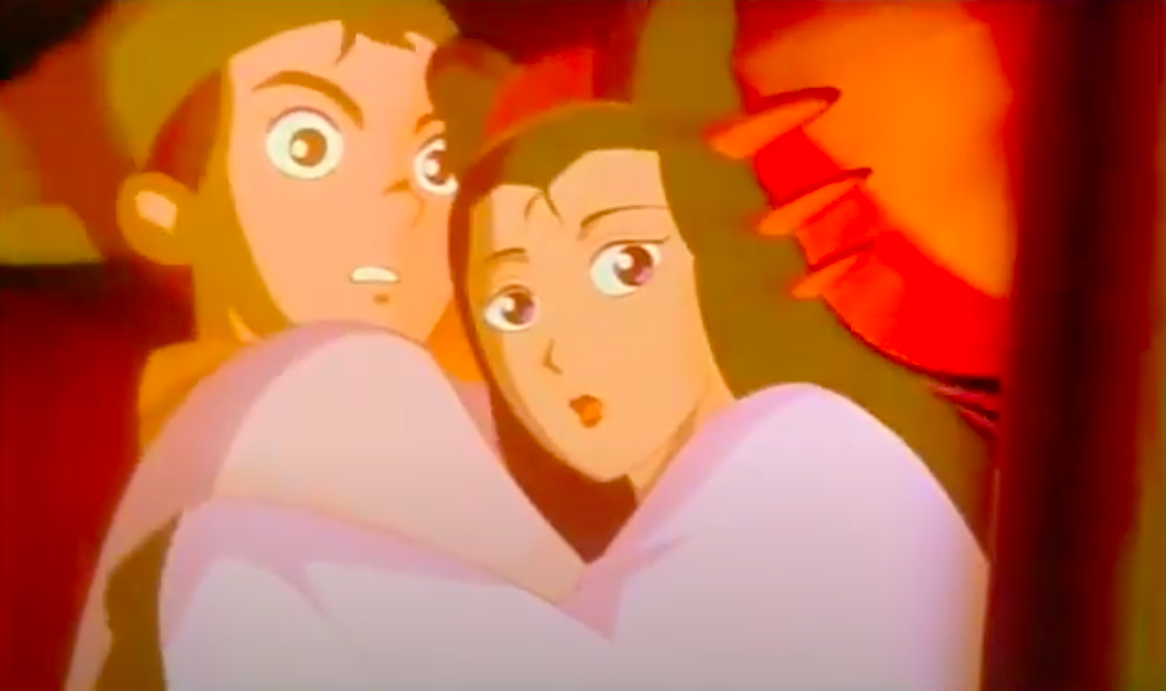
The Japanese Bubble Economy of the 1980s was a heady time, and the direct-to-video boom—known as Original Video Animation or OVA—represented the Wild West of creativity. Tucked away in the shadows of giants like Akira or Bubblegum Crisis lay a whole world of lesser-known but nonetheless worthwhile works that deserved more than to be forgotten. Some demand a retrospective reappraisal, and Hell Target is one of those titles that deserves a second look. Directed by Motosuke Takahashi and produced with a modest but focused budget by Nakamura Production, Hell Target does not try to reinvent the wheel. Instead, it leans into the dark, claustrophobic tropes of the era to deliver a tight, atmospheric experience.

The story follows a rugged crew of space explorers sent to the planet Inferno to investigate the disappearance of a previous research vessel. What they find is a desolate, nightmare world where the environment itself feels hostile. As they delve deeper into the mystery of the missing ship, they realize they are not just dealing with mechanical failure or a harsh climate; they are being hunted. As the plot unfolds, the film shifts into a ruthless survival horror. The crew is systematically picked off one by one, but the threat is two-fold. On one hand, you have aggressive, terrifying lifeforms native to the planet that seem evolved specifically to dismantle human beings. On the other, there is a compelling layer of tension introduced through another entity with ill intent. As the film progresses, you are not just watching a monster movie but the psychological breakdown of the crew. There is a strange scene when the remaining two characters have relations while the monster is on the loose, which is admittedly jarring, but the tone otherwise remains consistently bleak.

One of the most striking aspects of Hell Target is its vision of the near future. In an age where modern sci-fi often trends toward the sleek, polished aesthetic of films like Wall-E, Hell Target is a refreshing throwback to the industrial and utilitarian. The technology here is heavily inspired by the used future look of Ridley Scott’s Alien. You can expect CRT monitors flickering with green text, heavy hydraulic doors that hiss and groan, and bulky space suits in grease-stained corridors. Everything feels lived-in, heavy, and most importantly, prone to breaking down when you need it most. This clunky tech heightens the tension, as there are no magical holographic shields here, just thin layers of vibrating metal between the crew and the void.

To be fair, the animation is functional rather than extraordinary. You will not find the fluid, high-frame-rate wizardry of a big-budget feature film here. However, where the film lacks in technical flash, it excels in world-building. The atmosphere of Inferno is oppressive, and the lore behind the mission feels grounded. The creators managed to build a sense of dread that punches far above the film's weight class. I had a genuinely enjoyable time with Hell Target. It is a gritty, unpretentious slice of 80s horror that understands its influences perfectly. It remains a bit of a hidden gem in the anime community, but it absolutely deserves more recognition from fans of lo-fi sci-fi.

LINK- Pure Invention: How Japan's Pop Culture Conquered the World- Book Review (and Personal Reflections)

LINK- The Rise of Retro Gaming During Covid

LINK: Japan: My Journey to the East

LINK- Blood, Sweat and Pixels- Book Review

LINK- Utopia for Realists- Book Review

LINK- On And On And Colston ( Or, How We Kinda Sort of Learned to Talk About the Legacy of Colonialism and the British Empire)

LINK- ‘Natives: Race and Class in the Ruins of Empire’ LINK: Elden Ring- Videogames As Art
Wicked City - Cult Manga Review

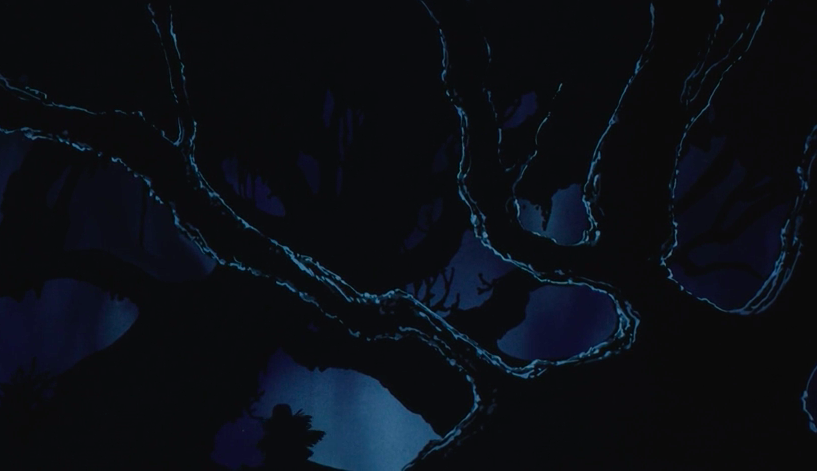
In the early 90s UK manga boom, there was a fear that "Japanimation" was corrupting our youth, and Urotsukidōji: Legend of the Overfiend was the absolute poster child for what parents feared we were watching on VHS. Joining this infamous shortlist was 1987's Wicked City by Yoshiaki Kawajiri—the very definition of late-night, top-shelf anime salaciousness and the kind of movie people assumed you’d only find nestled between Ninja Scroll and Akira in a dusty comic shop somewhere in Soho. However, it was everywhere, including Virgin Megastore, HMV and Forbidden Planet, as well as my precious Rodney's Books and Games. I never watched the film at the time but thought I'd give it a look now to correct my old-skool manga knowledge gap. So, how does it fare?

Well, the film wastes no time setting its dark tone, giving us THE iconic spider-woman scene within the first five minutes—one I'd heard about from friends over 30 years ago but had never experienced until now. Our protagonist, Taki, thinks he’s getting lucky with a beautiful woman in a bar, only for her to transform into a terrifying arachnid demon, sprouting massive legs from her torso to pin him down. It’s a legendary piece of body horror that instantly hooks you, setting the stage for a pretty straightforward, hard-boiled noir affair where Taki, a member of the secret "Black Guard," must protect a fragile peace treaty between the human world and the demon realm.

The animation is gorgeous, fluid, and has that signature Kawajiri sense of style that perfectly evokes the era; it looked head and shoulders above most other studios at the time. We get heavy shadows, stark neon blues and purples, and framing that feels incredibly cinematic. While Demon City Shinjuku kept its edge-lord tendencies relatively reined in, Wicked City dives straight into the deep end of problematic territory. The film is packed with gratuitous sex and graphic sexual violence, featuring tentacle assaults and demon violations that definitely push past simple fanservice and into genuinely uncomfortable territory.

It’s a product of its time, and the characters fit those 80s archetypes perfectly: Taki is your quintessential trench-coat-wearing, chauvinistic slacker who happens to be a badass with a gun, while his demon partner, Makie, actually gets some great moments of agency and holds her own in a fight, even if the script constantly subjects her to distress. This is all brought to life by voice acting that is highly indicative of the era's localization quality—which is to say, the dub is gloriously wooden. Taki sounds like a man trying to read a grocery list while doing a flat Clint Eastwood impression, and the ancient mystic they are protecting sounds like a bizarre, screeching caricature. It is stiff, clunky, and completely drains the tension from otherwise horrific scenes, but honestly? I love it. It adds a brilliant layer of unintentional comedy to an otherwise grim, self-serious movie.

Overall, whilst problematic for its gratuitous sexual violence, the lush animation, iconic framing, and that legendary opening five minutes make it almost mandatory viewing for fans of peak bubble-era Japanese animation. It’s well worth the 80 minutes or so of your time... just maybe don't watch it with your other half.

LINK- Fire Tripper- Cult Manga Review

LINK- Akira Soundtrack Vinyl Review

LINK- Monster City- Cult Manga Review

LINK- Japan: My Journey to the East

LINK- The Offworld Collection- Book Review

LINK- Manga Exhibition at the British Museum

LINK- The Midnight Library and the Idea That You Can’t Go Home Again

LINK- The Transportive Nature of Objects (And the Power of Mini Consoles)

Record of Lodoss War - Cult Manga Review

Back in the heady days of the early 90s, when anime was still widely referred to as "Japanimation" in much of the West and finding new titles meant making an expensive pilgrimage to Forbidden Planet or hunting through the back shelves of local comic shops like Rodney's Books and Games in Barking, one series stood above all others as the ultimate gateway to fantasy: Record of Lodoss War.

While this period was famous for cyberpunk dystopias and hyper-violent horror, this 1990 13-episode OVA series took a completely different path, giving us unadulterated high fantasy. I never got around to watching it at the time as it was prohibitively expensive and quite difficult to find but strangely, despite this, it always cast a long shadow. Because it was so formative to the genre, it regularly dominated the pages of the various manga and anime magazines I bought at the time. Decades later, I finally sat down to see if the reality matched the legendary reputation.

The story centres on Parn, a headstrong but incredibly green young warrior eager to clear his late father's dishonoured name. When his peaceful village is attacked by goblins, Parn sets off on a quest to defend his homeland, quickly assembling a classic, ragtag party of adventurers along the way.

What starts as a localised skirmish, however, quickly spirals into a continent-spanning crisis. The dark island kingdom of Marmo is launching a massive invasion of the civilised realms, orchestrated by shadowy conquerors and Karla—a mysterious "Grey Witch" who has been pulling the geopolitical strings of Lodoss for centuries to keep the world in a state of perpetual, balanced warfare. It ultimately falls to Parn and his newfound companions to stop the forces of darkness, solve the riddle of the witch, and prevent the resurrection of an ancient, destructive deity.

Watching the series [null]today, I found it immediately clear that Lodoss War is steeped very much in the high fantasy Tolkien tradition. You’ve got ancient dragons guarding legendary hoards, grumpy, axe-wielding dwarves, majestic but aloof elves, and enough magical doodads and cursed artifacts to fill a D&D dungeon master’s almanac. That tabletop game's DNA runs incredibly thick through its veins as it follows a classic heroic party's journey, but the show treats its lore with a level of sincerity and weight that makes the world of Lodoss feel genuinely ancient and mythological rather than just a collection of tired tropes.

What truly elevates this OVA into the tier of timeless classics, though, is its absolutely beautiful art style. This is peak 90s hand-drawn cel animation, and the visual design is nothing short of breathtaking. The production team went all-out on world-building, and it shows in the amazing attention to detail on the backgrounds. Every moss-covered stone in a forgotten ruin, every flickering torch in a sprawling castle hall, and every sweeping shot of the Accursed Island feels like a living, breathing painting. There is a texture and a lived-in warmth to these environments that modern, sterile digital animation often struggles to replicate. It doesn't just provide a backdrop for the action; the scenery actively tells the story of a war-torn continent.

Holding this vast world together is a deeply likeable crew of characters. While Parn is the naive centre, the show thrives on the chemistry of his party. You have Slayn the wise wizard, Ghim the rugged dwarf, Etoh the loyal cleric, Woodchuck the cynical thief, and, of course, Deedlit—the high elf who practically launched a thousand anime elf tropes with her iconic long ears and fierce grace. Watching this group grow from a localised defence force into a tight-knit found-family tasked with saving the world is incredibly rewarding. You become genuinely invested in their survival, which makes the stakes feel incredibly real when things go sideways—and things do go sideways in quite spectacular fashion.

The show delivers some of the most detailed fight scenes of its era, easily rivalling the kinetic energy of 1986’s Arion. The choreography is top-notch, swapping out the abstract speed-lines of lesser shows for fluid, weighty physical combat. Swords clash with a [null]satisfying metallic crunch, shields splinter, and the spellcasting feels appropriately cataclysmic. Whether it’s a small-scale skirmish against a band of goblins or a massive, multi-army clash against the forces of Marmo, the action is beautifully framed and meticulously animated. The dragon fights in particular are legendary, capturing the sheer, terrifying scale of these beasts as they tear through landscapes.

Overall, the Record of Lodoss War OVA is a masterclass in classic fantasy animation. It’s a warm, comforting blanket of a series for anyone who loves epic quests, beautiful artwork, and a proper old-skool adventure.

If you haven't revisited it since the VHS days—or if you're a newcomer like me, finally looking to see where modern fantasy anime found its footing—it is well worth your time. Grab a cup of tea, dim the lights, and let yourself get lost in Lodoss.

LINK- Fire Tripper- Cult Manga Review

LINK- Akira Soundtrack Vinyl Review

LINK- Monster City- Cult Manga Review

LINK- Japan: My Journey to the East

LINK- The Offworld Collection- Book Review

LINK- Manga Exhibition at the British Museum

LINK- The Midnight Library and the Idea That You Can’t Go Home Again

LINK- The Transportive Nature of Objects (And the Power of Mini Consoles)

Angel's Egg - Cult Manga Review

When people describe a piece of art as a "mood," I think films like the 1985 cult classic Angel’s Egg (Tenshi no Tamago) is precisely what they mean. Directed by Mamoru Oshii and featuring the ethereal character designs of legendary artist Yoshitaka Amano, this film is far more than traditional animation. It is a haunting, minimalist journey that prioritizes atmosphere and sublime beauty over standard narrative, creating an experience that feels like a dark painting come to life.

The story itself is deceptively simple, unfolding within a surreal, Gothic-dystopian landscape. A young, nameless girl wanders the desolate world alone, fiercely guarding a large, mysterious egg tucked beneath her clothes. Her solitude is eventually broken when she meets a young man carrying a cross-shaped weapon. He chooses to accompany her through the ruins, but his presence introduces a quiet tension as he repeatedly asks her to break the egg open. As they travel, the two engage in sparse, cryptic dialogues that delve into ambiguous theological philosophy, touching on heavy themes of faith, loss and existential meaning.

Rather than relying on traditional exposition or dialogue, Angel's Egg lets its striking visuals and eerie incidental audio do all the heavy lifting. The film's environment is dominated by deep, ink-black shadows and a fiercely unique aesthetic that masterfully utilizes darkness to build tension. This eerie imagery is perfectly paired with a discordant, atmospheric score that amplifies the overwhelming sense of isolation. Because there is so little dialogue to guide the audience, you are forced to completely immerse yourself in the film's acoustic and visual landscape, interpreting meaning or just taking in the audio-visual overload.

Overall, Angel's Egg is an enigma that defies easy explanation. It leaves viewers not fully knowing what is going on or what to make of its dense symbolism, yet that is precisely why it is so easy to love.

There is something deeply arthouse, hypnotic, and oddly calming about its slow, deliberate pacing. It stands as a beautifully haunting fever dream that lingers in the mind long after the final frame fades to black.

LINK- Fire Tripper- Cult Manga Review

LINK- Akira Soundtrack Vinyl Review

LINK- Monster City- Cult Manga Review

LINK- Japan: My Journey to the East

LINK- The Offworld Collection- Book Review

LINK- Manga Exhibition at the British Museum

LINK- The Midnight Library and the Idea That You Can’t Go Home Again

LINK- The Transportive Nature of Objects (And the Power of Mini Consoles)

Patlabor WXIII: A Cult Film Review

Having experienced the first two entries of the trilogy, I approached the final installment of Patlabor with high expectations. The original Patlabor remains a masterclass in cyber-terrorism with provocative religious undertones, while its sequel serves as a profound meditation on the veneer of peace and military ethics. Naturally, I was eager to return to the world of the Tokyo Metropolitan Police Special Vehicles Unit 2 and their iconic Labors. However, even a cursory bit of research revealed that WXIII is widely considered the "black sheep" of the franchise. As a fan of cult cinema, I was undeterred; I went in forewarned that this might be a misunderstood trailblazer or, perhaps, simply a disappointment.

WXIII: Patlabor the Movie 3 departs significantly from the high-stakes political thrillers of its predecessors, offering instead a gritty, atmospheric noir centered on a traditional police procedural. Set against the perpetually rainy backdrop of Tokyo Bay, the narrative follows two detectives who serve as the film's true heart: the grizzled, cynical veteran Takeshi Kusumi and his younger, more earnest partner, Shinichiro Hata. Kusumi - navigating the investigation with a persistent leg injury and a dry, snarky wit - provides a grounded contrast to Hata, whose personal life and budding romance with a mysterious researcher become inextricably linked to the case. Their dynamic anchors the story in a human reality often missing from mecha-heavy narratives.

As they navigate bureaucratic red tape and industrial secrets, the duo uncovers a truth far more organic and unsettling than mere mechanical sabotage. I thoroughly enjoyed my time with the film, as its technical merits are undeniable. The animation remains top-notch, and the stunning background art provides essential worldbuilding alongside necessary moments of contemplative calm.

The primary point of contention for many fans is the absence of the core cast; the SV2 crew members are relegated to the periphery, eventually providing "heavy metal" backup only in the final act, approximately seventy-five minutes into the runtime. While the series' protagonist, Noa, makes a brief, wordless cameo earlier on, the lack of the trademark character dynamics explains the film’s divisive reputation.

Overall, I found WXIII to be a somber, slow-burn mystery that is exceptionally well-told. It moves beyond the giant robot trope to explore the ethics of scientific progress and the unintended shadows cast by a rapidly evolving city.

LINK- The Rise of Retro Gaming During Covid

LINK- Blood, Sweat and Pixels- Book Review

LINK- The Offworld Collection- Book Review

LINK: Japan: My Journey to the East

LINK- Battle Angel Alita: And So It Ends

LINK- The Moomins 80's Soundtrack Vinyl Review

LINK- Inspector Gadget Retro Soundtrack Review

LINK- Ulysses 31 Retro Soundtrack Review

LINK- The Mysterious Cities of Gold Retro Soundtrack Review

Patlabor 2 - Cult Manga Review

A short while ago, I finally sat down and watched Patlabor: The Movie. I found that it stood out as a titan of late-80s anime and deservedly was oft cited in the same breath as Akira, Ghost in the Shell and Ninja Scroll. So, how would the sequel fare?

Mamoru Oshii’s Patlabor 2: The Movie is less a film about giant robots and more a haunting autopsy of the modern nation-state. Released in 1993, its vision of "gray zone" warfare - where the line between peace and conflict is blurred by misinformation and economic complicity - has only grown more chillingly relevant.

The story is set in a near-future 2002 and follows the Tokyo Metropolitan Police's Special Vehicle Section 2 as they are drawn into a web of domestic terrorism and military intrigue. When a missile attack on the Yokohama Bay Bridge - initially blamed on the Japanese Self-Defense Forces - turns out to be a masterfully staged phantom strike by a rogue former UN peacekeeper named Yukihito Tsuge, Tokyo is plunged into a state of emergency. As the city is slowly occupied by its own military and the rule of law dissolves into martial law, detectives Goto and Nagumo must navigate a landscape of misinformation and political maneuvering to stop Tsuge from shattering the illusion of Japan's post-war peace.

The film was a direct response to Japan’s controversial role in the 1990 Gulf War. While the nation’s constitution prevented military intervention, the government essentially “bought” its way into international good graces by contributing $13 billion to the war effort. Oshii saw this not as pacifism, but as a parasitic extraction: a nation consuming the stability and oil prices secured by foreign blood while maintaining a domestic mirage of moral purity.

At the heart of this complex geopolitical story of intrigue is the character Shigeki Arakawa. During a hushed, atmospheric boat ride through Tokyo, he delivers the monologue that defines the film's philosophical thrust:

"Look at this city. From here, it looks like a scene from a dream, doesn't it? But it’s a mirage. In this city, people have everything. They’re convinced that this peace will last forever. But this peace... it’s a peace bought at the expense of wars being fought elsewhere. We export the reality of war and import the fruits of its labor. We call it 'peace,' but it’s a fraudulent peace. They say that an 'unjust peace' is better than a 'just war.' I used to believe that. But once you’ve experienced a peace that’s been bought with a 'just war' happening somewhere else—in a place you can’t see—you start to realize how thin that line really is. If the foundation of our peace is the suffering of others, then our 'peace' is nothing more than a crime. And yet, I’d still take this 'fraudulent peace' over a 'just war' any day. Because in a 'just war,' everyone dies for a lie. In an 'unjust peace,' at least we can pretend the lie is true. Maybe the front lines will come home eventually... but until that day, isn't the view beautiful?"

This sentiment found a striking modern echo in Mark Carney’s recent speech at the World Economic Forum in Davos. Addressing the rupture of the global order, Carney suggested that our international stability was often a performance - a way of "living within a lie" to maintain economic momentum. Much like Arakawa, Carney suggested that for decades, middle powers prospered under a rules-based order they knew was partially false. The fraudulent peace Arakawa describes is the geopolitical equivalent of what economists call "externalities": the costs of our comfort, such as conflict and labor exploitation, are simply moved off the balance sheet and out of sight.

What makes Patlabor 2 so effective is that it refuses to deliver this message as a dry lecture. Instead, it utilizes Production I.G’s peak hand-drawn animation to create a palpable sense of dread. The film is famous for its empty shots—long, wordless sequences of Tokyo’s infrastructure, canals, and military convoys moving through silent, snowy streets. This use of ma, or negative space, forces the viewer to sit with the weight of Arakawa’s words. The mecha action is minimal, relegated to the background, because the true battle is one of perception.

By the time the denouement arrives, the film doesn't offer the catharsis of a won war. Instead, it leaves the audience with a lingering, uncomfortable awareness that the view from the window is indeed beautiful, but the slaughterhouse is still running.

Overall, Patlabor 2 remains a pinnacle of mature storytelling that treats its audience with the respect of a political thriller while utilizing the unique visual strengths of animation.

Megazone 23 Part 1 - Cult Manga Review

Megazone 23 is a cyberpunk OVA that is well regarded. I've known of it for years, seeing it frequently mentioned in Manga Mania, Anime FX as well as on shelves at video stores but I had never got around to seeing it. I thought I'd put aside an hour and a half to check what the fuss was about. 

I saw the film mentioned on numerous occasions in various manga and anime magazines.

Set in a neon-drenched, eternal 1980s Tokyo, the plot follows brash Shogo Yahagi, a cocky young biker who spends his nights tearing through the city streets. His life takes a sharp turn when an old friend entrusts him with a stolen military prototype: an advanced motorcycle that can transform into a powerful mecha. As the military hunts him down to reclaim their tech, Shogo begins to notice strange glitches in his perfect urban paradise. With the help of a popular virtual idol named Eve, Shogo uncovers a massive conspiracy that suggests the world he lives in - and the history he knows - is a carefully constructed illusion.

Having watched it, I can see now where The Matrix, They Live and Dark City got their ideas from; they are a haunting meditation on The Stagnation of Paradise, where the concepts of nostalgia, technology, and social control aren't just separate ideas, but layers of a singular, claustrophobic trap. The story posits that a society prioritizing comfort over truth is inherently fragile, existing in a "forever summer" designed to prevent anyone from looking closely enough at the seams of their reality - all pretty heady stuff for a 1985 anime.

The animation is stunning and holds up well, especially the amazing mech designs by Shinji Aramaki, who worked on Appleseed, Ghost in the Shell SAC and Metal Skin Panic Madox, and character work by the legendary Haruhiko Mikimoto, who worked on Macross and Gundam. The soundtrack slaps and there is no problematic etchi stuff, although there are a couple of love making scenes, but apart from that you're all good to go.

Overall, if you enjoy the vibe of 80s synth-pop, detailed mechanical animation, and "Big Truth" mysteries, this is essential viewing. Just be prepared as it trades the typical hero’s journey for something much more cynical and thought-provoking.

LINK: Japan: My Journey to the East

LINK: Summer, Fireworks, and My Body

LINK: A Nightmare on Elm Street Boxset - Cult Movie Review

LINK: The Power of Stories and How They Are Manipulated

LINK: The Message by Ta-Nahisi Coates - Book Review (and Some Thoughts)

LINK: The Anxious Generation: Book Review (and Some Thoughts)

LINK: Utopia for Realists- Book Review

LINK: Toxic: Women, Fame and the Noughties- Book Review (and Some Thoughts)

Green Legend Ran - Cult Manga Review

I'm a huge Mysterious Cities of Gold fan and had heard that it was part inspired by a series called Future Boy Conan. I had never seen this series before, as it was never shown in the UK to my knowledge, but had heard that it was definitely worth a watch. When a Blu-ray was released, I jumped on it and ordered it on release day. I found that, even though the series was old and I had no personal attachment to it, I was very impressed. I could see the DNA from Conan to MCOG. I say this because it seems like it wasn't the only one as I heard that it had influenced Green Legend Ran, a three-part anime series that was released way back in 1992. I knew of it but had never got around to watching the series. However, I did have the soundtrack CD by Yoichiro Yoshikawa which I'd bought from the original location of Forbidden Planet back in the mid 90s. It had been on sale so if picked it up and listened to it with no context. So, with some time on my hands, I thought I'd finally give it a watch.

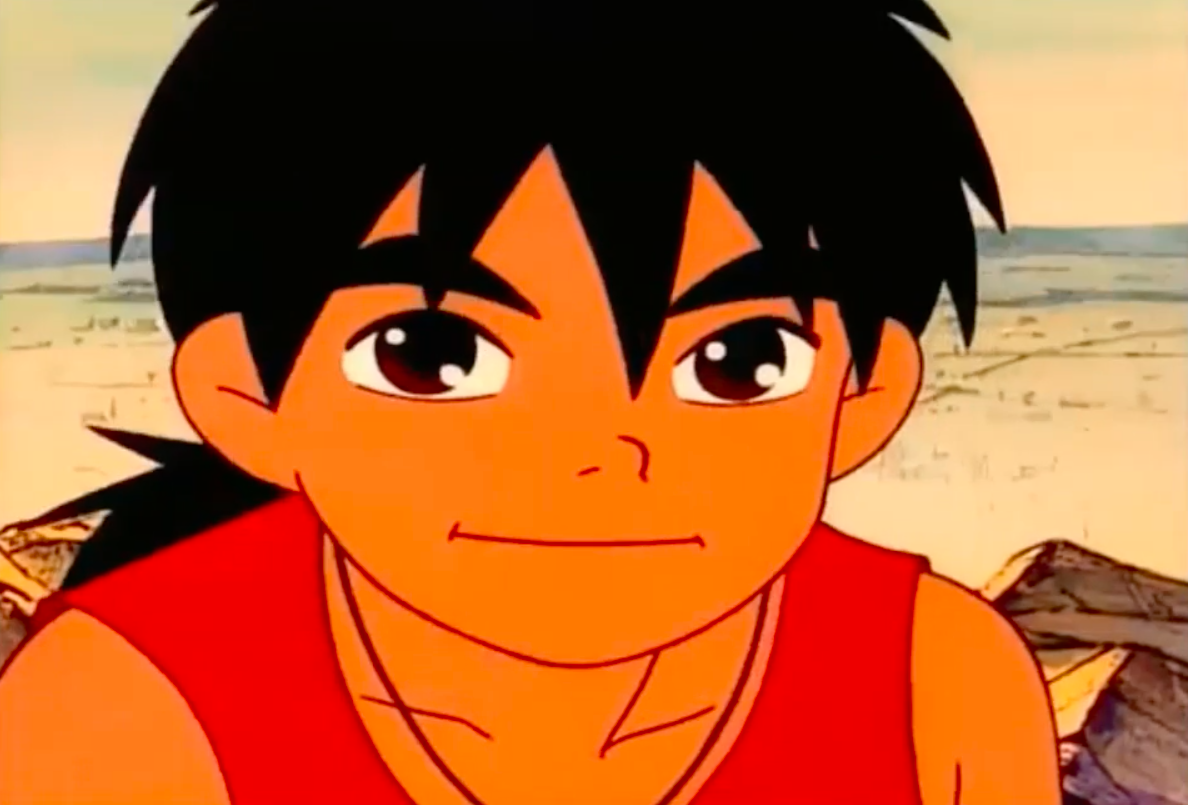
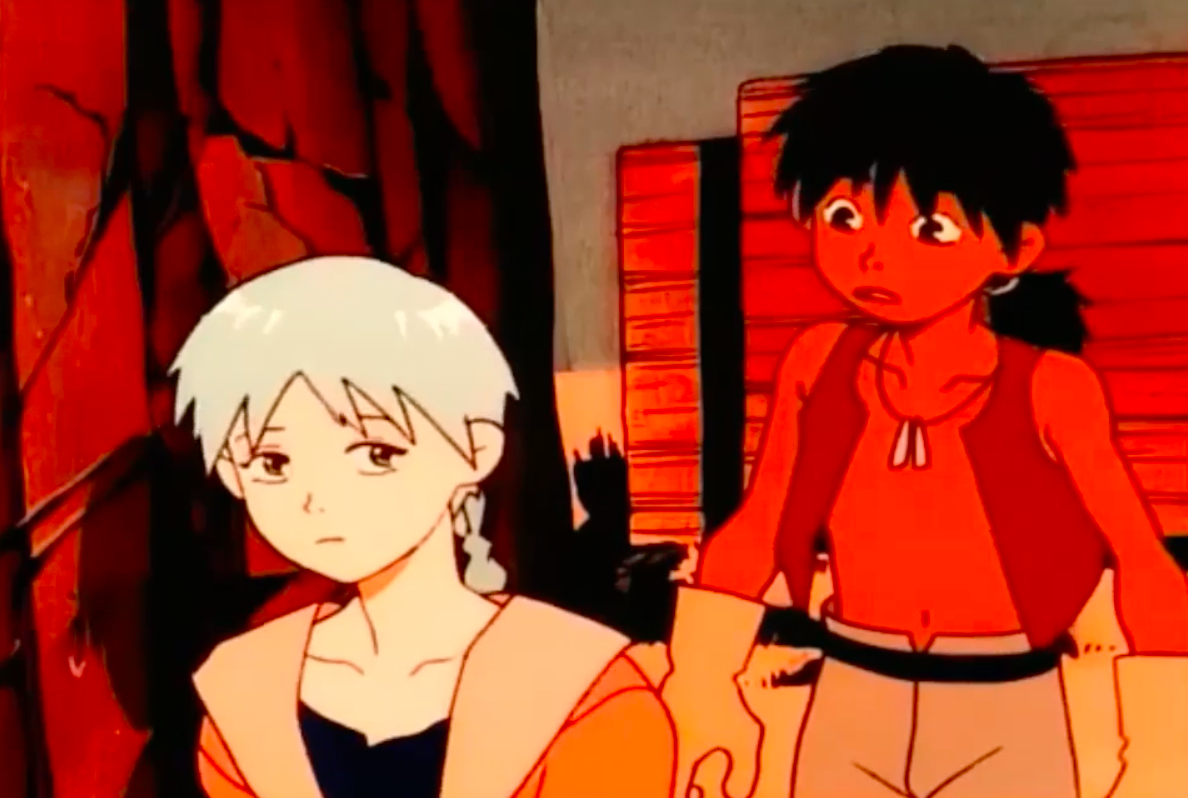
Set on a post-apocalyptic Earth that had been ruined by humans, the world was further transformed into a desert wasteland after alien monoliths, known as the Rodo drained the planet's water and life. The story follows Ran, an angry young man who questions his lot in life. He joins a revolutionary group to track down the scarred man who killed his mother but his personal quest shifts when he meets Aira, a mysterious silver-haired girl with an unknown connection to the Rodo's central monolith, the 'Holy Mother.'

When Aira is kidnapped, Ran pursues her across the desert, becoming entangled in the larger conflict between the oppressive, water-controlling religious cult known as the Rodoists and the anti-Rodo rebels of Hazzard. Along the way he find out what the purpose of the Rodo is and why they have kidnapped Aira.

I have to say that watching this reminded me of the storyline from several Hollywood movies where aliens are terraforming planets by destroying the atmosphere. It happens in The Arrival, Titan A.E, Chronicles of Riddick, Man of Steel and Dune so it's a pretty common trope. Here, it's wonderfully realised as you see the suffering of the people and the disperate societies that have emerged, some seeing the Holy Green Monoliths as a sign from God whilst others see them as oppressors. The Holy Green has its own plans though and it's machinations may not be magnanimous...

I really liked this anime as the animation by AIC is solid, showcasing some creative dystopian scenery of old ruined cities, failing infrastructures and increasing desertification. The soundtrack is great and complements the film well, especially in its more philosophical musing moments.

Green Legend Ran deals with some emotive themes and features swearing, acts of terrorism, violence, gunplay and blood; it is not intended for young kids, which is a shame as I think it has something important to say about blind faith and the environment.

In a world increasingly fragmented and more tribal, at least when looking at online discourse and politics, this story is pretty evergreen as it shows what can happen when fanaticism takes hold on both sides of the divide. This OVA is well worth 150 mins of your time.

LINK: Japan: My Journey to the East

LINK- Battle Angel Alita: And So It Ends

LINK- Fire Tripper: Cult Manga Review

LINK- Akira Soundtrack Vinyl Review

LINK- Manga Exhibition at the British Museum

LINK- The Transportive Nature of Objects (And the Power of Mini Consoles)

LINK- My One True Gaming Constant in Life- Nintendo

LINK- The Mysterious Cities of Gold Retro Soundtrack Review

Gunbuster - Cult Manga Review

Animation studio Gainax closed a couple of years and it sent shockwaves through the animation world. The studio was renown for Evangelion and Nadia: The Secret of Blue Water but it initially reached fame in 1988 with Gunbuster. I had seen most of the series but had never got to Gunbuster so thought I'd better give it a looksie.

I can say that Gunbuster, directed by Hideaki Anno, is a masterclass in how to blend high-concept science fiction with deep emotional stakes. It occupies a unique space in anime history, functioning as a bridge between the traditional Super Robot shows of the 1970s and the psychological deconstructions seen in the 1990s.

The story follows Noriko Takaya, a young girl living in the shadow of her father, a decorated Admiral who vanished during an alien ambush. When she is recruited into an elite space force to protect Earth, she must grapple with her own insecurities and the weight of human survival, a premise that feels remarkably similar to Orson Scott Card's Ender’s Game.

For modern viewers, Gunbuster could be seen as a fascinating prototype for Neon Genesis Evangelion. Many of Anno’s signature tropes are already present here, including the reluctant teenage pilot, the demanding commander, and sharp internal team rivalries. The character Jung Freud, a formidable redhead, clearly paves the way for future archetypes like Asuka. While the series starts with familiar genre beats, it quickly evolves into something much more profound by centering the narrative on the terrifying realities of interstellar combat.

One of the most impressive elements of the series is its commitment to the physics of special relativity. Unlike many sci-fi series that ignore the vast distances of the cosmos, Gunbuster uses time dilation as its primary emotional engine. As Noriko and her companions travel at near-light speeds, months in space result in years passing on Earth. This creates a tragic disconnect between the heroes and the people they are trying to save, as friends and family age and move on while the pilots remain physically unchanged. This hard-science approach elevates the series from a simple action show to a sophisticated meditation on sacrifice and isolation.

© BANDAI VISUAL © GAINAX

Technically, the animation has stood the test of time exceptionally well, showcasing the meticulous mechanical detail for which early Gainax became famous.

The finale of Gunbuster is a masterstroke of avant-garde direction. In a bold departure from the vibrant aesthetic of the earlier episodes, Hideaki Anno shifts the series into a high-contrast, black-and-white widescreen format. This stark change strips away distractions, emphasizing the monumental scale of the conflict and the profound isolation of its characters.

By utilizing detailed line art and cinematic composition, the show transforms from a standard mecha action story into an evocative, historical epic. It is a brilliant artistic choice that turns production limitations into a hauntingly beautiful meditation on sacrifice, leading to a conclusion that still feels powerful after nearly 40 years. Even without the typical flourishes of late-80s animation, the sheer weight of the narrative is felt in every frame.

Overall, Gunbuster is an essential watch for anyone interested in the evolution of mecha or the early works of Hideaki Anno, proving that even after decades, its message about human perseverance still rings true. Sure, some episodes contains some dated fan service elements but this was a common staple of late-80s OVA culture and these are relatively brief, but this is a minor content warning for contemporary audiences. Miss this to your detriment.

LINK- Pure Invention: How Japan's Pop Culture Conquered the World- Book Review (and Personal Reflections)

LINK- Japan: My Journey to the East

LINK- Akira Soundtrack Vinyl Review

LINK- Battle Angel Alita: And So It Ends

LINK- Fire Tripper: Cult Manga Review

LINK- The Future Starts Here: An Optimistic Guide to What Comes Next- Book Review

LINK- On Mysticism by Simon Critchley- Book Review

LINK- The Power of Stories and How They Are Manipulated

LINK- The Message by Ta-Nahisi Coates - Book Review (and Some Thoughts)

Patlabor - Cult Manga Review

Patlabor: The Movie stands as a titan of late-80s anime. Often mentioned in the same breath as Akira, Ghost in the Shell and Ninja Scroll, it was a critical darling of the era. Yet, for years, it somehow eluded me. Recently, I finally corrected that oversight but has it been worth the wait.

Set in an alternate 1999, the story depicts a Tokyo undergoing the massive Babylon Project, a land reclamation undertaking. To handle the colossal construction efforts, the city relies on giant humanoid machines known as Labors. The plot ignites when these machines begin malfunctioning, prompting an investigation by Special Vehicle Section 2. What appears to be a one-off mecha rampage glitch quickly evolves into a moody, atmospheric procedural. It weaves a web involving the suicide of a brilliant programmer, a virus-infected operating system, and a conspiracy that suggests the city's greatest threat is not a physical army, but a line of corrupted code.

Although released in 1989, the film is uncannily prescient. Its exploration of political cover-ups, corporate malpractice, and the fragility of a networked society feels ripped from today's headlines. While we may not have giant mechs roaming our streets, the film’s depiction of software vulnerabilities and corporations hiding defects to protect stock prices is strikingly modern. Patlabor wisely trades simple villains for complex, systemic dangers.

Visually, the film is a triumph. It eschews flashy, weightless action for a grounded realism; the machines feel heavy and mechanical. The background art is phenomenal, providing a dense, lived-in texture that set a new benchmark for the industry. The script is equally mature, delivering a dense political thriller that rewards patience. It is punctuated by philosophical introspection—most notably an investigator quoting Paul Gauguin to question humanity's technological trajectory—and is layered with biblical symbolism regarding Babel, Yahweh and the Ark that is central to the antagonist's philosophy.

Underscoring this heady drama is the glorious score by Kenji Kawai. His signature blend of heavy percussion and haunting synths creates an ethereal atmosphere that binds the narrative together. It all reaches a heady crescendo with the Ark falling apart and the Labors going berserk - wonderful!

Ultimately, despite the three decades since its release, Patlabor: The Movie remains a relevant, thought-provoking watch and an undeniable masterpiece from director Mamoru Oshii. I'm sure had I seen it back in the day it would have blown my mind because, even now, it stands as a phenomenal piece of work.

LINK: Japan: My Journey to the East

LINK- Battle Angel Alita: And So It Ends

LINK- Fire Tripper: Cult Manga Review

LINK- Akira Soundtrack Vinyl Review

LINK- Manga Exhibition at the British Museum

LINK- The Transportive Nature of Objects (And the Power of Mini Consoles)

LINK- My One True Gaming Constant in Life- Nintendo

LINK- The Mysterious Cities of Gold Retro Soundtrack Review

Maturity and Meaning in Revisiting the Manga and Anime of Our Youth

There is a special kind of power in returning to the media of your youth and realizing that your younger self was watching an entirely different show. Over the past year, I’ve been revisiting some of the key anime and manga of my formative years—Neon Genesis Evangelion, Serial Experiments Lain, and my undisputed favorite, Haibane Renmei - and I've come to a striking realization. While Haibane Renmei (the purgatorial masterpiece) has always felt like a key text to me, I’ve also had to accept a basic truth: Evangelion and Lain are right up there with it. Now, I always loved these two but my re-evaluation hasn't come from the giant robots or the cyberpunk aesthetics but from the abstract, deeply polarizing internal monologues that bookended both these series which have finally clicked into place.

As a younger teenager, I found their navel-gazing head-trip endings confusing or even self-indulgent. However, as an adult with a life lived, I have come to realise that they are among the most honest representations of the human condition ever animated: not many shows looked at the philosophies of Kierkegaard and Schopenhauer and treated them seriously back then and the fact that these three series did that in an accessible way is pretty mind-blowing.

At the age of fourteen, the Hedgehog’s Dilemma in Evangelion was a cool philosophical trivia point - the idea that we, like hedgehogs in winter, want to huddle for warmth but inevitably prick each other with our spines. It felt poetic in an edgy, detached way. Now, after years of navigating real-world relationships, heartbreaks, and the complexities of intimacy, that dilemma feels less like poetry and more like a scar. Adulthood is a constant negotiation of those spines. We crave to be known and validated, yet we are terrified of the vulnerability that being known requires. We push people away to preserve ourselves, then find ourselves shivering in the cold.

Returning to Evangelion as an adult means recognizing that Shinji’s paralyzing fear isn't just petulent whining - it is the very real weight of realizing that to love someone is to give them the power to hurt you. We spend our lives trying to find the sweet spot on that graph: close enough to feel the warmth, yet far enough to avoid the sting.

If Evangelion is about the internal barriers we build, Serial Experiments Lain is about what happens when those barriers dissolve in the digital age. Re-watching Lain in the present feels almost prophetic. In the Wired, Lain exists in multiple versions—the shy girl, the bold digital entity, the cruel observer.

As an adult, this mirrors the exhaustion of the modern Persona. We project ourselves into different Wireds of our own lives—our LinkedIn professional self, our Instagram and Facebook curated self, our private, lonely self—seeking a connection that bypasses the physical pain of the Hedgehog’s Dilemma. But Lain warns us that when we are everywhere, we are also nowhere. It serves as a bridge: if we can be anyone to get validation, how do we ever live with who we actually are when the screens turn off?

This is where Haibane Renmei completes this triad. Where Evangelion deals with the terror of being an individual and Lain deals with the fragmentation of the self, Haibane explores the weight of being a guilty one. Its central philosophical hurdle is the Circle-of-Sin, a paradox that feels agonizingly familiar once you’ve carried the weight of your own mistakes for a few decades.

The logic of the Circle-of-Sin is a trap: To recognize one's sin is to have no sin. But then, are those who recognize their sin without sin? If you believe you have a sin, you are caught in the circle.

As an adult, this hits home because we often become our own harshest jailers. We believe that if we just feel bad enough, we can earn our way out of our guilt. But Haibane Renmei argues that you cannot find your own way out of the circle alone. You cannot self-validate your way out of shame. You have to accept the help of another; you have to allow yourself to be forgiven by the very other that Evangelion warns will prick you with their spines.

Ultimately, these three series function as a roadmap for the maturing psyche. They move from the external chaos of robots and computers to the internal silence of the soul. Through the lens of adulthood, the Human Instrumentality of Evangelion is no longer a sci-fi threat; it is the very real temptation to stop trying—to stop being an individual and sink into a sea of easy validation and collective numbness or ennui where everyone is one.

To truly wake up is to navigate the triad: you must acknowledge the fragmentation of your digital masks (Lain), break the self-perpetuating cycle of your own shame (Haibane Renmei), and finally accept the inherent pain of the Hedgehog’s Dilemma (Evangelion).

The final episodes of Eva resonate so deeply now because they represent the moment of synthesis. They tell us that the A.T. Field - the barrier of the soul - is not just a wall that keeps people out, but the very thing that gives us a shape to love. The Congratulations isn't for winning a war; it’s for the quiet, monumental decision to remain an individual in a world that makes being one incredibly difficult. I used to think these shows were about the end of the world. Now, I see they are about the courage it takes to truly inhabit it.

Returning to these stories isn't just an exercise in nostalgia for me; it's a kind of progress report on the soul. We never truly watch the same show twice because we are never the same person twice. If the anime of our youth once felt like an escape from a world we didn't understand, revisiting them as adults feels like an invitation to engage with that world more deeply. We are no longer just watching Shinji, Lain, or Rakka; we are recognizing ourselves in them. And in that recognition, there is a strange, quiet comfort: the realization that while the world may be heavy, we finally have the strength to carry our own spines.

LINK- Serial Experiment Lain - Cult Manga Review

LINK- Haibane Renmei - Cult Manga Review

LINK- The Anxious Generation: Book Review (and Some Thoughts)

LINK- Japan: My Journey to the East

LINK- Utopia for Realists- Book Review

LINK- On And On And Colston ( Or, How We Kinda Sort of Learned to Talk About the Legacy of Colonialism and the British Empire)

LINK- ‘Natives: Race and Class in the Ruins of Empire’ LINK: Elden Ring- Videogames As Art
LINK- Toxic: Women, Fame and the Noughties- Book Review (and Some Thoughts)

LINK- Pure Invention: How Japan's Pop Culture Conquered the World- Book Review (and Personal Reflections)

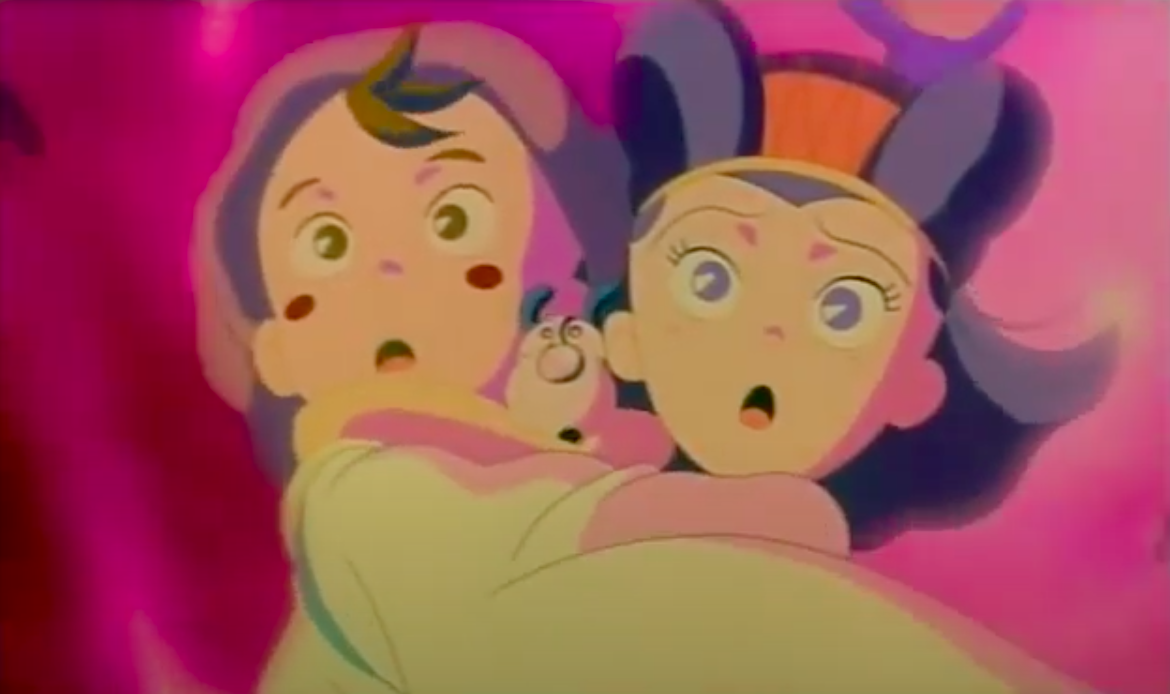
A Chinese Ghost Story: The Animated Film - Cult Film Review

Back in the early 90s, Hong Kong cinema (as well as much of world cinema) was still quite niche, cult and difficult to find in England. You'd get the occasional Bruce Lee movie on television and that was about it. I knew Bruce Lee through Enter the Dragon but that was it, my knowledge of the wider genre was very slim. That changed as Channel 4 (and later cable channels) started to show anime, manga and Asian Cinema more frequently and when Crouching Tiger, Hidden Dragon became a worldwide smash the floodgates opened. I may be misremembering but I think I was introduced to this genre through Channel 4 or by a close friend who was a huge Jackie Chan fan before he became a 'name' in the West with the success of Rush Hour. However, by whatever means, A Chinese Ghost Story was one of the first HK films I saw and I fell in love with it, purchasing the Hong Kong Legends DVD for the then princely sum of £20 years later (that’s in the early 00s mind you so that’s mega expensive!)

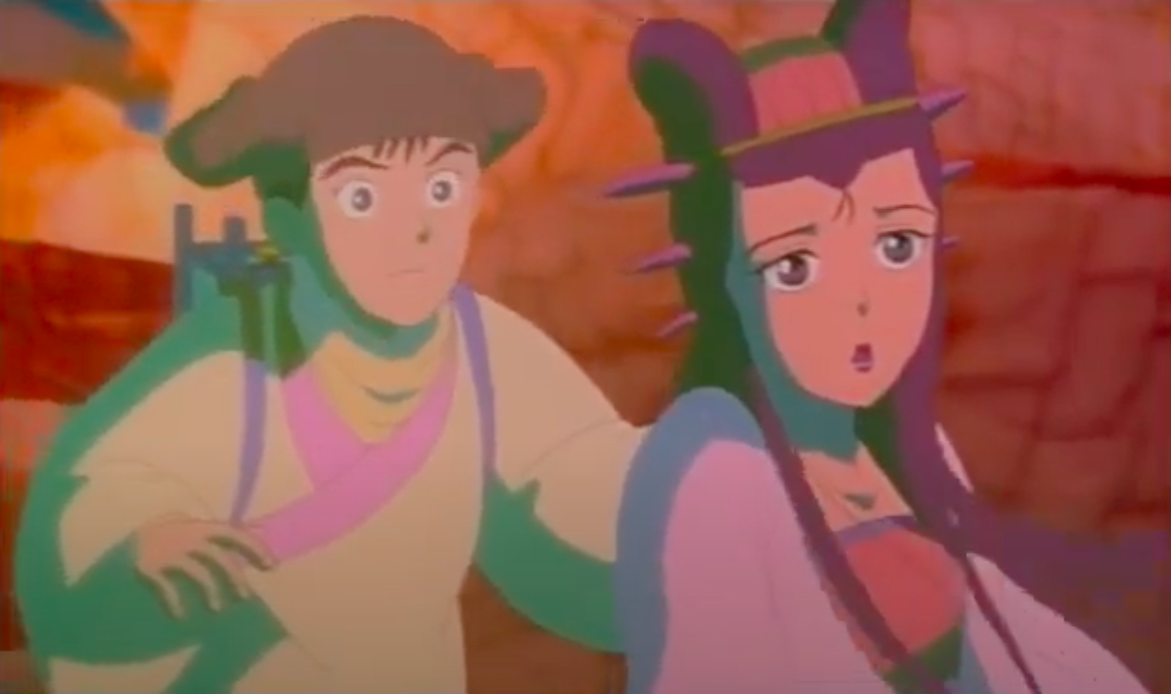
Later I would realise that, whilst incredibly beautifully shot with sumptuous costumes and detailed sets, the film was a sum of the genre parts rather than a truly innovative picture. Another earlier Tsui Hark picture, Zu: Warriors of the Mountain (which I also purchased later, again by HKL) did a lot of what is shown Hark's oeuvre and the Wuxia genre, however, at the time I didn't mind as I didn't know any better. Even now, the tale of a lowly, down on his luck tax collector falling in love with a spirit and trying to save her cursed soul still captivates me.

Released in 1997, A Chinese Ghost Story: The Animated Film was something I sought after seeing it mentioned in Manga Mania but I never found it... until now, where it came up serendipitously in my YouTube feed.

Under the direction of Tsui Hark, who also produced the original films, this animated film ventured into new territory, aiming to translate ethereal romance and supernatural action into a fresh medium. So, did Hark succeed in this endeavour?

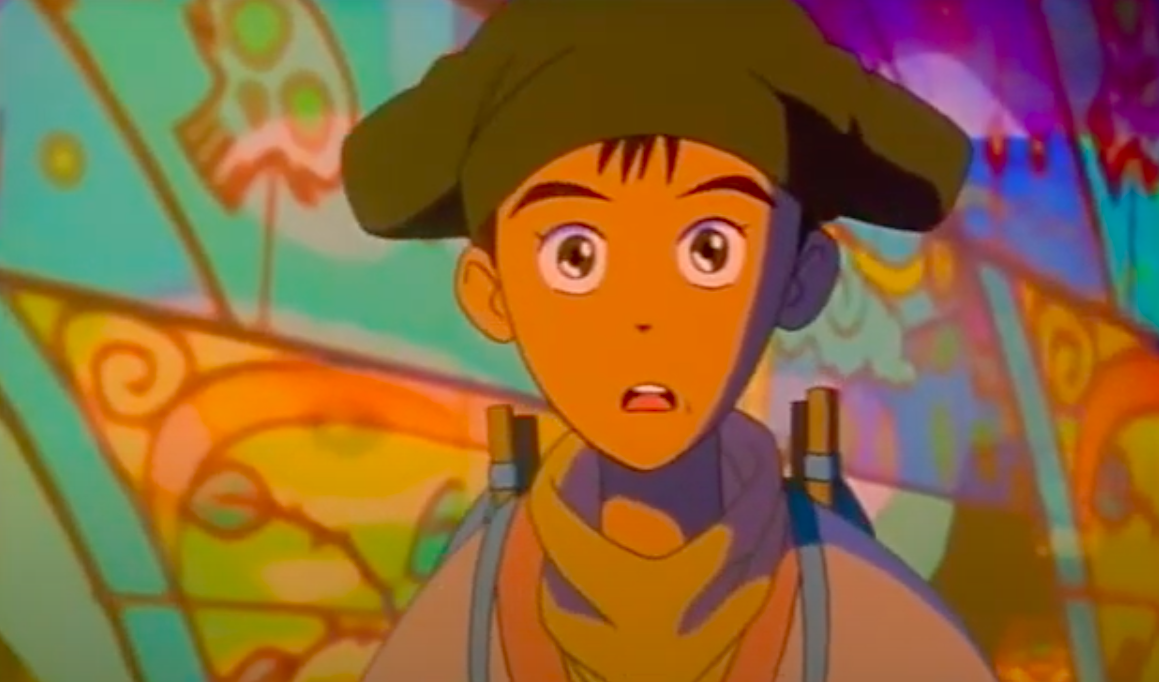
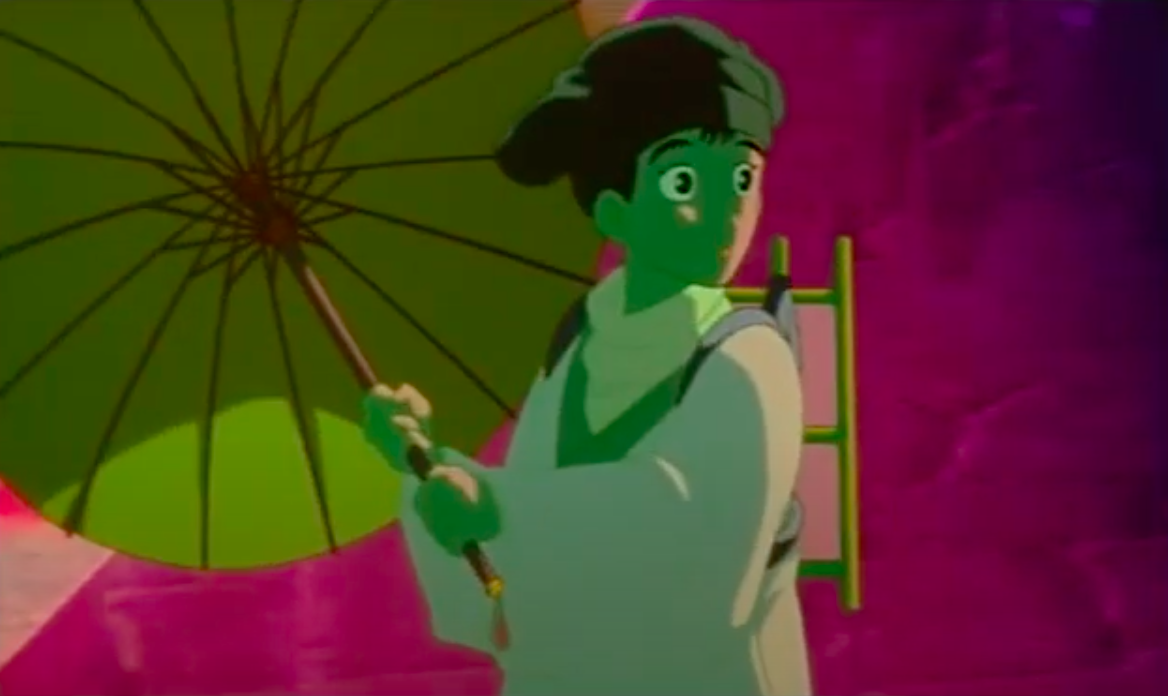
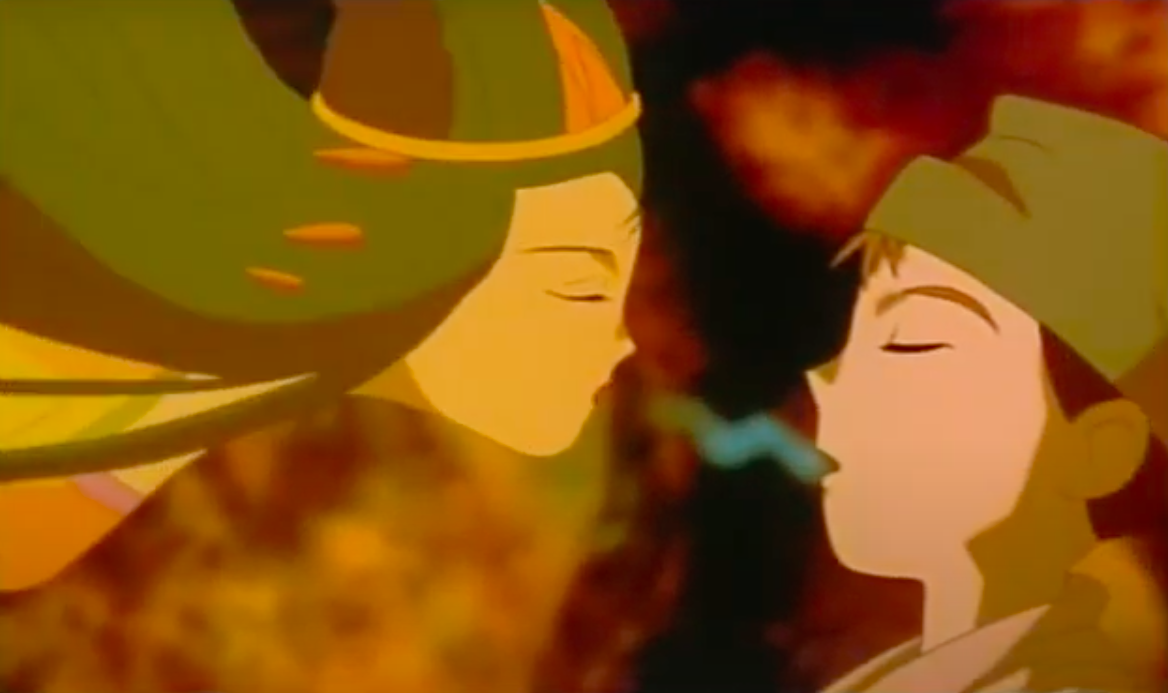
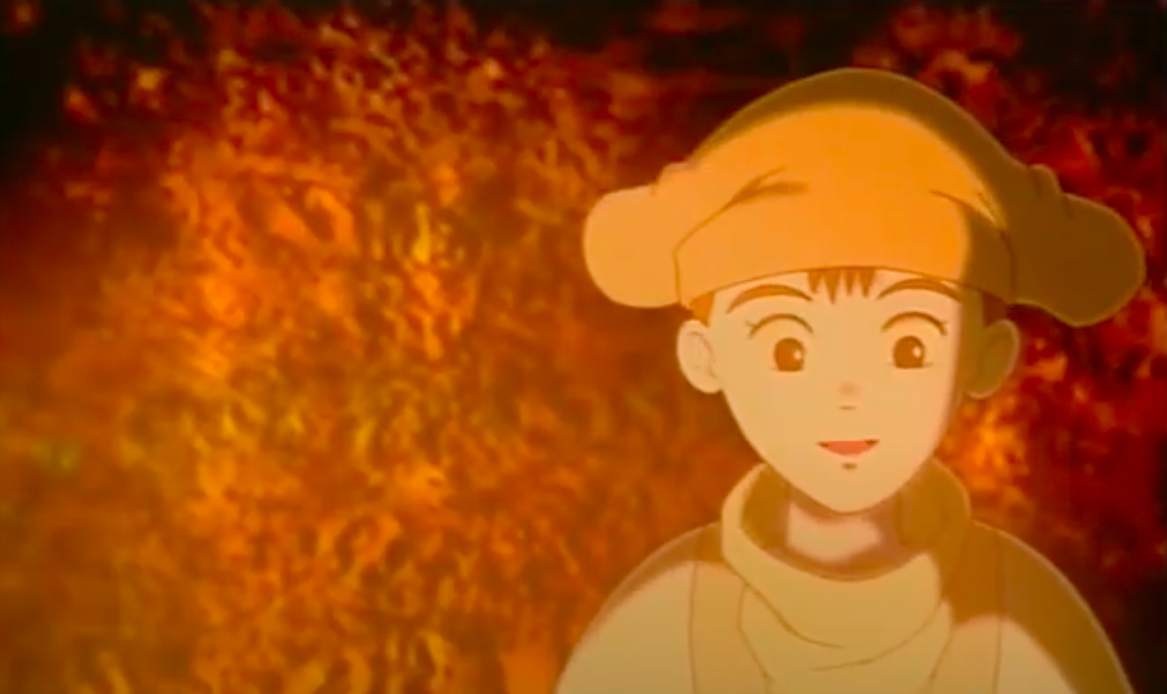
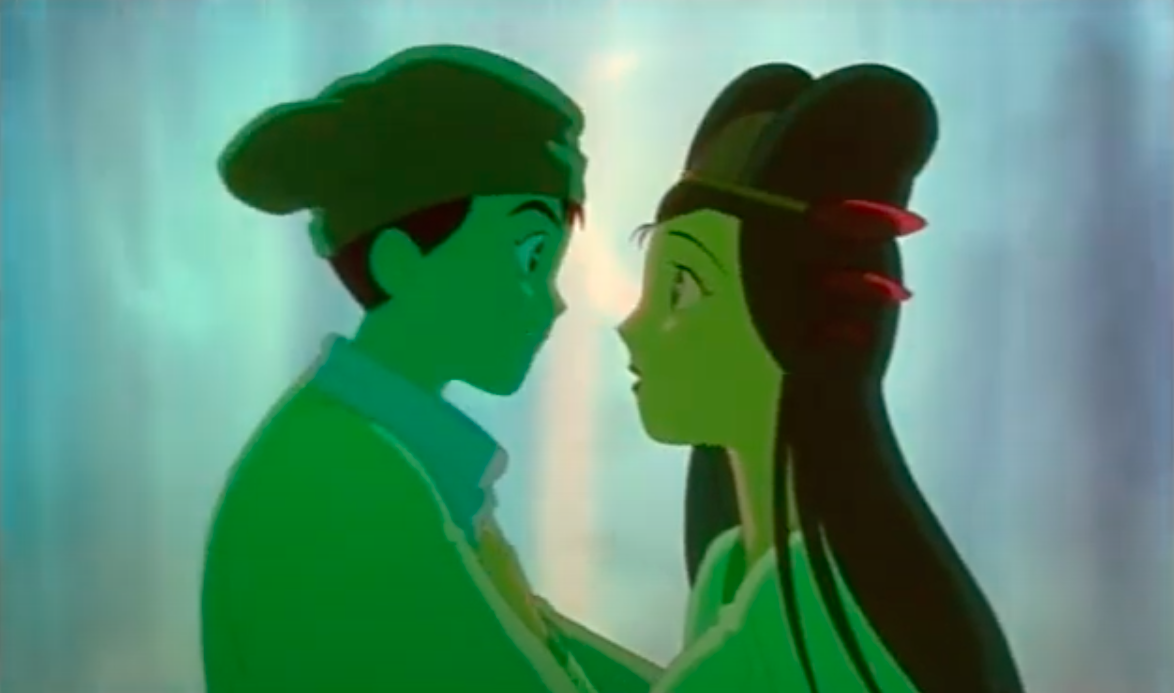
The narrative mirrors its live-action predecessor, following Ning, a young and somewhat naive tax collector and scholar, who is heartbroken and adrift in ancient China. However, his spirits are lifted by an encounter with Siu Lan, an ethereal beauty with whom he instantly falls in love. The significant complication, however, is that Siu Lan is a soul stealing ghost. Their blossoming romance quickly finds itself at odds with the formidable supernatural powers that govern their world. Ning's unwavering devotion forces him to confront a gauntlet of challenges, from undead beasts and mad exorcists to powerful chi blasts and even spectral trains. Despite these perilous obstacles, his determination to fight for his one last chance at happiness forms the emotional core of the film.

I really enjoyed my time with the film as it is an ambitious fusion of animation techniques. It is a testament to the artistry of fluid, hand-drawn animation. This traditional approach masterfully captures expressive character designs and creates dynamic action sequences, imbuing them with a timeless cel-animated charm. Characters move with a grace and exaggerated flair difficult to achieve in live-action, allowing for more fantastical and emotionally charged performances. Complementing this, meticulously detailed backgrounds depicting misty forests, ancient temples, and bustling marketplaces are rendered with impressive depth, often evoking the beauty of traditional Chinese painting. However, the film also serves as a fascinating snapshot of animation in the late 1990s, venturing into the then-nascent realm of GCI and live film, a real mixed media prodution of you will. The integration of CGI is arguably the most experimental aspect, and at times, the least seamless. While employed effectively to depict certain magical effects, spirits, and elaborate transformations, the early 3D animation occasionally contrasts sharply with the more organic hand-drawn elements. This visual disconnect can momentarily pull the viewer from the immersive experience, a common challenge for films of this era that pushed the boundaries of new technologies. While some CGI elements hold up better than others, they are undeniably a product of their time. However, despite these experimental quirks, the film largely succeeds in delivering a beautifully animated and engaging narrative.

The story admirably retains the melancholic romance and tragic undertones that defined the original live-action trilogy, while adapting the action for the animated medium, allowing for more exaggerated and visually creative battles against various demons and spirits. The voice acting, which I experienced as an English dub, breathes life into the characters, and the score effectively underscores the film's emotional beats and supernatural tension.

In conclusion, A Chinese Ghost Story: The Animated Film is a captivating curio in the history of animated cinema, especially for aficionados of Asian animation. Its unwavering commitment to traditional hand-drawn techniques remains its greatest strength, delivering vibrant characters and dynamic action sequences. While its pioneering use of CGI and live-action elements can at times feel dated or disruptive, they also serve as a valuable testament to the era's innovative and exploratory spirit.

So, for those keen to witness a beloved tale retold with creative ambition and a truly unique visual approach, this animated feature is well worth a watch.

Puppet Princess - Cult Manga Review

Like many of us, I often find myself tumbling down the rabbit hole of obscure anime, and that's precisely how I stumbled upon the OVA Puppet Princess. Intrigued by the mysterious title, and with no prior knowledge, I decided to dive in and what I found was a surprisingly engaging, albeit brief journey.

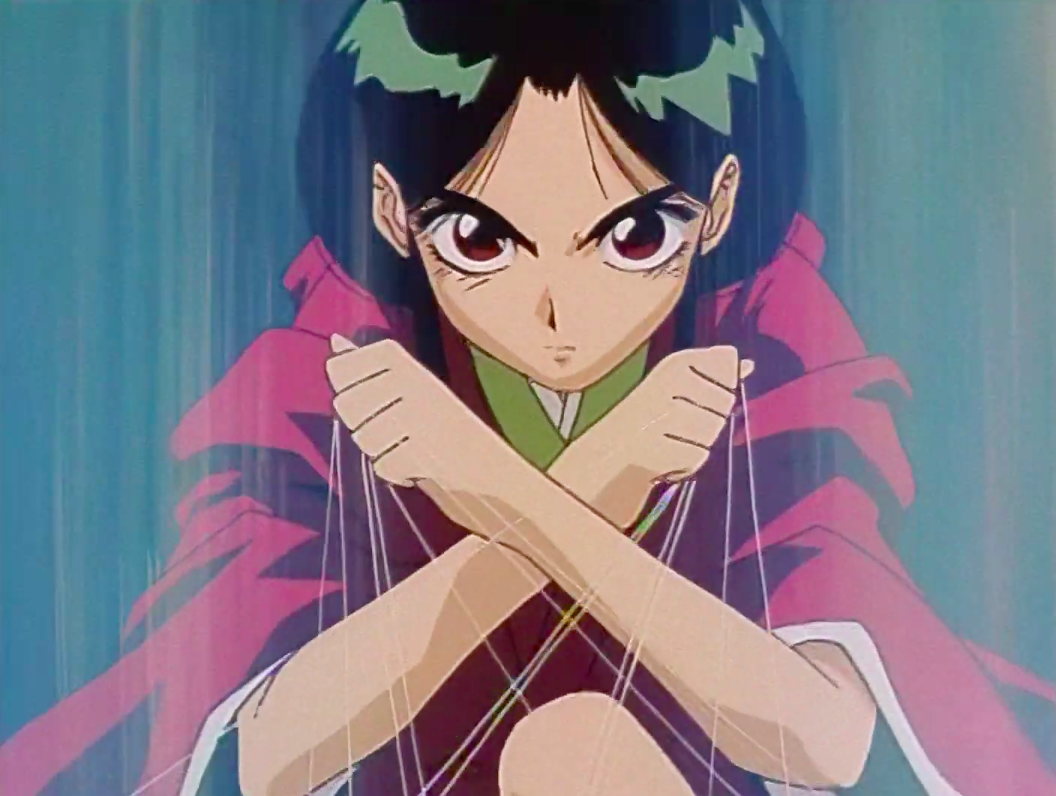
The story of Puppet Princess centers on a seemingly naive and clumsy young woman, named Princess Rangiku, traversing a war-torn landscape, burdened by a massive box on her back. Her mission? To exact revenge on the  tyrannical Lord Karimata, who not only decimated her family but also seized her father's land and, more notably, his cherished collection of intricate giant Karakuri puppets. Along her arduous journey, she gains a ninja companion called Manajiri, and together they face a series of formidable adversaries, all leading up to the final confrontation with the 'big boss' to achieve her revenge.

Clocking in at a concise 42 minutes, Puppet Princess is a pretty good watch as it offers a unique fusion of steampunk aesthetics, traditional Japanese puppetry and some pretty dramatic fight action. Released in the early 2000s, it boasts a distinct visual style and beautifully blends traditional 2D animation with subtle applications of CGI, creating a visually rich experience. This is no surprise as it was produced by TMS and Toho (and another studio I don't know much about called Shogakukan).

While the premise is undeniably intriguing, the OVA's limited runtime presents a double-edged sword as the plot progresses at such a rapid clip that it leaves certain plot points feeling a bit rushed or underdeveloped. However, it's a testament to the creators that despite this constraint, Puppet Princess still manages to deliver a complete and satisfying narrative arc when a limited 6-part series may have suited it better.

So overall, if you're an anime enthusiast looking for something off the beaten path, with a unique visual flair and a quick but impactful story, Puppet Princess is definitely worth seeking out.

LINK: Japan: My Journey to the East

LINK: Please Save My Earth - Cult Manga Review

LINK: Thomas Was Alone Video Game Vinyl Soundtrack Review

LINK: Akira Soundtrack Vinyl Review

LINK: The Power of Stories and How They Are Manipulated

LINK: The Message by Ta-Nahisi Coates - Book Review (and Some Thoughts)

LINK: The Anxious Generation: Book Review (and Some Thoughts)

LINK: Utopia for Realists- Book Review

LINK: Toxic: Women, Fame and the Noughties- Book Review (and Some Thoughts)

Fireworks - Cult Manga Review

For fans of Shunji Iwai's distinctive cinematic style, the 2017 anime adaptation of his 1993 television special, Fireworks: Should We See It from the Side or the Bottom? feels like a beautiful and unexpected gift. As a long-time admirer of his work, which I first discovered through the cult classic Picnic, I was delighted to find this animated reimagining. I hoped it would capture the earnest spirit of his original vision while expanding it into something new.

The film, now titled simply Fireworks, is from Shaft Studios and Director Akiyuki Shinbo. This adaptation takes a 30-year-old story and turns it into something new yet familiar. It's a time-loop romance centered on two teenagers: the carefree Norimichi and the emotionally burdened Nazuna, who is grappling with her mother's impending remarriage and a forced move away from her friends. The story cleverly uses a magical, glowing orb to explore "what if" scenarios, allowing Norimichi to repeatedly alter events in a bid to change Nazuna's fate. This narrative device, reminiscent of films like Sliding Doors or Mr. Nobody, delves into the complexities of choice and the longing for a different outcome.

What truly elevated this film for me was its breathtaking animation. The vibrant colors and fluid character designs create a dreamlike atmosphere that perfectly complements the story's fantastical elements. Each scene is a work of art, from the sun-drenched coastal town to the mesmerizing spectacle of the fireworks themselves. This visual feast is expertly paired with an emotive and memorable soundtrack that enhances the film's poignant moments, pulling the viewer deeper into the characters' emotional journeys. The main protagonists are simply characterized and, aside from a few juvenile moments from the male students, are quite innocent and endearing.

Fireworks is a poignant meditation on first love, regret, and the paths not taken. The film's earnestness and stunning artistry make it a compelling watch that will resonate with anyone who has pondered the choices that shape their lives. While it might not reach the epic emotional heights of modern classics like Your Name or The Girl Who Leapt Through Time, Fireworks should be judged on its own merits. It doesn't need to be a masterpiece to be worth your time.

Ultimately, this animated version is a testament to Shunji Iwai's enduring talent for crafting stories that are both deeply personal and universally relatable. For that, it stands as a worthy addition to his body of work.

LINK: For the Love of Shunji Iwai

LINK- The Anxious Generation: Book Review (and Some Thoughts)

LINK: Japan: My Journey to the East

LINK- Utopia for Realists- Book Review

LINK- On And On And Colston ( Or, How We Kinda Sort of Learned to Talk About the Legacy of Colonialism and the British Empire)

LINK- ‘Natives: Race and Class in the Ruins of Empire’ LINK: Elden Ring- Videogames As Art
LINK- Toxic: Women, Fame and the Noughties- Book Review (and Some Thoughts)

LINK- Pure Invention: How Japan's Pop Culture Conquered the World- Book Review (and Personal Reflections)

Please Save My Earth- Cult Manga Series Review

Please Save My Earth is a series I only knew of through a soundtrack which I purchased from Forbidden Planet in London over 30 years ago. It was on sale and was an impulse buy as at the time manga and anime CDs were very expensive so a CD for under £10 was a bargain. I had never seen the series before but recently found all the English dubbed episodes online so thought I'd dive in. Was it good though?

Well, one thing that comes through clearly is how weird a series it is, one with timeslips, past lives, reincarnation, alternate timelines and the eternal love triangle. But I’m getting ahead of myself…

The story concerns Alice, a typical high school student in Japan who dreams that she is the reincarnation of an alien scientist who lived on the Moon. She find other youths who have a similar dream and the group decide to find others in order to understand what it all means. However, they soon discover that their present and alternate lives clash and combine in interesting ways as past loves, hates, jealousies and worried bleed into the present.

The series, produced by Studio I.G. and based on the shojo manga by Saki Iwatari, was apparently quite influential back in the day and I can kind of see why. During our formative years we go through change and growth and the show isn't scared to look deep into our humanity to see what makes us all individual and unique.

As with many OAVs of the time, the art is stunning and has aged very well. The music is haunting and melancholic to create the perfect mood. As for the story, it reminds me of The OA in some ways with fate, destiny, The Garden of Forking Paths and the eternal battle between good vs evil playing out through time, or Sense 8 which is all to do with the interconnected lives of individuals across the world who share a mysterious connection. Mostly, I think it shares ideas that were explored further in David Mitchell's sublime Cloud Atlas- the grand story of people whose  destinies are entwined across time and space in the most profound way, sometimes for good and sometimes for ill.

At 6 episodes of 30 mins in length, it's not the most time consuming series to dedicate some time too but it does linger in the mind. Considering that only in the last few years have more mainstream shows depicted the ideas presented here this series was a bit of an outlier. Not bad for a lesser known series (at least in the West) which was created in 1993.

LINK: Japan: My Journey to the East

LINK- Battle Angel Alita: And So It Ends

LINK- The Moomins 80's Soundtrack Vinyl Review

LINK- Inspector Gadget Retro Soundtrack Review

LINK- Ulysses 31 Retro Soundtrack Review

LINK- The Mysterious Cities of Gold Retro Soundtrack Review

LINK- Sonic Mania Video Game Vinyl Soundtrack

LINK- Thomas Was Alone Video Game Vinyl Soundtrack Review

LINK- Akira Soundtrack Vinyl Review

Kotaro Lives Alone- Anime Series Review

This is a short 10 part series on Netflix about a young kindergardener living alone. There are no parents in the picture but Kotaro navigates the intricacies of life through the lessons learnt from an anime featuring an honourable samurai called Tonosoman, as well as the help of his eclectic neighbours. These neighbours include Karino, a struggling manga artist, Isamu, an absentee father with severe guilt who dresses like a Yakuza mob man , and Mizuki, a young woman who works as a hostess in a flashy part of town- all people dealing with their own concerns. However, by coexisting lessons are learnt and friendships borne as Kotaro and his neighbours bond, grow and develop in this found family slice-of-life comedy series with heart. There are lots of small scenes and scenarios that make up the patchwork of this groups daily lives and whilst I won't go into details of all here, I will provide a rough overview:

Episode 1- Kotaro moves in and makes a good impression on his neighbours by being incredibly formal with his language and offering them a gift of a box of tissues. Kotaro goes to the local bathhouse and we learn a little about his OCD about cleanliness.

Episode 2- Kotaro's favourite show is about to end so his neighbours unite to watch the finale together. He also has trouble sleeping so Mizuki has a sleepover but it doesn't work.

Episode 3- Kotaro starts kindergarden and his neighbours all turn out for him, much to his surprise. He also helps Karino to understand the craft behind his manga in order to achieve at his best. There is a b-story where Kotaro collects 4 balloons 'for his family' but draws faces of too siblings and a mother and father on them. What could it all mean? We meet Ayano, a lawyer who drops off Kitaro's life insurance money each week. She knows it comes from his mother but can't let Kitaro know.

Episode 4- Kitaro has a playdate with his friend Kakeru who is a spoilt and pampered young boy. Kitaro decides to encourage some independence in his by getting him to do some fishing. Karino also helps Kitaro learn how to catch a ball in order to play dodgeball. Also, it is Kitaro's birthday and the group try to celebrate.

Episode 5- Kotaro meets up with a friend from the home he ran away from after his father tracked him down. They watch the Perseid shower together and reminisce. Kotaro also had a day playing with the toys and videogames in Karino's editors office- just being a kid and enjoying himself.

Episode 6- A short stay tenant named Aota moves into the apartment complex and makes friends with Kotaro. However, he turns out to be a private eye in the pay of Kotaro's father.

Episode 7- Kotaro has a playdate with an acquaintance from school called Kana and it is awkward as he doesn't know how to interact with children his own age. Meanwhile, Mizuki is abused by her boyfriend and leaves to make another life for herself elsewhere- leaving Kotaro upset but understanding that life moves on.

Episode 8- A new neighbour called Takei moves in. She is not good with kids and her mother was not very motherly so she has issues to deal with but tries to bond with Kitaro. Kitaro also joins a football team and helps a fellow player who is struggling with the pressures of the game and the breakdown of his parents' relationship.

Episode 9- Kotaro shares an umbrella with people as people coke home from their commute and there's a cute reason as to why. Kotaro also meets with another friend from the home, Tasuku, and they bond over their connections. However, when he suggest they move out and get a place together Kirano is a bit suspicious of the friend's motives.

Episode 10- When Karino gets some success with his manga an old girlfriend turns up and starts to support his workload by collecting Kotaro. However, she is jealous of the relationship between the two and purposely tries to sabotage it. We also get an insight into how Kotaro got his corny GOD t-shirt and it's a heartwarming story.

In this day and age of huge anime series that never seem to end, it's refreshing to get a small and focused manga that is so impactful without overstaying it's welcome. It's seems that Kotaro has attachment issues, probably linked to his mother's post partum depression and abusive father but these weighty issues are deftly handled with care and sensitivity over the course of the series. As someone who has been in the formal and informal educational sector for nearly 30 years of my life, it is great to see issues like neglect dealt with in such a respectful manner.

There are some episodes that made me well up, including episode 4 where Karino and the group helped to make the Summer Festival special for Kotaro by helping out. The fact the community comes together to ensure that the children have a great time is heart-warming. Episode 2, where Isamu opens up and says clothes do not maketh the man and that people will judge those different from themselves are true lessons that are important for everyone to know. Finally, episode 7 where Mizuki leaves is very emotional as she doesn't want to leave her found family but must to keep herself safe.

It's a beautiful manga that will long linger in the mind as we know that there are plenty of children in the world that deal with these issues everyday. On a wider note, I think Kotaro Lives Alone deals with the idea that as a society we should not judge one another too harshly and should be accepting of difference. Now, that's a message I can get behind.

Ah! My Goddess OVA - Cult Manga Series Review

There are certain anime series that are like a warm, comforting blanket which never lose their appeal. For me, it's Haibane Renmei but I know everyone has their own comfort go to. Ah! My Goddess is one of those comforting manga series that was everywhere in the 90s whilst I growing up. I mean, it wasn't in the public zeitgeist but was in many of the comic shops and superstore like HMV Picadilly or Virgin Megastore Tottenham Court Road. I never got around to watching it as the VHS tapes were £12.99 for each 30 minute OVA but I did read a lot of it in my monthly Super Manga Blast, which features xx pages monthly.

As I continued my journey to catch up on manga and anime series I had missed in my youth, this one came up so I thought I'd dive right in and give it a looksie.

The story is very simple, when student Keichi accidently calls the goddess helpline whilst trying to order takeout, he meets Belldandy, a beautiful Norse goddess. She insists on helping him and hilarity ensues as she gets used to the ways of us mere mortals. Over 5 episodes, we get the start of the magical girlfriend/ harem genre conventions that would prove popular within the medium.

Moonlight and Cherryblossoms
Keiichi rings the wrong number and dials the goddess helpline. Belldandy appears and offers Keiichi and wish and, being skeptical, he wishes for her to be with him forever. The wish is granted but Keiichi is kicked out of his men's only dorm. They find a new home in an old temple and just as they are settled his younger sister Megumi visits.
It's a very sweet introductory episode and you get the lay of the land pretty quickly that this is going to be an ensemble cast piece. Keiichi is sweet and Belldandy says, "It's not the size of the body, it's the size of the heart."

Midsummer Night's Dream
Keiichi considers taking Belldandy to the beach but things get a little complex when Urd, the Cupid of Love and Belldandy's big sister, starts to give Keiichi some poor advice on how to make his move.
Urd is a hilarious agent of chaos, being a bit naughty and impish. She gives Keiichi a love potion but he sees someone else first and declares his love, breaking Belldandy's heart. In the end it all works out and Urd joins the household.

Burning Hearts on the Road
Whilst fixing up a motorbike for an interschool motor club drag racing competition, Keiichi is visited by Belldandy's younger sister Skuld. She doesn't like the fact that her elder sister and Urd are on Earth with Keiichi and resents him. She tries to fix the race against him but starts to see that he has a true heart and starts to come around.
This is a cute episode with lots of team spirit and unity conveyed. Even though Skuld is understandably upset at losing her two sisters, she starts to see that Keiichi's intentions are pure.

Evergreen Holy Night
Belldandy is given a recall notice from her father, the ultimate power, and she only had three days left with Keiichi's before she returns. Whenever the two are close together, the world around them breaks and shatters but will it be enough to keep the two apart.
This episode is melodramatic in the best way as Belldandy and Keiichi are heartbroken that they will be separated. The impact on their friendship group is felt too as they belong together like peanuts and chewing gum.

For the Love of Goddess
As the deadline draws closer, Keiichi and Belldandy try to come to terms with their forced separation. Skuld and Urd scheme for a way to hack the system to allow the lovers to stay together but it's not guaranteed.
This is a wonderful ending with a flashback to Keiichi's childhood that brings the whole piece together. It's a fist pumping ending to a wonderful series that doesn't overstay its welcome.

Watching this anime is like stepping back into a simpler, more innocent time. This anime is sweet but to saccharine at all. The OVA offers a refreshingly pure dose of romance with Keiichi's earnestness and Belldandy's gentle grace being central to the series as they grow together. This is a classy series which doesn't go down the ecchi (pervy) harem aspects many other series did at the time.

One of the reasons I like the anime of this era is that the art is gorgeous; the character designs are beautifully rendered, and the gentle, pastel infused aesthetic perfectly complements the series' lighthearted tone.

At only 5 episodes, this OVA series is brief and can be watched in one evening, clocking in at around 2 1/2 hours. This is a blessing and a curse as it feels like there is more to see of this world but with the manga, the Ah! My Goddess TV series and other iterations it's no biggie to keep on exploring this universe.

Overall, Ah! My Goddess OVA is a timeless classic that deserves a place in any anime fan's collection. Whether your a long-time devotee or a newcomer (like me) the series will charm you with its gentle humour, heartwarming romance and enduring appeal. Sometimes the simplest stories are the best and boy meets girl/ Goddess is a a pretty universal love story.

Petshop of Horrors - Cult Manga Review

I love myself an anthology series as there is always a new surprise around each corner. So when I heard on a manga and anime Facebook group I'm on that there was a horror tetralogy (or quadrilogy in Alien boxset parlance) I was all in as that stuff's my jam.

Petshop of Horrors is a 1999 OVA series that presents tales about an unusual pet shop that deals in rare and exotic creatures within Chinatown. Count D, the enigmatic petshop store owner, has many animals which are precious and unusual but there is usually a monkey's paw price to be paid for these unchecked human desires - each episode serves as a cautionary tale.

Daughters
When a wealthy couple lose their daughter through excessive drug use, they buy a 'rabbit' from the Count which looks exactly likes their daughter. They are given rules to follow but inevitably don't and there are consequences.

This episode is quite powerful as it looks at how spoiling a child will lead to its ruin later down the line. 'Just this once' is a poor excuse that moves the Overton Window ever so slightly each time.

Delicious
When a man, stricken in grief after losing his wife on their wedding night, comes to the pet shop he is given a mermaid. The mermaid looks like his wife and even bears the same wedding ring but has amnesia. Could it really be her?

This episode is chilling as it looks at love, obsession and the consequences of not remaining true to your heart.

Despair
When a young actor, who has not had an success over the past few years, is found dead with a rare lizard nearby, Count D is in the glare of the police inspector. However, as the Count retells the story of what happened what we have is a tale of sadness and, yes, despair.

This is a powerful tale of finding fame at a young age and trying to live in the glare of that success. It can be isolating to have so many fans but not to really feel a connection.

Dual
Whilst a hot young American senator vies for the top spot, his best friend and put-upon secretary supports his anguished wife. After a tragic accident, the two swap places with the help of a Kirin, a wish granting entity, and the ascent to Presidency is clear.

This was a bit of a clever twisty turn episode as it showed the stoic being true of heart and his dreams finally being fulfilled by the end. This was a very clever episode indeed!

I thoroughly enjoyed the series as the episodes all had a different theme about the frailties of the human condition. This consistent thematic thread creates a sense of foreboding that permeates the entire OVA, reinforcing the idea that every desire comes with a price. The vibes were intense and profound with this show and it reminded me mostly of the Vampire Princess Miyu OVA in that each episode was self contained and contemplative.

My favourite of the 4 episodes was Despair as Robin kept his side of the deal, doing everything he was supposed to do. He didn’t break the contract until his hand was forced because he knew he was a product of showbusiness and Medusa was the only one who truly understood him. For Medusa, she finally found happiness with someone who sincerely loved her knew that they could never to be separated. It's a Romeo and Julie situation and oh so tragic.

The character of Count D emerges as a compelling and enigmatic figure, however the limited runtime hinders extensive character development so what we are left with is a cypher without depth - like the crypt keeper without the personality or depth.  I would have liked to have seen a more in-depth exploration of the character and their motivations without needing a breakdown as that would destroy the mystery. I don't need the midochlorian explanation for kiddie Darth Vader to know that he's a badass but some thread would have been nice.

Overall, the Pet Shop of Horrors OVA is a worthwhile experience for aficionados of dark fantasy and mystery. Its stylish presentation and atmospheric storytelling create a lasting impression, despite its short length. Sure the soundtracking choices are more bizarre than those in videogame Deadly Premonition but where it matters, the series comes through and is a powerful study of the human condition.

LINK- The Anxious Generation: Book Review (and Some Thoughts)

LINK- Utopia for Realists- Book Review

LINK- On And On And Colston ( Or, How We Kinda Sort of Learned to Talk About the Legacy of Colonialism and the British Empire)

LINK- ‘Natives: Race and Class in the Ruins of Empire’ LINK: Elden Ring- Videogames As Art
LINK- Toxic: Women, Fame and the Noughties- Book Review (and Some Thoughts)

LINK- Pure Invention: How Japan's Pop Culture Conquered the World- Book Review (and Personal Reflections)

Phantom Quest Corp. - Cult Manga Review

Phantom Quest Corp. is a 4-part OAV series which was originally released in the mid-90s. It centers on a quirky, ragtag group of exorcists, pyrokinetics, and spirit mediums dedicated to solving the world’s ghostly woes. I watched it upon release and remember it to be a delightful blend of spooky, supernatural shenanigans and laugh-out-loud comedy. However, revisiting it for the first time in 30 years, would it still hold up or suffer from the usual cringe elements that mar much of the 90s output in today’s light?

The first thing to note is that the animation, a product of its time but still impressive even now, possesses the distinctive charm of Madhouse, the studio behind Wicked City and Ninja Scroll and key animator Yoshiaki Kawajiri. The character designs are expressive, especially that of the lead character, the fiery and fiercely independent Ayaka Kisaragi. She is a powerful psychic with a penchant for collateral property damage, sake, and karaoke, Ayaka leads a team that's equally eccentric and endearing, elevating Phantom Quest Corp. beyond your average monster-of-the-week narrative. The four tales include:

  • Kiss of Fire: The Corp tackles a vampire stalking the women of Tokyo, uncovering an unconventional relationship and an ancient evil.

  • End of World: Ayaka, suspicious after surviving a car accident linked to a strange electrical outage, investigates mysterious scars on the deceased taxi driver within a hospital.

  • Love Me Tender: The Corp looks into problems at an Ancient Saharan Exhibition, where a ghost may be connected to a CEO's harassment of the lead archeologist.

  • Lover Come Back to Me: When a Buddhist cult threatens to steal the Corp's business, Ayaka investigates the group and discovers a hidden agenda.

Watching the show again after so long, I had a great time. Each episode of the series presents a self-contained ghost story but it's the unique way these cases are handled that truly makes the series shine; the sharp banter, teamwork and individual quirks of the characters make them feel like real, albeit slightly unhinged, people. You genuinely root for them as they face angry spirits, mischievous yokai, and often crazy scenarios. Perhaps the most enduring appeal of Phantom Quest Corp. lies in its refusal to take itself too seriously. While the stakes can be Scooby Doo spooky, a healthy dose of humor is always present to ensure you know it’s just for laffs. Also, I was thankful that the series does not have any fan service, until the last shot of the whole series that is…oh dear, so close!

If you're looking for a fun, spooky, and thoroughly entertaining anime that has flown somewhat under the radar, I wholeheartedly recommend Phantom Quest Corp. It's a delightful blend of supernatural thrills and comedic spills that will leave you wanting more ghostly adventures with this unforgettable team.

Serial Experiments Lain - Cult Manga Review

"No matter where you are, everyone is always connected."

That line, whispered by Lain in the hauntingly prescient anime Serial Experiments Lain, has stuck with me for decades. Back in the late 90s, when I first encountered this strange anime on bootleg DVD purchased from my go-to Goodmayes guy I got to know from eBay, the internet was a relatively new frontier, a weird and exciting wilderness. Now, the 'Wired' is less a frontier and more like the very air we breathe, making Lain's words ring with an almost unsettling familiarity.

Lain’s ephemeral self makes quite an appearance on the Wired.

But, let's head back to the start. Lain, a seemingly ordinary schoolgirl, is drawn into the Wired after the suicide of a classmate, Chisa. She receives a message from Chisa from the great beyond saying she has found God online. Lain wants to know if it is real or a trick of some kind and so, she is propelled into a bewildering exploration of virtual identity, online communities, and the increasingly blurred lines between the real and digital realms.

Revisiting this cult classic after about twenty years, what struck me most wasn't just its cyberpunk aesthetic or its exploration of virtual identity. It was how acutely the series captured the paradox of our hyper-connected age: profound social pressure existing alongside deep-seated isolation. Lain foresaw this strange duality, highlighting how technology, while promising to bridge distances, can ironically amplify our sense of being alone. The relentless barrage of information, the carefully curated online personas, the constant pressure to be connected – it can all lead to a profound sense of alienation. Serial Experiments Lain was diving headfirst into the rabbit hole way back in 1998 with its unsettling foreshadowing of our current internet landscape, where conspiracy narratives thrive with alarming ease. We've all been tempted to follow those winding threads online, even if just for a little while, and Lain was already mapping that territory.

The series also fearlessly grapples with the darker undercurrents of our digital existence: suicide and mental health. Chisa's tragic fate and Lain's subsequent investigation reflect a growing awareness of the mental health challenges facing young people in an increasingly digital world. The addictive pull of screens and the potential for disassociation, themes that felt somewhat abstract in the 90s (with the notable exception of Fight Club), are now painfully real. We're witnessing a generation navigating the psychological toll of constant connectivity, a phenomenon Jonathan Haidt explores in his recent and much-discussed book, The Anxious Generation. Lain was sounding the alarm long before the data backed it up.

Lain tries to connect with the Wired but finds it all too overwhelming.

Underpinning the entire series is a subtle yet potent critique of late-stage capitalism. The commodification of identity, the relentless drive for connection as a product, the erosion of genuine human interaction – it all speaks to the isolating and alienating forces shaping our society. Released in Japan in 1998 against a backdrop of economic uncertainty, a major earthquake, a horrific terrorist attack, and the approaching end of the millennium, Lain tapped into a deep-seated cultural anxiety. It masterfully blended horror and creepiness with the burgeoning internet, pulsating club music, and mind-bending science fiction. Building on the cultural impact of The X Files, episode 9 of Lain goes full on conspiracy theory on the origins of the 'Wired' with Roswell, The Manhatten Project, the sensory deprivation experiments of John C. Lilly, E.C.C.O. and (not the) dolphins and hypertext. In 1998, these unconnected points were connected in Lain in a grand maniacal scheme. It was the right story at the right time, a prescient work that foreshadowed so much of our current digital reality where people see the Deep State and a sinister cabal everywhere.

Special mention must be made of Yoshitoshi ABe's distinctive character designs. They would later grace the ethereal beauty of Haibane Renmei, but this first work perfectly complement the series' complex themes. His style melds seamlessly with the avant-garde, cyberpunk digital backgrounds, where dominant purples and blues amplify the pervasive melancholic atmosphere. The sensory experience is profound – a tapestry woven from the hum of powerlines and the rhythmic clacking of keyboards, punctuated by the vibrant energy of the club scenes at Cyberia and the indie-rock pulse of Boa's opening theme. Even Lain herself is visually presented in three distinct styles, a clever way to illustrate her fracturing sense of self as she navigates the Wired and perhaps even transcends into something akin to a digital deity. Ah, the Japanese and their enduring fascination with Christian iconography in their storytelling!

I love the final episode and have remembered the sentiment of, "If it isn't remembered, it didn't happen," after all this time as it's a thought that continues to echo in our digital age. It's a chilling precursor to our "pics or it didn't happen" mentality and the very real challenges of erasing our digital past, as poignantly explored in Jon Ronson's ‘So You've Been Publicly Shamed.’

Serial Experiments Lain isn't just a piece of nostalgia; it's a vital, unsettling mirror reflecting our present and perhaps even our future. The writer of the series, Chiaki Konaka seems to have stared too deeply into the abyss and seems to be aligned to many conspiracy theories and theorists now - such a shame for someone who looked so deeply at radicalisation and cult brainwashing strategies, only to succumb to them himself, or at the very least, get his information from the same main source.

As we continue to navigate the ever-evolving landscape of the Wired, Serial Experiments Lain remains a haunting and incredibly relevant reminder of the profound questions lurking beneath the surface of our seemingly connected world. It's a call to question, to reflect, and to remember that even in the digital age, our humanity remains our most precious connection. Lain has earned its cult status for a reason. It's not just a cyberpunk anime; it's a philosophical exploration of the human condition in the face of rapid technological advancement. This is a series that demands multiple viewings, each time peeling back another layer of its unsettling truths about our digital existence. It is very much a series about the Present Day, Present Time.

LINK- The Anxious Generation: Book Review (and Some Thoughts)

LINK: Japan: My Journey to the East

LINK- Utopia for Realists- Book Review

LINK- On And On And Colston ( Or, How We Kinda Sort of Learned to Talk About the Legacy of Colonialism and the British Empire)

LINK- ‘Natives: Race and Class in the Ruins of Empire’ LINK: Elden Ring- Videogames As Art

LINK- Toxic: Women, Fame and the Noughties- Book Review (and Some Thoughts)

LINK- Pure Invention: How Japan's Pop Culture Conquered the World- Book Review (and Personal Reflections)