
I recently put together a trilogy of essays exploring systemic cruelty and complicity—so, all light and airy stuff, then. But, this being a pop-culture blog, I tackled the subject through a few different mediums—weaving together comic books, video games, and academic theory alongside lived experience. It was a slightly different direction for the site, but I wanted to try something new.
By bringing together all three pieces, I hoped to construct a unified thesis on how modern systemic cruelty operates across every scale of society. My first essay was on Supergirl: Woman of Tomorrow and examined macro-level community complicity through Hannah Arendt's concept of the "banality of evil".
The second essay was on systemic cruelty and I looked at how Papers, Please served as a sobering exercise in systemic empathy and moral compromise as the foreigner could be transformed into a convenient scapegoat for societal and economic crises that existed long before they arrived.
This is my third and final piece which looks at corporate indifference during the period of late stage capitalism. Enjoy!
As I’ve grown older—a shift I touched on in my piece The Evolving Fears of a Horror Gamer—what frightens me most has fundamentally changed. Jump scares, monsters lurking in dark corridors, and gore in media entertainment don't hit the nerve they used to. No, instead the horror that keeps me up at night is far more mundane and devastating: the cold, institutional indifference of the real world.
This brings to mind Fullbright’s 2017 sci-fi narrative game Tacoma. It presents itself on the surface as an environmental mystery set aboard an abandoned lunar transfer station in the year 2088. However, beneath its sleek, low-gravity corridors lies one of the most chilling explorations of late-stage corporate capitalism in modern gaming.
The AR Ghosts of Lunar Station Tacoma
You play as Amy Ferrier, an independent contractor sent by the colossal Venture Corporation to retrieve the station's AI processing unit, ODIN, alongside recorded data logs following a catastrophic accident. As you explore the quiet, empty facility, you don't fight monsters; you simply observe. Using an interactive Augmented Reality (AR) playback system, you watch the translucent, colourful wireframe "ghosts" of the six crew members during their final days.
What makes these crew members so memorable is their utterly relatable humanity. Through their archived emails, personal desktop files, and private conversations, you learn about their lives: their anxieties over work contracts, their personal relationships, their favourite songs, and their shared camaraderie. They aren't heroic space pioneers; they are everyday working-class people trying to earn a living in a gig-economy future where human labour has been heavily commodified.
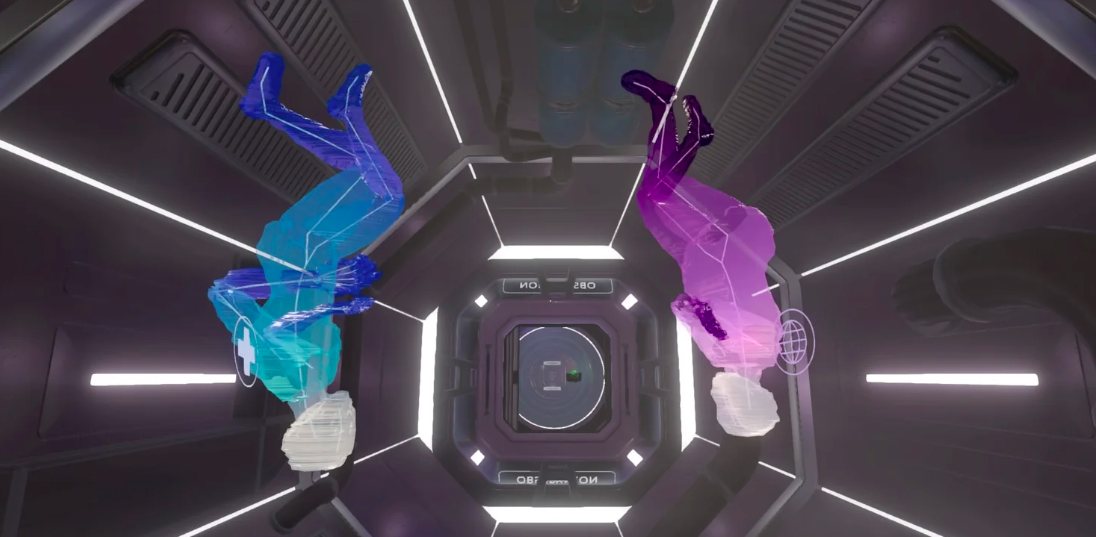
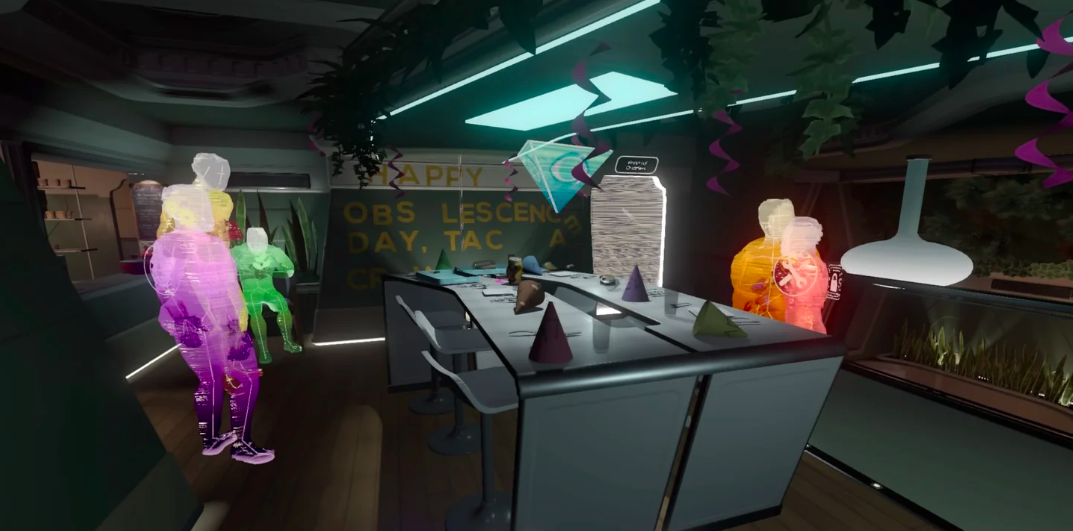
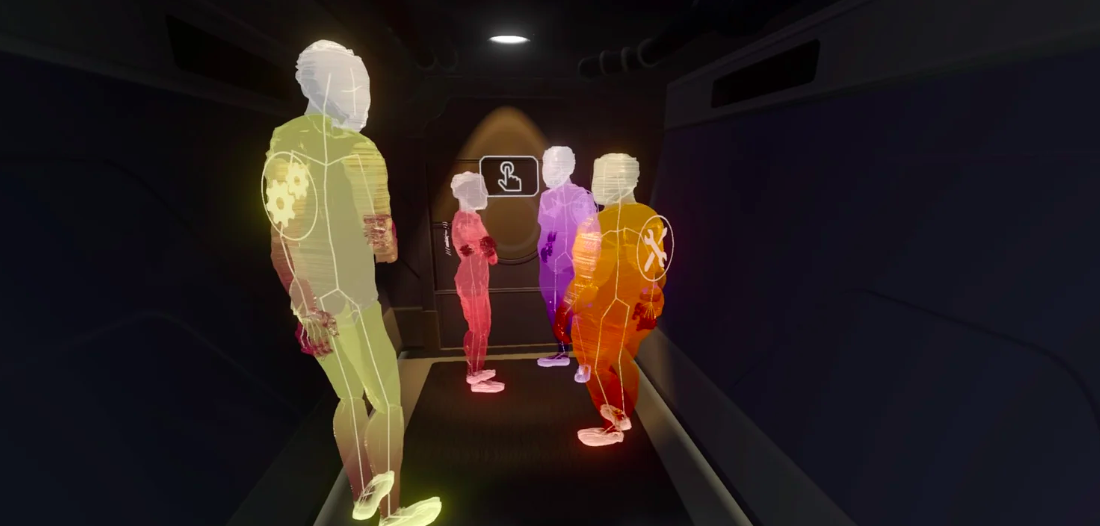
The Ledger Math of Human Worth
The horror of Tacoma arrives not with an explosion, but with a stark realisation. Early in the game, a piece of space debris strikes the station, destroying the main communications array and venting their primary oxygen reserves. The six crew members are left with less than fifty hours of breathable air.
As you piece together the AR recordings, you watch the crew band together with remarkable ingenuity, calm professionalism, and mutual support, attempting to build a makeshift escape craft or contact a rescue vessel.
However, the real twist reveals that the true threat was never the space debris. Through restricted corporate memos, you discover that Venture Corporation intentionally blocked rescue attempts and instructed the station's AI not to assist the crew.
From an executive boardroom perspective, rescuing six contract employees was an expensive logistical liability. Worse still, Venture Corp was actively lobbying the government to eliminate mandatory human staffing on space stations in favour of fully automated, un-crewed facilities. Six living survivors would prove that human crews are resilient and necessary; six dead employees, conveniently blamed on an "unfortunate automated failure," served as the perfect tragic justification to rewrite labour laws and boost corporate profit margins.
From Pixelated Fiction to Industry Reality
What hits hardest playing Tacoma today is just how rapidly its fictional dystopia has bled into our actual lives. Look no further than the videogame industry itself: an era defined by brutal, relentless corporate layoffs, studio closures, and executive restructuring. Entire teams of brilliant artists, programmers, and writers are routinely cut loose by the thousands—not because their work failed, but to inflate short-term stock prices and satisfy shareholder demands through the "line goes up" philosophy.
Compounding this human cost is the aggressive corporate push towards AI and automation. Just as Venture Corp sought to replace human crews with unfeeling algorithms to erase labour overheads, today’s tech giants and publisher executives seem obsessed with replacing human creativity with generative tools.
It begs an urgent political question: in a world where AI threatens to automate away human livelihoods and corporate balance sheets dictate who is deemed "economically viable", how do everyday people survive?
Historian Rutger Bregman famously argues in Utopia for Realists that as automation drastically shifts the labour landscape, Universal Basic Income (UBI) is no longer a radical pipedream—it is a fundamental necessity. Bregman asserts that decoupling human survival from market productivity is the only way to prevent millions from being left to starve as technology marches forward. Without structural safety nets like UBI, society risks descending into the exact bleak economic landscape Tacoma warns us about: one where your right to eat, heat your home, or simply breathe is tied entirely to whether a corporation still finds your labour useful.
The Banality of the Balance Sheet
This is where Tacoma links directly to the broader conversations surrounding systemic cruelty and administrative violence.
In Supergirl: Woman of Tomorrow, Hannah Arendt’s concept of the "banality of evil" manifests as an entire town of polite neighbours who pay mercenaries to commit genocide so they can maintain their quiet suburban comfort.
In Papers, Please, that same banality is reduced to the micro-level of an underpaid bureaucrat stamping visas, where docking five dollars from a paycheck determines whether a family starves or survives.
Tacoma completes this picture by examining evil through the lens of modern corporate ledger math. The executives at Venture Corp are not cackling villains twirling their moustaches in a lair. They are respectable men and women sitting in sunlit corporate offices, wearing tailored suits, looking at spreadsheets. To them, the six lives aboard Lunar Station Tacoma were never people—they were simply items in a cost-benefit analysis.
The Ultimate Horror
What makes Tacoma so haunting is how recognisable its dystopia feels. We already live in a world where corporate entities calculate acceptable loss ratios, weigh legal settlements against the cost of product recalls, and treat human workers as temporary, disposable assets.
Fullbright strips away the sci-fi spectacle to leave us with a stark, terrifying truth: the most dangerous monsters aren't hiding in the dark waiting to tear us apart. They are sitting in executive boardrooms, placing a cold financial value on human breath, and quietly moving on to the next fiscal quarter while the air runs out.
LINK: Japan: My Journey to the East
LINK: Please Save My Earth - Cult Manga Review
LINK: Thomas Was Alone Video Game Vinyl Soundtrack Review
LINK: Akira Soundtrack Vinyl Review
LINK: The Power of Stories and How They Are Manipulated
LINK: The Message by Ta-Nahisi Coates - Book Review (and Some Thoughts)
LINK: The Anxious Generation: Book Review (and Some Thoughts)
LINK: Utopia for Realists- Book Review
LINK: Toxic: Women, Fame and the Noughties- Book Review (and Some Thoughts)