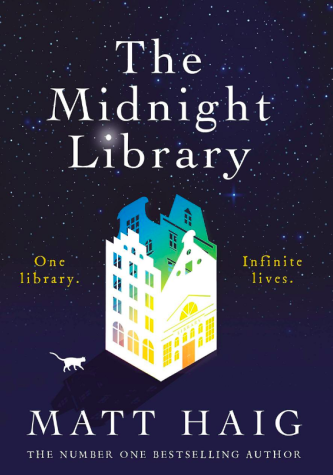
About four years ago, I read The Midnight Library by Matt Haig and loved it. The timing was perfect, as it coincided with a visit to my parents in East London. Back then, I wrote:
"...the book was all about the various choices and opportunities we face and the paths we take. It was apt as I was staying in my childhood family home for the first time in 11 years. I've changed a lot in that time; married, learned to drive, had two kids, travelled and worked across the world, and finally come back to Britain. I've also gained a few pounds around the belly and lost a little more off the top, but I’m content really. Arriving in Barking and parking outside the house, things didn't seem to have changed that much—it had a recent lick of paint, but the streets felt like the same old, same old.
After seeing my parents briefly, I went into town with my dad and saw the true scale of change; Barking had really developed. So much of the old council estate (the infamous Gascoigne Estate) was now low-rise apartments and building sites of riverside abodes. The shops mainly consisted of barbers, hairdressers, fast-food places, and mobile phone shops, but there was also a Costa and a Starbucks—so obviously the town was changing, with city types moving in."
Barking has changed a lot of over the years.
Overall, I loved that book and concluded that what makes life so interesting and powerful is our evolution as people. So, what about the follow-up, and how does it measure up?
Well, The Midnight Train follows Wilbur, a successful businessman who, at the end of his life, meets the younger version of the kindly old bookseller he knew in his youth, who acts as his psychopomp (a guide to the afterlife) to help him reflect on the key moments of his life. His vessel of choice on this personal River Styx is a train - a beloved toy from his childhood. While the train is Wilbur's specific mode of transport, everyone gets something different based on their own personal memories and affections.
Much like Dickens' A Christmas Carol or the videogame Before Your Eyes, a soul gets a chance to recollect their life and reflect on pivotal moments. However, in this version, there are strict rules you must follow to be allowed into "eternity." Naturally, when Wilbur starts messing with the past, a lot of wibbly-wobbly, timey-wimey stuff happens.
Over the course of the story, Haig delivers some amazing, highly quotable line. A few that stood out to me include:
"Stories are like the threads that make a strong rope."
"Russian doll days with an ever-expanding future."
"...we act for outside eyes..."
That last quote - “we act for outside eyes” - really gets to the heart of the book's deeper critique. Wilbur starts out as the quintessential modern success story: a businessman who bought into the capitalist rush, climbing the ladder and measuring his worth by his bank account and status. It's a trap so many of us fall into, especially when we look at the changing landscapes of our hometowns, driven by development and gentrification. We are conditioned to think that growth, profit, and building upward is the ultimate goal. But through Wilbur’s retrospective journey, Haig holds up a mirror to this hyper-capitalist mindset. The novel gently but firmly argues that chasing monetary success is a hollow race against time. When you’re sitting on a train bound for eternity, your net worth means absolutely nothing.
Instead, the narrative shifts the metric of a "successful life" away from ledger books and toward the relational impact we leave behind. I’ve always liked this about Haig's writing; his central theme always seems to be that our relationships are what give us meaning in the face of nihilism. It’s not about the wealth we accumulate for outside eyes to envy, but the quiet, unseen ways we connect with, support, and love the people around us.
Overall, I found the story to be wonderful and thought-provoking. While it might not be entirely groundbreaking material, it is deeply humanist, relatable, and introspective. It’s a timely reminder to slow down, look away from the grind, and invest in the people who actually make the journey worthwhile. Ultimately, it’s the kind of book that successfully makes you question your own priorities and life decisions.
LINK: Videogames As Art - Nier: Automata
LINK: The Evolving Fears of a Horror Gamer
LINK: The Power of Stories and How They Are Manipulated
LINK: The Message by Ta-Nahisi Coates - Book Review (and Some Thoughts)
LINK: The Anxious Generation: Book Review (and Some Thoughts)
LINK: Utopia for Realists- Book Review
LINK: Toxic: Women, Fame and the Noughties- Book Review (and Some Thoughts)