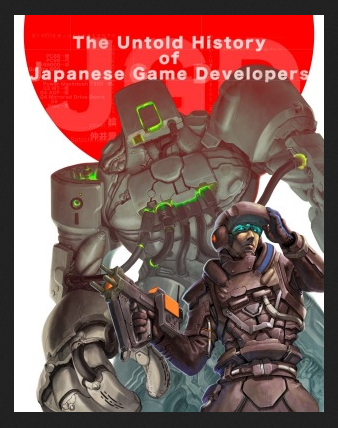
Japan has an incredibly rich video game history, yet it has rarely been documented in depth—neither in the West nor in its home country. While myriad books discuss the industry’s legacy, they often adopt a Western viewpoint, focusing on the impact of gaming in the Americas and Europe (such as David Sheff’s Game Over, Blake Harris’s Console Wars or Chris Kohler’s Power Up).
With so many legendary Japanese developers entering their later years, it is a case of "now or never" to record these stories for posterity. Retro video game journalist and historian S.M.G. Szczepaniak - who has written for publications including Retro Gamer and Gamasutra - launched a Kickstarter for this ambitious endeavor in 2015. His goal was to pull back the curtain on the often-secretive Japanese development scene.
After completing Volumes 1 and 2, Szczepaniak returns for Volume 3. In a raw foreword, he details the immense personal and financial toll the project has taken. The books had not been profitable, and he describes a harrowing ordeal involving doxxing, sabotage, and blackmail from online trolls. It sounded like a genuine nightmare; one cannot help but feel sympathy for him, even if his occasionally prickly attitude had reportedly strained some professional relationships. Regardless, by capturing this firsthand documentation, Szczepaniak has ensured the history of the Japanese industry is preserved. This work grants him a legacy that will outlast his current hardships.
Beyond the author’s personal travails, the book is packed with knowledge bombs spread across 35 interviews. Szczepaniak’s deep reserve of knowledge makes him an expert interviewer, capable of opening up a traditionally closed industry. This volume was particularly illuminating for me, as it features interviews regarding Technosoft, Squaresoft, Enix and other legendary names that defined my youth.
Highlights and Key Takeaways:
Henk Rogers (of Tetris fame) is a skilled gemstone cutter who once almost drowned while surfing in Hawaii. He now runs a green energy business with plans for terraforming the moon.
Yuichi Toyama pushed for cutscenes in M.U.S.H.A. because he was a massive Gundam fan and loved the drama of those manga-style shows.
Developers from Technosoft and Compile hint at significant behind-the-scenes animosity between management and staff, explaining the frequent staff shuffling between companies during that era.
The Naikon Zoku were a subculture of computer-less hobbyists who coded games on display computers in department stores, saving them onto punch paper. Because computers cost roughly £1,500 in 1984, this was a thriving fandom; some middle-schoolers from this scene were actually offered professional jobs at Compile.
Technosoft was financially stable, but the mainstream success of Thunder Force II, III, and IV brought intense pressure and fan expectation for every subsequent sequel.
The first level of Thunder Force V was originally designed for the Mega Drive, but production moved to the Saturn and PlayStation to better utilize 3D polygons.
Kotori Yoshimura, a coding genius behind Thunder Force, transitioned after surgery and continues to have a successful, well-regarded career in the industry.
Former Technosoft employee Naosuke Arai describes head of development Tomio Ozono as a shy, misunderstood man whose social struggles were often mistaken for arrogance.
The SNES shooter BioMetal was one of the first games to feature licensed music—specifically from the techno band 2 Unlimited.
Manabu Yamana (coder for Dragon Quest) believes Metroid was inspired by the Apple II game Aztec, noting similarities in the gameplay and the design of Ridley.
Takashi Tokita (Final Fantasy IV, Chrono Trigger) recalled that during a sound-mix bug in FFIV, the team wasn't allowed to go home—or shower—for days until it was resolved.
Live A Live and Chrono Trigger were produced concurrently.
Hironobu Sakaguchi (Final Fantasy) decided to adapt Parasite Eve after reading the novel. Square opened an American studio to handle the CG, moving the game's setting to New York to help the US team ground it in reality.
Tokita believes the fields of manga, anime, and video games are unique in Japan because they were "industries formed by young people getting together and creating whatever they wanted."
Aziz Hinoshita (formerly of Square) notes that in the late 2000s, the Japanese industry was obsessed with selling to the West, which led to the infamous US Ico box art and the poorly received Ninja Gaiden 3.
Yosuke Hayashi (Team Ninja) used a great analogy: "It seems like we made a Japanese hamburger for the West. As a Japanese developer, we need to make good Japanese food... we’re going to offer you damn good sushi."
Kouichi Yotsui (Strider) predicted the Mighty No. 9 Kickstarter disaster, noting the "gulf between one’s fame and one’s actual ability."
Toshinari Oka (Metal Gear 2) recalled Konami company outings to play laser tag (Quazar). Everyone used nicknames; Hideo Kojima, naturally, called himself "Snake."
Youji Ishii (Sega) revealed that for OutRun research, he and Yu Suzuki drove a BMW 3 Series (not a red Ferrari) from Frankfurt to Rome over three weeks. He still has the VHS tapes to prove it.
Yutaka Sugano (Shinobi, Sonic Adventure) is actually a trained mining engineer.
Naoto Ohshima (Sonic) claims an acapella tape of Michael Jackson humming tunes for Sonic 3 exists somewhere in the Sega archives.
Kotaro Hayashida (Alex Kidd) revealed the character was created after they lost the Dragon Ball license; they originally intended for the protagonist to be Goku.
Mark Cerny helped develop the Master System’s 3D glasses at the Sega Technical Institute.
Yasuhide Kobayashi (Ico, Shadow of the Colossus) predicted in 2013 that game-only hardware would eventually phase out as users lost interest in dedicated machines.
Konami is notorious for its "aggressive patents," including one for the camera logic that makes walls invisible in 3D games. This patent is often cited as the reason many Japanese games had disorienting camera angles during the 2000s.
Street Fighter II cabinets cost £820 to make, and Capcom sold 144,000 units. In 1992, the Champion Edition made $257 million for Capcom, but generated a staggering $1.63 billion in arcade coin revenue.
An anonymous Microsoft Japan source claimed the company hired middle managers from Konami who "moaned about their old jobs" rather than being creative, leading to mass layoffs.
Hironobu Sakaguchi reportedly spent over $10,000 in one night at a hostess club, prompting Microsoft to institute a $200-per-person entertainment limit worldwide.
Yu Suzuki had a windowless "throne room" in the Sega building where Enya music played on a loop. He once pitched an idea to Microsoft execs for a version of Swan Lake featuring heavy metal music.
While I didn't recognize every interviewee, the sheer breadth of topics provides a vital look at the generation that built this industry. If you are intrigued by these snippets, I cannot recommend these books enough; they are a Rosetta Stone for the genesis of Japanese gaming. Drop a coin for the author, too.
LINK: The Untold History of Japanese Game Developers: Volume 1
LINK: The Untold History of Japanese Game Developers: Volume 2
LINK: Videogames As Art - Nier: Automata
LINK: The Evolving Fears of a Horror Gamer
LINK: The Power of Stories and How They Are Manipulated
LINK: The Message by Ta-Nahisi Coates - Book Review (and Some Thoughts)
LINK: The Anxious Generation: Book Review (and Some Thoughts)
LINK: Toxic: Women, Fame and the Noughties- Book Review (and Some Thoughts)