Retro Revival X - A Shop Full of Nostalgia

Regular readers of this website will know how often I find myself contemplating the profound, almost magnetic power of nostalgia. In previous articles, I’ve explored how the collective trauma and isolation of the COVID-19 pandemic triggered a massive cultural shift. Faced with an uncertain present, millions of us sought solace, comfort, and a sense of safety in the familiar landscapes of our childhoods. We didn’t just want to remember the past; we wanted to touch it.

This collective yearning has had a massive impact on the vintage market. Over the last few years, old things have risen dramatically in price. I’ve noticed this firsthand during my own late-night scrolls through eBay and various auction sites, hunting down vintage anime cels and original production backgrounds. But it’s not just animation art; the boom has swallowed up old gaming systems, classic cartoon toys, and memorabilia from long-forgotten but fondly remembered children's television series. What used to be considered loft-clearing junk is now highly prized treasure. Which brings me to a serendipitous discovery I made recently in Devon…

The signage is pure 90s nostalgia.

I was walking around Torquay, having just dropped my daughter off at a softplay centre for a birthday party, when I accidentally stumbled upon a shop that felt like a localized tear in the fabric of time. Unfortunately, it was a Sunday, and the shutters were firmly down. But peering through the glass, I knew I had to plan a return trip.

The perfect opportunity arose a couple of weeks later. My wife was booked in for a lengthy hair-colouring session, my eldest was away at a sleepover, and with my youngest daughter happily acting as my wingwoman, we headed back into Torquay.

I went with a very specific mission in mind. I was there to right a nearly 40-year-old wrong and settle a sad tale of childhood woe. When my wife was a young girl, she was an absolute fanatic for the Care Bears. For her birthday, she had desperately wanted one of the iconic, cuddly bears. Alas, her well-meaning parents—who were not exactly au fait with the nuances of Care-a-Lot—instead bought her a toy model of the Cloud Sweeper, complete with the Cloudkeeper, that beardy old dude with a broom. Needless to say, it was not the same thing. I was determined to find an old-school Care Bear and finally grant her childhood wish.

Our destination was Retro Revival X, and you truly cannot miss it. The storefront signage is gloriously coded in the style of the late 80s and early 90s, featuring a classic geometric grid background slashed with great, sweeping graffiti strokes of neon lime green and electric blue. It’s an absolute statement of intent, screaming its retro credentials before you even cross the threshold.

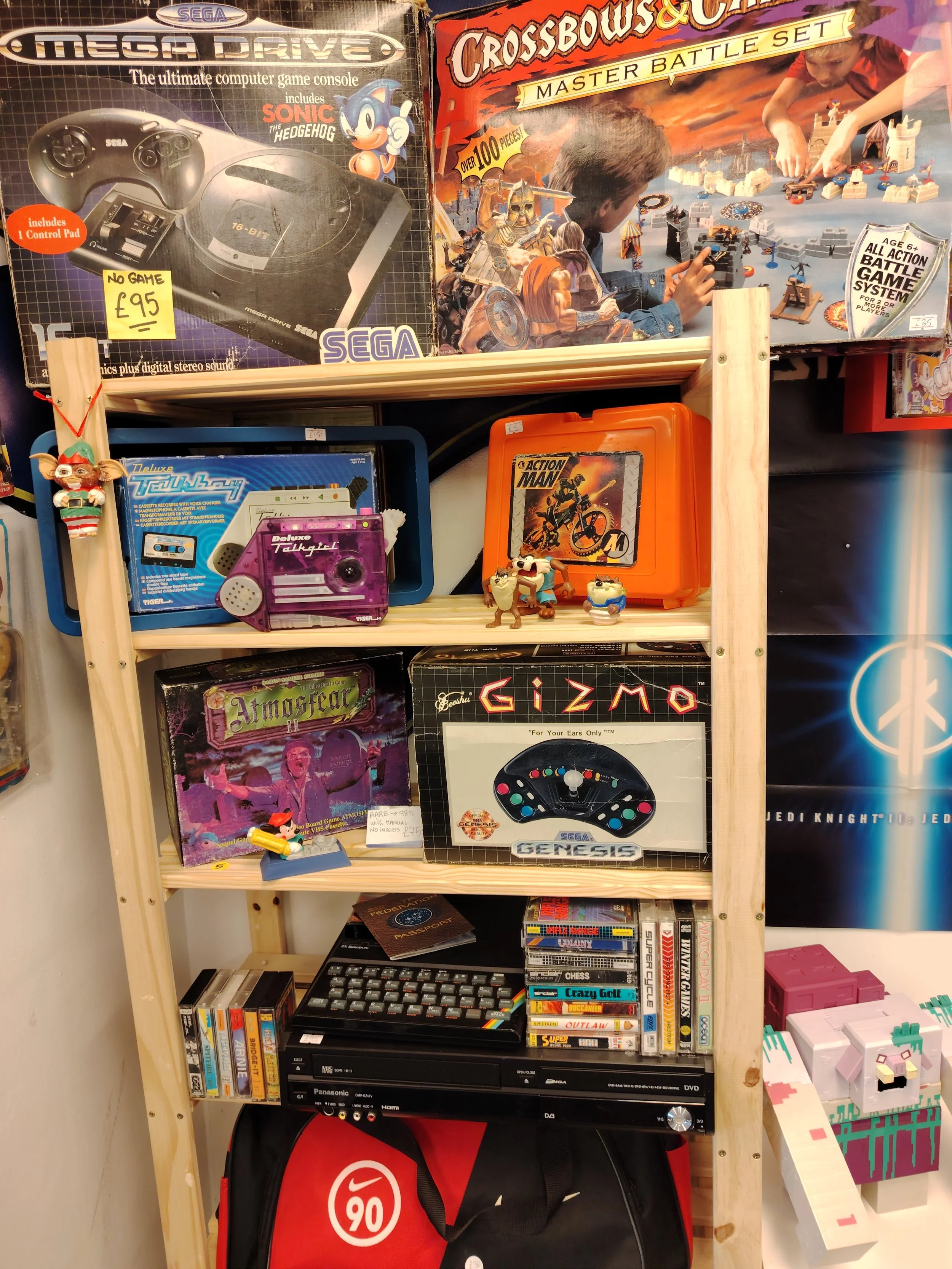
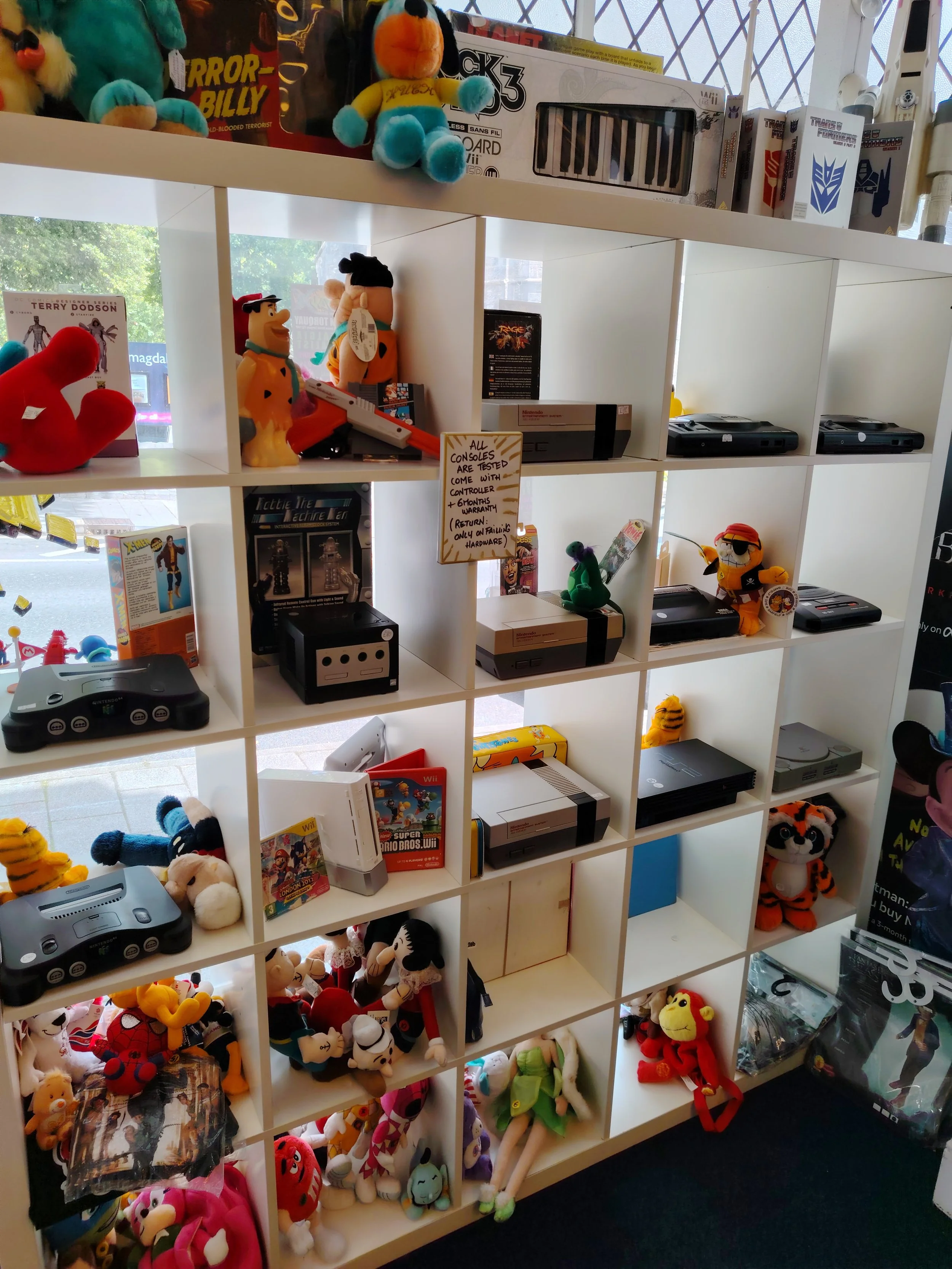
The front window display is a masterclass in pop-culture dopamine, packed with classic IPs like Micro Machines, Snoopy and Sesame Street. Stepping inside, I was incredibly impressed by how well laid out it all was. Rather than the chaotic, dusty clutter of a standard junk shop, Retro Revival X is clean and organized, utilizing a smart central island surrounded by neatly arranged shelves and glass display cabinets lining the perimeter.

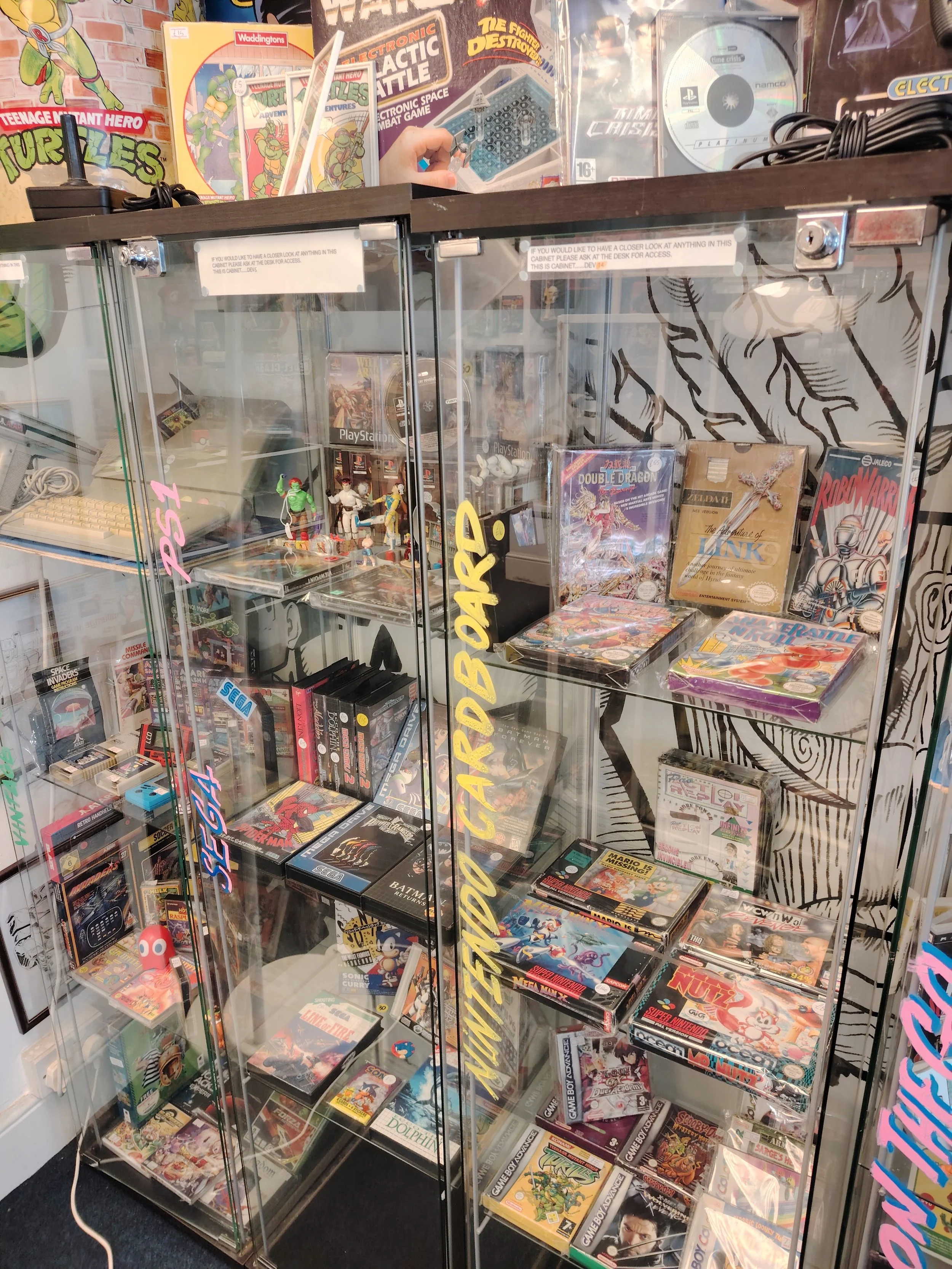
To the left lies an absolute paradise for retro gamers. The shelves are stacked with legendary consoles: the NES, Sega Master System, Mega Drive, and the Nintendo 64. Sitting right alongside the hardware is a fantastic selection of software, stretching from classic cartridges to big-box PC CD-ROMs and even old-school floppy disks.
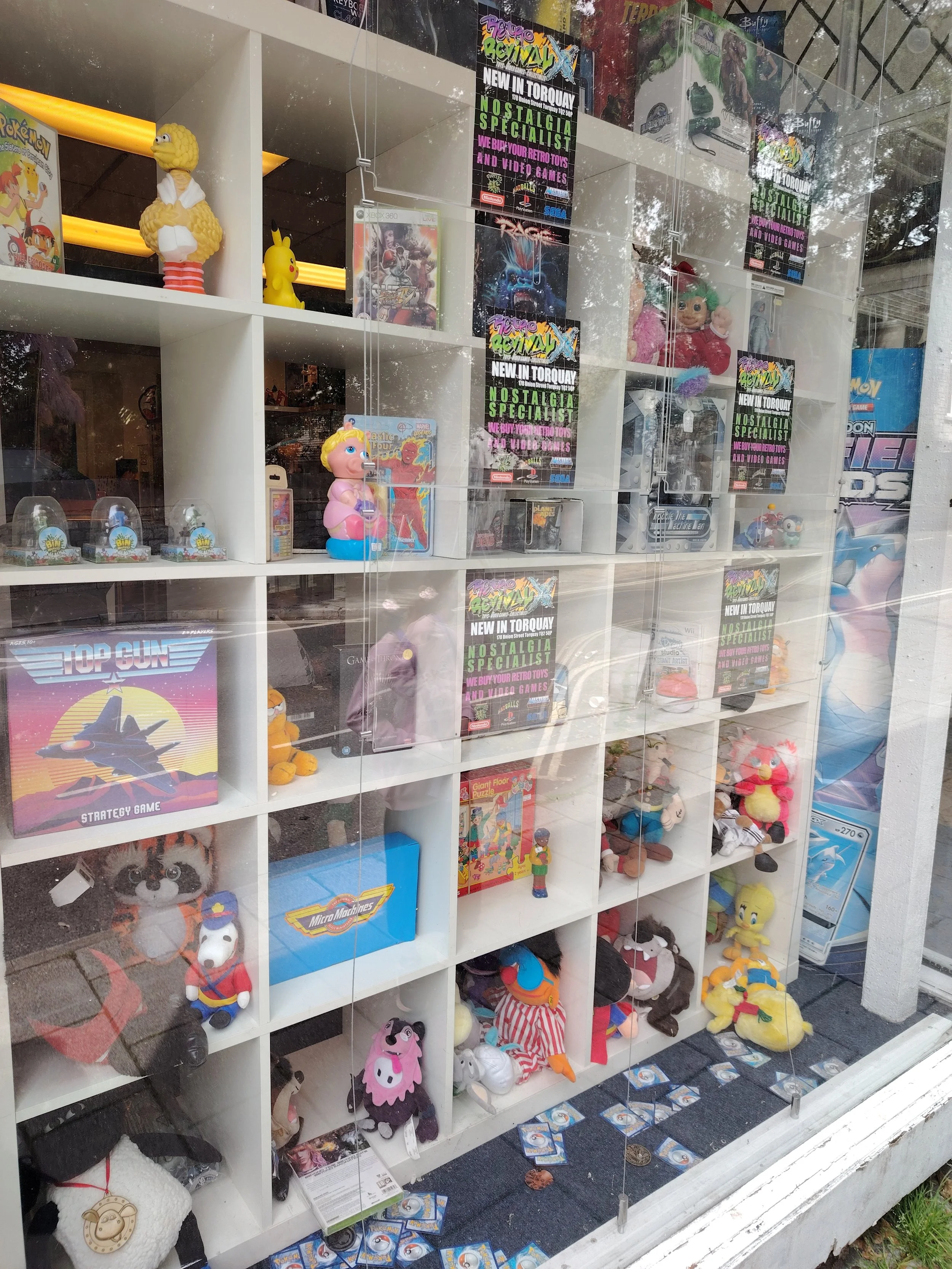

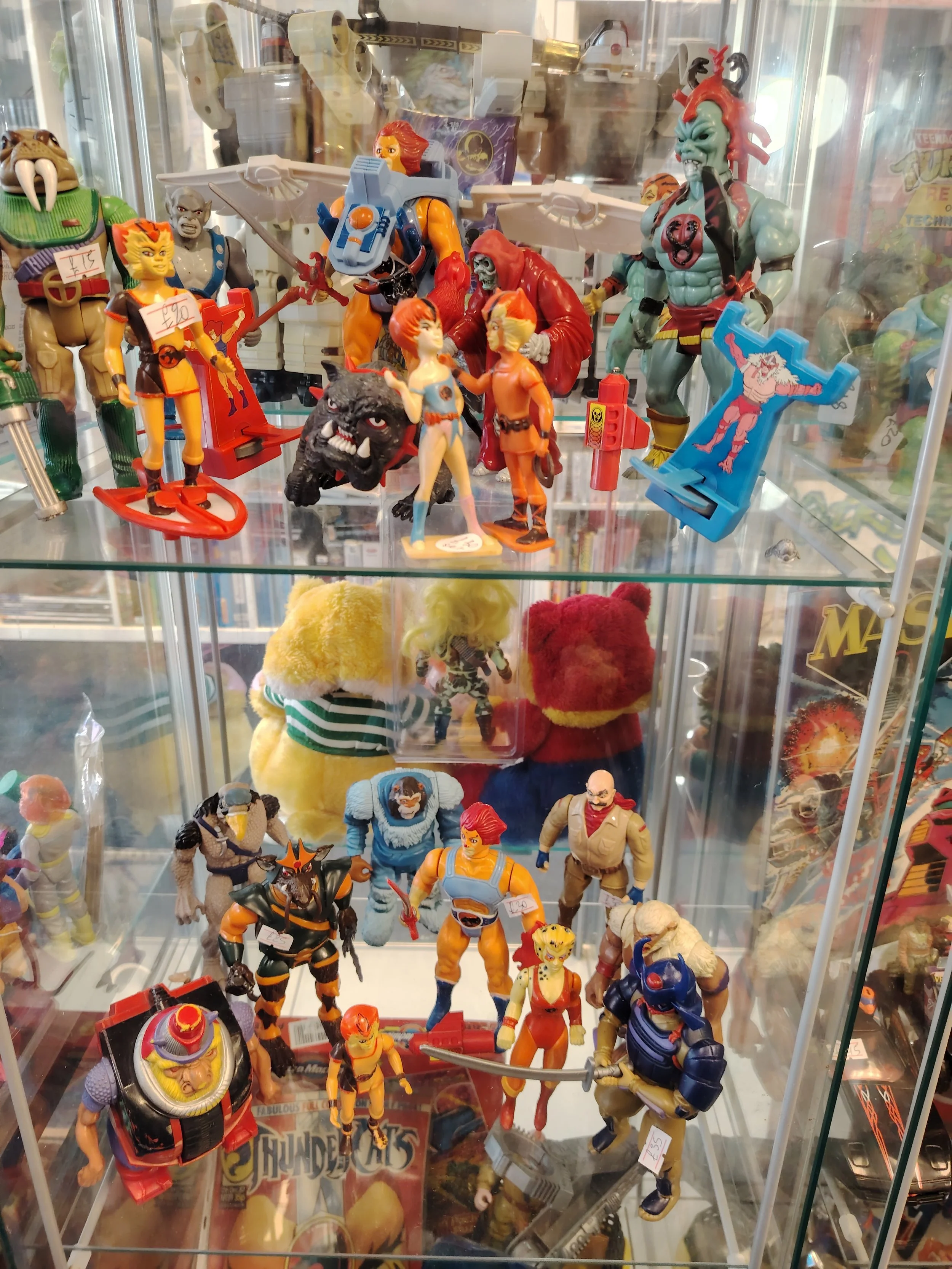
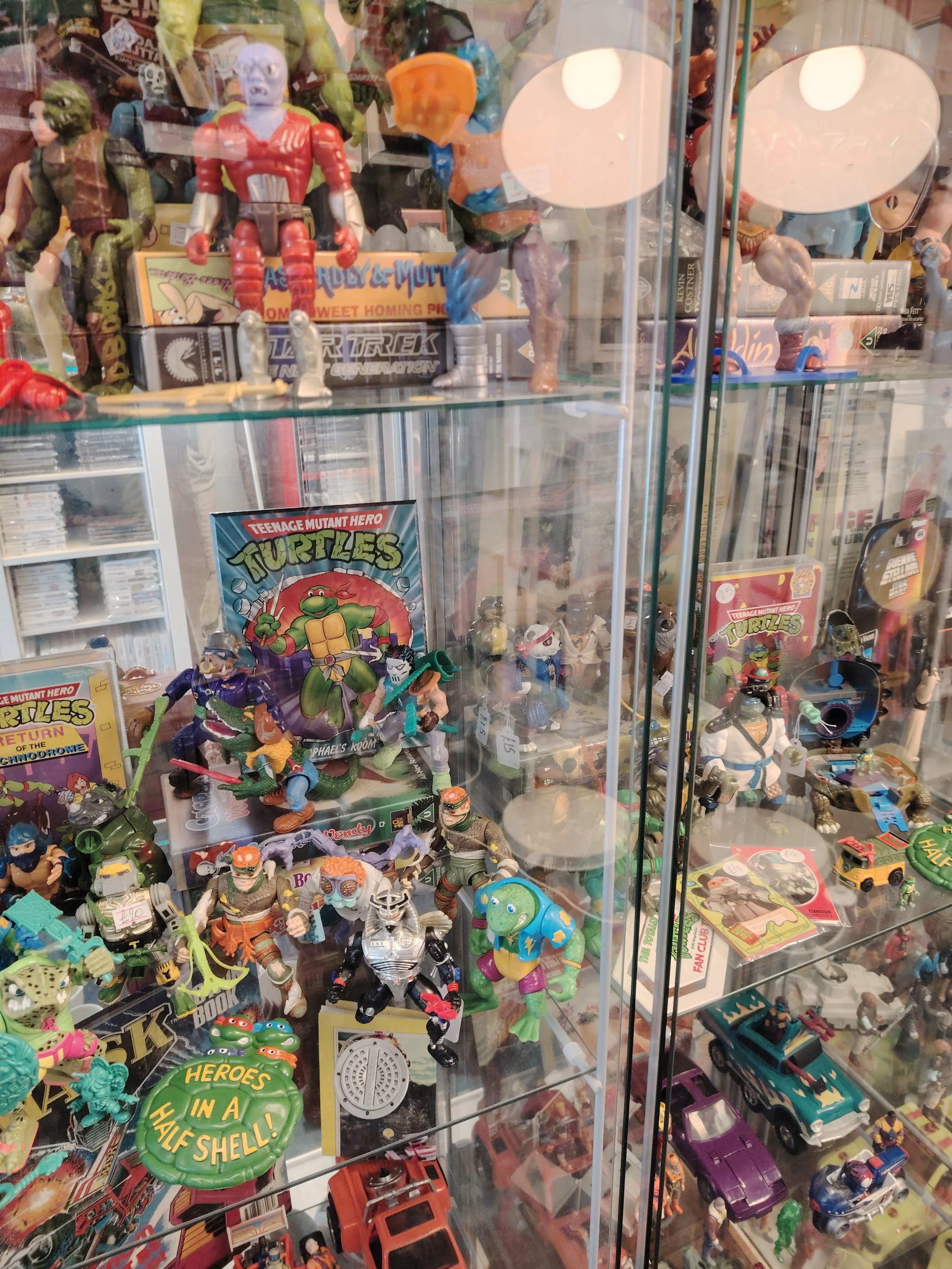
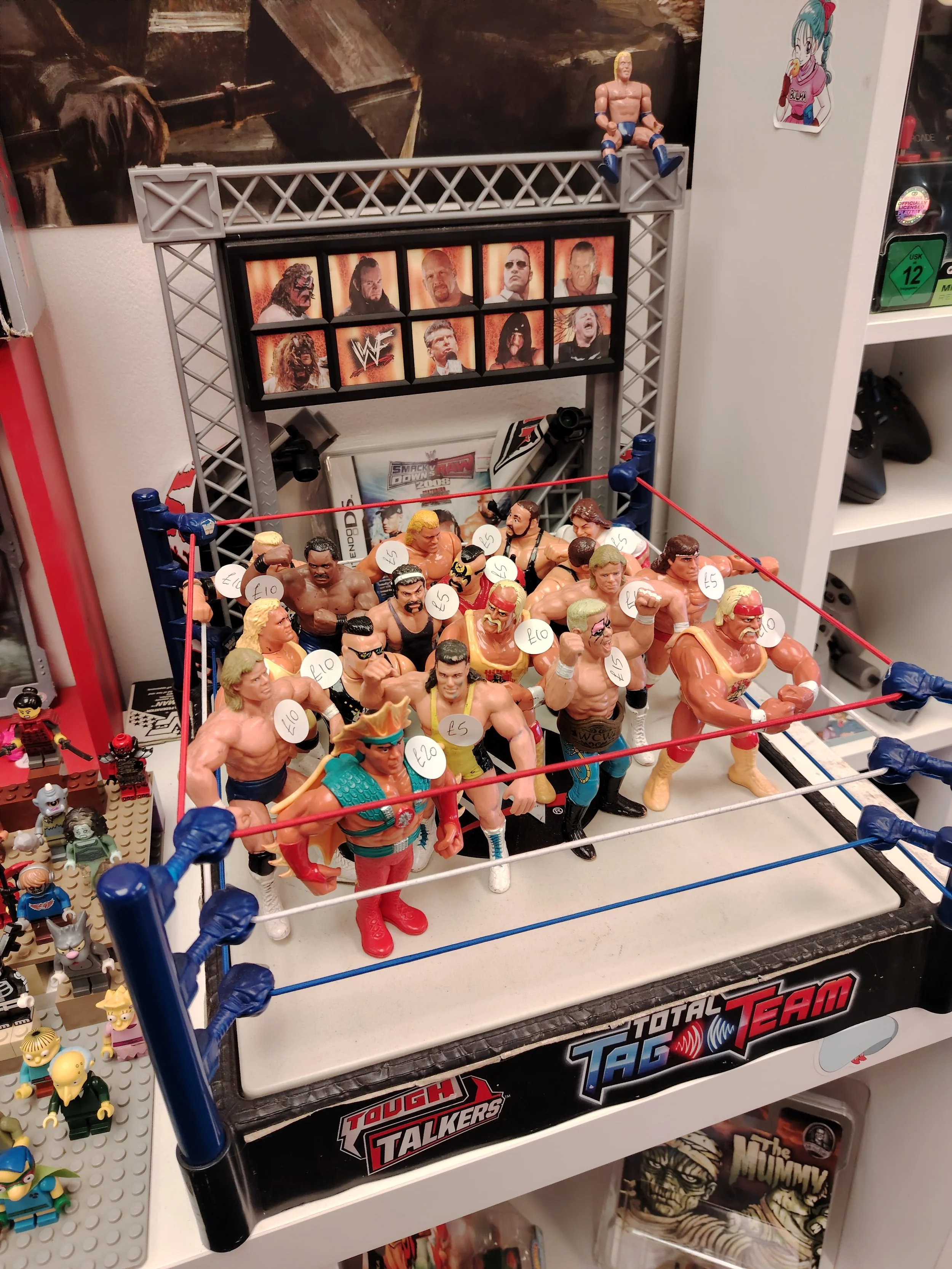
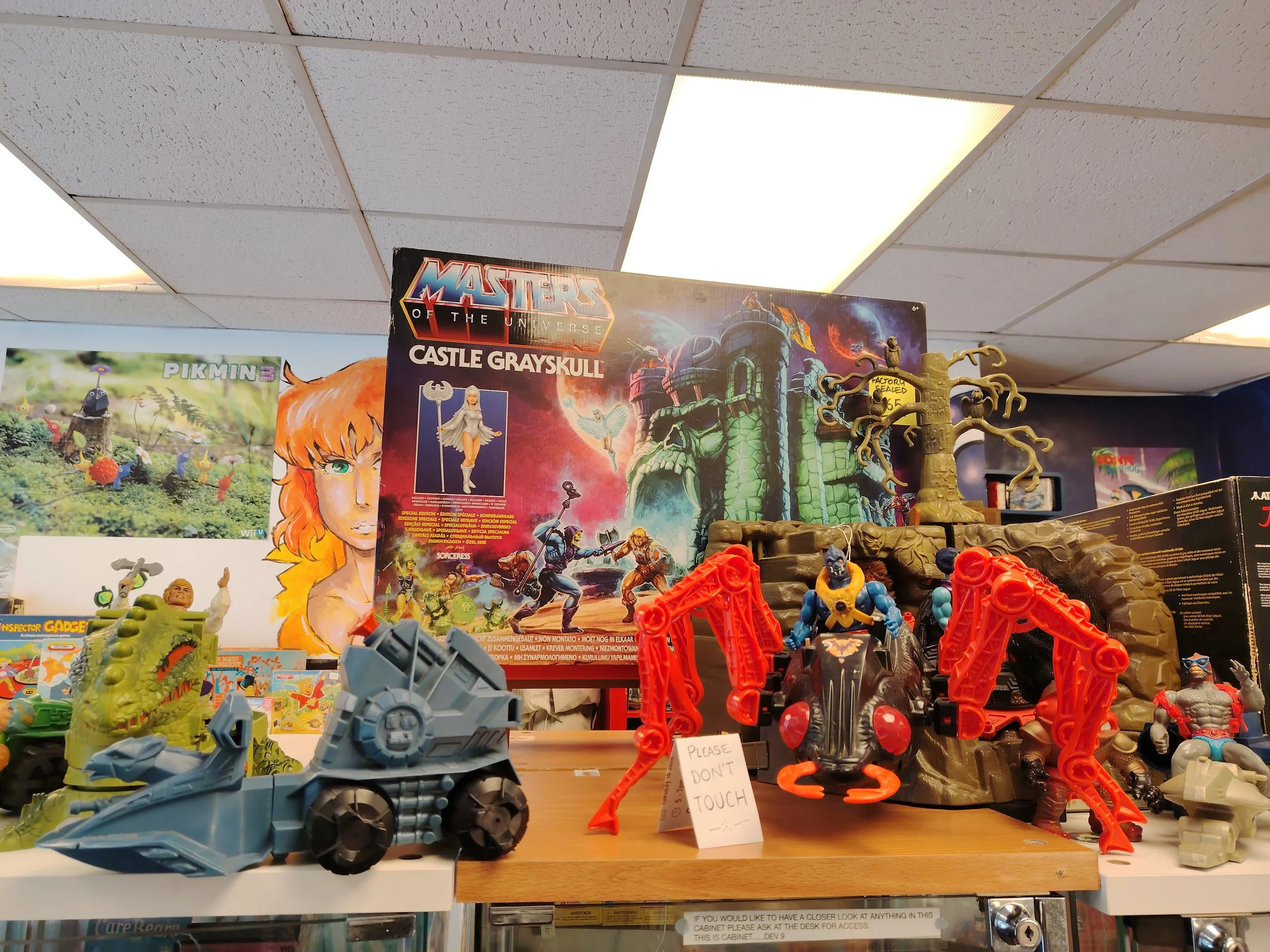
As we meandered toward the checkout desk, the hits of pure nostalgia just kept coming. I spotted the legendary VHS-based board game Atmosfear, a pristine Home Alone 2 Talkboy (and its counterpart, the Talkgirl), and even a ZX Spectrum computer. The toy selection is a veritable roll-call of Saturday morning television royalty: ThunderCats, He-Man and the Masters of the Universe, Teenage Mutant Ninja Turtles, Rainbow Brite, My Little Pony, Transformers, and classic wrestling figures from the WWE (or the WWF, as it will always be known in my heart). To round out the collection, there are packs of Pokémon cards, graphic novels, vintage annuals, and books catering to just about every niche taste.

But did I succeed in my quest? Absolutely. Tucked away on the shelves, I found a brilliant 2014 re-release of the classic, old-style Care Bear. It was exactly what I had been looking for.

As I bought it, I ended up having a wonderful chat with the shop's French owner. His passion for retro culture was completely infectious, and it was hilarious listening to his slightly askew, uniquely continental interpretations of the British and American shows we grew up with.

I left Retro Revival X with a smile on my face, a Care Bear under my arm, and the immense satisfaction of knowing there is a place in Torquay where your inner child can be thoroughly satiated—and at a really reasonable price, too. Whether you are looking to fix a childhood toy tragedy or just want to relive the glory days of 16-bit gaming, I highly recommend paying them a visit.

LINK- Pure Invention: How Japan's Pop Culture Conquered the World- Book Review (and Personal Reflections)

LINK- The Rise of Retro Gaming During Covid

LINK: Japan: My Journey to the East

LINK- Blood, Sweat and Pixels- Book Review

LINK- The Argument for Videogames As Art in the Age of Mechanical Reproduction

LINK- Akira Soundtrack Vinyl Review

The Melodic Time Machine (or: How Videogame Soundtracks Take Us Back)

There is a very specific kind of magic in the hum of a CRT television - that static-charged air and the low-frequency thrum that preceded the light. For a certain generation, the sounds that followed, be it the Sega chorus, the ethereal swell of the PlayStation startup, or the playful bounce of the GameCube, unlock core memories.

Psychologists call this Music-Evoked Autobiographical Memory (MEAMs) - it acts as a uniquely potent trigger, often bringing back vivid, emotionally rich, and nostalgic memories. It is a clinical term for something that feels profoundly soulful: the way a handful of synthesized notes can bypass your logical brain and trigger a Proustian flashback so vivid you can almost smell the carpet of your childhood bedroom and taste the Angel Delight. It hits what researchers call the reminiscence bump, that formative era where our identities were being forged in the glow of 16-bit adventures.

The Digital Sanctuary

You can see this phenomenon in real-time if you spend five minutes in the comment section of any retro videogame soundtrack on YouTube. These pages have quietly evolved into digital sanctuaries. In a corner of the internet usually defined by noise and chaos, these comment sections are strangely reverent.

You’ll see thousands of check-in posts: 2024 check-in, May 2026, still here, Who else is listening to this to feel okay? These aren't just spam; they are flags planted in the sand. They are people proving to themselves - and to a community of strangers - that they still exist, and they still remember the version of themselves that first heard those notes thirty years ago.

The Aquatic Ambience Effect

Among these digital artifacts, David Wise’s score for Donkey Kong Country on the SNES holds a nearly legendary status. With Aquatic Ambience, Wise famously pushed the Super Nintendo’s limited sound chip until it did things it wasn't supposed to do, creating a soundscape that felt vast, fluid, and strangely eternal.

For many, this track is a mental safe space. The comments here often read like quiet confessions. People share stories of using these chords to navigate modern grief, burnout, or the simple, heavy loneliness of adulthood. There is a surreal ability in these textures to act as a tonic, smoothing out the jagged edges of a world that has become much louder and more complicated than we ever expected it to be.

There are hundreds of comments which are beautiful and touching.

Then there is the longing sadness of Stickerbush Symphony. It captures a very specific 90s mood: a blend of melancholy and hope. It triggers a nostalgia that isn't just about a video game, but about a feeling of safety. Back then, the biggest weight on our shoulders was a difficult platforming level, not the crushing velocity of adult life. Wise’s music gave those pixels a soul, creating something that felt ahead of its time while perfectly preserving the grainy, warm texture of the era.

Personal Echoes: From the Master System to the Mega Drive

While the SNES often takes the cultural spotlight, my own digital sanctuaries are flavored with a different kind of synthesis. My closest friend and I grew up in the glow of the NES, Master System, and Mega Drive, and it is those FM-synth landscapes that truly vibrate in my memory.

For me, the check-in happens during the opening notes of Streets of Rage 2, where Yuzo Koshiro’s club-inspired beats made a living room feel like a gritty, neon-soaked metropolis. Or the frantic, optimistic energy of Sonic the Hedgehog 2, and the soaring, metallic intensity of Thunder Force III and IV. These weren't just background tracks; they were the anthems of our shared youth.

Why Do We Keep Coming Back?

We keep returning because these soundtracks represent a period of perceived simplicity. In an age of always-on connectivity and digital exhaustion, a 16-bit melody or a PS1 chime offers a rare moment of singular focus.

These games were our first real adventures, and their soundtracks became the scores to our lives. By building these collective time capsules in the comments, we’re making sure those experiences don't just fade into the background noise of history.

We aren't just listening to old music; we’re visiting our younger selves - making sure they know we’re still here, still listening, and still remembering what it felt like to be a hero in a world made of light and sound.

The Ghost in the Machine: Weaponized Nostalgia and Bubble Bobble

Like many, I have been deeply worried by the seemingly unstoppable return of fascism across the globe. It can become somewhat overwhelming and so my primary coping mechanism has been to treat it like a specimen under a microscope, specifically by studying its techniques of persuasion.

Among the most insidious techniques used is what philosopher Jason Stanley terms the "mythic past," or what I like to call weaponized nostalgia. We’ve all seen the AI-generated "sloppaganda"  media flooding our feeds - images of a sun-drenched, crime-free London that supposedly existed before the "wrong" type of people (read: "foreign folks") arrived. The decline porn’s power lies in exploiting the sheltered innocence of childhood; of course you felt safer as a ten-year-old as your world was the size of a postage stamp and you weren't the one paying the bills! You weren't living in a safer era; you were just living in a smaller one. However, the sense of hauntology, of what could have been, seeps through and is a siren song for the disaffected and disenfranchised looking for someone to blame for why it all went so "wrong".

Many far-right actors and grifters promise a return to that sanctuary, provided you trust them and place them into positions of power and influence. Once they’ve successfully convinced you to loathe the present, the suggestion that creating a wave machine in Dover to push back boats and opening "processing centres" in Rwanda might start to sound disturbingly like common sense. We become more susceptible to this as we age, largely because it’s a convenient distraction from the realization that our own lives maybe haven’t quite unfolded in all the cinematic glory we envisioned in our youth.

So, why am I so unconcerned about falling for my own nostalgic indulgences? Simple: I own a collection of vintage computers and consoles and they serve as my personal fact-checkers.

Take Bubble Bobble, for example. In my memory, the version for the Amstrad CPC 464 was a pinnacle of digital achievement - a masterpiece of monochromatic fluid motion (I only had the green monitor on which to play the game). However, when I played the pixel-perfect port on the Numskull Quarter Arcade cabinet I bought as my Covid comfort purchase the reality bit.

This machine was my lockdown purchase and I do not regret anything, except maybe the lack of a haircut!

Sure, the Amstrad version was a valiant effort, but compared to the original 1986 arcade Bubble Bobble game, it was obviously a lesser work. In my head, nostalgia had upscaled my memories to 4K, but the aging Amstrad hardware was only pushing 8 bits and creaking under the effort. It seems a long way from the English Channel to the 8-bit caves of a 1980s platformer, but the mechanics of the delusion are identical; nostalgia didn't just upscale the image; it filled in colors that were never actually there. So, by keeping these relics around, I’m constantly reminded that the "good old days" were often just a lower-resolution version of the present.

The Crisis of Connectivity (Or, How Globalisation, Hyper-Events, and Misdirected Nostalgia are Ruining the Public Discourse)

We are living in the age of the hyper-event, and it has fundamentally broken our experience of reality. This isn’t just about bad things happening; it’s about the non-stop, globally streamed cascade of crises - from climate breakdown and extreme nationalism to a live-streamed genocide - that instantly dominates every news feed and social media timeline. The constant, hyperconnected transmission of these events has created a state of communal anxiety as the sheer volume of information has become an overwhelming burden on much of our collective psyche.

The Malignancy of Misinformation

In this pressurized, frantic environment, the space for a calm, nuanced response has somewhat evaporated. Misinformation, the oxygen of demagoguery, thrives here because it appeals directly to anger and raw emotion. It simplifies complex geopolitical and economic failures into easily digestible, emotionally satisfying narratives of blame or "pwning." Everything becomes a battleground, regardless of necessity. But how do we deal with this evergrowing wave? Well, we can’t just stop at surface-level fact-checking but there needs to be a fundamental overhaul of our civic literacy and critical thinking skills, demanding a thorough examination of our education systems, the structures of our media, and the very language we use to frame public issues.

True intellectual integrity - the search for truthfulness through honesty, fairness in your thinking, reasoning and expression,—requires relentless scrutiny, self-examination and empathy. This is something the BBC and other purportedly truthful news outlets should have done over the past couple of years in their coverage of certain events.

The Erasure of the Digital Village

The paradox of this hyperconnected world is that the cultural and technological globalisation that gives us instant information also acts as a powerful agent of cultural erasure. Our world has become a digital village, but this global embrace is driven by the relentless pursuit of corporate revenue - the "Moloch Trap" of modern capitalism - which often leads to the destruction of local identity by a race to the bottom where everyone loses by trying to win. This global force is frequently synonymous with Americanised cultural capitalism. As our choices trend toward ubiquitous, globalised brands - McDonald's, Starbucks, Nvidia, Amazon - we are unintentionally starving the homegrown alternatives that once defined local distinctiveness. This is a subtle yet relentless form of colonisation, where cultural borders aren't invaded by armies, but commercially and technologically hollowed out.

Hauntology and Misdirected Blame

This economic and cultural homogenisation creates a deep, unsettling social void: a sense of loss for something authentic and distinct. This feeling is hauntology: the pervasive sense of a lost future, a ghostly presence of a potential that never materialized, manifests as a profound, directionless nostalgia. The rise of extreme nationalism and associated street unrest in the UK and elsewhere is a symptom of this deep cultural wound. Here, in England, many people feel the loss of something "English" and, in their frustration, seek an identifiable culprit to blame for this lost potential.

Tragically, this anger is almost always misdirected. The target isn't the technological and cultural Americanisation that eroded local distinctiveness or the techno-feudalist fiefdoms but it’s the visible "other" - the person of colour, the immigrant - who represents change without being the structural cause of the loss. Many extremists are blaming diversity for the cultural vacuum created by global finance and unchecked consumerism. They forget that Britain was, and still is for many, (although milage may vary due to the past couple of decades of these right showers in politics) respected across the world as a beacon of opportunity, equality, and fair play, which is precisely why many from the old colonies sought to come (and were, in fact invited) to the "Motherland".

Moving Forwards

To heal this profound societal fracture, we must shift our focus from identity to introspection. We must look at ourselves as a nation—our political choices, our economic priorities, and our cultural consumption—and accept that the loss of a distinct culture is a consequence of our own uncritical embrace of global capitalism, not the fault of our neighbors. Only by demanding a renewed sense of responsibility from both our leaders and ourselves can we hope to define a twenty-first-century identity that embraces the modern world without sacrificing the joy and distinctiveness of the local.

Jayce and the Wheeled Warriors- Soundtrack Review

A warm fuzzy feeling fills my heart whenever I watch television shows and cartoons from my childhood. However, there are only a few that quicken my heart and make me yearn for simpler times, well, t least simpler as a kid and those include Ulysses 31, The Mysterious Cities of Gold, Inspector Gadget, Dogtanian, Around the World With Willy Fogg and… Jayce and the Wheeled Warriors.

Thundering across the stars,
To save the universe from the Monster Minds!
Jayce searches for his father,
To unite the magic root,
And lead his Lightning League to
Victory over the changing form of Sawboss!
Wheeled Warriors explode into battle!
Lightning Strikes!

With these words Jayce and his Lightning League battled the Monster Minds and Saw Boss for 65 episodes. Produced by the hilariously named (at least I thought at the time) DIC studios and overseen by Jean Chalopin (of Mysterious Cities of Gold, Ulysses 31, Inspector Gadget and tonnes of other formative cartoons from the 80s) the show was grand and cheesy operatic drama and a big part of this was due to the epic music, created by Shuki Levy.

The soundtrack for the series has never been released… until now. Tele 80 crowdfunded the soundtrack and I backed it. After a seemingly long wait (it wasn’t that long actually but it seemed that way due to anticipation and slight Covid delays) I finally received my vinyl and CD.

I first came across the show when it was first shown in the mid 80s on Channel 4 but I saw it in my formative years again in the early 90s on Channel 4, where it was shown at weekends. I remember thinking how cool and ahead of it's time the animation was and how moody, mature and rocky the synthesizer soundtrack was.

Since getting the soundtrack I've listened to the album a few times now and the majority of the themes I remember are all here, however the soundtrack isn’t as ingrained into my mind as much as The Mysterious Cities of Gold, Ulysses 31 or Inspector Gadget are.

I'm not going to go through every single track here as that would be long and incredibly tedious for you to read so I'll pick out the highlights.

The album starts with the French opening credits. It has the instrumentation that we all know and love but with the French vocals. The track is okay but holds no real nostalgia for me, that'd be track 21, the English vocal track that played over the opening of the show, but this is the extended cut. Track 23 is the instrumentation of the opening credits, whilst track 22 has the ending vocals (‘Keep On Rolling’) and track 24 has the instrumentation of that, so you can get your hair rock on!

Now onto the back ground music (BGM):

Track 2 (The Fight of the Light Force) - starts off all mystical and woozily dreamlike but quickly the synthy beat, violin and jazz flute kick in and it's a veritable smorgasbord of pure 80s euphoria.

Track 4 (The Cunning of the Monster Minds) - lots of oboe and unsettling string picking make this a suitably creepy piece.

Track 6 (A Hope) - a light, chilled piece which wouldn't be out of place in a romance scene from some forgettable 80s movie.

Track 7 (The Fight Against the Monster Minds) - a consistent drum beat which is followed by a fluttering flute before a jazzy brass section comes in to add some uptempo jam before a crescendo of strings swells and hits.

Track 10 (All Together) - a relaxing piece which is sort of like a redux of track 9.

Track 11 (Moments of Clairvoyance) - breezy and airy sounding with a gentle wind chimey sound.

Track 12 (An Unknown World) - creepy and unsettling as a quick rhythmic mood sets in with heavy synthesiser sounds wend their way in and out. This track wouldn't be out of place in a John Carpenter film as it fits his ouvre.

Track 13 (Mysteries of the Universe) - upbeat funk with wailing guitar and jazzy brassy freestyling.

Track 18 (Imminent Danger) - sounds like an end of level boss from a PS1 game which is no bad thing. Heavy drums and waning guitar give way to moody rhythmic guitar.

Track 19 (Musical Bridges)- This track is a collection of 5 to 10 second bridged that are dramatic and concluded fight or action sequences. They are dramatic and bombastic, ending with a flourish.

Overall, there are plenty of tracks here for Jayce fans but the track that I most miss due to its omission is the darkly sinister driving imperial march sounding one that is reminiscent of St. Elmo's Fire/ La Passage Secret from the MCOG soundtrack. It was the track used when a discovery was made and is one of the most spine tingling tracks from the show and the Jayce equivalent, which shares a lot of the same DNA, is missing too. I’ll link it below so you can have a listen to both tracks.

The Joy of Now

We live in amazing technological times where many things can be done instantly at a touch of a button... ordering anything online (food, goods, medicines), online banking, research (Googling it bro), dating (insert the myriad of dating sites here) and watching movies and shows. It makes me think back to simpler times, when I'd load up my monochrome Amstrad CPC 464 and watch the tape deck counter slowly crawl forward before a game (hopefully) loaded.

This old pic of me is sorta connected to the concept of time and nostalgia.

Maybe in these times when everyone wants everything now there's something to be said for days of yore where we enjoyed the games more because we had had to wait. The anticipation was maybe half the joy; watching the loading screen slowly appearing and bathing the bedroom in a green glow while that annoying screeching noise reverberated all around.

No doubt these idle thoughts seem like an old man wishing for a past bathed in the cathode ray tube glow of nostalgia, but recently I bought a new game for the PS4 and had to wait quite a while for the system to update and download a patch and it had me reflecting back to my youth.... The waiting sucked, it did then and it does now! In these busy times who can wait for a hefty day 1 patch to download? I’ve got box sets to get through, digital friends to chat to so I can ignore real pals, tonnes of images of my mates food to appreciate... In my youth there wasn't much to do and the pace of life was slower so sitting, waiting for a crappy port of Double Dragon to load for 20 minutes was fine, but now.... yeeesh it's painful! I could watch an episode of Carmen Sandiego in that time!

I think there is much to be said of slowing down and smelling the roses and that Bueller quote but really, life has so many more options now and waiting is boring. Now making time for yourself, being present and mindfulness are another matter, but we'll save that for another time.

Just to note- this was an off the cuff devil’s advocate piece. My thought are a lot more nuanced than stated*

Ah, those were the days...

Avengers Endgame made $1 billion in 5 days, which is impressive until you consider that it took the video game Grand Theft Auto V 3 days to achieve the same thing. As credited by the Guinness Book of Records, ‘GTA V sold 11.21 million units in its first 24 hours, and generated revenue of $815.7 million (£511.8 million), going on to reach $1 billion (£624.45 million) in sales after just three days on September 20 2013.’

It went on to make over $6 billion and counting due to recurring user spending with dlc, online etc. This dwarfs the $4 billion achieved by best-selling films such as Star Wars, Gone with the Wind and even Avatar, the highest grossing film of all time at $2.8 billion.

Gaming is on the up and while it faces teething issues like any other medium before it such as video game violence, toxic online communities, positive LGBTQ+ and diversity representations to name but a few, it is maturing, developing and undergoing its own issues including archiving and the rights of gaming staff, much like cinema before it.

This got me to thinking: Will I be talking about the year of '97 which saw the release of Zelda: Ocarina of Time, Final Fantasy 7, Metal Gear Solid, GoldenEye and Half Life 2 as much as film lovers talk about the year Rocky, Star Wars and Annie Hall fought it out at the Oscars?

mr+anjums+influence_map_PSD.jpg

From my arthritic hand will I still be playing the latest iteration of Mario? I don't know... Will my misty-shortsighted vision ever set eyes on the remake of FF7? I don't know. Will my bladder still hold when I hear that the biggest ever entertainment event at the time will still be GTA, probably up to part 69 by then? I don't know but as the biggest entertainment industry which accounts for over half of all entertainment sales in the UK, I don't see why not.

LINK- DIC: Series Of Your Childhood page

LINK- Mysterious Cities Of Gold Nostalgia

LINK- The Moomins 80's Soundtrack Vinyl Review

LINK- Inspector Gadget Retro Soundtrack Review

LINK- Ulysses 31 Retro Soundtrack Review

LINK- The Mysterious Cities of Gold Retro Soundtrack Review

Manga Exhibition at the British Museum: Review

In Japan, manga has been a part of the culture for a long time. The origins of manga are debated and The Handscroll of Frolicking Animals by Kitazawa Rakuten is considered a major influence, but generally it gained prominence in the post World War 2 era where artists such as Osamu Tezuka brought some levity and lightness to proceedings with Mighty Atom or Astro Boy as he's known in the West. Tezuka was to manga what Will Eisner was to American comics; the medium existed before their arrival but they brought it to the fore and forever changed it.

Astro Boy is iconic and will feature heavily in the 2020 Olympics, which will be held in Japan.

As a young boy growing up in east London, England, I didn't know anything about manga or anime but I was consuming it unknowingly through shows such as The Mysterious Cities of Gold and Ulysses 31.
One Saturday I went into my local WH Smith and saw issue 22 of a magazine called Manga Mania and was taken by the big eyes, spiky hair style and tiny mouth and nose of the cover star that reminded me so much of the animation style I liked. When I picked it up, from the top shelf next to the more salacious magazines, I felt a bit of a rebel but upon opening it the kinetic imagery and artistry blew me away. Flicking through it I saw a mention of The Mysterious Cities of Gold in the letter pages and knew I had found something special. From then on I would buy Manga Mania monthly and purchased graphic novels, VHS films, soundtracks and even anime cels. The shop Forbidden Planet became nerd nirvana for me and I'd visit it monthly. Manga was one of my first true loves and one that has survived to this day, at least to some lesser extent. Manga is in my lifeblood and even though it doesn't feature as prominently in my daily life as it once did for me, it was formative in my youth and for that I am still grateful.

I loved getting my monthly Manga Mania fix.

I loved getting my monthly Manga Mania fix.

Since those heady underground days in the early 90s, manga has grown and thrived and its influence is spreading across the world. So, when I heard that the British Museum was hosting the largest manga exhibition outside of Japan I wasn't surprised and knew that I had to go. The British Museum has dipped its toes into the manga and anime pool before over the years but these have been smaller, more focused exhibition. This promised to be a much larger, grander affair as manga is still developing and evolving, the form has and is still contributed rather uniquely to modern culture and I'm glad that a venerable institution as the British Museum is recognising this. I visited the Kyoto International Manga Museum several years ago, which is the largest repository of manga in the world, and wanted to see how this exhibition would compare.

So the question is, is the exhibition worth visiting? In a word, yes.... but this comes heavily loaded with a proviso, which I'll go into later.

The whole show feels less like a staid exhibition but more like something you'd see at more immersive and engaging galleries, no surprise as manga means 'irresponsible pictures' and what is on show is a riotous walk-through of the medium. Being a family oriented exhibition the more controversial elements have been excised but that doesn't diminish what's on show, rather it still offers a smorgasbord of artists and genres that covers the art-form well without excluding younger generations or upsetting some sensibilities.

The exhibition starts with an introduction about the origins of manga and provides a guide on how to read it, from left to right. Then there is a section on the manga-ka, the artists who produce the manga, and the tools of their trade.

On an impressive display of collected comics are a few televisions with the chiefs and editors of the weekly manga collections which are published weekly and sell in the millions. They offer their insight into the creative, production and distribution process.

Around the corner, there is a brief look at the influence of woodblock and scroll works on the medium. There are a few stunning pieces on show but a couple stood out to me, the one where a recent piece of work by artist Katsuhiro Otomo (Akira, Domu and Memories) was compared to his woodblock forebear. The current breed of artists have built on the shoulders of giants and their influence is appreciated here.

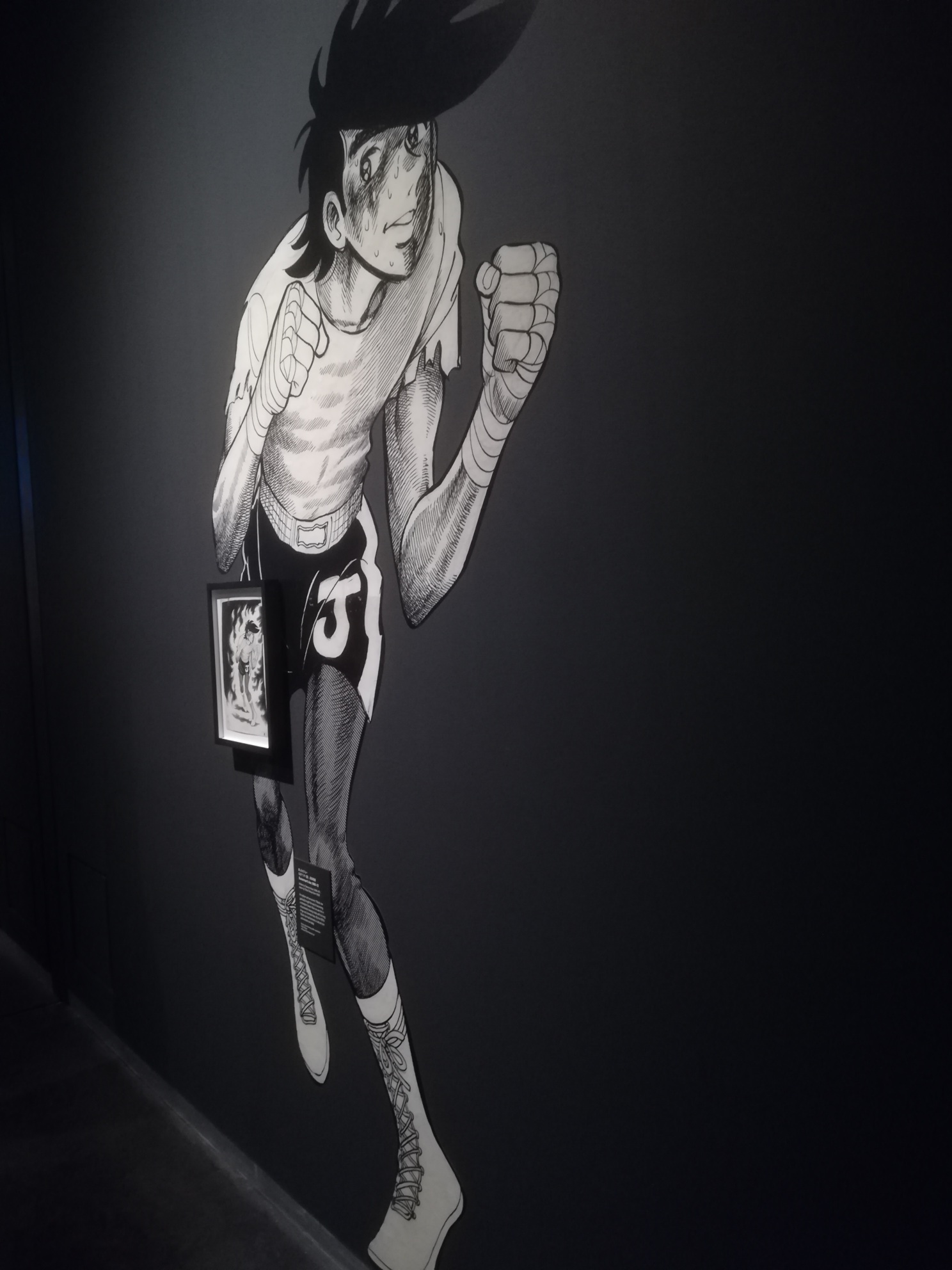
After that, the bulk of the exhibition is split into little islands where different themes of manga and artists are explored like Love, Sports, Horror etc. This is all quite dynamic and exciting as there are banners and posters hanging from the ceiling and giant murals and original art pieces stuck on the gallery walls.

In the middle of the exhibition, there is an impressive library of manga on offer and many soft seats in which to read at your own pace.

Manga Exhibition at the British Museum

The last section of the exhibition has a couple of art installations. Kawanabe Kyosai’s theatre curtain from 1880 was painted in just four hours after the artist had imbibed several bottles of rice wine. He painted the 17 metres by five metres high piece using a huge brush and it was done in such a rush of inspiration that you can still see his footmarks on it!. It really is an impressive achievement and whilst not manga, it shows the kinetic frenetic art style that would feature in so much manga years down the line.

Kawanabe Kyosai’s theatre curtain certainly is an impressive piece of work.

Kawanabe Kyosai’s theatre curtain certainly is an impressive piece of work.

Near the exit, a large projected montage of Studio Ghibli films at the end is a fitting bookend to an impressive exhibition.

The exhibition is a great primer for the common manga fan or someone with a cursory interest in the medium but someone looking for a deeper look into the minutiae of manga, this is not that. In my opinion the exhibition, whilst well organised and curated, had some glaring omissions in manga-ka such as Rumiko Takahashi (Mermaid Saga, Urusei Yatsura and Inuyasha) and Masamune Shirow (Ghost in the Shell, Aplleseed and Dominion Tank Police),  but on a personal level I'd have loved to have seen some works by Yoshitoshi Abe (Serial Experiment Lain, Haibane Renmei) and Yukito Kishiro (Battle Angel Alita). I understand that with such a large number of artists it is not possible to get everything in the exhibition but Takahashi and Shirow are titans of the medium and needed some mention or recognition. It’s like having an exhibition on Italian masters and forgetting to mention any of the Turtles; Leonardo, Raphael, Donatello and Michelangelo, it just wouldn’t seem complete. However, as the first real look at manga outside of Japan this is an excellent exhibition and well worth the 90 or so minutes of your time. It is an amuse-bouche to the promise of something more and for that I’m excited.

LINK: Japan: My Journey to the East

LINK- Battle Angel Alita: And So It Ends

LINK- The Moomins 80's Soundtrack Vinyl Review

LINK- Inspector Gadget Retro Soundtrack Review

LINK- Ulysses 31 Retro Soundtrack Review

LINK- The Mysterious Cities of Gold Retro Soundtrack Review

LINK- Sonic Mania Video Game Vinyl Soundtrack

LINK- Thomas Was Alone Video Game Vinyl Soundtrack Review

LINK- Akira Soundtrack Vinyl Review

The Dark Crystal: Age of Resistance Trailer Drops

I watched The Dark Crystal in my early teen years and found it a bit creepy and disconcerting. I haven’t revisited it since but with the new trailer of the series dropping I might just do that. I always loved the art style by Brian Froud and the show seems to combine CGI practical puppetry effects. Maybe it’s just me but I feel that CGI works best when worked alongside practical real-world effects. I’ll revisit the original movie soon in preparation for this promising series.

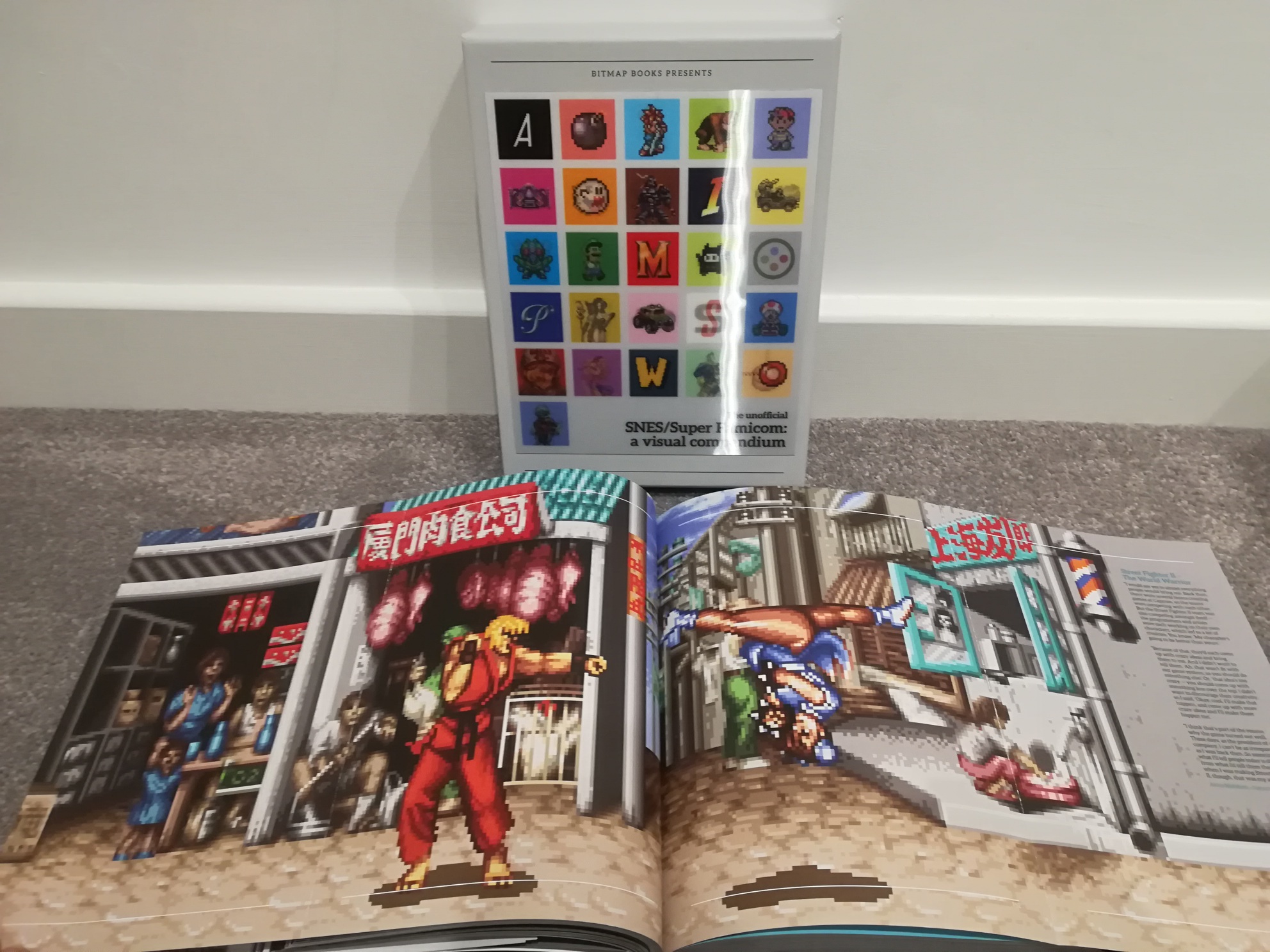
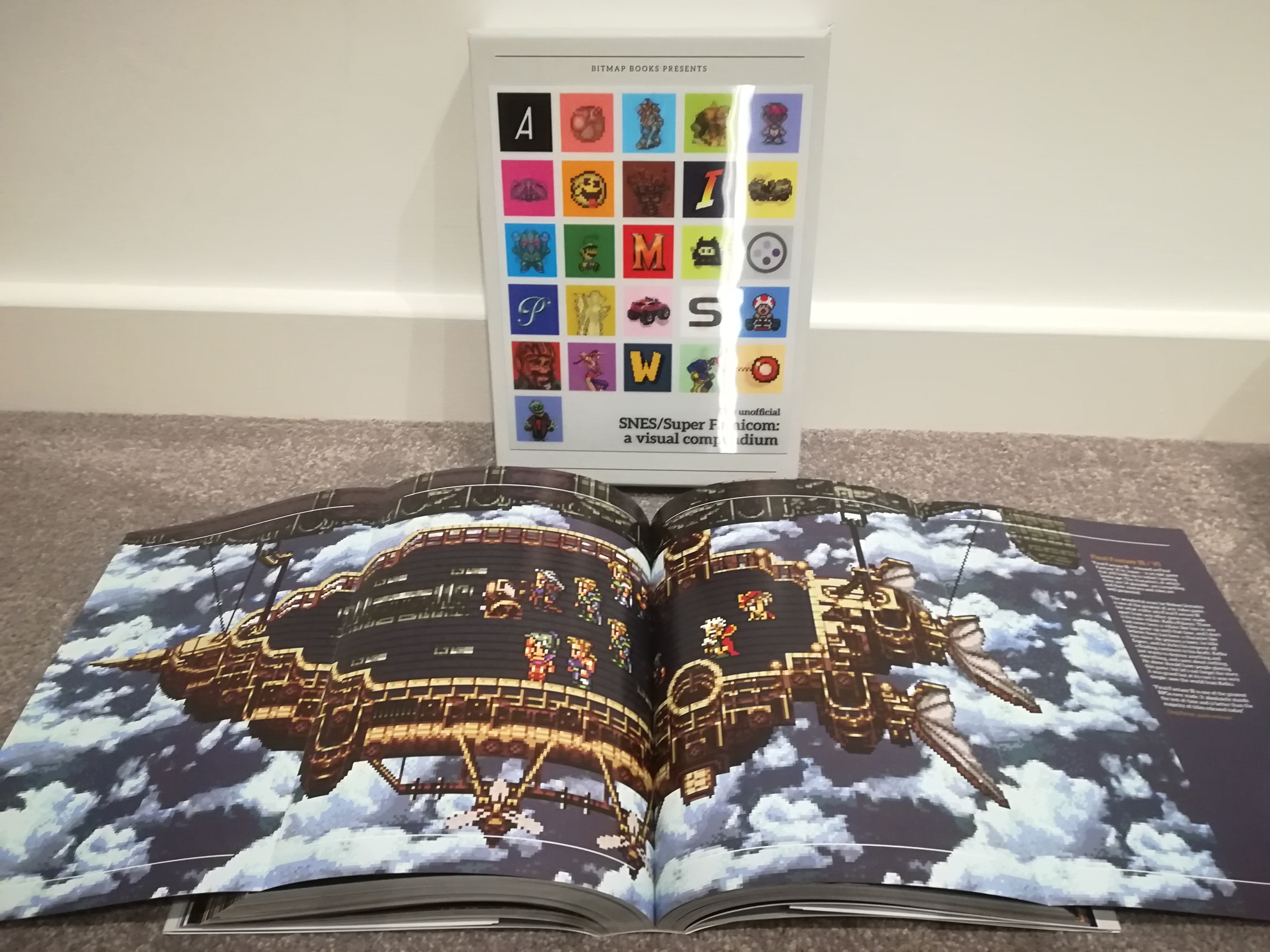
The Unofficial SNES/ Super Nintendo Visual Compendium- Book Review

Gamers like me have an affinity for pixel art as we grew up with it, nostalgia is a wonderful thing and we don't need to apologise for it. Pixel art itself was born out of necessity, this economy of design came about due to the various technical limitations but often where there are limitations that is where creativity prospers and thrives.

Over the last few years there has been a boom in quality books celebrating retro video game culture, including pixel art. Bitmap Books, one of the most profilic and consistently excellent producers of such books, have just released what is arguably the console which showcased the peak of pixel art... we are, of course, talking about the might Super Nintendo Entertainment System (the Super Famicom as it was known in Japan or the SNES to Brits like me who like to abbreviate everything). 

I kickstarted the softcover edition of the book for £25 and for this I got:

  • a softcover book
  • a scan line bookmark
  • a multimedia version of the PDF, which I was able to download
  • my name in the book
  • access to the backer updates

However what of the book itself? Well, the entire package is a thing of beauty as it comes coming protected in a tough slipcase with a snazzy lenticular cover. The book itself is a snug fit and has a spot varnish cover which gives it a feel of real class. The pages themselves are vivid and brightly coloured and make no mistake, this is a weighty tome with high quality paper that feels great to the touch.

Over the course of 529 pages the SNES/ Super Famicom: A Visual Compendium showcases the very best pixel art and box art. The book features over 100 classic games, with articles from leading developers, interviews with key figures in the industry and mini-features on subjects such as homebrew games, unreleased games (including the very recently released Starfox 2) and company profiles.

This all sounds great, and it is, but a real highlights are the occasional fold-out sections on games such as Street Fighter 2, Super Mario World and Chrono Trigger which showcase the beautiful pixel art in all its stunning glory.

The interviews with creators, programmers and various people involved in the industry gives real insight in small 200 word mouthfuls that break up the artwork nicely, offering a look inside the industry at the time.

The compendium is another excellent addition to the Bitmap Books roster of video game art books and it well worth the price. Buy it now as you won't be disappointed!

The Moomins- Retro Soundtrack Review

To kick off the first of hopefully many retro soundtrack reviews I've got a spectacular starter, the vinyl of the 1980s Moomins series. I've spoken previously about how as a child the jerky, awkward animation style and the creepy title music spooked me but with time I've come to respect the art choices and direction taken with this work and have come to appreciate similar works by the Bolex Brothers and Jan Svankmajer.  

Getting the vinyl itself was an interesting story worthy of Tove Jansson herself; Drift Records had procured a sizable chunk of the initial 600 vinyl shipment but on the day of their arrival into the UK the box was mislabeled and the vinyls were taken elsewhere to another warehouse with over 1000 other containers. It took over a month for the box to be found and the Moomins to be rediscovered... truly a wonderful tale for such whimsical characters, but what of the record itself? 

The record is beautifully presented within a large image from the 80s show and on the back is the track list with the blurb which reads: 

Imagine, if you will, a foreboding homemade electro-acoustic, new age, synth driven, proto-techno, imaginary world music Portastudio soundtrack for a Polish-made animated fantasy based on a modern Finnish folk tale, created for German and Austrian TV, composed in 1982 by two politically driven post-punk theatre perfomers from a shared house in Leeds!

Yeesh! Maybe I should have chosen a simpler, more straightforward album to review but this album was too good to pass up on so on we go!

This blurb is a good indicator of the musical journey you take over the course of the 30 minute or so it takes to finish the record. 

It kicks off with the Moomin Theme and it is wonderful to hear the completed piece with an elongates ending. The whole piece sounds a bit like a broken Victorian carousel mixed with a calliope falling down the stairs.

The Travelling Theme suits the title well and is a measured gentle plodding piece, almost metronome-like in its style. It has a simple beat which plays under a wonderful ethereal flute sound. This is an early highlight of the album.

Hobgoblins Hat is suitably mysterious and atmospheric with an arabesque woodwind sound and a throbbing synthesizer pulse underneath it.

Leaving Moomin Valley is grand and sweeping with gentle strings adding a sense of longing.  

Moomins Partytime sounds almost calypso in its rhythm and beat but is punctuated with whoops of joy and guttural throaty sounds which almost give it a tribal feel.  

Hattyfatteners Row is a frenetically paced track with deep throaty shouts of 'row' whilst a drum beat persistently beats. It is a driving track and almost sounds like an early garage or jungle track.

Woodland Band is a whimsical piece which brings together the sounds of various woodwind instruments and forest sounds together. The piece is quite sweet and has a 'regular' musical sound. This is another beautiful highlight of the album.

Most Unusual is exactly that; unusual. It sounds almost like a theremin mixed with a metallophone and is quite muted and moody but pleasing to the ear.

Midwinter Rites is a spooky piece which starts off with a deep percussive drum beat and strange guttural voices which growl and moan to the driving beat whilst in the background other higher screams are heard. An Indian sounding pungi piped instrument slits in and adds to the peculiarity. A strange piece indeed but an unusual highlight.

Piano Waltz is an elegant waltz piece and one of the more conventional pieces on the album but no less wonderful for that fact. 

Creepers sounds like a gamalan piece with lots of gentle rhythmic thumping and beeps flitting in and out. A melodic relaxing piece.

Woodland Band (Far Away) is a reprise of sorts of Piano Waltz but done in woodwind, it sounds so gentle and calming.

Comet Shadow is a haunting piece with howling wind and echoing whistles and a reverberating low synthesizer sound, this piece sounds moody and sinister. 

Comet Theme is a piano based theme with the same few notes played in different keys, getting faster and faster as the comet approaches I guess! 

The Moomins Theme (Ending Titles) are the same as the beginning it shorter and by my reckoning faster but I could be wrong. 

Overall the album is unlike anything I've heard before, apart from this show which I occasionally caught in my youth. It is unique, both beautiful and strange and so it is a difficult one to recommend to everyone. For people with niche tastes and quirky sensibilities this might be your bag but for most this is an uncomfortable and strange listen. I love this album and even though I know I won't listen to it very much, it's just not that sort of album, I'm glad I've got it to listen to on occasion when the need to be terrified/ whimsified takes me. If you'd like to listen to a sample of the album follow the link here.

The Nostalgia of Low Poly Art

I've spoken before about how nostalgia typically works in 20/ 30 year cycles (linked below). And so it comes to pass that on the 20th anniversary of the Playstation people have looked back with rose tinted eyes at the games of the early Playstation.

For many it was the first real introduction to the world of polygons, typically games had been 2D and sidescrolling on consoles, PCs had been experimenting with polygons for years, but due to their prohibitive price point was unavailable to many. So with the PS release the first wave of polygon games into being, looking at the gallery below you can see that the art was in it's early stages but there was a cubist beauty to its angles and contours. Many polygons had to be sacrificed in the quest for an improved frame rate. The games may look quite janky now but some, especially those with an interesting art direction, still hold up pretty well.

Over the decade we have seen the revival of pixel art and pixellated games, this has in part been due to the rise of the Indie scene and the affection that the creators have for 8 and 16 bit games... but now its the turn of polygon games. For those in the know the low poly art scene has been in full swing for about 3 years. The idea of producing simple items through limited polygons presents an interesting artistic challenge and there are many tools available to do the job. Some are easy and some are more complex but the end result can be curiously spellbinding. I have spoken before about how you can create immersive worlds without the use of photo-realistic graphics and the same applies here in low poly art, you can create wonderful worlds without needing to make it look exactly like the object as we can fill in the details ourselves. A similar event occurred in ancient Greece, although obviously not with computers, where the statues had become so lifelike that there was nowhere else to go with artistic interpretation so there was a move towards more stylised sculpture.

I for one am glad that there is yet another facet to the video game and art scene and am all for different forms of expression. Long live low poly!

LINK- Video Game Soundtracks on Vinyl

Music and Nostalgia

Authors Note: This was written on Monday 6th April 2015 on the way to Devon in the early afternoon.

I'm in the passenger seat riding shotgun in a car with my wife and recently born baby strapped into her car seat sleeping away behind me. We are in our Toyota Yaris which is bursting at the seams with baby related paraphernalia. For someone so small our baby requires a lot of equipment! Heading out onto the road for Devon my wife asks me to put on some music. Looking through the ipod I see some recent albums and artists, Adele-check, Emelie Sande-check, Ellie Goulding-check... Paul Oakenfold.... Check!  This last artist was the one I selected and as Bunkka started it brought forward a wave of nostalgia.

The late 90s were an amazing time, after xxx years of Tory rule hope seemed to be in the air with the rise of Labour and Blair. It was a time of optimism as football was coming home in Euro 96 but the biggest area of influence was music. Britpop was in full swing with Blur, Pulp and Oasis battling it out in the charts. In fact London was cool as a whole, claiming the title of 'Coolest place in the World' in Vanity Fair magazine.


This time will stick with me and many of the people of my generation due to the incredible diverse range of music.  Trance, dance, jungle and drum and bass would be battling it out in the charts next to the likes of Spice Girls and errr Aqua. The music hit the mainstream, so much so that when Sony were launching their Playstation console they promoted it alongside Wipeout with its cutting edge music tracks. There are many tracks created in this period that are stone cold classics; Beachball, For An Angel, 7 Days One Week and many many more. There are names that will stick out like Paul Oakenfold, Matt Darey, Tall Paul, Paul Van Dyke, Judge Jules, Fatboy Slim and of course Pete Tong. The music of this era had such a profound impact on my formative years that for our wedding playlist 50 percent was dance and trance, the other 50 was the usual pop fare. By far the dance floor was busiest when a pumping track came on, it felt like a club in the 90s. 
Well now with broken dreams from Bliars Labour, the Middle East up the shitter due to continued interference from countries with their own agendas and the economy in tatters due to greedy bankers and unscrupulous businesses I do look back fondly at those times. They weren't perfect by any means but the times seemed simpler. At least we still have the music memories.

Preserving the Spirit of Media Past

Preserving the past is a tricky preposition and getting trickier with the amount of information stored on fragile digital media. Filmmakers like Martin Scorsese have made it their mission to preserve classic films whilst Christopher Nolan has sought to preserve the medium of the physical film stock itself. However whose mission is it to save the audience?

We are at a watershed moment in film history, not just with the impending extinction of physical film but the demise of an audience equipped to appreciate some of its greatest works. I am a great lover of silent film and early movies, having been introduced to many in my youth by my parents and BBC 2 Sunday morning programming. I have fond memories of watching Laurel and Hardy, Buster Keaton, Harold Lloyd and Charlie Chaplin. Having attended a University which specialised in media and film studies (but studying Anthropology myself) I was introduced to many 'new' old films almost through a process of osmosis. I would take 8 to 10 VHS tapes at a time and consume them voraciously between assignments, listen in to students discussing them in the library and although many years have passed I still appreciate and watch these classic movies.

The Great Dictator is an absolute classic and contains one of the greatest speeches ever written.

I was concerned that the medium would be forgotten by the new generation- these films exist out of the childrens palate don't they? Well as a teacher I have had to endure many wet plays and this past December was a particularly soggy one, so there were more wet plays than usual. So I put on some Charlie Chaplin and Laurel and Hardy short films. There was no hype, no boombast, no 3D and no dramatic Hans Zimmer score.

My 30 pupils were motionless for a few minutes, I assumed that they were struggling to find a way in but watching patiently out of politeness to me. After a few moments I asked "Do you want me to turn it off?" and the children shouted "No!" Then the laughter started, the children were mesmerised for the length of the 25 or so minutes, they requested more clips so I worked through my collection. Children don't need to be told what to like, they will intuitively try things out and relate it to their world and experiences. In this case Charlie Chaplin was like "An old Mr Bean."

In much the same way as cinephiles do not need to guard older films, we older gamers do not need to feel like guardians of gaming heritage.

This term I have started a Retro Games Club using the Retron5 with original controllers and games to introduce children to the games of yore. The first game I unleashed on them was the SNES classic 'Street Fighter II Turbgo.' The children loved it and recognised some of the main characters. This led to a discussion on other characters that the children knew like Megaman and Pacman as well as the more famous contemporary icons from more modern games. A few of the children told me that their parents had the old systems and so they played some of the older games at home.

Punchout is the spiritual father of Wii Sports boxing, a game many children have played.

This wasn't 'Fauxstalgia' (False nostalgia) but something palpable- the children could relate to these characters and games from their own experiences and those who couldn't recognised the mechanics from their current gaming experiences. In the same way that 'Punchout' was compared to Wii Sports Boxing by my children people will always find a way in and seek out the origins of thing. Our gaming and film heritage is in good hands; God is in his heaven All is right with the world.

'From Bedroom to Billions' Review →

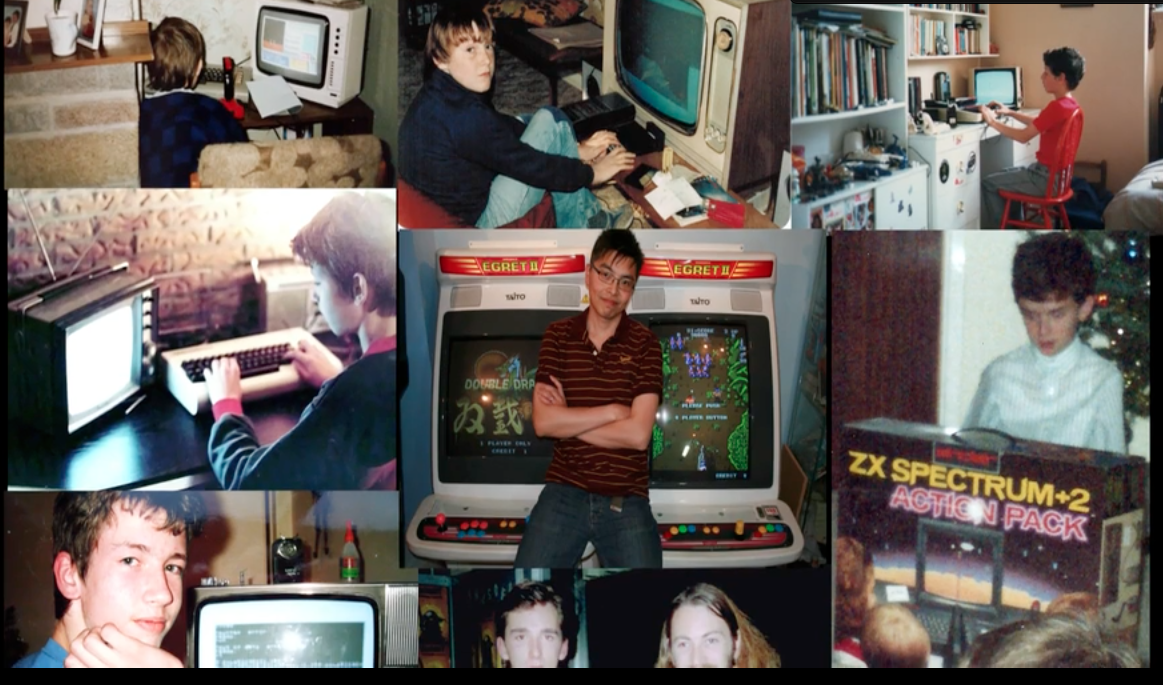
There has never been a detailed look at the UK gaming scene in the late 70's and 80's... until now that is! Anthony and Nicola Caulfield sought to gain funding through the major UK TV channels to rectify this but after being declined they went through the process of crowdfunding and smashed through their target on Indiegogo and Kickstarter. This was all a couple of years ago and since then I have been looking forward to this documentary as most of the gaming films are American and Japan-centric. In Britain we didn't have a gaming crash in 1983, in fact there was never a more vibrant time and I'm glad that this period has now been covered in the wonderful 'From Bedrooms to Billions'

The couple leave a message in their credits to those who doubted that there was a market for this documentary.

The couple leave a message in their credits to those who doubted that there was a market for this documentary.

In the words of creators Anthony and Nicola Caulfield;

'From Bedrooms to Billions' tells the story of how the creativity and vision of a relatively small number of individuals allowed the UK to play a key, pioneering role in the shaping of the billion dollar video games industry, which today dominates the modern world’s entertainment landscape.

Developments in computer technology in the UK of the late 70’s early 80’s  helped inspire a generation of small team enthusiasts, hobbyists, school kids, bedroom coders and entrepreneurs to make and release some truly classic games. From Bedrooms to Billions reveals some of the remarkable stories, struggles and successes that saw the UK video games industry go from quite literally nothing into a major force littered with original thinkers, innovators and eccentric characters.

At 2 and a half hours this documentary is long but still whips along at a brisk pace so time flies by. There is no narration  or voiceover but rather the interviews weave the story, being expertly edited and cut to create a flow and narrative. The film starts with the early days of the UK games industry, talking about the home coders who started selling their games through adverts placed in the back of magazines. It then moves on to discuss the various Micro Meets where groups would come together to share their work and ideas.

The second part of the film talks about gaming gaining traction and the rise of distributors like US Gold and Ocean. The interviews are insightful and honest and thoroughly engaging, of particular note is the interview with Matthew Smith, creator of Jet Set Willy and Manic Miner. He was burnt out and thoroughly depressed after producing two hits at such a young age, he didn't know how to handle the fame and expectations placed on him and candidly recalls the 80's being a terrible time for him. As a gamer with much nostalgia for the 80's this section of the documentary was very interesting as it explained the introduction of the middle men and emerging business orientated approach of the industry. This professionalisation led to bigger teams and higher budgets, including the introduction of film license tie-ins and rising advertising budgets. There was a reduction in lone programmers and for many interviewed was a sign of things changing for the worst.

The final part of the film talks about the rise of the 16-bit era and the end of the micro computers. With the rise in quality and the demands on cost and skills many lone programmers either left the business altogether or went to join the big teams in America or Canada. However rather than end on a sad note there is a denouement with the rise of mobile gaming and the indie scene. Ian Livingstone, creator of 'The Next Gen Report' explains how computing is now back in British education and there is an emerging programming scene once again. This hopeful note is a wonderful end to the documentary, as a teacher in a primary school in East London I hope to show some of this film to my class to inspire them to be producers rather than just consumers.

This documentary is a brilliant look into a special time in Britain, where there was a punk spirit and where people with imagination and a hard work ethic could achieve. Compared to 'Indie Game: The Movie' the interviewees seem less egotistical and self-absorbed, more honest and engaging. This is a wonderful movie and I highly recommend it to anyone with even a passing interest in retro gaming.

Retro Replay- by Anjum Razaq

As the children of the 80’s become the adults of the 21st century, they often yearn to revisit the halcyon experiences of their youths. Publishers are more than happy to oblige these reflective gamers- with re-releases, ports and mobile versions of these ‘classics’. The problem is that many of the experiences of our youths kind of sucked. Being young we didn’t see that but to revisit untouched ‘classics’ as an adult is often a dangerous thing. Nostalgia turns our rose-tinted memories into truths but when you revisit some games in the cold light of day, oh my are some of them bad.

Dragon's Lair on the NES- a gaming atrocity! 

Many game publishers have polished the games graphics and sound to make it more contemporary but still some of the mechanics of the game are flawed- Nostalgia is a dangerous thing. I have been playing a lot of old games over the last couple of years, from systems like the Megadrive (Genesis), Master System, SNES and NES and whilst some games are truly still amazing, many of the games are exercises in frustration and broken mechanics. Angry Video Game Nerd is an amazing youtuber who plays old computer games and even though he is very critical and swears frequently, his points are valid and with merit.

I have recently played 'Castle of Illusion' on the Megadrive and the recent update and no-matter the glossy sheen- the flaws of the original still persist in the remake. What are your opinions on the recent spate of remakes?