Keza MacDonald's Super Nintendo: A History of Play - Book Review

Keza MacDonald’s latest work doesn't begin in a boardroom or a lab; it begins in 1994 with a six-year-old girl and a Super Nintendo. It’s a vivid, sensory recollection of the joy that a grey plastic box can elicit - and it sets the stage for a book that is less a dry corporate timeline and more an exploration of a company’s "soul."

Nintendo is a developer that succeeds by zigging while the rest of the industry zags. While competitors engage in an arms race for teraflops and photorealistic grit, Nintendo leans into an economy of design. They find the extraordinary in the ordinary, prioritizing the human impulse to play over raw processing power.

As Johan Huizinga posited in Homo Ludens, we are defined by play. MacDonald has the additional benefit of being able to speak and understand Japanese, providing insights that many of her journalistic peers miss because translators often shorten or soften the original responses.

Chapter 1: Ultra Hand

MacDonald discusses the origins of Nintendo through it's history with hanafuda cards and visits a keen collector in France who has rebuild a copy of the original 19th century Nintendo studio in his home country, much to the surprise and delight of his neighbours.

She then does a quick timeline of primitive games and discusses how they evolved from chess and beyond.

Created by the legendary Gunpei Yokoi, this simple, extendable lattice toy sold millions and signaled Nintendo's shift from a card company to a toy titan. It perfectly encapsulates "lateral thinking with withered technology" - using simple, affordable parts to create something magical.

Chapter 2: Donkey Kong

MacDonald discusses the origins of the game, with Shigeru Miyamoto joining Nintendo in 1977. He was an avid Space Invader fan and, when presented with an opportunity to make a game came up with Donkey Kong. 

MacDonald highlights how Miyamoto’s lack of technical baggage allowed him to focus on character and personality over mere mechanics. This section shines because it treats Miyamoto not just as a developer, but as the architect of modern joy. The quotes and insights from the great man enliven this section to prevent it from being a dry potted history of the origins of the game. 

Chapter 3: Super Mario

The story of Mario is not merely a chronicle of successful game releases; it is a narrative of an industry being defined, challenged, and reinvented. As MacDonald illustrates, Mario’s journey began not as a global icon, but as a flexible design concept. Originally envisioned by Shigeru Miyamoto as Mr. Video - a character intended to cameo in every game—he first found fame as "Jumpman" in the 1981 arcade hit Donkey Kong. The unexpected success of that title transformed a pixelated carpenter into Nintendo’s official mascot, providing the company with the face it needed to conquer the global stage.

As the American video game market struggled to find its footing following the crash of 1983, Mario became the catalyst for Nintendo’s ascent. Through the NES and SNES eras, he didn't just sell consoles; he established the vocabulary of platforming and game design. However, this dominance was tested as the industry transitioned into 3D. Macdonald notes the friction of the N64 and GameCube years, where Nintendo faced a significant identity crisis. While Mario continued to innovate, the company struggled against the rising tide of Sony’s PlayStation 2, which captured a more "mature" audience and shifted the market's center of gravity.

The narrative of Nintendo’s resilience is best seen through the pendulum swing of the 21st century. The Wii represented a massive expansion of the medium, inviting non-gamers into the fold through intuitive motion controls. Yet, this peak was followed by the commercial and conceptual difficulties of the Wii U. Throughout these highs and lows, Mario served as a lodestone - a constant, reliable guide that showcased the pure possibilities of interactive entertainment. Even when the hardware faltered, a new Mario title served as the benchmark for what play should feel like.

What distinguishes this history from a standard timeline is the focus on the creative process. Through interviews with the designers and developers who have steered the franchise, MacDonald reveals a philosophy centered on "fun first." These insights show that Mario’s longevity isn't due to brand recognition alone, but to a rigorous commitment to movement, physics, and tactile joy. By focusing on the perspectives of the people behind the screen, the history of Mario is revealed as a human story of iterative genius, proving that while consoles come and go, great design remains.

Chapter 4: Zelda

MacDonald explores the evolution of the Zelda series through an internal Nintendo concept known as the Zelda Touch. This is the intangible magic that persists across more than twenty games. While players will always find a magical sword, a princess, a figure in green, and a mystic wood, these elements serve a deeper purpose. They are vessels for recurring themes of good versus evil, the thrill of adventure, the process of growing up, and a persistent sense of melancholia.

These concepts are so deeply entwined into the mythos that they feel both fresh and ancient in every new entry. Much like a classic fairytale, the icons are brought out to play and then placed back in the toy box once the adventure is over, ready to be reimagined for the next generation. This analysis is grounded in MacDonald's direct access to the architects of these worlds. Her insights come straight from the source, drawing on interviews with key players like Shigeru Miyamoto, Yoshiaki Koizumi and Eiji Aonuma. This provides a rare look at how these teams balance the weight of a legendary timeline with the constant need for mechanical innovation. 

Chapter 5: Metroid

MacDonald aptly describes this series as the black sheep of the Nintendo stable: a moody, eerie, and strikingly hands-off experience. For a company typically dedicated to delivering immediate joy and family-friendly fun, Metroid represents a significant tonal pivot. It offers a more nuanced and cinematically mature approach to the medium, abandoning traditional guidance to let players forge their own path through an unfriendly alien world. By leaning into its "Metroidvania" roots, the game transforms exploratory adventuring into a lonely, high-stakes puzzle where the environment itself is the primary antagonist.

Chapter 6: Pokemon

MacDonald goes into an amazing statiatic that, since its debut in 1996, Pokémon has grossed more than $100 billion, cementing its status as the undisputed heavyweight champion of media franchises. To put that number into perspective: Pokémon doesn't just lead the race; it’s running a different marathon entirely. She states that the secret sauce isn't just the games or the anime—it’s the merchandise as licenced goods (toys, apparel, home decor) account for the vast majority of that total. That brand has transcended being a "game" to become a lifestyle. 

Pokémon’s success comes from its uncanny ability to reinvent itself for every generation. It survived the transition from 8-bit handhelds to augmented reality, consistently finding new ways to make "Catching 'Em All" feel like a fundamental human instinct. The fact that in 2016, a terrible year of the toxic Brexit vote, Trump's first term, the war in Syria and multiple celebrity deaths added to the fact that hundreds of millions found solace in the Pokemon Go! world. Pokémon isn't just a nostalgic relic of the 90s; it is a multi-generational bridge as well as a  financial engine that shows no signs of slowing down.

Chapter 7: Kirby 

The chapter looks at the growing popularity of Kirby but is really a deep dive into Satoru Iwata, a HAL employees who would go on to lead Nintendo as its President. In his tenure, he would introduce the DS, Wii, WiiU and start work on the Switch. This is a heartfelt chapter where we learn about the great man, his philosophy and his enduring legacy. 

Chapter 8: Wii Sports

MacDonald captures the lightning-in-a-bottle moment of Wii Sports, illustrating how Nintendo successfully dismantled the "gamer" stereotype. By prioritizing intuitive motion controls over complex button layouts, they shifted gaming from a niche, solitary hobby to a universal social language. The Wii didn't just sell consoles; it brought together disparate cultures and generations, proving that the true power of gaming lies in its ability to bring people into the fold rather than shut them out.

Chapter 9: Animal Crossing

The chapter takes a poignant turn with Animal Crossing, a franchise ironically born from the creator's own feelings of loneliness. MacDonald highlights how this series became the "game of the pandemic," serving as a vital digital town square when the physical world shut down. During the height of COVID-19, the game's core pillars - family, friendship, and community - provided a much-needed emotional anchor, turning a simple life simulator into a global support network.

Chapter 10: Nintendo Labo

MacDonald explores Nintendo’s "quirky" side through Nintendo Labo. While the cardboard DIY kits weren't a commercial powerhouse, they perfectly encapsulate the company’s "toyetic" DNA—a philosophy that prizes tactile play and experimentation above all else. This chapter serves as a tribute to Nintendo's willingness to fail in the pursuit of innovation, reflecting on "forgotten" experiments like the Virtual Boy, the Vitality Sensor, and the Wii Fit Board as necessary steps in their creative evolution.

Chapter 11: Super Smash Bros

The influence of early videogames influenced Masahiro Sakurai and so he put these Easter eggs into the Smash Bros. series of games. The influence of Huizinga and Roger Caillois published Les Jeux et les Hommes (translated as Man, Play, and Games) is considered as the types of play are looked at by MacDonald. She looks at the Caillois formalized and classified types of play (Agôn, Alea, Mimicry, Ilinx) that Huizinga had described more abstractly. She believes that the series taps into a couple of these at the same time and so, it is a great series for newbies and old hands alike.

Chapter 12: Splatoon

This chapter looks at the younger generation of Nintendo creators (who average about mid 30 years old, so not really young tbh). The game jam idea, where teams explore creative avenues, is looked at as an example of how game ideas are shared and iterate upon. The passions and hobbies of the creatives is built into a cohesive whole which allows Nintendo to create games which ooze individuality and personality. MacDonald looks at how the production artwork was exhibited in the Victoria and Albert Museum in London in 2018. I visited the Design. Play. Disrupt. exhibition and thought it was amazing and Splatoon featured quite heavily.

Chapter 13: Epilogue:

MacDonald looks at the passing of the old guard and the newer generation taking up the mantle. She shares how Nintendo moves ever forward, however the Switch 2 is iterative and she shares her concerns about this but is hopeful about Nintendo's future.

MacDonald ends by sharing her top 50 Nintendo created games and, listening in, I realised that I'd played most of them!

Overall, I really enjoyed the book as it was a timeline of Nintendo but through the lens of its evolution. The first-hand interviews added much more detail and make this a cut above most other gaming history books.

Mario Wonder- Videogames As Art

Mario Wonder was an unexpected delight that subverted the self-imposed norms which had made the 2D Mario games seem stale over the last few iterations. Games like Rayman Legends, Ori and the Blind Forest and Celeste had been vying to dethrone Mario from his platformer heels but this game blew me away with its sheer lunacy. It dazzled with its vibrant, whimsical art, cartoonish characters and surreal landscapes which all helped to create a playful, captivating world.

The MVP was the Wonder Flower power which unleashed visual chaos, turning levels into shifting, delightful canvases. It's a testament to Nintendo’s creativity and artistry to view their gaming legacy askew and turn this single simple idea into a game-changing vehicle.

Pixel Art Pops In Teignmouth

Invader is a pioneer of ceramic pixel art inspired street art and his Space Invader inspired creations can be found all around Paris. He seems to have an acolyte with a pixel art enthusiast who has dotted several videogame, animation and pop culture pieces in Teignmouth, Devon with his signature Pacman Ghost. There have been art pieces appearing next to street signs in the small coastal town. I've found 30 so far but am sure that there must be a lot more around. I'm gonna go on a hunt to find them all, Pokemon style.

If you like what you see, you can follow Ghost on Instagram as ghost_tq14 or Facebook as Teignmouth ghost.

The Year Ahead in Gaming

Okay, I've joined the fray- after the usual flurry of end of year gaming reflections there's the typical 'looking to the year ahead' SEO thing, and I'm no different so here's my version of that, strictly tongue in cheek mind. Now, no-one can predict exactly what is going to happen but why let that stand in the way of an article? Let me gird me loins and let's get cracking.

In January, I abstain from any form of videogaming and usually catch up on the books, comics, graphic novels, podcasts, films and TV series that I've been meaning to get to but haven't. It has been building up quite a lot after the Summer holidays last year, where I went on a massive reading binge whilst in Cape Verde for the week and inhaled a load of books.

I read through a lot but this January my plan is to go through this lot... I'm sure I'd have a good old go and finish a lot though so I've probably bought more by the end if the month and given myself another huge to do list... Anything to ignore the fact that life is entropy and we are all slowly one step closer to death. Ahem. Onwards!

So, February will see me hitting the games big time. Catching up on this sweet stash. Finally I'll finish Mario Wonder and pause to think what the mustachiod err wonder will do next. Also, I'd have bought the Another Code: Remake Collection, which would have come out on Jan 19th, and will lose my mind over how they translate *that* puzzle which used the reflective power of the DS screens.
Final Fantasy Rebirth will also come out at the end of the month but the £70 price tag won't sit right with me so I'll probably get it near the tail end of the year, after the hype and zeitgeist has worn off and get it at the second hand or sale price of about £30. That and I still have FF7: Crisis Core Reunion to finish off.

This is my ‘to do’ list.

I'm sure by the time March hits there'll be loads of games in my digital store and pile from the sales where I would have scooped them up. Heaven's Vault, a game I bought over 3 years ago on the Switch will have to wait, yet again... alas.

Summer will brig the release of Llamasoft: A Jeff Minter Joint-a film about the singular Jeff Minter. I love the games the guy makes and, with the exception of Tetsuya Mizuguchi, the only guy who really gets synaesthesia in the game space.

PlayStation Foamstars will come out, riding in the coattails of Splatoon but, like PlayStation All Stars compared to Smash Bros, will lack the charm, finesse and flair. I predict it will be short lived and by Winter, we will hear of a dwindling player base numbering in the tens.

By now, Switch 2 model predictions would have gone nuts. I'm guessing that it won't start too far from the current model but will be higher powered, more like a PS4, but it will have the ability to play a screen on the TV but have the pad play as the touch control screen like we had in the DS and 3DS- this would allow Nintendo to port over or virtual store hundreds of old DS and 3DS games onto the library.
I would have pre-ordered one as Nintendo casually announce it in a Direct whilst I'm teaching in class. Game will have one and I will reorder but the gits will let me down (yet again) as they can't fulfill the order... sods!

The Autumn season will see the release of the Elden Ring DLC and, as usual, the totally rational and not at least elitist Git Gud crew will discuss the merits of having a rock hard game which doesn't take into account accessibility needs. This conversation will be coherent, logical and not in any way excluding to those who are colour blind, have difficulties with gross motor control or are women. I will buy it of course and love it with all my heart as Elden Ring is my most played game ever with 168 hours of play.

To coincide with Halloween, Silent Hill 2 will be released to much disappointment as all that made the game a masterpiece will be removed. Fog? Gone as now we can see where we are going! Nuanced writing? Gone as AI made the whole endeavour cheaper and better! It will also have DLC where James can wear amazing hats and you can buy different shapes heads for Pyramid Head... Dodecahedron Head? Sign me up!

The year will be peppered with AI, NFT and Games As a Service nonsense and when it doesn't work out, executives will say targets have not been met, award themselves huge pay rises and deals and sack a lot of the workers who actually produce the work. The whole failing upwards trend will continue.

The next Ubi sandbox game is released and, in a surprise move that astounds everyone, has even more icon splooged nonsense it has an over and underworld as well as a usual map: that's three layers of icon filled definitely essential to story beats and not time wasting nonsense. They have played Zelda: TOTK and have learned the lessons built on from that Zelda-like Greek gods themed Immortals: Fenyx Rising.

Also, COD is announced by Activision and in no way consistent with real world politics features a story containing an entirely fictional country called Falestine where the evil women and children must be killed for some totally legit reasons. It will take into account complex legalese framework to sympathetically put geopolitical questions under a microscope… psych! It’ll be the usual ‘do this and shoot that POC.’

Overall, I'm looking forward to the year ahead and predict it will be amazing. I don't foresee Silksong and Metroid 4 coming out but look forward to all the Nintendo Directs and the other not-E3 shows getting blasted for the fact, even though no-one announced a date for either game.

Bowser's Fury- Video Games As Art

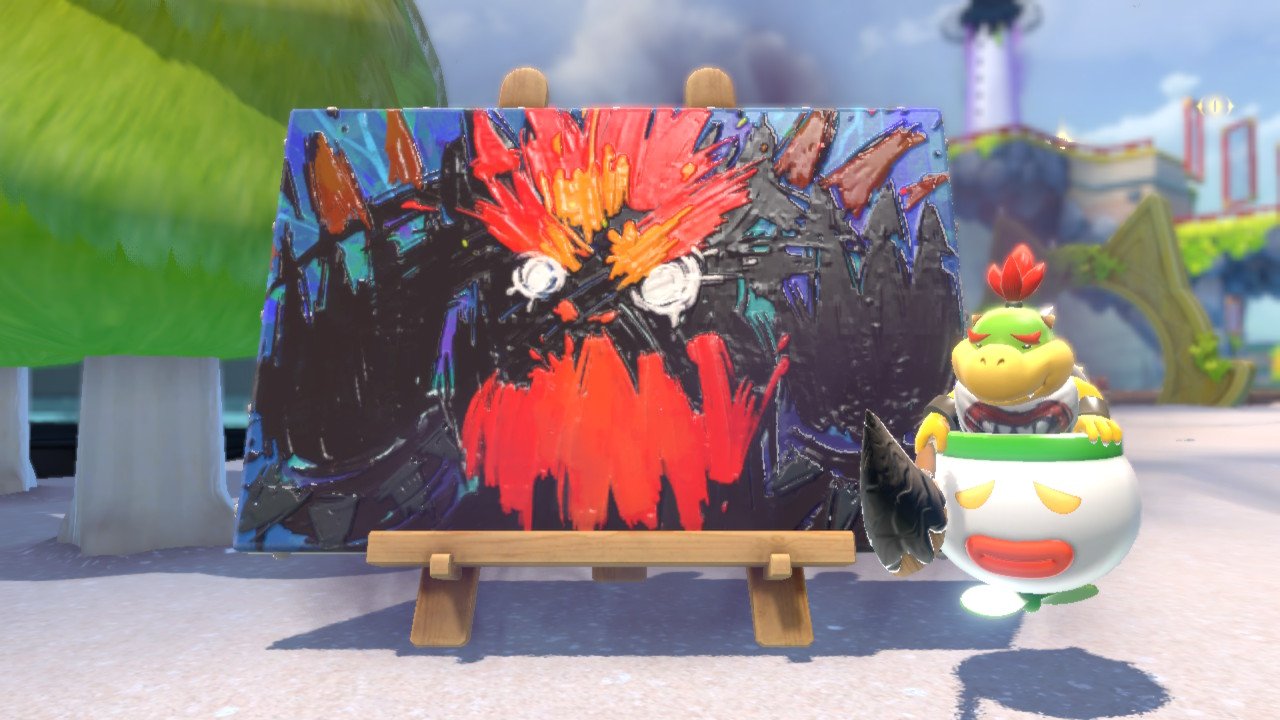
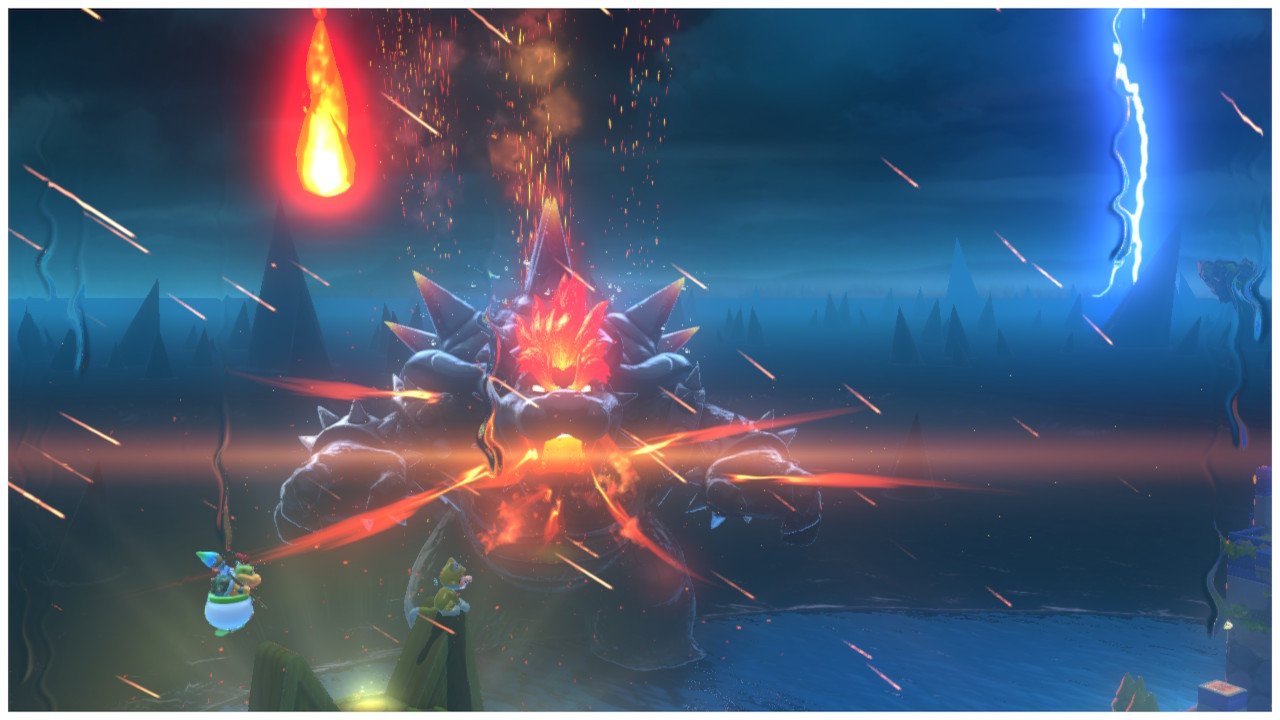
A short while ago, I played and completed Super Mario 3D World on the Switch port with my daughters. It became a weekly ritual as we played for about an hour a week, every week. Seeing the joy on my daughters’ faces as we entered a new world was one of the real pleasures of my life and, when we completed the game, the sheer excitement on their faces was heartwarming. However, as the curtain fell on that part of that game I dived in solo to the Bowser’s Fury expansion game and loved it. The open world gameplay style and Kaiju Bowser were epic and I loved the 5 or so hours it took to complete.

I’ve shared the screenshots from my gameplay below.

Being An Elder Statesman of Gaming

Recently, I turned 38 and it dawned on me… I’m approaching 40 and what used to be called ‘middle-aged.’ Now amongst my father’s generation middle-aged meant they’d take up a hobby, usually golfing, tinkering with old cars or going through some form of a mid-life crisis but for me I’m not sure what it will entail.

As many people of my generation approach 40 we are less likely to own our own homes and so we have this weird stage of ‘man-baby’ males who are not on the properly ladder or even settled on what they want to do in life. I’m lucky as I’m a teacher and happy to be so (most of the time), married with a wife and two kids and I’m kinda on the property ladder. What middle-aged means to me is not new hobbies but an old one, the constant I’ve had since I was about 5 years old… gaming. I play a couple of hours of games most days and it shows no sign of abating. Even when people said that having children would put a dent in my gaming it really didn’t and hasn’t. Now I know this doesn’t reflect well on my parenting skills but I only play games when my wife and children are in bed and never during their waking day so it’s all good and healthy.

I have been reflecting though; will I be playing games when I’m proper old and crinkly? Will I plug in the Nintendo Holocube, Xbox Infinity, PlayStation 69 or Spectrum Revival II in my mancave and play some Final Fantasy 42, Zelda: The Kazoo of Space Time or Half Life 3. I don’t know but I hope so. However, I could become more reflective and look back and finally play the games of my formative years, Dizzy, Sonic the Hedgehog 2 or Mario Bros. 3. It’s what the older generation do isn’t it? Look back with nostalgia on past glories and milestones.

Whatever the case, I’m sure I’ll be a gamer until my (probably arthritic) body gives out or my spirit is crushed through the constant talk of Brexit… whichever comes first!

Mario Odyssey- Video Games As Art

Mario Odyssey has been another home run by Nintendo. By taking Mario once more into an open world and giving him possession powers the various worlds became playgrounds where anything was possible. The art style in the game is curious, with many realistic elements (namely the T-Rex and citizen of New Donk City) blending strangely with our squat cartoonish hero, however gameplay is king and this game has it in spades. Over the course of 15 or so hours I visited the numerous worlds and enjoyed the beautiful art style. Have a look at the screenshots I captured below.

Maturity in Gaming

It's a topic that keeps cropping up every now and again, usually when Nintendo release their new console: should video games 'grow up?' People often criticise Nintendo for only appealing to children or an immature audience, saying they should provide more "mature" games on their platform. However I really value having excellent games that aren't trying to be ''edgy'' or '' dark'' all the time. Don't get me wrong, I love serious and intense games but it's a relief sometimes to play a game that isn't all about blood, guts and killing. Shooting everything that moves has its appeal but there are lots of game that do that.

Nintendo isn't just for kids, as a parent I play a lot of Nintendo games in front of my daughter as she won't get nightmares but feels engaged too.

Nintendo isn't just for kids, as a parent I play a lot of Nintendo games in front of my daughter as she won't get nightmares but feels engaged too.

The older you get, the more you realise how horrible and cruel the real world can actually be, so why would I want my video games to emulate that? Over the past few years it has often felt like we are in the darkest timeliness with some truly horrendous things occurring all around us. We are constantly barraged with horrific imagery, news headlines and 'hot takes' on some dreadful world events so for many  video games are an escape from the real world;  refuge from the general crap storm happening all around us.

Video games have the potential to test the limits of the imagination and induce a sense of wonder and awe that is often lacking in real life. That's part of the appeal for evergreen games series such as Mario and Zelda.

Don't get me wrong, I'm not saying that all mature content games are bad. Many of them actually tell beautiful stories and have great gameplay, like Nier Automata or The Last of Us. But I believe the people who only want to play gritty games and complain about the vast variety of games that are out there (including walking simulators or simple puzzle games) are themselves immature.  Maybe they don't truly understand what video games are capable of and the potential they have to be a unique art-form. As books have a multitude of genres, some which appeal to individuals and some that definitely don't, video games has the same situation developing. Not every game is for you and the sooner some gamers realise that the sooner the medium can move forward and lose some of its toxicity.

LINK- Nintendo: My One Gaming Constant

LINK- The Beauty of Walking Simulators

Top Chiptune Soundtracks You Don't Know

Soundtracks nowadays are similar in style and vein to movie scores, full of cinematic scope and bombast, which is great as it leads to fantastic scores like the ones for Journey, Thomas Was Alone or DMC. However there was a simpler time where space was limited and the sound files had to be compressed and optimised to fit on a cartridge with 8 or 16 megs. This economy of scale led to thoughtful and creative masterpieces that are still iconic even today.

Now we could rattle off the famous game soundtracks that usually fit into many of the 'greatest Megadrive / SNES / NES soundtrack compilations' which you can find on YouTube but I want to choose a few pieces that time has forgotten. This is away from the usual Castlevania, Sonic, Megaman and Mario soundtrack scores as everyone knows them and loves them. I'm talking about the rarely heard soundtracks of yore. Here are a few of my favourites, maybe you could tell me yours!

This music plays during the Underwater levels from the Disney game World Of Illusion. It also plays during Mickey's Coral Reef section.

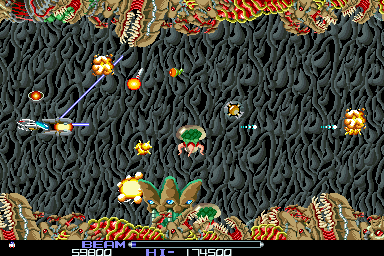
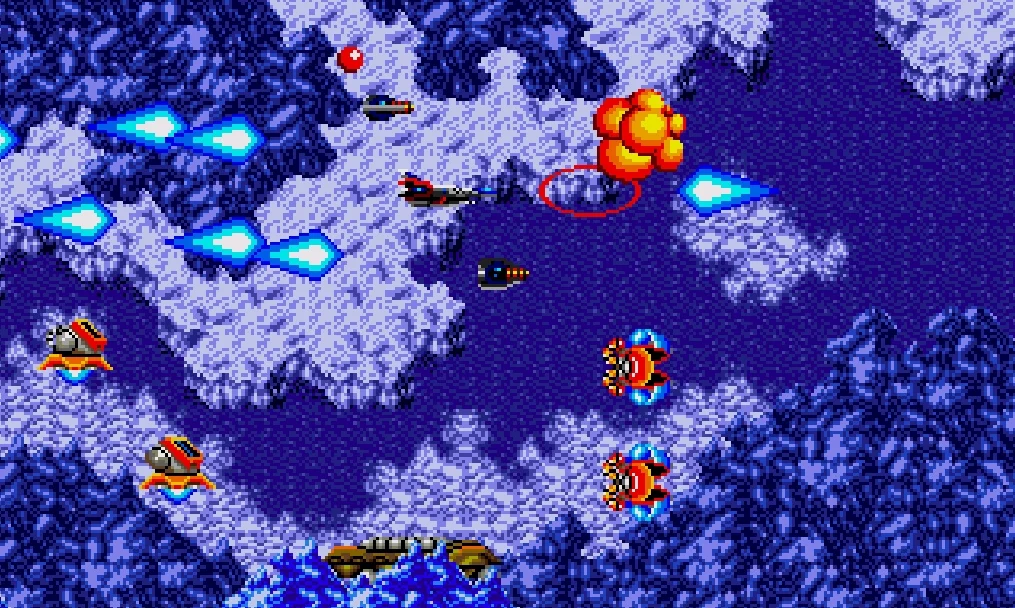
Music from R-Type 1987 by Irem- this level could be described as looking like the contents of a stomach, possibly after eating genetically modified food.

Thunder Force 3 - Stage 5: Ellis. This music was so upbeat and rocking that I loved leaving it to last!