The 13 Scariest Episodes of The Real Ghostbusters

The Real Ghostbusters was a genuine phenomenon in the 1980s. With seven seasons spanning 140 episodes, it generated enough merchandise to fill a containment unit. But while many remember it as a fun, action-packed extension of the hit film, those of us who grew up with it know the chilling truth: it was frequently pure nightmare fuel. In its early years, the show didn't shy away from atmospheric horror, Lovecraftian entities, and psychological stakes that felt far too high for a cartoon airing while kids were eating their tea. Based on fan consensus and a deep dive into the vault, here are the 13 most frightening installments that traumatized a generation.


1. The Boogieman Cometh (Season 1)

Widely considered the gold standard for scares, this episode introduced the Boogieman, a spindly, goat-faced monstrosity with a terrifying, rasping voice. He feeds on children’s fear and resides in the very closets we were all terrified to open. Watching this now, the courage of the kids finding the Ghostbusters in their pajamas is impressive. The parents' reaction of politely asking the team to leave their children's bedroom is a hilariously understated moment. Egon’s personal history with the entity and the non-Euclidean dimension the Boogieman inhabits make this a cerebral, bone-chilling classic.


2. The Grundel (Season 3)

Perhaps the most disturbing entry on this list, this episode features a creature that doesn't just haunt children, it corrupts them. The slow, parasitic transformation of a young boy into a Grundel-like monster added a layer of body horror that remains unsettling today. The way the Grundel travels as a shadow against skyscrapers is a brilliant nod to Nosferatu, and the focus on brotherly love provides a necessary, heart-wrenching emotional anchor.


3. The Thing in Mrs. Faversham’s Attic (Season 2)

This is a masterclass in gothic atmosphere. It focuses on a demonic entity that has spent 70 years growing mad and malicious in a locked attic. It’s a pure ghost story, stripped of gadgets and jokes for much of its runtime. Peter taking the case for free because Mrs. Faversham reminds him of his mother adds a rare, wholesome layer to his usually cynical character.


4. Mr. Sandman, Dream Me a Dream (Season 1)

Forget the catchy song; this Sandman is a blubbery, albino nightmare. He plunges the entire world into a deep sleep, causing everyone's darkest fears to manifest in reality. The surrealism of the Stay Puft Marshmallow Man appearing in a dreamscape is iconic, but the tension peaks as the crew is picked off one by one. Seeing Winston as the last man standing was a great subversion of 80s horror tropes.


5. The Boogieman is Back (Season 3)

A direct sequel that raises the stakes by making the conflict personal. It features the creature returning to specifically target a traumatized Egon Spengler. It is powerful to see the logical Ghostbuster grappling with what is essentially child-friendly PTSD. The escalation, moving from a bedroom closet to a haunted theme park, is fantastic, and having the Junior Ghostbusters save the adults is a rewarding payoff.


6. Mrs. Roger’s Neighborhood (Season 1)

A classic bait-and-switch horror. A demon lord named Wat masquerades as a sweet, fragile old lady to infiltrate the firehouse. The visual of the grandmotherly facade peeling away to reveal a monstrous entity is a core memory for many fans. The possession of Peter Venkman remains one of the more intense sequences of the first season.


7. Ragnarok and Roll (Season 2)

This episode leans heavily into cosmic horror. It tells the story of a man attempting to trigger the literal apocalypse out of heartbreak. The animation in the first two minutes is stunningly bleak. Interestingly, the villain’s motivation, destroying the world because he can't handle rejection, feels incredibly ahead of its time and serves as a cautionary tale about toxic masculinity.


8. The Man Who Never Reached Home (Season 2)

Playing on the Dark Rider urban legend, this is a chilling, cyclical story about a man cursed to travel forever in a supernatural loop. Starting in 1887 and colliding with the Ghostbusters in 1987, the sense of displacement and being lost in time creates a lingering feeling of dread that stays with you long after the credits roll.


9. Doctor, Doctor (Season 2)

After a chemical plant explosion, the Ghostbusters begin to mutate into slimy, grotesque versions of themselves. This is a rare dip into Cronenbergian body horror. While it’s handled with the show’s signature humor, like the giant eyeball growing out of Ray’s stomach, the underlying concept of losing control over your own biology is genuinely freaky.


10. The Collect Call of Cathulhu (Season 2)

A cheeky, high-stakes love letter to H.P. Lovecraft. After the Necronomicon is stolen from the Miskatonic Museum, the team faces off against a doomsday cult and ancient, world-ending deities. The scale of the threat is massive, and the baroque animation style used for the cult's rituals makes this one of the most visually distinct episodes of the series.


11. When Halloween Was Forever (Season 2)

This episode introduces Samhain, the Pumpkin King, who seeks to create an Eternal Night. There is a real visual flair here as the world begins to warp under Samhain's influence. It perfectly captures the Halloween aesthetic, making the stakes feel truly global and ancient.


12. No One Comes to Lupusville (Season 2)

A secluded village, heavy mist, and a war between vampires and werewolves make this episode hit every classic horror beat. The plot of two rival supernatural gangs fighting for territory while the Ghostbusters are caught in the middle is brilliant. The atmosphere is thick with isolation, capturing the folk horror vibe perfectly.


13. The Halloween Door (A Special)

Produced as a prime-time special, this benefited from a higher budget and a grander sense of dread. The story of a group trying to abolish Halloween only to accidentally unleash chaos is a great commentary on zealotry. Plus, it features a famous line about Donald Trump wanting to buy the afterlife, a joke that has aged in very interesting ways. The musical number explaining the origins of Samhain is the icing on the cake.

While The Real Ghostbusters set the bar, the 1997 follow-up, Extreme Ghostbusters, pushed the horror even further into a 90s aesthetic. With higher levels of gore and body horror, episodes like Deadlines, featuring the Hellraiser-esque Vathek, and Darkness at Noon proved that the franchise always respected its audience enough to actually try and scare them. 

The Real Ghostbusters remains a landmark of animated horror because it understood that kids want to be scared, provided they have the right heroes to help them through it.

The Power of Dungeons and Dragons.

Over many years, I've heard many videogame developers and designers talk about how Dungeons and Dragons helped influence their game design philosophy. I've read with interest but have no grounding in this as I have never played a D and D game in my life, despite owning the game for over 25 years! I bought it on a whim on one of my many shopping trip to Forbidden Planet in London as I’d heard so much about it, especially during the Satanic panic that swept across America.

Over the subsequent decades, I've heard much more about it through the various pop culture podcasts I have listened to, hearing the hosts talk about their formative years with the board game and then, of course, through Stranger Things where it gained pop culture traction.

My only context in my youth was the cartoon and the various shops I saw, as well as the Dragon Lance book series I read as a tweenager. Anyways, here's my D and D complete box which had never been played and I hope to organise a game as I have a board gaming group here in Devon who I play Ticket to Ride, Brass and Eclipse with on occasion. A friend informed me that my set might be worth something as they change the ruleset quite often so there's that I suppose.

Maybe I'll get my crew into D and D... We'll see, eh?

She-Ra and the Princesses of Power Season 2- Complete Series Review

She-Ra and the Princesses of Power on Netflix is a modern reimagining of the classic ’80s Filmation series. She-Ra is a part of the He-Man universe and so holds a place in many fans’ hearts, and as expected this led to many debates about the redesign of the characters. Some arguments seemed to be reasonable, like some complaining about the more cartoony super deformed art style, or the redesign of She-Ra herself, but some seemed purposely argumentative and toxic like why was there a wider LGBTQ and minority ethnic representation on the show and why She-Ra herself was less 'feminine'.

I personally thought that She-Ra and the Princesses of Power Season 1 was an excellent 13 part animated series with a lot of heart. I knew that it would not please all fans of the 80s show but as a father 2 young daughters I liked the strong female lead, the characterisation of the entire cast and the well told Heroes Journey tale.

Well, this second series continues from where the last series ended with She-Ra still being trained by Lighthope and making slow progress. The Princess Alliance is holding strong against the continuous daily onslaught of Horde robots.

The story works from there as the Princesses start getting used to being friends as well as allies. Meanwhile, Catra is making good progress as Horde Captain by taking over many of the kingdoms but becomes increasingly disillusioned by the paperwork, red tape and slow bureaucratic busywork of it all. Hordak, meanwhile, is busy with his portal machine, looking for an intergalactic endgame. So, from this briefest of overviews you can see that there's a lot going on.

At only 7 episodes this series is light on storyline but it really focuses on the characters and the world of Etherea. Along the way it tackles some heavy topics like toxic friendships, ageism and bureaucracy through the lens of animation. The episode focusing on Shadow Weaver is excellent and offers us a look into her past, showing her descent from the light side. The MVP of this series however is Scorpia, the wannabe bestie/ lover of Catra. We see her try to get Catra to open up to the possibility of friendship and maybe more but to little success. Don't get disheartened though, it's not all edge lord stuff, there's plenty of fun and the D&D episode, 'Roll With It' shows that the writers are on a winning streak with this series.

I'm glad that this series exists, one with strong characters that aren't afraid to work together to challenge the status quo.

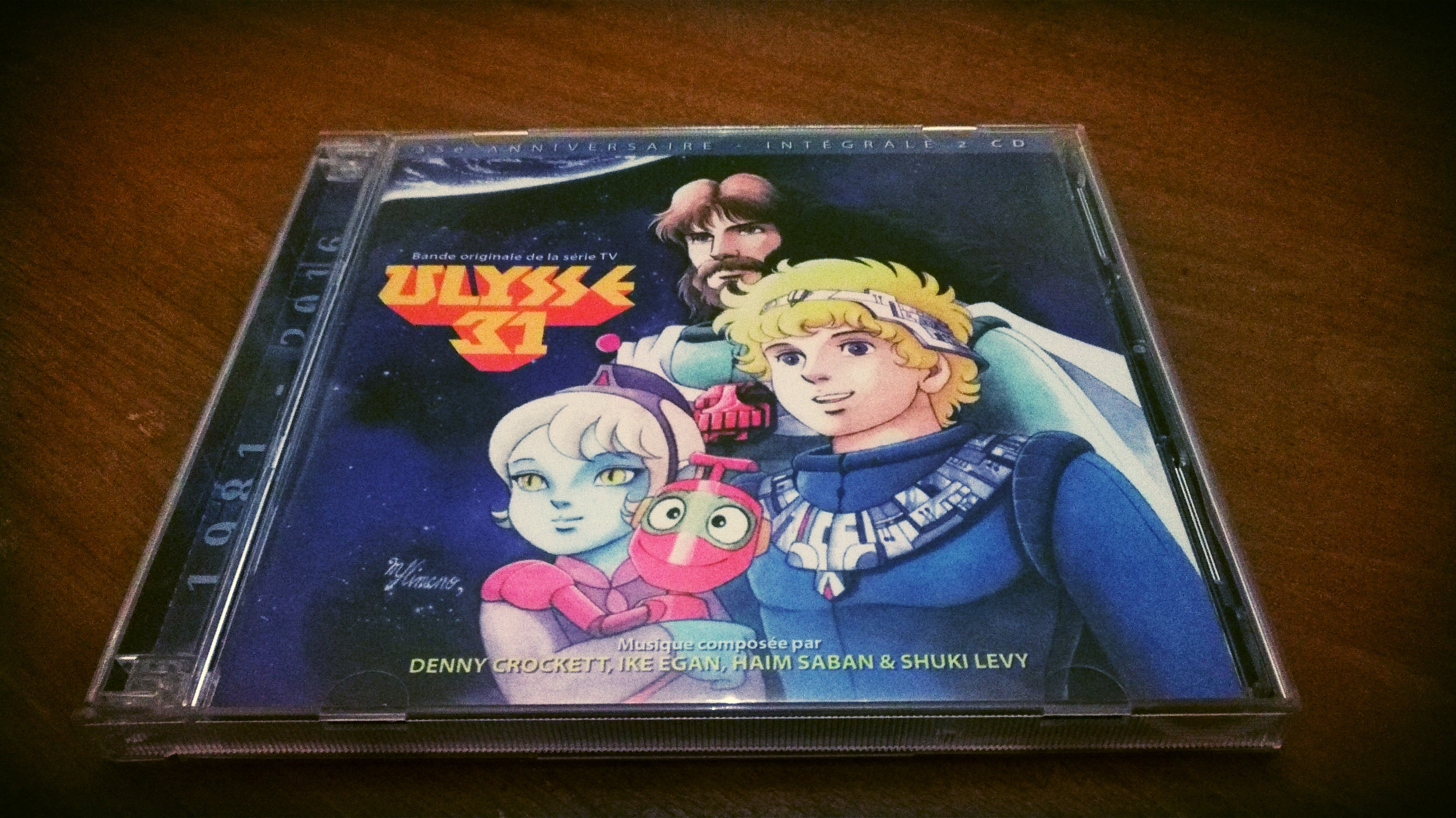
Ulysses 31- Retro Soundtrack Review

A warm fuzzy feeling, that feels like unconditional love, emanates from my heart when I watch television shows and cartoons from my childhood. There are a few very special shows that make my heart flutter all-the-quicker and one of these is Ulysses 31 (the others are The Mysterious Cities of Gold, Dogtanian and Around the World With Willy Fogg if you're interested). I first came across the show when it was first shown in the mid 80s on the BBC but I saw it in my formative years again in the early 90s on Channel 4, where it was shown daily at 6:30, just before the Big Breakfast. I remember thinking how cool and ahead of it's time the animation was but the moody, evocative and exciting synthesizer soundtrack complemented the show well... heightening the sometimes very dark cartoon well. Being a huge soundtrack nerd I tried to track it down but to no avail. The soundtracks that were available were the original vinyl printings from 1981 and these were far from the complete soundtrack, often vocal remixes over the scores.

I purchased a Tele 80 Ulysse 31 soundtrack a few weeks ago but unfortunately it contained lots of French vocal tracks and only about 6 instrumental pieces from the show.

This album has mostly french vocal tracks and only 5 instrumental pieces so is best avoided by those looking for the phenomenal score used in the show.

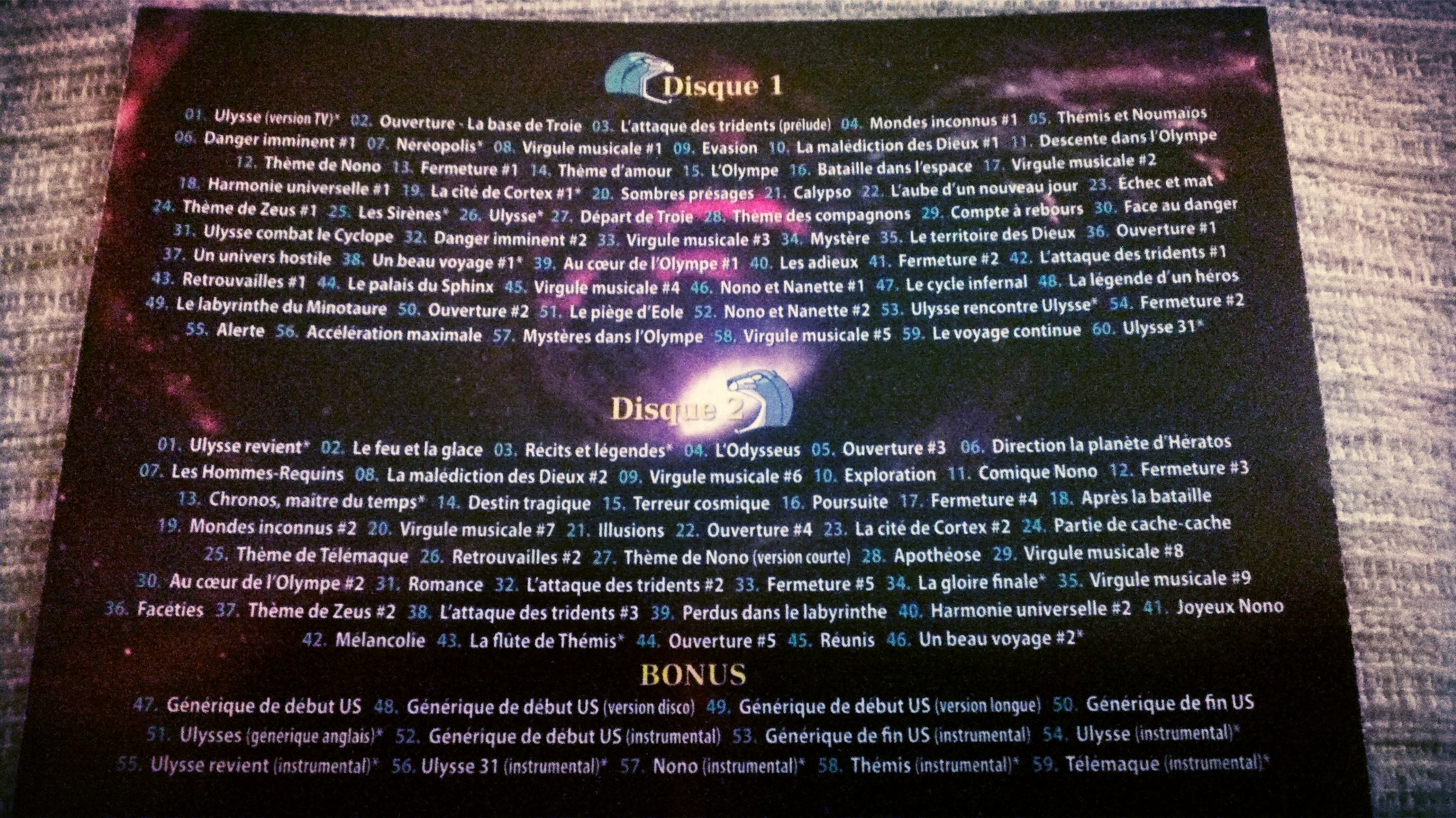
To say I was disappointed would be a huge understatement, however in my search I did see that as 2016 was Ulysses 31's 35th anniversary a collector's edition of the complete soundtrack would be available on double CD for the very first time. The release would include the complete score by Denny Crockett, Ike Egan, Haïm Saban and Shuki Levy and all the opening and closing credits sung in the French and English!

The album was only produced in limited numbers and was fetching a very high price on Amazon and other websites but I managed to get the soundtrack at a reasonable price on ebay, shrink wrapped and brand new. And so, without further ado... here is the review of the Ulysses 31 soundtrack.

This is the album you want if you are looking for the complete musical score... it is truly wonderful and impeccibly presented.

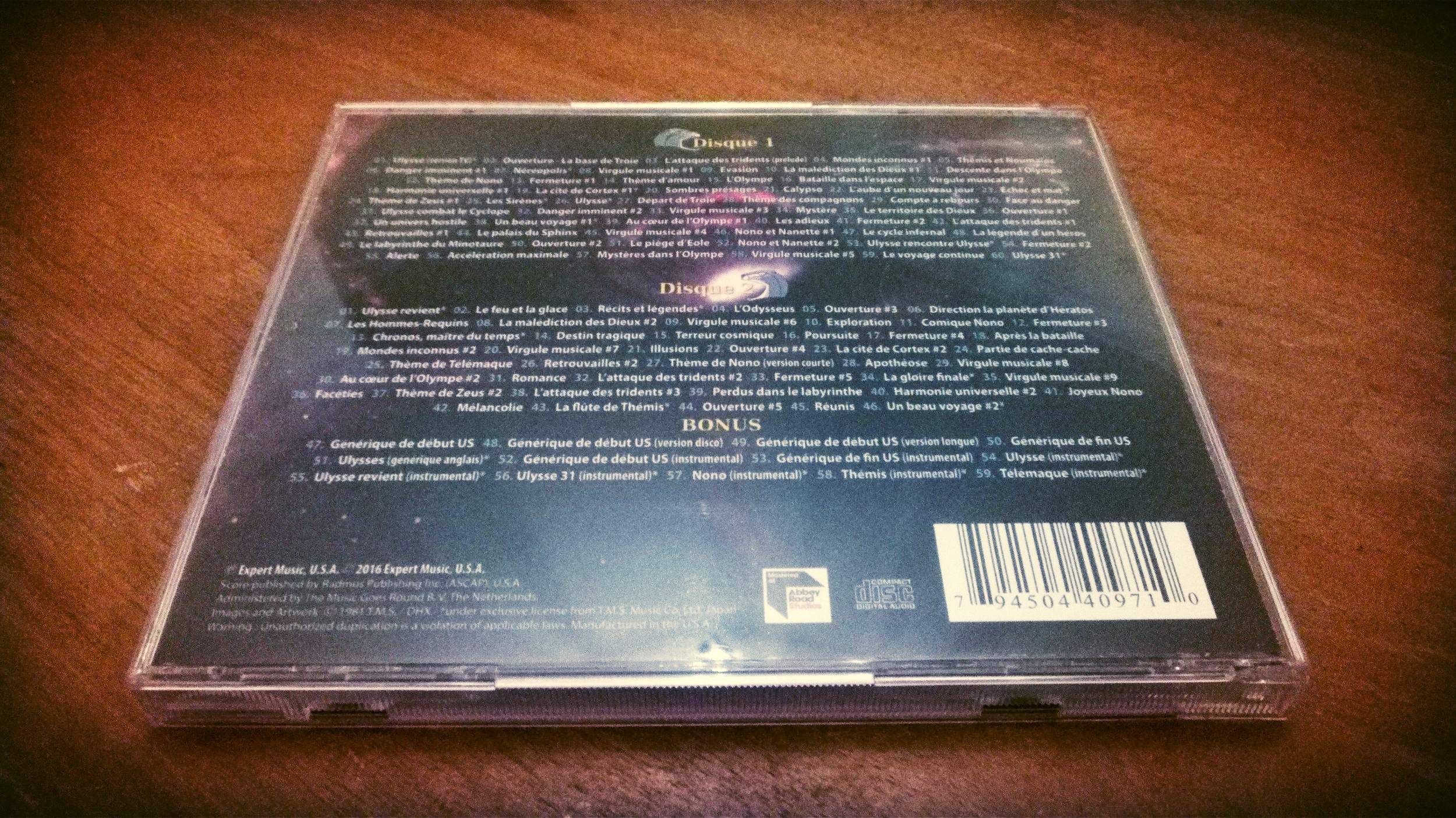
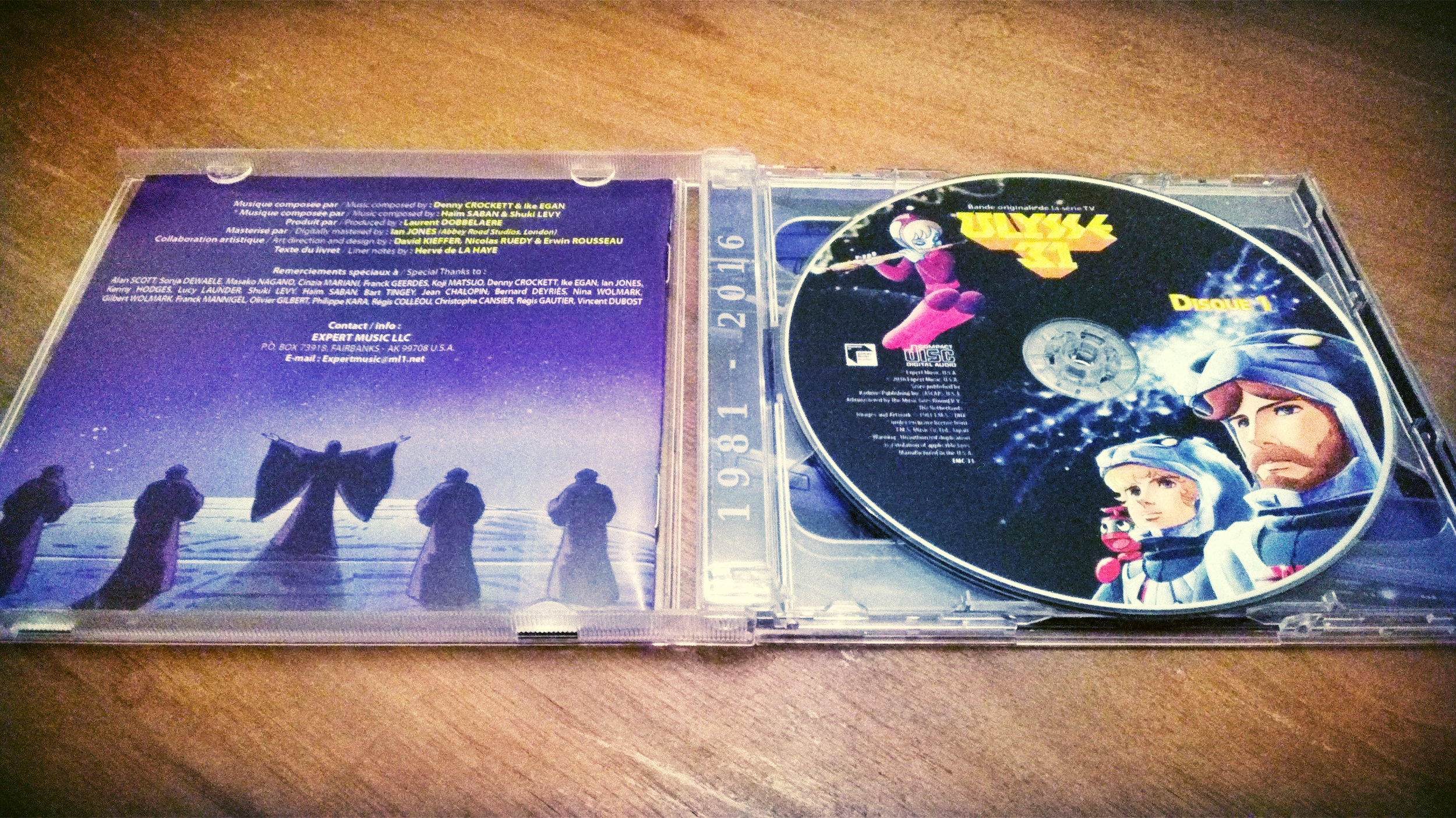
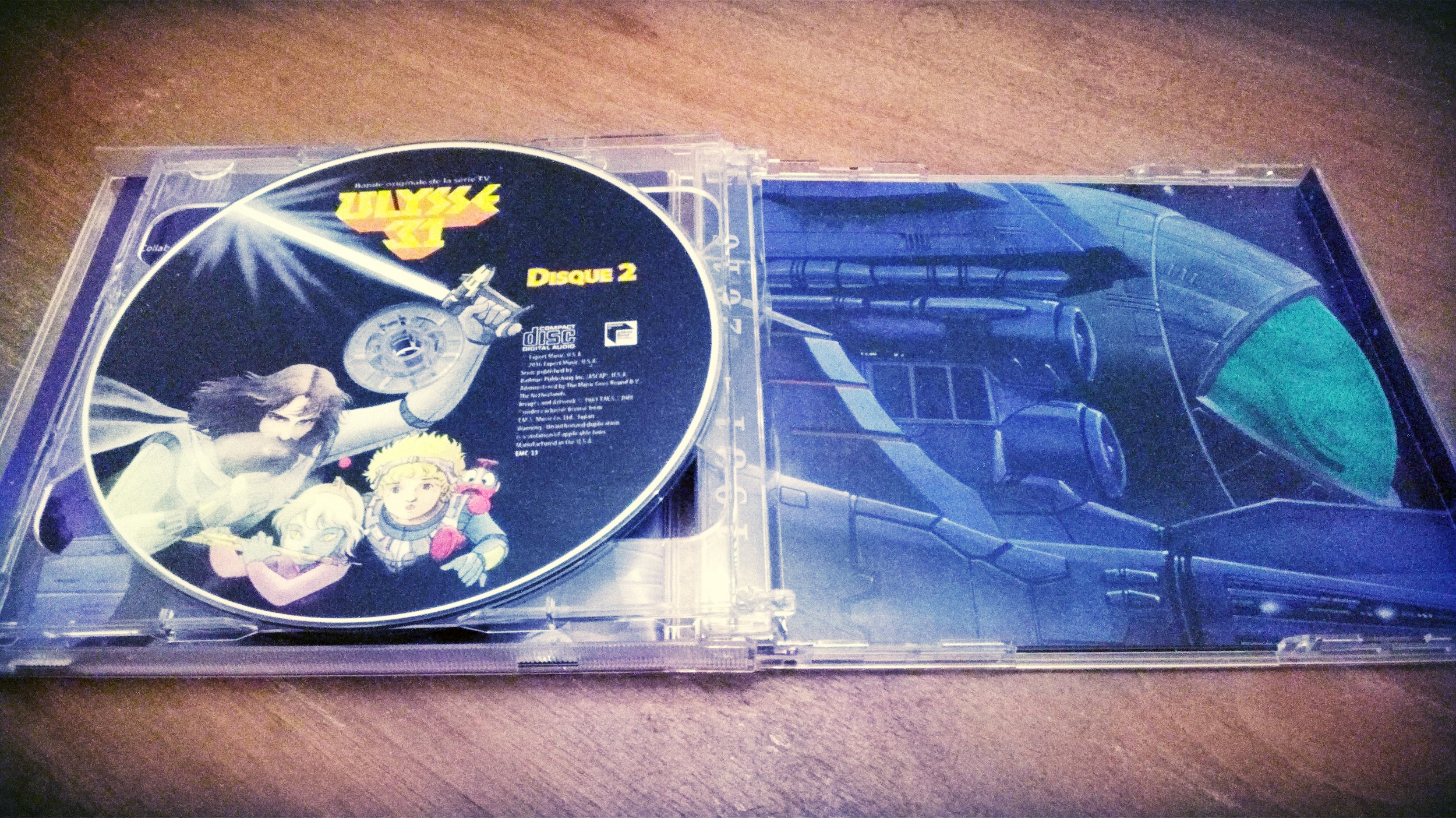
The first thing to notice is that the soundtrack has a bit of weight to it as it is a double CD set (containing 165 tracks!)with a 16 page booklet explaining the creation of the show, with interviews of the the creators, composers as well as a detailed account of the remastering process. Unfortunately for me the whole thing is in French and having not spoken the language since secondary school my translation is patchy at best, however I have a wonderful teaching assistant who speaks French fluently and I will try to get her to translate it for me.

The music here is crystal clear as it has been remastered from the original masters by Ian Jones at Abbey Road Studios.  This is the way the soundtrack was intended to be heard as even on the DVDs the music can sounded distorted and warbled.

I've listened to the album a few times now and the majority of the themes I remember are all here. I'm not sure how the album is sequenced but I think it is in chronological order, with many of the familiar themes near the beginning and the more uniquely used tracks or incidental tracks being later on in the collection.

I'm not going to go through every single track here as that would be long and incredibly tedious for your to read so I'll pick out the highlights.

On disc 1:

  • Track 2 is Overture- The Base of Troy, which sounds quite majestic and sweeping, just what you'd expect for a space opera but it morphs into late 70's disco with a funky beat. Definitely a track of it's time but charming for it.
  • Track 3 is energetic and driving as it underscored moments of space battles and actions. Attack of the Tridents is a very short track, being only 20 seconds long, but is very effective.
  • Track 4, Unknown World, is a beautiful piano piece with moody synthesizer bloops and beeps creating an unsettling soundscape. This piece was used in times of tension and mystery and you can see why.
  • Track 5, Noumaïos's Theme is a beautifully melancholic piano and flute theme. There is very little synthesizer sound used for this piece and this adds to its wistfulness- a definite highlight.
  • Track 10, The Curse of the Gods #1, is one of the signature pieces of music from the show. It has a dramatic steady drum beat which is added to by a deep synth sound which adds a spooky element, then the trumpets kick in and add a shrill element. This is another absolute must listen for fans of the show!
  • Track 15, Olympus, is a wonderful piano and deep synth sound which is further enhanced through the shredding guitar. It sounds broody and dark and is another signature theme from the show.
  • Track 16, Space Battle, sounds like an 80s soft rock band just jamming with drums, cymbals and shredding guitar combining to create a fast paced track.
  • Track 21, Calypso, is a soft piano piece that sounds melancholy and thoughtful at first then the flute and drum kick in to add another layer of sadness. Another beautiful must listen.
  • Track 25, The Sirens, sounds unearthly and ethereal. The whoosy airy synth sounds mixed with the strange whale-like squeals give this piece a unique sound. It ends with strange cries and moans of the type you'd find in scary horror films. it is quite unlike anything else on this album but in a good way.
  • Track 31, Ulysses Battles the Cyclops, sounds suitably epic. It builds with a deep bass guitar and thumping drum and then the weird synth kicks it adding to the drama, throw in a few violin and trumpet sounds and this piece kicks it up a notch until it reaches the dramatic end.
  • Track 40, Goodbye, is a poetic flute and piano piece that flutters by sadly. It was often used at the most tear-jerking moments of the series and you can hear why.
  • Track 53, Ulysses meets Ulysses, is a strange Spanish guitar piece interspersed with some dramatic strings.

CD 2 continues the good work of the first but has less of the well known tracks but does still contain much worth listening to.

  • Track 3, Tales of the Legend, is a dramatic track with organs and what sounds like some harmonised vocals, lending this piece an otherworldly air.
  • Track 4, Odysseus, sounds like an 80s guitar solo from a soft rock band, all shredding guitars and a cool base in the background.
  • Track 30, The Heart of Olympus, has a deep baritone noise underscoring a dramatic piano peice... very unnerving!
  • Track 40, Universe in Harmony, is pure funky disco celebrating the success of Ulysses. A fitting groovy ending to the series!

Overall the soundtrack is brilliant and has stood the test of time well. There are tracks that are undeniably relics of the time but the whole score sounds like it belong to a lost sci-fi feature film rather than a 35 year old animated series. This is a must have soundtrack for all fans of the show and for fans of synthesizer music with that late 70s / early 80s feel. Essential!